
Healthcare providers can be paid for their services quickly and effectively due to revenue cycle management (RCM), a crucial financial process. Claim payments that are lost or delayed might have a domino effect on the standard of care. Revenue cycle management guarantees that healthcare providers have the means to meet the standards set by commercial and public payers for quality treatment and to deliver it. In order to manage the healthcare insurance cycle, these resources include personnel, funds, policies and procedures, and electronic health record (EHR) systems. Providers face many challenges when they lack resources, one of which is having insufficient administrative staff to manage both new and returning patients. The practice makes less money when patient volumes are lower. In addition, fewer personnel are overseeing safety protocols and office conditions due to a shortage of administrative resources, which may result in non-compliance problems. Quality care is the foundation of a successful practice, and an organized revenue cycle is essential to both. Steps in the Revenue Cycle Staff members and healthcare professionals must adhere to a standardized 10-step cycle in order to manage the healthcare insurance model. There are two parts to the process for revenue cycle management: front end and back end. All of the stages that come before the claim is submitted make up the front end of the revenue cycle. Steps after the claim is submitted are included in the back end. 10 Steps of the Revenue Cycle Management Workflow 1-Insurance Eligibility and Patient Registration Pre-registration, registration, and scheduling are all included for new or returning patients. Pre-registration comprises eligibility verification and the collection of patient demographic data, including insurance information. Challenges Accuracy of data entry Finding the right payers Coordinating the advantages of extra patient regulations 2-Meeting, Coding, and Capturing Charge The physician records the patient’s visit in the electronic health record (EHR) when the patient shows up for appointments, also known as encounters. The patient’s medical history, encounter notes, diagnosis codes, information about follow-up, orders, prescriptions, tests, and assessments are all included in the paperwork. Based on physician documentation, the medical coding team records diagnosis (DX) codes, healthcare common procedure coding system (HCPCS), and current procedural terminology (CPT). A modifier based on the payer and procedure type (CPT code) may also be included by the coder. Complying with payer criteria and claim requirements is crucial in order to guarantee payment for the provided service or interaction. Challenges Inadequate recording of the interaction Patient policy ignorance Excessive medical expenses Identifying the appropriate CPT or HCPCS in accordance with provider specifications 3-Submission and Scrubbing of Claims The billing staff completes a CMS-1500/UB-04 form or inputs the charges for the claim into a medical billing system. Next, the group drafts the claim in the EHR of the provider and submits it to the clearinghouse either electronically or on paper (the insurance company may be a government agency or a private payer). The payer receives the claim from the clearinghouse, and it can be rejected. The billing team may determine and address the underlying reason for the clearinghouse’s denial of the claim. The team can reprocess the claim and deliver it to the payer after determining the cause. Challenges Recognizing quickly payer and clearinghouse denials 4-Query on Claim Status The back-end staff, which consists of accounts receivable and billing professionals, will monitor the claim status and keep note of the date the practice filed the claim. A minimum follow-up should occur once every thirty days until the claim is reimbursed by the payer. The practice might need to step up how frequently it follows up on claims in some circumstances. Challenge To make sure the medical billing team addresses claim denials, it is essential to determine how long a payer takes to process claims. It’s crucial to properly note the claim and provide as much information as necessary. It takes less time to follow up on claims if the team takes as many detailed notes as they can. Book Free Demo 5-Advice on Remittances Claims are received by the payer, who either pays them back or rejects them. The payer transmits additional data, including copayments, deductibles, and reimbursements, along with specifics about the amount billed and/or denied. Challenge Underestimating the explanation of benefits (EOB) or remittance advice (RA) and recognizing problems and remedies 6-Refusals and Appeal In order to address denials, the billing team will determine the underlying reason and submit an adjusted claim, reconsideration, or appeal. The billing department will then inquire about the status of the denial. The insurer will make payment if it reverses its decision to deny the claim. The appeals procedure is restarted if the payer continues to reject the claim. In the event that the payer does not modify its decision following this process, the healthcare provider may elect to deduct the claim from its total losses. Challenge The majority of payers handle claims in 7–21 days Medicare claims: within 7 to 14 days Commercial claims: between 14 and 21 days Choosing whether to write off or recover a claim Figuring out whether the codes billed are supported by the medical records or if a different code is better appropriate for the interaction 7-Posting of Payments The medical billing software will be updated by the billing staff with the payers’ reimbursement. This gives a quick overview of healthcare providers’ financial situation. Challenge Effectively entering payments and detecting inconsistencies in payments. 8-Statements from Patients Medical bills are generated and distributed to the patient following data entry into the medical billing software. Using current billing tools, this step can be automated. All costs that are considered the patient’s responsibility are included in the medical bill. Take into account the patient’s preferred method of communication when sending statements: text, email, or print. Choosing the appropriate channel can enhance patient financial participation and raise the possibility that they will promptly pay their bills. Challenge The administrative expense of mailing or electronically delivering patient statements Not all patients pay their fees after getting a statement. Patients call

15 Most Common Types of Healthcare Software The aspect of health industry is fast changing and technology is at the centre of this change. Since bettering patient care to simplifying administrative processes, contemporary health care is dependent on software solutions. As the expectation levels of the patients increase and with the compliance demands also growing and the necessity for being efficient, the hospitals and clinics are coming increasingly to relying on the digital facilities. Whether managing patient data or facilitating teleconsultation, healthcare software is creating the future of medicine. What is Healthcare Software? Healthcare software refers to specific digital products created to assist the medical field in clinical, administrative, and operational functions. Such tools support healthcare professionals in diagnosing, treating, and monitoring patients and facilitate internal workflow management in institutions. Healthcare software has a huge variation, from storage and scheduling software to much more intricate systems that include diagnostics, imaging, and decision support. Importance of Healthcare Software in the Medical Sector Getting software tools for healthcare in 2021 is not an option anymore – it is now a necessity. It enhances the precision of diagnostics; it improves the availability of the data, and optimizes patients’ experiences. In addition, healthcare software helps minimize manual errors, reduce operational costs as well and meet healthcare regulations. This technology also facilitates data-driven decisions that would result in better outcomes for the treatment process as well as efficient resource management. Types Of Healthcare Software You Must Know Let’s get into the top 15 most common types of healthcare software systems changing things up in the medical world nowadays: 1. Electronic Health Records (EHR) Software In the core of modern healthcare systems lays the Electronic Health Records (EHR) software, which contains the complete medico-history for patients. It enables access to such information by authorised personnel such as previous treatments, allergies, lab results, and imaging. EHR software helps to coordinate between departments, reduces paper work and allows doctors to make better clinical decisions with real time access to data. 2. Practice Management Software Practice Management Software is a special software system for facilitating management of everyday administrative activities for clinics and hospitals. This entails appointment scheduling, billing and reporting, tracking of patients’ related information. It makes operations easy, eliminates much of the manual labor and guarantees the medical professionals concentrate on the patients leaving them with less of back-end logistics. 3. Medical Billing Software Effective billing in healthcare is very important, and Medical Billing Software is a solution for automatic invoicing and the claim process. This software makes fewer mistakes in cash flow and precise financial records. It also upholds several health insurance laws, as well as dictates regarding health insurance. 4. Telemedicine Software Remote consultations are becoming the standard; therefore, Telemedicine software contributes to video calls, remote diagnostics, and patient monitoring. It is now essential for healthcare access in rural or underserved areas. With this software, the patients can gain medical advice without having to go to a clinic physically, hence convenience and provision of services via book internet is enhanced. 5. e-Prescribing Software A doctor can send prescriptions electronically to pharmacies through the use of e-Prescribing software. This extinguishes handwritten inaccuracies and hastens the prescription process so customers can get prescriptions faster. It also assists in tracking patient drug history and warns providers against any potential drug interactions. 6. Hospital Management Software Hospital Management Software is a comprehensive hospital operation solution including, but not limited to, modules such as patient registration, billing, inventory, pharmacy, and HR. It simplifies all processes and smooth flow of departmental communication. Such systems increase hospital efficiency and affect patient experience. 7. Laboratory Information Management System (LIMS) For clinical laboratories, Laboratory Information Management System (LIMS) software is meant to monitor samples, as well as wanting to store test results, control inventory, and manage quality. LIMS increases a lab’s efficiency; reduces error, hence improves conformity to the regulatory measures, which is vital in the case of diagnostic and research labs. 8. Radiology Information System (RIS) The point, in this case, is to use a Radiology Information System (RIS) for controlling medical imagery and data. Such software is utilised by radiologists in monitoring imaging orders, keeping reports, among other workflow management. It is typically integrated with PACS and EHR systems to see all the patients’ records in full and make diagnoses more expeditious. 9. Picture Archiving and Communication System (PACS) Picture Archiving and Communication System (PACS) archives and retrieves certain medical images, including X-rays, MRI, and CT scans. It eliminates use of film-based storage hence enabling healthcare providers view, share and analyse images in digital format. The PACS also interoperates with RIS and EHR for increased accuracy and efficiency of diagnosing. 10. Clinical Decision Support System (CDSS) The Clinical Decision Support System (CDSS) is a powerful piece of software intended to assist the clinician in making well-informed decisions. It works with the data of patients and alerts and reminds them, as well as offers treatment. CDSS will enhance outcomes and compliance with best practices as errors by humans will be eliminated as well and there is a standard level of care provided by CDSS. Book Free Demo 11. Pharmacy Management Software Pharmacy Management Software supports pharmacists with drug inventory, which automates refilling and answers billing and compliance with regulations. It enhances safe medication by alerting about potential interaction, contraindications and it frequently integrates with EHRs and billing systems to the purpose of making the functionality, as easy as possible. 12. Healthcare CRM Software Healthcare CRM software is aimed at enhancing patient interaction, communication and services. It captures and manages patient data, preferences and communication history. This assists healthcare providers in providing individualized services and send reminders as well as long term relationships with patients. 13. Healthcare Analytics Software Healthcare analytics Software sifts through stupendous amounts of clinical, operational, and financial data to create insights. Hospitals use this software to enhance the delivery of care and cost management, as well as cost projection. It facilitates predictive analytics, population health management, and performance benchmarking.
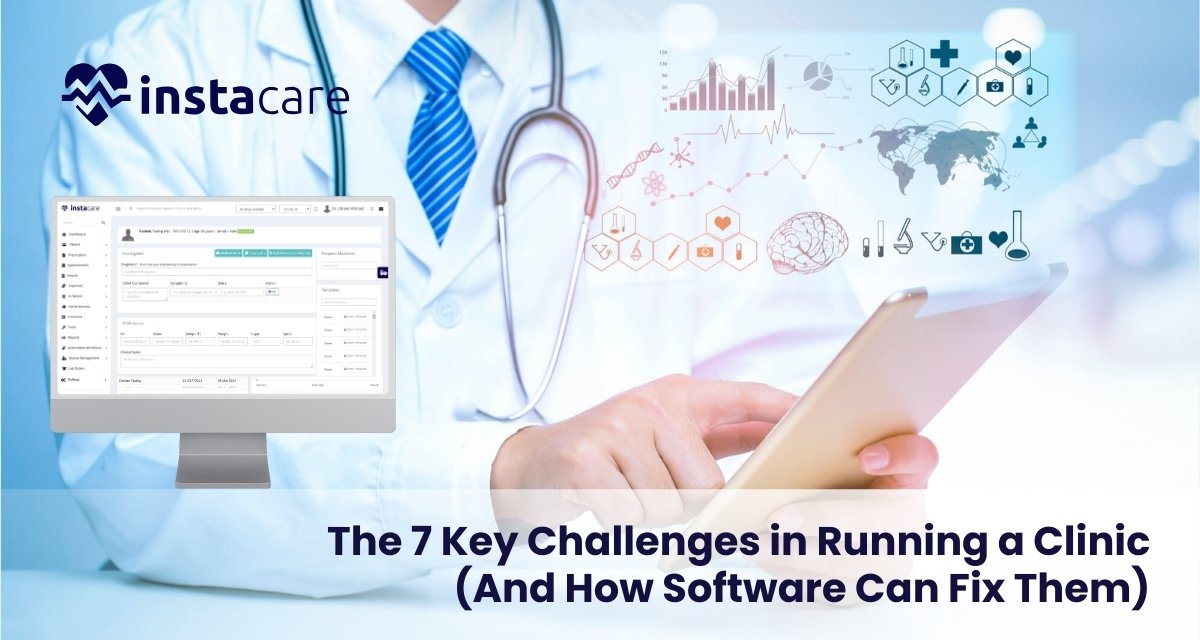
The 7 Key Challenges in Running a Clinic (And How Software Can Fix Them) Running a clinic poses many problems in running a clinic that may have significant effects on patient care and operational efficiency. Issues such as overworked staff, scheduling conflicts, and billing errors are major concerns to clinic owners. However, modern clinic software directly addresses these Challenges in Running a Clinic and in the management of the clinic, thus improving overall productivity and enhancing patient satisfaction. Here are the 7 Key Challenges in Running a Clinic & their Solution 1. Overworked Staff One of the Problems with Clinic Management is that of staff burnout because of overwork. Most of the administrative work carried out in the clinics, like scheduling, billing, and record-keeping has overwhelmed the personnel of the clinics. It tends to lead to errors but also lowers the quality of care extended to patients. Tired workers can sometimes become tiresome, thus leading to decreased engagement levels and empathetic attitudes toward patients. This creates a bad atmosphere, both in terms of staff morale and patient experience, when employees feel stretched thin. How Can Software Help? Clinic management software can automate many routine tasks so that the staff will be able to find time to address much more important issues of patient care. Some of the features helpful in streamlining workflows, and reducing the paperwork burden of the staff, include: automated scheduling, digital record-keeping, and integration with billing. Efficiency improvement thereby results in a lighter workload for the staff, and the use of the software tool to track staff hours and workloads helps identify when employees are overworked, thereby improving resource allocation and scheduling. 2. Scheduling Conflicts The other major issue with clinics is scheduling conflicts. Double bookings, missed appointments, and last-minute cancellations can really disrupt the flow of daily operations. Inefficient scheduling can result in longer wait times for patients and increased frustration for staff. These scheduling conflicts can not only affect the clinic’s bottom line but can also result in lost revenue and diminished patient loyalty. How Can Software Help? The advanced clinic software also provides excellent scheduling tools for powerful organizations. The scheduling of real-time appointments will allow the staff to view the available slots and automatically remind the patients to be at that specific time of their consultation, so they may prepare with minimal conflict of appointment, thus giving them a more efficient flow of patients throughout the day. Additionally, with analytics features, the owner would understand peak hours and adjust staff accordingly, maximizing the scheduling. 3. Billing Errors Most clinic management issues are taken forward to the billing and insurance claims. Incomplete billing may delay payments while the administrative workload of the healthcare clinic increases and others, among other frustrated patients who receive an unexpected bill. This tracing can be started by breaking down the communication either from or between the staff or perhaps archaic systems. Other errors arise from the incorrect billing that creates disagreements with the insurance companies and this brings about the disruptions of the revenue cycle and cash flow. How Can Software Help? Clinic billing software can offer ease in generating invoices because clinic software benefits would handle insurance verification along with the perfect making of invoices. Minimal manual inputs while the billing regulations are clearly provided save clinics from plenty of errors made in this part and timely reimbursement. Having such a central managing system can lessen the claim-filing follow-through and appeal stages, therefore putting the clinic more in order from a financial basis. 4. Trouble in Patient Record Management Keeping track of patient records, perhaps the most important aspect of quality care, is yet to be done by the majority of healthcare clinics. Paper record-keeping or archaic electronic medical record systems are still prominent in most clinics. This often leads to the loss of details and lack of access to patient history, which is a barrier to proper treatment in the end. Also, managing physical records consumes much time and resources away from patient care. How Can Software Help? Modern clinic management software provides a cloud-based safe record-keeping system, and there is easy access to patient information. Patient histories, treatment plans, and test results can be quickly accessed by staff, which adds value to the quality of care by ensuring good communication between providers. Electronic health records can also improve the safety of patients through reduction in error risks from written notes as well as alerting on potential drug interactions or allergies. 5. Unable to Put Up with Compliance and Regulations The other considerable challenge clinics encounter is compliance with health regulations. Be it HIPAA requirements, or any new billing legislation, the landscape is one of complexity in constant motion. Non-compliance will result in massive fines but with the downside of reputational damage. Added to that, compliance itself becomes an administration burden which is likely to be a detractor from patient care, and anxiety is created amongst staff members. How Can Software Help? Most clinic management systems offer features that aid in compliance. Among the features are built-in checks for HIPAA compliance, secure data storage, and modules on employee training. Automating compliance tasks allows clinics to attend to patient care more regularly and less to regulatory issues. Moreover, several software solutions include audit trails and reporting, which would enable compliance monitoring to be simplified for better demonstration during inspection. Book Free Demo 6. Inconsistent Patient Engagement Patient engagement should be improved as one of the strategies to facilitate creating a long-term relationship and improving health outcomes. Most clinics fail to inform the patients about their care. The lack of patient engagement might result in low patient satisfaction and poor health outcomes, such as failure to adhere to treatment or visit follow-ups. How Can Software Help? It has the component of patient engagement tools incorporated in clinic software that allows communication in the form of reminders, educational content, and follow-up surveys. These elements engage patients toward better health management, improving their outcomes and making them highly satisfied. For

Investing in practice management software can really boost efficiency and profitability for a health care practice. But calculating its return on investment is more challenging. This guide is going to walk you through the key considerations and metrics to effectively evaluate the return on investment of your practice management software. Understanding ROI in Practice Management Software What is ROI? ROI or return on investment is considered as an important tool used to make a measure of investment profitability depended upon its investment cost. It is usually put forth in percentage and computed using the following formula, ROI=Cost of Investment Net Profit×100 While reviewing PMS, one needs to look at both tangible as well as intangible benefits. Why is it Essential to Assess ROI? Evaluating ROI is important for many reasons: It makes practices realize whether the investment is worth making. Budget Justification: The ROI calculation clearly provides justification for the budget. Identification of Improvement Areas: Through the ROI, it may point out where the software is underperforming and needs adjustments or improvements. Critical Metrics in Determining ROI 1- Cost Savings One of the biggest benefits of practice management software is that it offers operational efficiency, hence saving costs. Consider the following: Reduced administrative costs- Find out how many hours employees save by way of administration in these areas, including scheduling, billing, and managing the patient. For example, if the PMS cut down 20% time in those activities, calculate the monetary saving from salaries for such staff members. Reduced Billing Errors: Determine the ways in which the software has reduced billing errors, which translate into costly claim rejections and delays. Estimate the average cost of billing errors pre and post implementation of the software. Workflow Streamlined: Determine the ways the software has streamlined workflow processes and improved productivity. For example, if the software allows for check-in of patients more rapidly and scheduling of appointments more rapidly, determine the amount of time saved. 2- Revenue Generation Besides saving costs, practice management software can also help in generating revenue. Analyze the following key areas: More patients retained: The enhanced experiences of patients-for example, online scheduling and reminder capability-will enhance patient retention. Calculate the value gain of retaining more patients during a year. More patients will come as there would be easy scheduling and probably better marketing capabilities through software. Therefore, work out your additional income on extra patients. Faster realization of money from the insurance companies It could make for speedier claims processing which contributes to faster cash flows and improved cash flows are often brought with quicker payments. 3- Intangible Benefits While the tangible metrics can be useful, do not overlook the intangible benefits of practice management software. Improved Patient Satisfaction: It is likely that a patient will experience better satisfaction based on better scheduling, wait times, and communication; although this is a non-quantifiable result, satisfied patients are likely to return and recommend the practice. Staff Morale and Retention: An effective system reduces burnout and encourages high job satisfaction among staff; hence, a small rate of turnover occurs. It can calculate how many to hire and train so that savings can be figured out. Compliance and Risk Management: Determine how the software is helping to maintain compliance with healthcare regulation. Non-compliance can lead to fines or litigation. Software that makes it easy to maintain compliance with these requirements may save a lot of costs on fines. Book Free Demo Calculating ROI: A Step-by-Step Approach Step 1: Gather Data Accumulate pertinent information both prior and post-deployment of practice management software. Some of the necessary points to include would be Staff salary and hours used on administrative tasks Billing errors percentage along with cost of the error Count of patients retained plus retention percent; volume details Revenue from service Step 2: Step 2: Cost Accounting Calculate all costs that the practice spends on software by the following; Entry Costs: This would be software acquisition/implementation along with equipment purchased. Operational Expenses: subscription or service charges, and any other training cost. Step 3: Step 3: Savings and Income Based on the data gathered, find: Administrative Costs and Billing Error Savings: calculate how much of administrative costs and billing error would be decreased. Income Generation: calculate the income produced with improved patient retention and high volume of patients. Step 4: Compute Net Income Now, subtract the total costs from the combined cost saving and increased revenue to calculate the net profit: Net Profit = Total Savings + Increased Revenue – Total Costs Net Profit=Total Savings + Increased Revenue−Total Costs Step 5: Calculate the ROI Finally, in conclusion, use the formula for ROI to calculate the percentage return on your investment: ROI = Net Profit – Total Costs × 100 ROI= Total Costs Net Profit ×100 The fees of software implementation in new practice management in medical practices are $30,000 one time and $5,000 yearly in form of maintenance. The estimated billing error averaged around 15 per cent before the practice acquired the new software system, which cost them about $20,000 each year. Step-by-Step Calculation Cost Savings Administrative cost savings from saved time in scheduling and billing: $10,000 Less incurring because of fewer billing errors: $15,000 or a decrease assumed from accuracy More patients coming in: $25,000 (new patients brought in by improvement in marketing) Patient retention: $10,000 (increase in revenue from retained patients) Total Savings and Revenue: Total Saving: $10,000 + $15,000 = $25,000 Total Increase in Revenue: $25,000 + $10,000 = $35,000 Net Profit: $25,000 + $35,000 = $60,000 Total Costs: Cost initially: $30,000 Annual Maintenance Cost: $5,000 Total Costs: $30,000 + $5,000 = $35,000 Net Profit: Net Profit = $60,000 – $35,000 = $25,000 ROI Calculation: ROI = 25,000 35, 000 × 100 = 71.43 % 35,000 25,000 ×100=71.43% Conclusion of Case Study In this case, the practice management software returned a 71.43% ROI. This means it is very profitable to invest in it. Such analysis will assist similar practices to decide their potential software investment. FAQs 1- What factors do I need to consider in selecting practice management software? When you select practice management software, consider the following factors: Functionality: It should
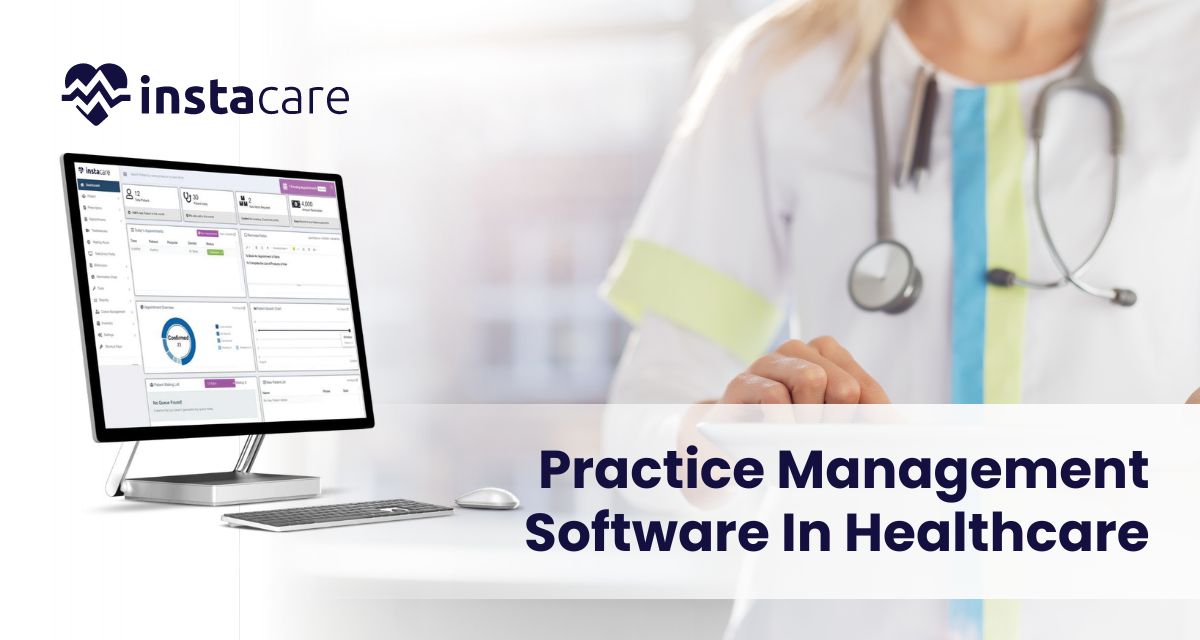
What Is Practice Management Software In Healthcare? Practice management software, often known as PMS, is an important tool in modern healthcare as it helps medical practices organize day-to-day activities. It ranges from schedule making of appointments to charges that are to be levied and from keeping records of all the patients in hospitals to any other Administrative duties that may be asked of it. In this article we shall discuss on a topic, what is practice management software; fundamentally reviewing features and benefits of practice management software showing how it makes difference in the success of healthcare practices. Introduction to Practice Management Software Practice management software on the other hand is an electronic system that is used for organizing the running of a medical practice. It eliminates the time otherwise spent on activities such as appointment making, patient registration, billing, and production of reports in that it frees up a lot of time for healthcare practitioners to attend to patients. Normally, practice management software is implemented in medical offices, clinics, and hospitals to help in organizing the practice in that the flow of operations and management of administrative procedures is enhanced. The software can be hosted on the web, meaning that the users can access from any place, or local, depending on the need of the practice. List of Characteristics of Practice Management Software Appointment Scheduling Another key practice of use of practice management software is in managing appointments. It can be used to book, modify, and generally control patients’ appointments by the staff. Other features could be in the nature of alerts in form of short messages or electronic mails to remind a patient not to miss an appointment or to adhere to the appointed date. Patient Registration And Record Management Patient registration is a standard module that is integrated in the practice management software that is used for storing of patient data including their demographic details and insurance details and medical history. This database makes the information to be easily retrievable and can be changed anytime; this makes the continuity of care to be achievable. Billing And Claims Processing Billing is an important activity in any healthcare practice, and the practice management helps in the simplification of billing activities. The possibilities of the software are the ability to create invoices, payments, and insurance claims. It can also encompass coding support to guarantee the appropriateness of the billing codes thus minimizing rejection of the claims. Reporting And Analytics Most of the practice management software has reporting features that enable the identification of different performance aspects of the practice. Such reports may include information concerning the organization’s financial performance, information on the patients, and the appointment schedule among others. This way of decision making enables the healthcare providers to make good decisions on the development and the improvement of the practice. Book Free Demo The Use Of Integration With Electronic Health Records: Some of the features of practice management systems are that many of them can be easily interfaced with the EHR systems. This integration means that both the clinical and the administrative data collected will be combined hence avoiding the duplication of data entry. Advantages of Practice Management Software Increased Efficiency When it comes to the functions like appointment scheduling, billing and patient record management, practice management software cuts down the overall time greatly. This automation means that much of the work that administration used to do will be done by the system hence freeing time for staff to perform other activities that cannot be automated. Improved Patient Experience It also improves health care by reducing time taken to secure an appointment with the doctor, reducing time spent waiting for a doctor and having comprehensive and updated records of the patient. This is also useful when it comes to patient satisfaction as they do not have to be often reminded regarding the bill that they have to pay. Enhanced Financial Management The practice management software also enables the healthcare providers to enhance the management of their financial needs. The software allows for revenue tracking, for expense control and financial reporting. Efficient and proper billing and claims processing also avoids revenue leakages from wrong or denied claims. Data Security And Compliance Many Non-small organizations are needed to practice many regulations such as HIPAA in the United States that specify the protection of patient information. Security measures are incorporated in practice management software in the form of data encryption and user authentication, with audit trails to check on the compliance of the practice with the legal requirements regarding protection of patient data. Scalability In this case, the target healthcare practice increases its operation overall requirement as it expands. An example of elemental software is the practice management software and this is a product because it is scalable where it can accommodate the needs of a growing practice. Incorporation of new providers, extension of services, and establishment of more offices, among others can be made easily because the software can be configured to meet the change without causing disintegration of the practice. Selection of Right Practice Management Software Choosing the right practice management software for your healthcare practice is very important if the advantages are to be realized. Here are some factors to consider: User-Friendliness Essentially the software should be friendly to everybody in staff irrespective of the level of their computer literacy. A good user interface minimizes the training aspect so that everyone within the team embraces the software. Customization Options Customization is a feature that may be equally valuable for every healthcare practice because practices have different needs. This could be in the form of field templates for bills, reports or to and from patients that should be integrated but can be modified or added to depending on practice needs. Integration Capabilities If your practice is already utilizing an EHR system or other technologies, there must be an opportunity to choose practice management software with a clear compatibility with all those tools. Interoperability means that information bypasses the limitation

Top Clinic Management System – Streamline Operations Are you having trouble managing your clinic operations? The right Clinic Management System will give you the ability to streamline your processes, complete tasks more quickly, and reduce administrative fatigue so that everyone in your office can focus on providing top-notch care. We’ll take you through all the features of our favorite Clinic Management System, what it can do for you and why we think it’s a must-have. Get ready to learn how to save time and money while providing excellent service! Introducing Clinic Management Systems – an overview of what they are and how they can save time and money Managing a clinic requires juggling multiple tasks like scheduling appointments, billing, and maintaining patient records. With the help of clinic management systems, these tasks can be done with ease. A clinic management system is a software that automates the daily tasks of a clinic. From booking appointments to maintaining patient records, everything can be done using a single platform. Not only does it save time, but it also saves money by reducing paperwork and streamlining processes. These systems ensure efficient patient care and reduce the risk of errors. There are many clinic management systems available in the market, so clinics can choose the one that best suits their needs. In summary, clinic management systems are a boon for clinics, helping them provide better care while also saving time and money. Book Free Demo What to look for when selecting the right clinic management system for your office In the midst of running a busy medical office, it can be overwhelming to decide on the best clinic management system for your needs. However, an effective organizing system can be a game changer for your practice. When selecting a clinic management system, it’s important to consider the features that will streamline your workflow and improve patient care. Look for a system that includes tools for staff scheduling, electronic health record management, and a patient portal for appointment scheduling and secure messaging. In addition, ensure that the system is user-friendly and can easily integrate with your current technology. With the right clinic management system in place, you’ll be able to save time, reduce administrative mistakes, and ultimately provide better care for your patients. Advantages of using a clinic management system to improve patient care As the healthcare industry evolves to become more efficient and patient-centric, clinic organizing systems have become an integral part of healthcare facilities. With their advanced capabilities, clinic management systems provide healthcare providers with a comprehensive set of tools to manage patient data, appointments, electronic health records, billing and invoicing, patient communication, and provide real-time analytics. By effectively utilizing a clinic management system, healthcare providers can significantly improve patient care while increasing operational efficiency. Automated appointment scheduling and reminders, patient data management, and seamless communication enable healthcare providers to focus on delivering quality care while maximizing patient satisfaction. Whether you run a small clinic or a large healthcare facility, a clinic organizing system is a must-have to ensure optimal patient care and streamline your operations. View More: Simplifying Record-Keeping with a Patient Record Management System Streamlining operations with automated processes Streamlining operations in any business is a key factor in reducing costs and increasing efficiency. With the advancement of technology, automated processes have become increasingly common in various business sectors. In the healthcare industry, a clinic management system can provide significant benefits in streamlining operations. These systems can automate appointment scheduling, patient information management, billing and insurance claims filing, and much more. By automating these processes, healthcare providers can free up time to focus on providing quality care and improve patient satisfaction. The benefits of a clinic management system are undeniable, and healthcare providers can only benefit from embracing this technology. Benefits of integrating practice management systems to minimize paperwork and errors Managing a practice can be overwhelming, with stacks of paperwork to file and critical tasks to perform while avoiding errors. Thankfully, the integration of practice management systems has revolutionized the approach to managing practices by minimizing paperwork and errors. These systems allow for more efficiency and organization, reducing the time and effort spent on administrative tasks. Patients’ medical information can be easily stored in one location and accessed quickly, streamlining the patient experience and reducing wait times. By implementing a practice management system, practices can save time, avoid errors, and provide their patients with reliable, quality care. Tips for ensuring successful implementation of a clinic management system in your office Modernizing your office’s healthcare record-keeping processes by incorporating a clinic management system is an excellent move. However, it’s not just a matter of installing the system, calling it a day, and assuming that everything will fall into place. Implementation requires strategy and planning to maximize its benefits to patients, healthcare providers, and the practice as a whole. There are several tips that can ensure successful implementation of a clinic management system, including proper training, testing, and gathering feedback from users. With such an approach, your office will be able to operate more efficiently and effectively, leading to improved patient care and ultimately, profitability. Conclusion To recap, investing in a top-tier clinic management system can help streamline overall operations and keep medical facilities efficient. Such a system should include features like appointment scheduling, billing and coding support, practice analytics and more. Furthermore, an ideal CMS will offer secure storage for patient information as well as advanced messaging tools to enable better collaboration with colleagues. By implementing a robust solution for clinic management one can focus on improving patient outcomes while freeing up time that was previously consumed by tedious manual processes. Ultimately, yields can be maximized when clinics rely on the most advanced solutions available – finding an effective CMS makes all of this possible! It’s clear that investing in the right clinical management software pays off – not only for staff but patients as well – with streamlined operations delivered through a comprehensive solution
The Benefits Of Implementing Practice Management Software In Your Practice Do you ever feel like the day-to-day operations of your practice are getting in the way of caring for patients? It’s a common issue that all health practitioners face, but it can often be solved with an additional resource such as practice management software. In this blog post, we’ll discuss why implementing practice management software can benefit your healthcare business – from streamlining administrative tasks to improving patient care and satisfaction. Read on to learn how investing in this technology could transform your clinical environment for the better! What Is Practice Management Software and How Does It Work Practice management software is a tool that streamlines administrative tasks and improves communication in a workplace. It has become increasingly popular in Pakistan in recent years, with more and more businesses turning to software solutions to increase efficiency and productivity. Practice management software can help with scheduling appointments, managing patient or client data, tracking billing and payments, and much more. These software solutions are designed to make work more manageable and to reduce the amount of time spent on administrative tasks. By using practice management software, businesses can focus on providing top-quality services to their clients or patients. Book Free Demo Advantages of Practice Management Software For Your Practice As a healthcare provider, managing your practice involves a lot more than just seeing patients. From scheduling appointments, managing patient records, to coordinating insurance claims, there are several important administrative tasks that need to be taken care of. This is where practice management software comes in. By using practice management software, healthcare providers and organizations in Pakistan can streamline various aspects of their practice and focus on what they do best – providing quality care to patients. With features such as automated appointment scheduling, patient record keeping, and real-time billing, practice management software can help save time, reduce administrative errors, and ultimately improve the efficiency of your practice. Tips for Choosing the Right Software for Your Practice As a healthcare professional, choosing the right practice management software can be a daunting task. With so many options available in the market, it can be overwhelming to determine which one will best suit your needs. However, selecting the right practice management software is crucial for the success of your practice. Not only does it streamline scheduling, billing, and record-keeping, it also improves the overall efficiency of your practice. In Pakistan, there are several options for practice management software, but it’s essential to choose one that fits your specific requirements. Take the time to research and compare software features, customer support, and pricing to determine which software is the best fit for your practice. View More: 6 Tips How To Choose Practice Management Software Benefits Of Automating Your Practice With Practice Management Software The benefits of automating your practice with practice management software are numerous, especially in the context of Pakistan. Practice management software helps streamline administrative tasks such as scheduling appointments, managing patient records, and billing. Adopting this software in Pakistan’s medical industry can significantly reduce errors, increase efficiency, and ultimately improve patient care. Additionally, practice management software can help healthcare providers manage their workload and track progress, allowing them to focus on what they do best – providing quality care to their patients. Therefore, those who are looking to enhance their medical practice should consider investing in practice management software in Pakistan, and take advantage of the benefits it has to offer. Key Features To Look Out For In The Best Practice Management Software Solutions When it comes to finding the best practice management software, potential buyers should focus on specific features that can make a significant difference in how efficiently and effectively their practice runs. In Pakistan, practice management software has become an increasingly popular tool for healthcare professionals as it simplifies time-consuming processes such as appointment scheduling, patient records management, and billing. Some key features to look out for include flexible scheduling options, intuitive record-keeping capabilities, and a user-friendly interface. Additionally, prioritizing software providers with reliable customer support and secure data storage measures can ensure a smooth transition to a paperless system. By investing in the right practice management software, healthcare professionals in Pakistan can streamline their operations and focus on providing excellent care to their patients. Overcoming Resistance to New Technology in Your Office Environment In today’s fast-paced world, technology plays an integral role in optimizing businesses and improving productivity. But for many office environments, the resistance to new technology can be a real challenge. That is why it is important to understand the benefits of integrating practice management software in your office, even if it is met with some initial pushback. Practice management software streamlines various aspects of running a business, including scheduling appointments, managing electronic medical records, and tracking finances. In Pakistan, the use of practice management software in office environments has become increasingly popular and can make a huge difference in managing tasks and increasing efficiency. By embracing new technology, your office environment can stay ahead of the curve and experience first-hand the many benefits and efficiencies of practice management software.

Boost Your Productivity with Practice Management Software Are you looking for ways to increase your productivity and efficiency? Practice management software is one solution that could be the key to helping you achieve both of these goals. Not only can this type of technology help streamline processes, but it also offers a variety of features designed specifically with health care professionals in mind. From electronic health records (EHRs) integration to allowing secure messaging between patients and providers, practice management software provides much-needed support within busy clinics, hospitals, or even solo practices. Read on to learn more about how implementing this system could boost your productivity and maximize workflow! Understand the Benefits of Practice Management Software Practice management software is an essential tool for any business that wants to run smoothly and efficiently. It is especially important in the field of healthcare, where there are many different aspects of patient care to keep track of. In Pakistan, practice management software is becoming increasingly popular due to the numerous benefits it offers to healthcare providers. This software can help streamline administrative tasks, improve patient care, and increase overall productivity. By using practice management software, healthcare providers can save time, reduce costs, and provide a higher level of service to their patients. Whether you are a small clinic or a large hospital, practice management software can help you manage your practice more effectively. How to Find the Right Solution for Your Business In today’s digital age, finding the right solution for your business can make all the difference in streamlining operations and boosting productivity. For businesses in Pakistan, implementing practice management software can be a game-changer. But with so many options available, it can be difficult to decide which one is the best fit for your unique needs. To find the right solution, it’s important to do your research, ask for recommendations from industry peers, and test out different software options before committing to one. By taking the time to carefully evaluate your options, you can ensure that the practice management software you choose will help take your business to the next level. Book Free Demo Get Organized – Develop a Clear Workflow In today’s fast-paced world, it’s essential to stay organized to keep up with daily tasks. The best way to do that is by developing a clear workflow. One of the key tools you can use to help you achieve this is practice management software. With its ability to streamline everything from scheduling appointments and billing to client communication and data analysis, it’s worth investing in a good one. Pakistan has seen an increase in adoption of practice management software, which has resulted in faster and easier work processes for legal, medical, and accounting professionals. By taking advantage of this technology, you’ll free up your time and resources, allowing you to focus on more substantial business matters. Automate and Streamline Administrative Tasks Streamlining and automating administrative tasks is essential for any business to operate effectively. The use of practice management software has gained popularity over the years by providing solutions for organizing and automating day-to-day administrative tasks. This software offers several features ranging from scheduling appointments, recording patient data, generating reports and invoices, to managing finances. Practice management software in Pakistan has allowed healthcare professionals to improve their workflow, enhance patient care, and reduce the likelihood of errors. By automating routine administrative tasks, medical professionals can focus on what matters most – providing quality care to patients. View More: Streamline Your Workflow with Practice Management Software Increase Efficiency With Instant Access to Information and Resources In today’s fast-paced world, businesses are always seeking ways to increase efficiency and productivity while simultaneously reducing costs. This is especially true for healthcare providers who need to manage their practice efficiently to ensure patients receive the best possible care. One of the most effective ways to achieve this is by implementing practice management software. With the increasing availability of such software, even in countries like Pakistan where the healthcare system is constantly evolving, healthcare providers now have instant access to patient and administrative data. With streamlined processes, automated communications, and efficient workflows, practice management software in Pakistan is helping healthcare providers optimize operations and, ultimately, enhance the quality of patient care. Make Scheduling Easier with Online Appointment Bookings Managing appointments can be a tedious task, especially in a healthcare setting where time is of the essence. However, the introduction of practice management software has made scheduling a whole lot easier. Now you can efficiently manage your appointments with online booking systems, such as those provided by practice management software in Pakistan. These systems are designed to save time and streamline administrative processes, allowing you to focus on patient care. With online appointment bookings, patients can easily book their appointments, receive reminders and even fill out forms before their visit. Practice management software has proven to be a valuable tool for healthcare providers, simplifying the process of appointment scheduling and leaving more time for patient care. Conclusion Ultimately, your business cannot afford to overlook the benefits of a practice management software system. By organizing and automating tedious tasks, practice management systems can help you increase productivity and optimize your workflow over time. As technology continues to evolve and progress, this type of software often becomes more reliable, user friendly, and cost effective than ever before. From streamlining client payments to tracking employee performance, practice management software is an unparalleled tool for businesses everywhere looking to achieve superior efficiency in their operations. By arming yourself with the right information, you can make an informed decision that best suites your individual business needs when it comes to selecting a practice management system. Start improving your organization today with the help of a trusted and innovative practice management system!

Streamline Your Workflow with Practice Management Software Are you frustrated with the lack of efficiency and organization in your medical practice’s workflow? Trying to juggle patients, appointments, prescriptions, paperwork and more can be a daunting task. Practice management software can become an invaluable tool by assisting healthcare providers like yourself in streamlining processes and bringing order to everyday tasks. In this blog post, we’re going to explore how using modern practice management software can help save time while improving patient satisfaction at the same time! What is Practice Management Software? Practice management software is a vital tool for any business to run its operations smoothly. It is particularly significant in the healthcare sector, as it helps medical professionals manage their day-to-day activities efficiently. Practice management software in Pakistan, in particular, has been gaining popularity in recent years due to its ability to reduce costs, improve patient care, and streamline operations. Practice management software is an all-in-one platform that helps healthcare providers streamline multiple tasks, from scheduling appointments to managing patient information and billing. Integrating this software allows medical professionals to spend less time on administrative tasks and more time on patient care, which ultimately leads to better health outcomes. Whether you are running a small clinic or a large hospital, practice management software is an essential tool that can help improve the overall efficiency of your business. Why Practice Management Software is important for medical professionals In today’s fast-paced world, medical professionals are facing the daunting task of managing their practice efficiently and effectively. With the increase in the number of patients, managing appointments, patient information, and billing processes has become increasingly complex. This is where practice management software comes in. Practice management software is an essential tool for medical professionals in Pakistan, providing them with a range of features to streamline their practice, save time, and improve patient care. From scheduling appointments to maintaining patient records to the automated billing system, practice management software makes the day-to-day tasks of running a medical practice much easier. It’s no wonder that many medical professionals in Pakistan are now turning to practice management software to improve their working efficiency and ultimately, patient outcomes. Book Free Demo Benefits of Utilizing Your Practice Management Software In today’s digital age, the use of technology in healthcare has become essential for streamlining operations and improving patient care. Practice management software is one such powerful tool that is gaining popularity among healthcare providers in Pakistan. This software can automate and organize various tasks, such as scheduling appointments, billing, and maintaining patient records, making processes more efficient and accurate. With features like customizable dashboards, real-time data analysis, and easy integration with other healthcare systems, practice management software can significantly improve practice profitability, staff productivity, and patient satisfaction. By embracing this modern technology, healthcare providers can stay ahead of the curve and provide the best care possible to their patients. How to Set-up Your Practice Management System Setting up a practice management system can be a daunting task, but it can streamline your practice, leading to better patient care and more efficient operations. With the increasing availability of practice management software in Pakistan, it is important to select the right system for your practice. First, determine your practice’s needs and budget. There are cloud-based systems that may be less expensive but may have less functionality than software installed on-premise. Once you have selected a system, make sure all staff members are trained on how to use the software and establish protocols for data entry and management. Regularly evaluate the performance of your practice management system to ensure it is meeting your needs and adjust accordingly. By following these steps, you can set up a successful practice management system that can ultimately benefit your patients and your bottom line. Streamline Your Billing Process with Practice Management Software Managing a healthcare practice can be challenging, especially when it comes to billing. However, with the use of practice management software, this important task can be streamlined and made much more efficient. Whether you’re a small practice in Pakistan or a larger healthcare provider, practice management software can provide a range of benefits. Not only can it automate billing tasks, but it can also help to automate other areas of your practice such as scheduling, patient communication, and even inventory management. So, if you want to make your billing process easier and more efficient, consider implementing practice management software into your healthcare practice today. View More: A Comprehensive Patient Record Management System for Healthcare Providers Automate Scheduling & Reminders with a PMS Managing a medical practice in Pakistan can be a daunting task. With countless patients, appointments, and administrative duties, the workload can quickly become overwhelming. However, with the right tools in place, you can streamline your workflow and focus on what matters most: providing quality care to your patients. That’s where practice management software comes in. By automating scheduling and reminders, this software can help you stay organized and save time and effort. With practice management software in Pakistan, you don’t have to worry about manually tracking appointments or following up with patients. Instead, you can rely on technology to handle these tasks for you, allowing you to focus on your patients’ needs and your practice’s growth. Add Additional Functionality with Third-Party Integrations As more and more healthcare providers in Pakistan switch to digital practice management software, they are discovering the ease and convenience that these systems provide. However, many practitioners are not taking full advantage of the third-party integrations that can be added to their software. These integrations can add a range of useful features, from patient reminders to telemedicine capabilities. By utilizing these integrations, doctors and clinics can improve patient care, streamline workflows, and increase efficiency. So take a look at what third-party integrations are available for your practice management software, and consider adding some new functionality to take your practice to the next level. Conclusion In conclusion, practice management software is a great way to streamline your workflow

14 Tips To Run A More Successful Clinic Using Practice Management Software Do you want to leverage the latest advancements in healthcare to run a more successful clinic? Look no further! Use practice management software. With 2023 right around the corner, it’s time to get proactive and start planning your strategies for setting yourself up for success. In this blog post, we’ll be providing 14 tips that will give your practice the upper hand – from incorporating high-tech hardware into everyday operations and taking a data-driven approach when optimising patient care through remote monitoring technology or practice management software. Read on to find out how you can make the most of these tech advances during the coming year – and set yourself up for ongoing success into 2024 and beyond. Adopt A Tech-Enabled Approach To Improve Clinic Efficiency In today’s fast-paced world, adopting a tech-enabled approach to streamline clinic processes is more important than ever before. By utilizing software and digital tools, clinics can reduce the burden of manual paperwork, better manage patient information, and enhance communication among staff. The benefits of implementing technology in a healthcare setting are significant, allowing for greater efficiency, improved accuracy, and ultimately, better patient care. These advancements can include electronic health records (EHR), practice management software, appointment booking systems, and automated billing processes. Embracing technology can also improve the overall patient experience, as they will have access to their medical information and be able to communicate with healthcare providers in a more streamlined manner. By embracing these advancements, clinics can improve their operations, streamline workflows, and create a pathway to a more modern healthcare system. Set Up An Electronic Medical Record (Emr) System To Streamline Patient Care As the healthcare industry continues to evolve, one of the most significant advancements has been the widespread adoption of electronic medical record (EMR) systems or practice management software. By transitioning from traditional paper records to digital records, healthcare providers can streamline patient care processes and improve the overall quality of care provided. Implementing an EMR system allows healthcare professionals the ability to easily access a patient’s medical history, prescribed medications, test results and other important information at any point in time. This ensures that patients receive the best possible care and that healthcare providers have the necessary information needed to make informed decisions regarding treatment options. EMR systems are also cost-effective, efficient and contribute to a paperless environment, further contributing to the healthcare industry’s efforts towards becoming more environmentally friendly. Overall, incorporating an EMR system into your healthcare facility is a valuable investment that can greatly benefit providers and patients alike. Utilize Telemedicine Services To Reach More Patients And Maximize Appointment Availability Telemedicine services offer a convenient and cost-effective way to reach a larger number of patients while maximizing appointment availability. With telemedicine, patients can receive medical care from the comfort of their own homes, eliminating the need for lengthy travel times and reducing the risk of exposure to other illnesses. Additionally, telemedicine provides greater flexibility in scheduling appointments, allowing patients to receive care at a time that works best for them. This type of service is especially beneficial for individuals who live in rural areas, who may have difficulty accessing medical care otherwise. By utilizing telemedicine services, healthcare providers can improve patient outcomes, increase patient satisfaction, and reduce healthcare costs. Book Free Demo Invest In The Latest Medical Technologies Practice Management Software Investing in the latest medical technologies is essential for healthcare providers to offer superior treatments to their patients. With the constant advancements being made in the medical field, it is imperative that healthcare providers stay up to date with the latest technologies to improve patient outcomes and overall satisfaction. These technologies allow for quicker and more accurate diagnoses, minimally invasive procedures, and effective treatments for a wide range of medical conditions. By investing in these cutting-edge tools, healthcare providers can provide their patients with the highest level of care and ensure that they are receiving the best possible treatments available. It is a wise investment that pays off in the long run for both the patients and the providers. Increase Your Online Presence Through Social Media, Blogging, And Website Optimization In today’s digital age, having a strong online presence is crucial for businesses and individuals alike. From social media to blogging and website optimization, there are numerous avenues to promote your brand and engage with your target audience. Social media platforms like Facebook, Twitter, LinkedIn, and Instagram offer a cost-effective way to connect with potential customers and build brand loyalty. Blogging is an excellent way to establish yourself as an expert in your field and create content that resonates with your audience. Website optimization ensures that your website is user-friendly, easy to navigate, and search engine optimized to drive more traffic to your site. By utilizing these tools, you can increase your online presence and ultimately grow your business. Focus On Customer Service – Respond Quickly To Emails, Follow-Up With Phone Calls, Etc. For any business, customer satisfaction is the key to success. And one of the most effective ways to ensure that your customers are satisfied is by providing excellent customer service. This includes responding quickly to emails, following up with phone calls, and making any necessary arrangements promptly. By doing so, you can build trust with your customers, show them that you value their time and concerns, and ultimately create a better shopping experience. You can use practice management software. It may take some effort and time to provide top-notch customer service, but the long-term benefits are definitely worth it. Provide Excellent Patient Care Providing excellent patient care is crucial for medical practitioners to not only gain the trust of patients but also to ensure their successful recovery. Patient care involves treating patients with respect, empathy, and understanding. You can use practice management software. It also means informing and educating patients about their medical conditions and treatment options in a manner they can comprehend. In addition, medical practitioners need to be
- 1
- 2