
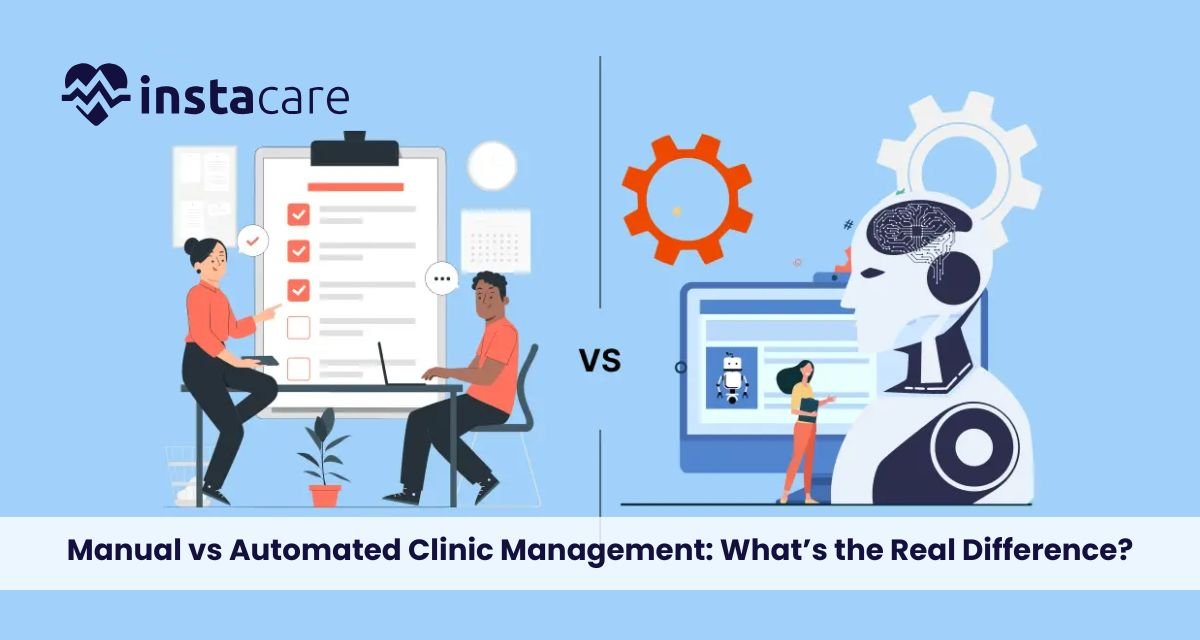
Manual vs Automated Clinic Management: What’s the Real Difference? Much has been written about Manual vs Automated Clinic Management as health facilities seek to optimise administrative costs and improve patients’ welcomes. Most clinics typically rely on manual systems such as paper records and human input for administrative tasks. However, means have developed over the last years with many modern systems that automate processing and provide other benefits that can radically change a clinic’s operations. Thus, healthcare providers must understand the distinction between the two to better manage themselves. The Manual Clinic Management Manual clinic management generally implies practices that have been basic for healthcare administration for many decades. It usually means using paper files, handwritten notes, and manual scheduling systems. These methods might have performed their functions; however, they leave much to be desired in their drawbacks, which can hinder clinic operation efficiency and patient care. Time-Consuming Task Patients’ medical records are stored in physical files manually, making recovery time-consuming and, in most unfortunate cases, the a danger of losing or destroying files. Also, introducing human input into data entry has created a health risk environment that establishes a high disorder or error state in patient information. Such symptoms contribute to a poorer workflow, severely affecting patient satisfaction and the entire clinic’s performance. Administrative Effort They often require a lot of administrative effort, which clinic staff invest almost all their working time into, eventually leading to an inevitable diversion from patient-centred activities. Such experiences are the precursors of burnout among healthcare workers, impacting the quality of patient services. Such gaps in clinic management will become glaringly visible as changes in the healthcare sector continue shaping demand for better alternatives. Understanding Automated Clinic Management On the other hand, automated clinic management software depends largely on different kinds of digital systems to optimise the efficiency and accuracy of various processes in healthcare settings. Electronic health records (EHR), billing systems, and appointment scheduling tools are automated systems designed to facilitate a perfect run of course in the management of a clinic. Professional Patient History With automated systems, professional patient history is stored in digital form; thus, it can be accessed quickly and securely for authentication. It reduces time consumption in carrying out administrative tasks and also reduces human errors related to manual data entry. For example, automatic systems can ensure that patient folders are updated with treatment work readily available to health professionals, enabling them to make immediate decisions. To Increase Efficiency In The Workflow Furthermore, automated systems are often equipped with techniques to increase efficiency in the workflow. For example, reminders can be set up to alert staff concerning upcoming appointments, follow-ups needed, or critical billing deadlines, which helps reduce the chances of missing assignments. Such an organisation cultivates a more cohesive working environment so that healthcare professionals can devote their attention to where it truly matters: patient care. Advantages of Automated Clinic Systems When considering the benefits of automated clinic systems, it is found that these are just some of the solutions through which most manual management problems can be addressed. Such change does bring modernisation to the ruins of a clinic; however, the transition from paper to digital introduces the following significant changes. Improved Efficiency Improved overall efficiency is by far the greatest benefit of automated clinic management. In effect, automating routine stuff streamlines working processes within the clinic and, in this manner, enables clinicians to spend more time talking to their patients instead of doing administrative work. This results in speedier processing of patients and a more organised approach to managing appointments and records. Automated scheduling systems enable patients to make appointments online, relieving the administrative staff from extra burden and reducing scheduling conflicts. This adds convenience to the patient’s experience and helps clinics optimise their schedules to better allocate their resources. Reducing Errors Reducing errors is another important advantage of automated systems. Automatic systems eliminate the possibility of human error at this stage as far as data entry is the outcome being wrong. But above all that, automatic systems always include built-in checks and balances that notify potential errors long before they become an issue. For example, if a health provider tries to enter different information, the computer can output an alert, allowing immediate correction. This level of oversight is immensely valuable for the precision of patient information, as well as ensuring that healthcare providers will have accurate information available for their patients. Enhanced Patient Experience Apart from this, automated clinic management systems also contribute to a much better patient experience. Features such as easy online appointment scheduling and secure portals for patients will increase the flexibility of healthcare activities. These will empower patients since they can now manage more on their own, such as gaining access to their medical records, seeing the outcomes of tests, and communicating directly with their healthcare providers. From A Paper-Based Management System to an Automated Shifting from a paper-based management system to an automated one may be intimidating; however, clinics have succeeded in this transition. A transition becomes successful with careful planning and good execution. These clinics should begin as far away from the final implementation as possible in evaluating existing workflows for situations that most deserve automation. This could include administrative processes, management of patient data, or billing practices. After recognising the areas that require improvement, clinics can then choose suitable software products based on those needs. It becomes important to involve the staff in this phase, as their input may give very relevant context to the selection of systems that will work best. Following this, training the staff on the new technology becomes very important so that everyone feels good and can use the automated tools in their work. Follow system implementation with ongoing support and feedback possibilities to keep improving. As the staff becomes increasingly comfortable with the automated processes, clinics can optimise the potential of their new systems and reap the benefits of enhanced efficiency and fewer errors. Digital Healthcare Management With healthcare constantly evolving, digital healthcare

As the complexity in the healthcare landscape continues to build up, so too does clinic operation efficiency become even more important. Clinics continually focus and work on developing better patient care together with administrative tasks to achieve proper performance. In this direction, many clinic owners begin to look into clinics’ management software-a technology which will deal and better manage a clinic itself. In the current context, this article will describe the cost associated with CMS, profits related to it, and some FAQs that will assist you in taking the final decision to invest in this technology. Clinic Management Software Most of the administrative and clinical work is generally streamlined through an integrated clinic management system taken by clinics or facilities. Most typical services comprise appointment scheduling, registering patients, billing and account receiving, EHRs for storage and reporting, and inventories. It integrates all the processes; thus, it has high efficiency and minimizes many errors. Further, it also offers optimum patients with satisfaction. Cost of the clinic management software The investment in clinic management software has several costs associated with it that can be categorized into three: initial setup costs, operational expenses, and potential hidden costs. 1- Initial Setup Costs Software licensing or subscription fees: The clinics may purchase CMS license directly or can go for a monthly or yearly subscription. It makes a huge difference because the cost varies. Hardware Cost: If a clinic is not equipped with proper hardware, then added costs come in the way of buying computers, servers, and other required equipment. It can be hundreds or thousands of dollars. Implementation and Training: Most of the time, implementing of a new CMS requires professional help increasing the cost. 2- Ongoing Operating Expenses Maintenance Fees: Most CMS providers will charge a yearly maintenance fee that usually ranges from 15-20% of the original software cost. Maintenance fees cover updates, support, and bug fixes. Support Costs: Depending on the level of service desired, technical support may add an additional cost to support at clinics. Most providers have their services tiered from simple phone support to fully on-site. Data Storage and Security: There are also costs clinics incur about data storage solutions, backup systems, and cyber security among other things to keep the sensitive information of the patient safe. 3- Hidden Costs Downtime and Transition Period: The transition into a new CMS may result in temporary downtime or low productivity, and this will result in loss in revenue and possible patient care. Integration with Other Systems: Your clinic might already be using another system other than this one, so integration could cut into your pocketbook. It would especially be true, if it needs to be bespoke. Book Free Demo Advantages of Clinic Management Software CMS can prove pricey. The upside though tends to be bigger than the cost. Some benefits of clinic management software are enumerated below: 1- Productivity CMS automates most routine activities, such as scheduling and billing, thus significantly decreasing administrative burdens. This leads to more time spent on the patient, hence increasing productivity in the clinic. 2- Better Patient Experience The entire affair keeps things simple for the patient: online appointment booking, reminders, and access to health records. Satisfaction such as this can pay positive for better retention and “good” word of mouth an unbeatable ingredient in running a thriving clinic. 3- Precision This is a process error-prone method because data can be wrong to begin with hence causing billing errors, losing the records, and compromising patients’ safety. To curb these risks, CMS automates processes in such a way that ensures patient information is accurate and up to date. 4- Efficient Management of Funds CMS ensures clinics have strong reporting and analytics tools to empower clinics to track their financial performance. This will help clinics track KPIs like revenue cycles and patient volumes to enhance the profitability of decisions. 5- Compliances with Regulations Healthcare laws are constantly changing, and CMS will allow clinics to be in line with the laws, like HIPAA, by having security features and documentation. This may prevent costly fines and legal battles. FAQs 1- What is the time to receive a return on investment (ROI) from clinic management software? The time of which a clinic notices its ROI on CMS is going to be highly dependent upon the size, the complexity of used software, and how much employees can adapt. Ordinarily, the clinics would realize the difference in efficiency and saved cost between six and twelve months after its installation. Some may notice returns as soon as it involves a sharp cut in administrative cost and error. 2- Can clinic management software be customized to my clinic’s specific needs? Yes, many CMS vendors offer options that allow a clinic to personalize the application to its unique workflows and needs. Personalization may include adding unique features or modifying existing ones to accommodate your clinic’s system, which may be different from others. Although personalization may increase your cost initially, it usually repays in efficiency and effectiveness down the line. 3- What to keep in mind when choosing a clinic management software vendor? While choosing a CMS vendor, the following should be considered: Reputation and Reviews: Choosing a provider that has excellent reviews and reputation in the health care sector. Features and Functionality: It should possess all those functionalities that could be useful to clinic including interface with EHR, billing and patient engagement solutions. Customer Support: Evaluation of customer support services with respect to factor such as accessibility, attentiveness and knowledge level. Scalability: Select software that grows with your clinic, capable of expanding to meet future needs without having to overhaul completely. Cost Structure: Understand the pricing model, including initial costs, ongoing fees, and any additional costs for support or upgrades. Conclusion Clinic management software is a huge investment, but the benefits usually outweigh it in terms of efficiency, improved patient satisfaction, and better regulatory compliance. The clinics can make the right decisions that improve their operations, eventually leading to better care for patients, by carefully analyzing
Telemedicine is transforming the Pakistan health care landscape because more people need access to health care. Among its main factors of transformation are data management of patients and coordinating care, which EHR software helps in. However, there are many challenges involved in the implementation of EHR software in Pakistan’s telemedicine sector that may affect its efficiency. Challenges have been developed in this text and deployed for the purpose of deriving an understanding of constraints toward successful EHR integration and its implications for healthcare delivery in Pakistan. 1- Infrastructure Limitations 1.1 Internet Connectivity One of the major obstacles that would be faced in the introduction of EHR software in Pakistan is the lack of reliable internet connectivity especially in rural and remote settings. Most telemedicine operations rely on internet connectivity to function effectively. Where internet infrastructure is weak, health professionals will face difficulties accessing and updating patient records in real-time. Effects Disturbances in Services Poor internet connectivity creates disturbances to telemedicine services, and the care of the patient gets delayed further and affects the overall health outcomes also. Data Management Issues: Inadequate connectivity will not allow uploading, retrieval, and sharing of data with patients, which then creates a complication in further coordination with healthcare providers. 1.2 Inadequate Hardware and Software Resources Installation of EHR software should be accompanied by proper hardware infrastructure, for example, computers, servers, and network equipment. In most health facilities in Pakistan, especially the smaller clinics, this setup has yet to be implemented. Consequences Cost Barriers: The cost that is incurred in achieving and maintaining hardware as well as software makes it out of reach for many care providers, especially those not so well-funded facilities. Misapplication: Due to inappropriate tools, more providers will not embrace using EHRs while patient data use will continue being fragmented and inconsistent. 2- Training and Skill Issues 2.1 Technological Skills The training of healthcare workers is one of the significant issues other than applying the EHR software. Therefore, several providers will know nothing about the EHR systems as well as their use. Telemedicine will be disintegrated if the providers are not provided with adequate education regarding how to effectively use the EHR systems. More Errors: The misuse of the EHR software can introduce errors in the entry of data, and it can jeopardize the safety of the patients and the quality care. 2.2 Fear of Change Healthcare practitioners who are used to the old ways of maintaining records will find it difficult to embrace new systems. This may be fear of technology, job loss, or a general misunderstanding of what EHRs will do for them. Consequences Cultural Barriers: The unwillingness to embrace new technologies creates a culture barrier in health organizations that hinders their efforts at modernizing. Inefficient Processes: The use of paper records leads to inefficiency, and information about a patient is difficult to access. Telemedicine eliminates this. 3- Regulatory and Legal Obstacles 3.1 Lack of Standardization Telemedicine is in its infancy in Pakistan. There is no standard rule set for the implementation of EHRs. A lack of guidelines brings confusion on the aspects of compliance and best practices among healthcare providers. There is a risk of violating the privacy laws, or not being able to provide adequate data security, considering there is no standardized set of rules followed up till now by health care services. Disintegrated Systems: A lack of standard would even mean disintegrated, isolated EHR systems incapable of communicating among themselves as is with the complication in managing the care and sharing information. 3.2 Privacy and Security Concerns EHR software is always known to raise serious issues of privacy and security concerns particularly when it deals with patients’ data. In Pakistan where cyber threats are rampant, patient data would be the first consideration for safeguards. Implications Trust Issues: Patients will not disclose sensitive health information unless they feel that their data would not be at risk or not secure in the opinion of a concerned patient that may just negate the entire purpose of telemedicine. Potential Data Breaches: Lack of security measures can lead to data breaches, which can compromise patient confidentiality and cause severe reputational damage to healthcare organizations. 4- Financial Constraints 4.1 High Implementation Costs EHR software requires substantial front-loaded investments in terms of purchasing software licenses, hardware, and training. Many health care providers in Pakistan, especially in the public sector, have limited budgets and are unlikely to afford investments of this magnitude. Implications Delayed Adoption: Financial constraints may delay the adoption of EHR systems, meaning that health care providers will miss out on the benefits of telemedicine. Resource Allocation: The tight budgetary constraint may encourage an organization to prioritize their current needs and allocate as much as possible on short-term technological investment rather than long-term, that may limit their EHR implementation. 4.2 No Financial Incentives Most of the regions do not have enough financial incentives that would encourage healthcare providers to adopt EHR systems. Compared to other countries, in which the government offers subsidies or supports on digital health initiatives, such schemes are not found in Pakistan, hence less attractive to providers for investment in EHR technology. Implications Limited Growth: Lacking good financial incentives, telemedicine services are likely to grow limitedly and thus limit access to the care of the underserved. Access Difficulties: A lack of support makes smaller healthcare providers inadequate in competing with larger facilities that can fund investable technology. Book Free Demo 5- Integration Challenges 5.1 Interoperability Challenges Seamless communication with other technologies used in healthcare should be accomplished by EHR systems while achieving data exchange. Most the prevalent systems in Pakistan are developed keeping in mind non-interoperability with others, creating interoperability issues. Interoperability Consequences Solitary Care: EHR systems that do not exchange data create silos affecting coordinated patient care and thus making treatment decisions more troublesome. Redundant Testing: Data sharing is not done, hence redundant testing and procedures. The healthcare costs increase and the delay in care is enhanced. 5.2 Interoperability with other Systems The healthcare systems consist of several packages
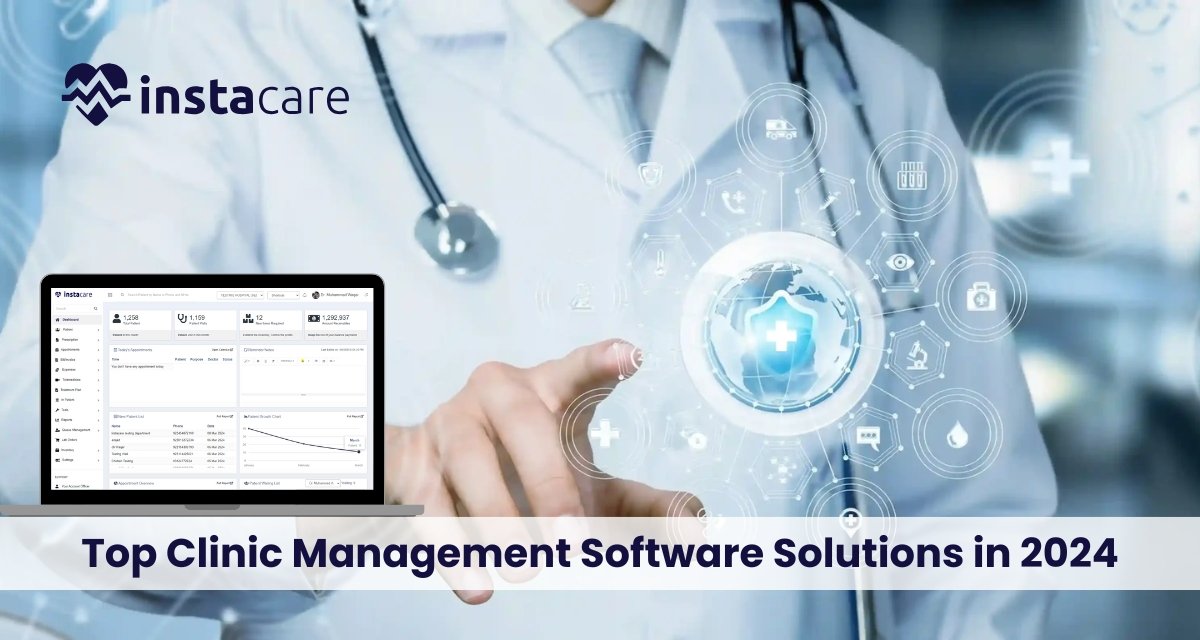
In this healthcare landscape, clinic management software helps in optimizing operations, enhancing the quality of care provided to patients, and simplifying administrative tasks. As the year progresses into 2024, different clinic management software solutions meet the distinct needs of clinics – from very small practices to large healthcare centers. The following guide discusses the top clinic management software available this year and their respective features, benefits, and what puts them at the forefront of the competitive market. 1- InstaCare InstaCare offers a cutting-edge solution for the management of healthcare operations in clinics of all sizes. InstaCare is a user-friendly clinic management platform that bundles rich functionalities for streamlining clinical and admin workflows. The software will fit practices looking forward to enhancing operational efficiency and patient engagement. Key Features Patient Management: All tools managing patient records, medical history, and treatment plans. Appointment Scheduling: Convenience features of appointments that means the choice of appointments that can be achieved online including appointments booking, changing or cancellation without any difficulties. Besides, it has default alerts to help reduce no-show instances in appointments. Billing and Financial Management: It has an integrated billing solution, making invoicing easier and streamlining the processes of payment and insurance claims management. Telehealth: Secure telehealth functionality includes video visits, so a patient’s care isn’t interrupted. Reporting and Analytics: Extremely feature-rich for tracking performance metrics and reporting on patient outcomes to guide decision-making. Pros Provides with additional free time for human management, because it reduces the administrative work It is convenient to get information in health and telehealth-related things. It provides with the cost-effective solution; price structure transparent and clear Clinics are scalable to grow. 24/7 customer service to help deal with any issues. Cons Smaller systems might miss some advanced features. In comparison to “all-inclusive” and comprehensive packages, customizations may be fewer. 2- Kareo Kareo is considered as one of the best practices management tools for practices of small to the mid-size medical concern. It has incorporated a generous amount of different functions, all of which seem to essentially minimize tasks relating to clinical and administrative procedures; thus it is ideal for use in a practice that aims to maximize on productivity. Key Features Patient Management: streamlined scheduling, reminders, electronic health records (EHR). Billing and Revenue Cycle Management: Billing tools are very well-integrated in order to reduce claims denials and increase revenue. Telehealth Capabilities: HIPAA-compliant video consulting. Pros User-friendly interface. Good customer support. Extensive training. Cons Limited flexibility. Potentially pricey for added functionality. 3- Athena health Athena health is a cloud-based service vendor that streamlines the management of clinical, administrative, and financial workloads. This solution is very suitable for larger practices and hospitals. Key Features EHR and Practice Management: Fully integrated EHR solutions to improve clinical workflow functionalities. Patient Engagement: Online appointment scheduling, reminders, and portals. Analytics and Reporting: Analytics are quite advanced to track practice performance and patient outcomes. Benefits A deep emphasis on interoperability. Flexible pricing plans Profound regulation compliance support. Cons Steep learning curve for new users May need additional training for more complex features 4- Cerner Cerner has been one of the forerunners in health information technology offering solutions mainly to large healthcare organizations. Their rich ecosystem is capable of carrying out a broad range of functionality, hence ideal for a highly complex environment. Key Features Population Health Management: Tools to manage and improve community health outcomes. Interoperability: Seamless data sharing with other healthcare systems. Data Analytics: Ability to harness advanced analytics to inform an appropriate decision Strengths Highly customizable to meet specific needs of any organization Extensive reporting capability Strong support for large-scale implementations. Cons More expensive than other smaller solutions. Implementation may be very time-consuming. Book Free Demo 5- NextGen Healthcare Meant for ambulatory care settings, NextGen Healthcare provides an array of functionalities to enhance both clinical and administrative work flows. Key Features Fully Integrated EHR and Practice Management: All-encompassing tools for managing patients and creating clinical documentation. Patient Portal: Interactive interface of the patient to access their medical information. Telehealth Services: Secure telemedicine services that allow for remote consultations. Pros For specialty practices with special needs. Support for robust customization options. Built-in billing and reporting features. Cons Not that easy to grasp and navigate for first-time users. The customer support strictly depends upon the tier of service. 6- Practice Fusion Practice Fusion is one of the cloud-based EHRs, designed specifically for medium-size and small practices. The system is relatively easy to use and is priced affordably. Key Features EHR and Patient Scheduling: User-friendly interface for maintaining patient information and scheduling. Billing and Insurance Verification: Appliances for making billing and insurance verification smoother. Health Information Exchange: You can exchange information with other providers. Pros Core EHR product free for eligible practices. The interface is very easy to use. Effective patient engagement tools. Cons Has fewer advanced modules than large systems. Customer service varies. 7- Meditech Meditech is one of the most recognized healthcare IT companies. It supports hospitals and health systems and aims at improving care for patients and operational efficiency. Key Features EHR: This software has a fully functional module for electronic health record support and clinical documentation. Patient Engagement Tools: Practice that enables appropriate communication among patients and, therefore, treatment. Mobile Access: Healthcare provider applications that allow a glance at patient data from mobile. Benefits Renowned brand and reliability factor Huge library of training Patient-centered care Cons Too costly for small clinics Rather old-fashioned user interface when compared with contemporary peers 8- eClinicalWorks eClinicalWorks is a well-established brand in the healthcare software market which offers a single tool that can be used by clinics of any sizes Key Features EHR and PM Solutions: An integrated system for handling patient records and practice management. Telehealth Services: Secure and user-friendly telemedicine capabilities. Patient Portal: Engaging patient communication and access to health records. Strengths Has several functionalities. High interoperability emphasis. Good customer service and training. Cons Initial setup is complicated. Users have complained of a few bugs in the system. 9- Simple Practice Simple Practice
How InstaCare Improved Efficiency with Clinic Management Software In Pakistan? In this health industry, efficiency is something that becomes an imperative to ensure quality care to the patients. With InstaCare operating at several clinics, huge difficulties were being faced in managing appointments, recording, and setting up communication with the patients. Feeling these problems and wanting to streamline operational efficiency, InstaCare opted for a full-fledged software solution to manage its clinics. Here is the case study on InstaCare’s journey: the challenges it faced, the solutions it implemented, and the significant improvements it saw. The patient population was enormous, and patient populations were diverse. As the patients increased, the manual systems in place could no longer be continued. The extent of administrative work burdened staff members, increasing the waiting time at clinics and decreasing the level of patient satisfaction. A change was in order and InstaCare needed an intervention that streamlined operations and enhanced care. Challenges Faced 1-Inefficient Appointment Scheduling Creating appointment schedules was the most time-consuming process that InstaCare had to undertake. The patients seldom created sufficient time to visit, filling up the calendar, hence many opportunities for care were missed. The long waiting times and the inability to make easy reservations of appointments frustrated both the patient and the workers. 2-Manual Record Keeping The patient records were kept manually, and this resulted in a greater likelihood of errors, as well as slowness in accessing needed information. In a busy clinic setting, there is a need for quick retrieval of patient information to ensure proper diagnosis and treatment. This was one of the major drawbacks of the traditional system- besides slowing down activities, it also watered down the quality of care. 3-Communication Effective communication is the key in health settings. In this respect, InstaCare was characterized by erratic staff and patient communication. This caused miscommunication, non-attendance, and dissatisfaction among patients. There was no directed reporting system to ensure that the care coordination among the staff was effective. 4-Unorganized Reporting InstaCare lacked reporting capabilities. Lacking real-time data, the clinic had no way of understanding performance. There could be no ways of monitoring patient outcomes or financial health. They cannot therefore understand where they can improve or what decisions in resource use require adjustments. Book Free Demo The Solution: Clinic Management Software InstaCare countered the above challenges by rolling out a strong software solution of clinic management. These consisted of a few key functionalities the aim of which was meant to simplify activities and possibly enhance better patient care: Online Appointment Booking The new system enables a patient to easily make appointments through an online portal, which is user-friendly. This has made it easier for patients and relieved the task of administration from the staff. Electronic Health Records (EHR) All the information of patients was digitized in adopting EHRs. Health care providers accessed patient records in real-time, hence increasing the speed and quality of care produced for the patients. Coordination among staff members also improved with access to EHRs. Automatic Reminders The software automatically reminded patients of the date of their appointments through SMS or email. This feature greatly reduces lost appointments since patients are alerted about the dates of their appointments. Reporting Tools The software provided thorough reporting capabilities with patient demographics, appointment trends, and financial performance. These helped in making data-driven, informed decisions while acting to streamline the operations of the clinic. Implementation Process of Clinic Management Software The implementation of clinic management software is a significant process that takes effort, proper planning, and strategic execution. InstaCare implemented it in a structured manner so that the transition was unnoticed: 1-Needs Assessment InstaCare began with an assessment of its current operations. In the process, it established specific needs and requirements by garnering input from the staff, clinicians, and patients. This would ensure that the software adopted solved real problems the clinic would have to face. 2-Software Selection After weighing all the options, InstaCare settled on a software solution that most closely resembled their needs. Some of the key factors InstaCare considered included user-friendliness, scalability, and the level of customer support provided by the software vendor. 3-Training and Onboarding Staff training was part of the implementation process. InstaCare conducted detailed training for all employees to make it easy for them to use the new system. The training packages included workshop hands-on and online guides to enable staff members learn through self-learning at their own convenience. 4-Data Migration The available patient records had to be migrated. This was done in a careful manner to avoid loss of data. Checking information was enough time taken by the clinic to check their details for accurate transfer to the new platform. 5-Go-Live and Support The software was implemented after a successful pilot phase. InstaCare remained constantly visible at each point where any queries or doubts might be there in the minds of the people while shifting to the new process. This ensured the participation of the staff in this movement, and accordingly, everything was executed well. Results and Gains with Clinic Management Software The clinic management software implementation greatly changed the operations of InstaCare. Some of the notable benefits included; 1-Enhanced Experience of Patients Online bookings and auto alerts made it easier for the patients to book an appointment. It improved the chances of patients attending scheduled appointments since it reduced missed appointments by 30%. The general ratings of patient satisfaction later improved due to appreciation of the system for being faster as well as convenient for the patients. 2-Efficiencies The amount of administrative time the staff at InstaCare used to waste was greatly reduced, and they were able to take care of more patients. The drastic time taken by management of appointments and records highly improved the workflow of the clinic. This change did not only boost staff morale but also raised the standard of communication with the patients. 3-Improved Communication The new software helped in improved staff communication. The clinicians could access any patient’s documents, notes, and their treatment plans, thus ensuring coordinated care.
How to Streamline Your Practice with Smart Clinic Management Software? Keeping a healthcare practice running smoothly is no easy task. It takes careful planning, organized systems and reliable software to ensure patient care comes first. Smart clinic management software can be the solution you’re looking for to help streamline your operations from appointment scheduling, billing and documentation to analytics and reporting – helping you maximize efficiency while delivering the best quality of care to patients. Learn how this innovative technology can have an impact on day-to-day operations in men’s health, women’s clinics or any medical office setting. Identify the biggest challenges in managing a clinic Clinic management is marred by various challenges that require attention to enhance the quality of care. The biggest challenges are the effective organization of patient data, patient scheduling, and managing financial transactions. These are some of the obstacles that tend to bog down clinic operations. While traditional paper-based systems may have worked in the past, the digital era has seen an introduction of smart clinic software solutions, and it now more than ever, healthcare professionals need to leverage technology. Clinic management software offers a comprehensive solution that simplifies complex healthcare workflows, minimizes human error, and therefore saves healthcare professionals more time to focus on patient care. Additionally, smart clinic software benefits include tools to gather data and compile reports that help improve overall practice management. Understand the benefits of using automated clinic management software In today’s fast-paced world, clinics need to streamline their processes to ensure they provide the best possible care to their patients. The use of clinic management software delivers a cost-effective solution that streamlines administrative tasks, such as patient scheduling, billing, and record-keeping. Using smart clinic software offers many benefits, such as increased efficiency, reduced paperwork, and greater accuracy when managing patient data. Automated clinic management software can also help manage workflows effectively, allowing healthcare professionals more time to focus on their core responsibilities. The benefits of using such software ultimately translate into optimal patient care and satisfaction while safeguarding the medical facility’s administration. Explore features like appointment scheduling and patient records storage Introducing Smart Clinic Software, the innovative tool that revolutionizes the way healthcare services are provided. With advanced features like appointment scheduling, patient records storage, and clinic management, Smart Clinic Software takes the hassle out of managing a clinic. This state-of-the-art technology provides healthcare professionals with the opportunity to deliver exceptional patient care while improving efficiency and productivity. From automating administrative tasks to providing seamless patient care, the benefits of Smart Clinic Software are undeniable. With a streamlined approach to clinic management, healthcare professionals can focus on what matters most – their patients. So, if you’re looking for a competitive edge in the healthcare industry, look no further than Smart Clinic Software. View More: Streamline Your Medical Billing with Medical Billing Software Analyze how to engage staff more effectively with improved communication tools Effective communication is crucial in engaging staff and improving overall productivity. With the utilization of advanced communication tools like Smart Clinic Software and Clinic Management Software, healthcare facilities can enhance operational efficiency, reduce errors and increase collaboration among team members. These tools streamline the flow of information, making it easier for staff to access essential data and communicate effectively in real-time. With benefits such as automated appointment scheduling, patient tracking, and electronic medical records, these software solutions create a more organized and efficient workplace environment, ultimately leading to increased job satisfaction and retention rates. By utilizing these communication tools, healthcare providers can better engage their staff and ultimately provide better patient care. Examine ways to reduce paperwork and increase efficiency with clinical data tracking As the healthcare industry continues to evolve, so do the demands for efficient clinical data tracking. The traditional approach of handling vast amounts of paperwork is cumbersome and time-consuming. Fortunately, with the advent of Smart Clinic Software and Clinic Management Software, healthcare providers can streamline their operations, reduce paperwork, and increase efficiency. These innovative tools offer numerous benefits, such as seamless patient information management, real-time data tracking, appointment scheduling, and billing automation, just to mention a few. Smart Clinic Software and Clinic Management Software are user-friendly, adaptable, and scalable, and with a secure, centralized database that ensures all information is accessible anytime, anywhere. These software solutions are indeed a game-changer for healthcare providers on the quest to improve clinical data tracking, reduce errors, and enhance patient outcomes. Discover how analytics help you better monitor and analyze patient care progress In today’s world, where healthcare has become more complex than ever, clinics need something more than manual data analysis. This is where Smart Clinic Software comes into play. With its advanced analytics capabilities, it helps users better monitor and analyze patient care progress. Clinic Management Software offers numerous benefits, including detailed patient history, efficient patient flow management, physician management, and much more. From appointment scheduling to medication management, analytics have become an essential component of healthcare that benefits both clinics and patients alike. By embracing Smart Clinic Software, clinics can lead the way in providing better care to their patients and setting new standards of excellence. Conclusion With the right clinic management software working on your side, you can have confidence that your practice or clinic is operating at its best. By streamlining operations and automating mundane tasks like scheduling and billing, you can focus more of your time and attention on what really matters – providing the best care for your patients. Smart clinic management software makes it easier to manage daily operations without taking up too much of consistent staff time. By investing in user-friendly technology you are showing that you are serious about improving patient experience and providing quality care. With comprehensive solutions dedicated to supporting small or large healthcare organizations, now is the time to give your practice the leg-up it needs to stay competitive in an ever-changing healthcare market.

10 Reasons Why Clinic Management Software Is Must For Clinics The era of clinics and hospitals was keeping track of patients’ information, and scheduling appointments required a herculean effort and involved several administrative, and functional inefficiencies are over. The health sector now operates also very differently from how it did in the past because of new software technology. With its unique and comprehensive features, Clinic Management Software provides many services. The capable program can maintain all patient data, including address, gender, age, drug sensitivity, and numerous other records, including charts for the heart, lungs, weight, and height. Prescriptions, patient data, invoices, diagnostic results, and other certificates are printed. It keeps track of the accounting system, appointment calendars, and drug inventory. Reasons Why Clinic Management Software Is Must For Clinics Paperless Record System Utilizing a Clinic management system allows you to do away with all of the manual paperwork. They are challenging to maintain and store and prone to damage. The program has a module called “electronic health records” that keeps all the required records and data in its database. Efficient Electronic Health Record System Among the characteristics of an efficient electronic health record system are the following: Creates efficient clinical processes Eliminates the need for significant paper records to be stored, managed, and retrieved. It makes it simpler for you to access clinical data Possesses the capacity to collect and analyze patient data to enable outreach to a specific demographic Access To Patient Records And Other Data Is Made Simpler And Faster Any healthcare professional must be able to track, store, and access patient medical records efficiently. Clinic management system administration makes it simple to enter, modify, and store essential patient data in the database for access during subsequent visits. Coordination Among Several Departments Clinic Management Software enables doctors from various departments to collaborate thanks to an integrated system of storing records, improving the ability to assess a patient’s condition. Furthermore, cloud-based platforms like Practo and doc-engage make interacting simpler than ever. Greater Efficiency The clinic management system increases the organization’s overall effectiveness by fully automating the system. The program aids in streamlining every aspect of a medical facility. Record-keeping, prescription printing, charting, setting up patient visits, and billing duties. Inventory and accounting are also maintained by it. Patient Contentment Scheduling is one of the most valuable functions of Clinic Management Software. It indicates that patients are freed from the necessity of making telephone appointments. Any time of the day, they can schedule their work online. Their portal is accessible around-the-clock. In reality, they have the option to change or cancel scheduled appointments. Increases Accuracy To ensure patients remember their appointments, the scheduling module automatically calls, texts, and emails them reminders. Accuracy Error-free electronic health records are available. It does away with the possibility of human error because all tasks are automated. Quicker Service The clinic management system reduces the time needed for billing and calculation, filing and searching for patient records, and appointment scheduling. As a result, doctors can better attend to their patient’s needs and provide prompt, effective care. Patient Records And Other Data Can Be Accessed More Easily And Quickly. Any human service provider must be able to track, preserve easily, and access patient treatment records. The software can help you quickly record, update, and keep track of critical patient information inside the system for access during subsequent encounters. Enhanced Delivery Time The software system delivers every patient’s record as a stream sheet. On it, you will find details such as historical findings, medical procedures, ongoing problems, test results, vaccines, and more. Finally! In conclusion, a Clinic management system is essential today. InstaCare, with the clinic management system combined, will produce beneficial outcomes for you. With the help of this solution, many developed nations have automated their medical sectors. Clinics and hospitals in Pakistan are quickly catching up and implementing clinic management software for increased productivity and better services with the help of instacare.com.pk.

5 Reasons Why Your Paper Based System is Slowing Your Practice Down | Clinic Management Software Positive patient outcomes are made possible by reducing duplicate chores, patient and medical team miscommunication issues, and errors and omissions in patient files. Medical records on paper can cause your clinic to lag. You should use Clinic Management Software. To increase productivity and improve patient experiences, medical organizations face these five hurdles while using handwritten records. These five issues are discussed below. Paper-Based Documents Don’t Follow the Patient Although many doctors still feel at ease using paper-based health data, portability is a severe issue. Patients with chronic diseases, transient patients, and those with complex medical problems may have a lot of records. It is difficult to share information between experts, supplementary service providers, and the patient with paper records. Clinics or hospitals should have clinic management software or cloud-based HER systems. Printing and mailing records or sending histories and test results via fax or messenger can be expensive and time-consuming, which can delay treatment and make it more challenging to make an accurate diagnosis quickly. Nowadays, most insurance companies require primary care supervision to access specialists. View More: How Can Electronic Prescribing Software Improve Your Practice In 2022? Clarity and Precision Are Lacking in Traditional Files Medical teams can build accurate, complete patient files thanks to voice-to-text tools in web-based EHRs and clinic management software. Clarifying unclear chart notes takes up time that may be used for more crucial organizational duties. Less labor is needed to help clinicians and patients understand obscure record details. Faster test ordering and result reception are made possible by interfaces with labs and testing facilities. This means that compared to paper-based care delivery methods, clinic management software may quickly make more informed decisions about prescribing and treatment regimens. Integrated systems enable data sharing without geographical boundaries or time restrictions imposed by office hours and personnel availability across the entire enterprise, external healthcare providers, and network-connected teams. It Depends On One Person Too Much Almost every OR stakeholder relies solely on the scheduler to inform them of upcoming events and who needs to be there. Imagine providing clarity to physicians and nurses who urgently require answers while handling physician demands for OR time, last-minute cancellations, physician preferences, equipment order confirmations, and patient education. Due to the overwhelming expectations, there may be mistakes and inherent inefficiencies, such as the custom of routinely padding blocks to avoid overtime. The top schedulers can accomplish much more with computerized forms in clinic management software and communication procedures. Book Free Demo Patients Might Be Erratic and Challenging to Reach Patients are occasionally considered to the unpredictability of the surgical scheduling process. However, there is proof that no-shows and delays can be significantly reduced with more structured communication. Processes that rely on paper or email are prone to error or confusion. According to the author, the most frequent reasons for patient no-shows in various healthcare settings include forgetting about the appointment, scheduling conflicts involving patients, and misunderstandings. Depending on the patient’s wishes, automated surgery scheduling software of clinic management software will communicate with the patient by email, text, or phone. Staff will get a sense of how engaged a patient is by receiving read receipts. Surgery scheduling software of clinic management software can use artificial intelligence to recognize patients who are very likely to disobey instructions or show up for their appointments, alerting staff so they can step in and possibly address pressing issues. Information in Paper-Based Files Is Inefficiently Retrievable The storage of electronic records is secure, portable, and searchable. Digital pages, unlike paper records, cannot be tampered with while being viewed. No description has ever been damaged by earmarks, liquid spills, tears, or smudges. Recovery happens very instantly. Sort queries are more effective with electronic records than sorting through a substantial patient file because they offer a wide range of search parameters and customizable structures. Conclusion The flow of patients is slowed considerably by paper records. Your business will save money and enhance revenue management by converting your practice to an electronic record-based care delivery model, which boosts productivity and simplifies patient flow. For more information, you can contact Instacare.
What Is The Best Practice Management Software In Pakistan? Practice Management Software in Pakistan is getting popular among the healthcare community such as doctors, clinics, and hospitals. Such software is helping medical businesses in providing better healthcare experiences to the patients. These days many companies are claiming to offer patient and practice management software in Pakistan but the most important consideration is the credibility of the companies. Buying software from any freelancing or unlicensed company can put you in trouble. InstaCare Is The Most Reliable Practice Management Software in Pakistan InstaCare was declared as the most reliable EMR / EHR and Practice Management Software By the University of Health Sciences and issue a formal certificate authorized by Prof. Dr. Javaid Akram, Vice-Chancellor of UHS in 2021. The recognition was issued after proper testing and implementation of the software in multiple locations and successful trials of over 3 months. Why InstaCare Is The Best Practice Management Software in Pakistan It is not only that InstaCare was recognized as the best Clinic Management Software by UHS and many other international and national organizations but also because of the vast range of features according to the Pakistani Healthcare Market’s need that makes it the best practice management software in Pakistan. What Are The Features Of Any Practice Management Software Practice Management Softwares are equipped with dozens of useful features but the following is the list of features that are available for you in InstaCare practice management software: Electronic Medical Records (EMR) EMR/EHR software for clinics helps doctors in digital patient record keeping. It is very helpful when you need to keep a track of all your patients, their medical histories, and disease-related information. Electronic Prescriptions ePrescribing is another great feature of practice management software that allows doctors to increase the accuracy of their diagnosis. The key benefit of using ePrescibing software in Pakistan is that it will increase patient safety and help clinics and doctors to offer a safe and secure healthcare experience. Almost every practice management software in Pakistan is equipped with this feature. Medical Billing Medical billing software in Pakistan is being widely used by clinics, doctors, and hospitals. It is also a key feature of any good practice management software because it helps you in maintaining the record of your financial activities. This feature has saved a lot of doctors from any theft and fast reconciliation of shares and daily financial activities. These were some key features of any good practice management software however InstaCare Practice Management Software offers many more features including digital payments, queue management, inventory management, medical reporting, and many, many more. How To Get Online Practice Management Software in Pakistan InstaCare offers some very cost-effective plans for clinics and doctors who are willing to get practice management software. You just need to fill the demo request here or contact us through chat or helpline. InstaCare offers exclusive discounts and services to its online customers. Book Free Demo Why InstaCare Stands Among Top Digital Health Company In Pakistan InstaCare has years of experience in developing digital health solutions in Pakistan and has thousands of satisfied customers. The company has always focused on innovation and relationships. That’s why the software solutions provided by InstaCare are the most advanced in the industry and available at very affordable prices. The company focuses more on building relationships rather than customers hence it has always strived to meet the industrial needs of the healthcare market. InstaCare has won tremendous achievements and awards for digitizing Pakistan’s Healthcare industry. Dr. Arif Alvi, The President of Pakistan also acknowledges the efforts and great work while having one-on-one meetings with the team of InstaCare at President House. You can learn more about InstaCare in the about us section and you can also get connected with the leadership via LinkedIn. Frequently Asked Questions: [sc_fs_multi_faq headline-0=”h3″ question-0=”What Is The Best Practice Management Software ?” answer-0=”Practice Management Software in Pakistan is getting popular among the healthcare community such as doctors, clinics, and hospitals. Such software is helping medical businesses in providing better healthcare experiences to the patients.” image-0=”” headline-1=”h3″ question-1=”What Are The Features Of Any Practice Management Software?” answer-1=”These were some key features of any good practice management software are: Electronic Medical Records (EMR), Electronic Prescriptions, Medical Billing” image-1=”” count=”2″ html=”true” css_class=””]

5 Amazing Benefits Of Clinic Management Software In Pakistan Doctors are often confused about choosing the best clinic management software in Pakistan. This is because of the wide variety of unreliable and less featured products available in the market. Today, in this article we will explain to you the benefits of using software for clinics along with sharing some Top EMR companies in Pakistan. What Is A Clinic Management Software Before we dig into other details, it is important to learn why top doctors use software for clinics. A Clinic management system is a set of software components that helps medical professionals with digital prescriptions, patient management, maintaining electronic health records, appointment scheduling, medical billing, and inventory management. It also helps doctors to completely automate the workflows in order to increase their efficiency and productivity. How Many Doctors Use Clinic Management Software According to research, less than 10,000 doctors use the software in Pakistan. These professionals use this software majorly for digital prescriptions, EMR/EHR management, billing, and, telemedicine appointment management. It is important to understand that digital health in Pakistan is a comparatively new market than any other. Till Year 2015, the adoption of medical software was very less due to the lack of trust in the technology. After 2016, Pakistan worked really hard to improve the access to the internet and mobile applications that helped in promoting the digital transformation in the healthcare industry as well. As of 2022, over 17% population use the internet in Pakistan. The growth of internet users has also helped in enabling digital health and we have seen a significant increase in the use of clinic and patient management software. What Are The Benefits Of Using Clinic Management System Paperless Information Management Best clinic management software will fulfill all the basic needs of your medical office. Good software comes with all the necessary options to help you get rid of papers. Such options may include digital patient record keeping, automatic appointment management, electronic digital prescriptions, digital billing for clinics, treatment planning, inventory management, and now with telehealth and video consultation features as well. Fast Access to Patient Medical Records There is no doubt that patient management software is much faster, accurate, and reliable than human beings. Within just a few seconds you can fetch the information of a patient out of thousands of records. Moreover, good software will provide you the facility of maintaining unlimited records. You can take backups of your information anytime and it is much more secure than papers in your clinics. Automatic Appointment Scheduling The biggest advantage of using clinic management software is its comprehensive appointment scheduling. With a proper alert system, appointment management software will increase the number of show-ups and patient inflow inside your clinic. Appointment Management Software also allows you to manage your daily, weekly, and monthly agendas in a much convenient way. While you can schedule an unlimited number of appointments with just a single clinic, you can also get some advanced features like SMS and email alerts to notify about their appointments and change in any appointment schedule. Electronic Prescriptions Creating, modifying, and finding an electronic digital prescription is much faster and easier than a handwritten prescription. one of the key benefits of electronic prescription is an increase in accuracy and fewer chances of medication errors. Some other benefits include immediate notification of allergies, drug interactions, and duplications. It also helps in reconciling of medical history quickly while prescribing medicines. It also reduces the chances of prescription loss. It also increases patient safety by a reduction in medical errors. Patient Satisfaction Do you know that patients are more satisfied and happy from the doctors and clinics who are enabled with digital health? It is because of the great patient satisfaction that clinics that are using patient management software are getting more patients. A good clinic management software will not only helps doctors to make their practices efficient and more productive but also makes patients more satisfied as they will be able to provide digital feedbacks, digital medical history, appointment notifications, and online appointment booking. The list of advantages and reasons why clinic management software should be used is countless and we will write more articles covering the benefits and advantages of implementing software for medical offices. In Pakistan, we see dental clinic management systems are most widely used because it helps dentists with digital treatment planning and appointment scheduling. However, now we have seen a significant increase in the number of specialists who are using specialty-based EMR systems for Clinics. Now let us help you identify the best software for clinics. What are the Best Clinic Management Softwares in Pakistan? There are not many specialized companies that are providing EMR/EHR Patient and Clinic management systems in Pakistan but there are some who are really doing very well in the industry. Currently, the following companies are providing software for doctors: InstaCare – Award Winning Clinic Management System InstaCare is the best-known digital health company in Pakistan that has already transformed over 3,000 clinics in Pakistan. The key features of InstaCare Clinic Automation Software include patient management, electronic prescription, medical billing, appointment scheduling, queue and token management system for clinics, inventory management system for clinics, accounts software for clinics, and telemedicine for doctors, clinics, and hospitals. The company is lead by Commonwealth Award Holder, Mr. Bilal Amjad under whose leadership, InstaCare has won tremendous awards including the International TakeOff Istanbul Top Foreign companies in digital health and the national P@SHA ICT Award in the health and well-being category. Other awards also include the APAC Insider award for best digital health startup in Pakistan. BOOK FREE DEMO OF INSTACARE CLINIC MANAGEMENT SOFTWARE CureMD CureMD is also a popular EMR Company in Pakistan with a wide variety of EMR Softwares.CureMD is a leading provider of innovative health information systems and services that transform the administrative and clinical operations of healthcare organizations of all sizes. Majorly CureMD operates in the American market however it has its offices established in