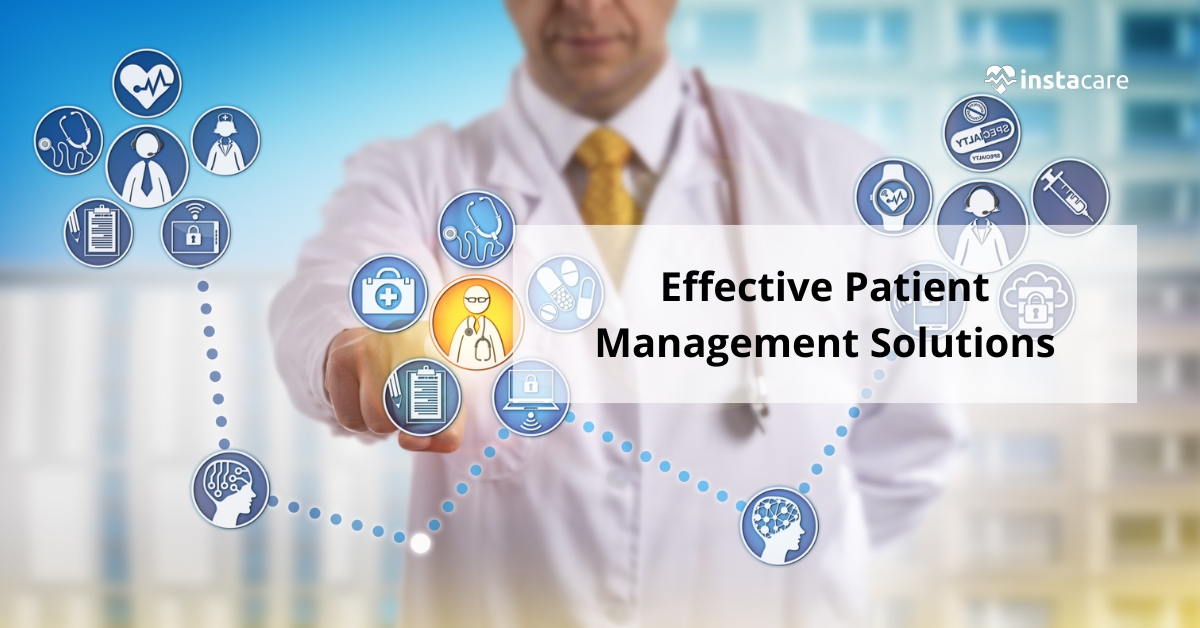
Effective Patient Management Solutions Are you a healthcare professional looking for ways to improve your patient management? Are you striving to provide better care and treatment to those in your care, but feel overwhelmed at the task ahead? Patient management can be a daunting task – yet with the right solutions, it doesn’t need to be. At our organization, we specialize in helping medical professionals streamline their patient management process so they can focus on providing quality care that helps enhance outcomes. In this blog post, we’ll share effective strategies and real-world examples that demonstrate how patient management capabilities are essential for success in today’s fast paced health industry. Keep reading to learn more about how patient management technology is changing the face of healthcare! Introducing an Electronic Health Record System (EHR) to keep patient records organized and up-to-date With the advancement of technology, the introduction of Electronic Health Record (EHR) systems have become a game-changer in the field of patient management. Keeping track of patient records and providing them with appropriate care has never been easier. An EHR system helps healthcare providers to access a patient’s medical history, past treatments, and prescriptions at the click of a button. This not only saves time but also improves the quality of care provided to patients. With the ability to maintain organized and up-to-date patient records, healthcare providers can make informed decisions about their patient’s health and provide better treatment options. Embracing an EHR system is the need of the hour, as it facilitates seamless patient management. Book Free Demo Utilizing a Patient Portal to allow secure access to Patient Management and medical services As the healthcare system becomes more complex, patients and their caregivers need to have a way to manage their medical information and better coordinate care. This is why utilizing a patient portal can be a powerful tool. A patient portal allows individuals to access their medical records, schedule appointments, and even communicate with their healthcare team – all from the convenience of their own device. It’s designed to provide a user-friendly interface that enables patients to take charge of their care and get organized. In addition, a patient portal can improve treatment coordination by allowing physicians and other healthcare providers to easily access and share important information about a patient’s health history, medications, and treatments. By providing secure access to health information and medical services, patient portals can greatly enhance the quality and effectiveness of patient care. Implementing a Healthcare Collaboration Platform for communication between healthcare providers In today’s healthcare landscape, effective communication between providers is essential for the delivery of quality patient care. However, traditional forms of communication, such as fax machines, phone calls, and even paper-based records, are rapidly becoming antiquated. To address this issue, healthcare administration is increasingly turning to collaboration platforms to streamline communication and collaboration among healthcare providers. By implementing a healthcare collaboration platform, providers can share patient information, consult with experts, and collaborate on treatment plans in real-time, leading to improved care coordination and better patient outcomes. With the right platform in place, we can transform healthcare communication to meet the needs of a rapidly evolving industry. View More: Maximizing Efficiency with Smart Clinic Software Designing a Health Information Exchange platform for securely sharing patient information across organizations The evolution of health monitoring technology continues to push the need for secure and efficient exchange of patient information across organizations. Healthcare providers have the responsibility to safeguard sensitive data, while also ensuring that critical information is being shared accurately and efficiently. The implementation of a Health Information Exchange platform can address these needs, providing a secure and centralized hub for medical professionals to access real-time data. This will enable providers to better monitor a patient’s overall health and wellness, leading to improved care and better treatment outcomes. Therefore, designing a Health Information Exchange platform that prioritizes secure data exchange can have a profound impact on the healthcare industry. Creating an Automated Contact Tracing Tool for locating and tracking contacts of those infected with COVID-19 One of the most challenging aspects of the COVID-19 pandemic has been tracking and locating those who have come into close contact with someone infected with the virus. As a result, scientists and health professionals have been exploring automated tools to improve this process. One such tool is an automated contact tracing tool that can locate and track contacts quickly and efficiently. By using this tool, health officials can create effective treatment plans for those affected by the virus. This technological breakthrough is paramount in controlling the spread of the virus, and its successful implementation is crucial in helping our communities return to a sense of normalcy. Exploring Innovative Technologies such as Artificial Intelligence (AI) and Machine Learning (ML) to improve patient care In recent years, the healthcare industry has been rapidly evolving with the introduction of innovative technologies such as Artificial Intelligence (AI) and Machine Learning (ML). These cutting-edge technologies have the potential to significantly improve patient care by streamlining various processes within patient management, allowing healthcare providers to more efficiently and effectively treat their patients. Rather than relying solely on manual processes, AI and ML can analyze vast amounts of data to help doctors and other healthcare professionals make more informed decisions. As a result, the use of these technologies could revolutionize patient care by offering more personalized treatment plans and improving patient outcomes. The possibilities for using AI and ML in healthcare are virtually endless, and it’s an exciting time to see how these technologies will continue to transform the industry in the future. Conclusion In conclusion, there are many effective options for patient management solutions to consider depending on the needs of your practice. Electronic Health Record (EHR) systems can provide a secure platform for all of your clinical documentation needs while ePrescribing and Telehealth tools can streamline care and reduce paperwork. Additionally, cloud-based medical billing solutions provide cost savings compared to paper claims due to their built-in accuracy checks and improved efficiency in

How Patient Management Systems are Transforming Healthcare in Pakistan? Healthcare in Pakistan is facing a major transformation due to the introduction of patient management systems. With an increasing number of people having access to healthcare resources, there has been significant progress made in ensuring that those with medical needs are able to take advantage of these resources. Patient management systems can provide immense benefits for both patients and providers, streamlining operations and making life easier for everyone involved by providing faster response times and better support when it matters. This post will explore how these innovative technology solutions are revolutionizing healthcare across Pakistan while also highlighting some areas where more work still needs to be done. What is Patient Management Systems? Patient Management System is software tool designed to help healthcare providers maintain accurate and up-to-date information about their patients. These systems can range from simple appointment scheduling tools to comprehensive electronic health record (EHR) systems that keep track of a patient’s medical history, current medications, allergies, lab results, and more. In today’s fast-paced and digital world, Patient Management Systems are becoming increasingly important as healthcare providers strive to deliver high-quality care while managing large volumes of patient data. With these systems in place, doctors and nurses can quickly access patient information, track treatment plans, and communicate with other members of the care team to ensure that each patient receives the best possible care. Benefits of Patient Management Systems As healthcare continues to evolve and become more complex, Patient Management Systems (PMS) have become increasingly important for hospitals and medical providers. One of the primary benefits of a PMS is improved efficiency in patient care. With a centralized system, doctors and nurses can quickly access patient records, medications, and test results, allowing for faster diagnoses and treatment. PMS also help to reduce errors and improve communication between healthcare professionals, resulting in better patient outcomes. Additionally, PMS can improve access to patient data, which can be used for medical research and population health management. With all of these benefits, it’s no surprise that more and more healthcare providers are implementing PMS into their practices. Book Free Demo Impact of Patient Management Systems in Pakistan Pakistan has seen a significant improvement in healthcare with the introduction of Patient Management Systems (PMS) in hospitals and clinics. These systems allow for seamless patient care by providing physicians with real-time access to patient data, reducing the risk of errors and delays. Patients can now easily book appointments, check-in, and receive reminders about upcoming visits through a mobile app or website. Furthermore, the PMS leads to improved communication between doctors and patients, as physicians are able to share test results, medication instructions, and other important information directly with patients through the platform. The impact of PMS is undeniable, and with continued investment in this technology, healthcare in Pakistan can become more efficient and effective. How Technology is Transforming Healthcare in Pakistan? Pakistan’s healthcare system has undergone a remarkable shift with the advent of technology. Technology is changing the way healthcare providers function and deliver care to patients. It has enabled doctors to make more precise diagnoses and has allowed for more effective treatment plans. Telemedicine and remote patient monitoring have made healthcare accessible to more people in remote areas. Patients now have access to their medical records, test results, and can even schedule appointments online, making their healthcare experience more seamless. Furthermore, technology has contributed towards research and development in the pharmaceutical industry, leading to the discovery of new treatments and drugs. The transformation that technology has brought to the healthcare industry in Pakistan is nothing short of revolutionary, improving patient outcomes and raising the standard of care. View More: 5 Benefits of Using Video Consultation Software Cost Savings for Patients and Caretakers Navigating the healthcare system can be challenging, especially when it comes to expenses. However, with the availability of cost savings options for patients and caretakers, seeking medical attention doesn’t have to create a financial burden. From insurance plans to government programs, there are various avenues for individuals to save on healthcare costs. By taking advantage of these options, patients can focus on their health, rather than worrying about the cost of treatment. For caretakers, cost savings can also alleviate some of the financial stress that comes with providing care for a loved one. With the right resources and information, cost savings for healthcare can make a significant difference in the lives of patients and their caretakers. Strategies for Adopting and Implementing Patient Management Systems Adopting and implementing patient management systems is a crucial aspect of any healthcare organization’s success in the modern era. However, with so many different strategies and options available, it can be difficult to know where to begin. One effective approach is to start by selecting a system that aligns with your organization’s values and goals, whether that be increased efficiency, improved patient outcomes, or greater financial stability. Once you’ve determined the best fit, focus on fostering a culture of collaboration and communication among staff to ensure a smooth transition and ongoing use of the system. Additionally, consider investing in training and ongoing support to keep staff up-to-date on the latest functionalities and capabilities of the system. By following these steps, your organization can successfully adopt and implement a patient management system that will improve the overall quality of care for your patients. Conclusion In conclusion, the utilization of patient management systems (PMS) is proving to be incredibly beneficial for healthcare organizations in Pakistan by reducing patient wait times and improving overall efficiency. With continued adoption of PMS technologies and techniques, there’s no doubt that Pakistan’s health sector will continue to strive to improve its standards across its various healthcare establishments, ensuring newly implemented processes are adopted effectively. Moreover, it is crucial that patients have an understanding of the systems so they can access the necessary treatments in a timely manner, leading to a higher quality of care- something that more and more healthcare organizations are working towards despite