
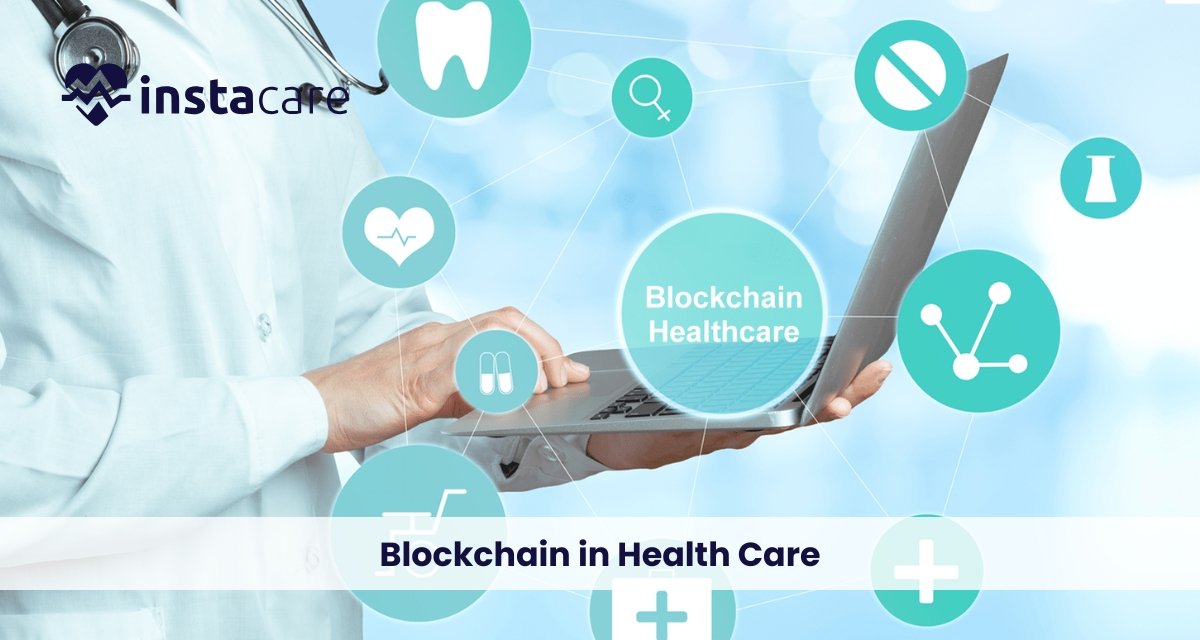
Blockchain in Health Care – Opportunities, Applications, and Future Data Security The Blockchain in Health Care is rapidly arising as a next-generation transformative technology that promises to add security to patient data, improve patient care, and streamline business operations in this medical industry. Blockchain can also address some of the most concerning issues in healthcare, such as data breaches and lack of interoperability, besides inefficiencies related to patient data management. The article outlines the benefits, applications, and future of blockchain in health care to discuss potential applicability toward revolutionizing how health information is created, shared, and handled. Importance of Blockchain Technology in Healthcare Blockchain technology has provided a sound solution to the majority of issues currently being faced by the industry. Decentralization ensures that no single entity controls data, which might increase security and transparency. Some key benefits of Blockchain in Health care transparency are discussed below: Data Integrity: It ensures that any recorded data will be immutable once recorded, preventing alterations or deletion and thus assuring the accuracy of patient records. Enhanced Security: Blockchain for Medical Data Management is safe because of advanced encryption and decentralized storage. By implementing blockchain, healthcare organizations can promote trust among patients, providers, and other stakeholders. Benefits of Blockchain in Health Care The advantages of blockchain in health Care are various. The Benefits of Blockchain in Healthcare can lead to improved patient outcomes and operational efficiency: 1- Improved Patient Data Management Blockchain for patient records ensures that there is easy access to accurate and current information about patients. This may help reduce errors and improve treatment outcomes. Some of the key points are: Real-time Access: Patient records can be accessed instantly by healthcare providers, irrespective of location. Interoperability: Data from different healthcare systems can be shared more efficiently and break down silos. 2- Improved Data Security Healthcare Data Security with Blockchain is essential, given the increasing threats of cyber-attacks. The technology offers: Distributed Storage: Data spread across a network of nodes more resistant to attacks. Secure Authentication: Blockchain can have multiple layers of robust authentication to ensure that only authorized individuals can access sensitive data. These factors lead to a more secure health setting. 3- Increased Transparency and Trust Blockchain transparency in healthcare generates trust between patients, providers, and insurers. This is because blockchain can provide a clear, auditable record of transactions, including: Build Trust: Patients can know the integrity of their medical records, which could increase their reliance on their caregivers. Reduce fraud: With visible records, instances of fraudulent cases and practices tend to be reduced. Therefore, this transparency is more important for creating a better care experience. Book Free Demo Uses of Blockchain Technology in Healthcare Blockchain Technology in Healthcare holds various applications, which will be used broadly in different categories to enhance efficiency and protection. Here is a list that includes some outstanding applications: 1- Blockchain for Healthcare Providers Blockchain for Healthcare Providers can significantly benefit from blockchain technology in streamlining their operations and data sharing. The main applications are: Credential Verification: Blockchain will simplify the process of credentialing health professionals by saving time and money. Billing and Payments: Smart contracts may automate billing procedures and ensure prompt payments with reduced disputes. 2- Blockchain for Healthcare Supply Chain The Blockchain for Healthcare Supply Chain is complex and is more prone to fraud most of the time. Blockchain will allow the following: Traceability: Everything in the supply chain can be traced, ensuring the authenticity of medications and medical devices. Reducing counterfeits: Blockchain will eliminate counterfeit products, and patients will be assured of safety and compliance. The supply chain’s integrity must be ensured to maintain trust in healthcare products. 3- Blockchain and Health Information Exchange Blockchain and Health Information Exchange can be facilitated by providing a decentralized platform for sharing data among providers. Benefits include: Seamless Data Sharing: Providers can access comprehensive patient data without compromising security. Reduced Administrative Burden: Automated processes can streamline HIE operations, allowing providers to focus more on patient care. Blockchain Applications in Healthcare addresses the challenges of fragmented healthcare systems. The Future of Blockchain in Healthcare The promise of blockchain in healthcare is pretty bright as well, as more and more organizations are becoming aware of that. The new areas of progress are: 1- Blockchain to Manage Medical Data As exponential growth in the healthcare data unfolds, blockchain proves to be highly scalable for this purpose. A few innovations involved are: Advanced-Data Storage Solutions: Advanced Healthcare Blockchain Solutions and frameworks accommodate large amounts of data with security and easy access. Integration with AI: Blockchain can be integrated with artificial intelligence to enable advanced analytics and better decision-making in patient care. 2- Blockchain and Healthcare Privacy Privacy is a very sensitive issue in healthcare. Blockchain can improve patient privacy by allowing individuals more control over their data. Features of Blockchain and Healthcare Privacy may include: Patient Consent Management: Patients can manage who has access to their data, ensuring their privacy is respected. Anonymization: Blockchain can make patient data available for research purposes using its Anonymization without compromising privacy. These advancements might profoundly impact how healthcare data is dealt with. 3- Use Cases of Blockchain in Healthcare Some practical usage examples illustrate the potential of blockchain in healthcare: Clinical Trials: Blockchain can improve the transparency of clinical trials by maintaining data integrity and ensuring participants’ trust. Telemedicine: Safe sharing of patients’ data can improve telemedicine services, keeping them safe and efficient during consultations. These use cases show the flexibility and practicality of blockchain technology. Conclusion In summary, blockchain in healthcare offers several prospects for increasing data security, better patient care, and smoother operation. Using blockchain technology’s advantages, organizations can build a more transparent, efficient, and secure environment to manage health information. With this technology constantly being developed, it is likely to play a pivotal role in defining the future of healthcare and offering innovative solutions to the industry’s problems. FAQs How does blockchain enhance data safety in healthcare? Blockchain enhances safety in healthcare
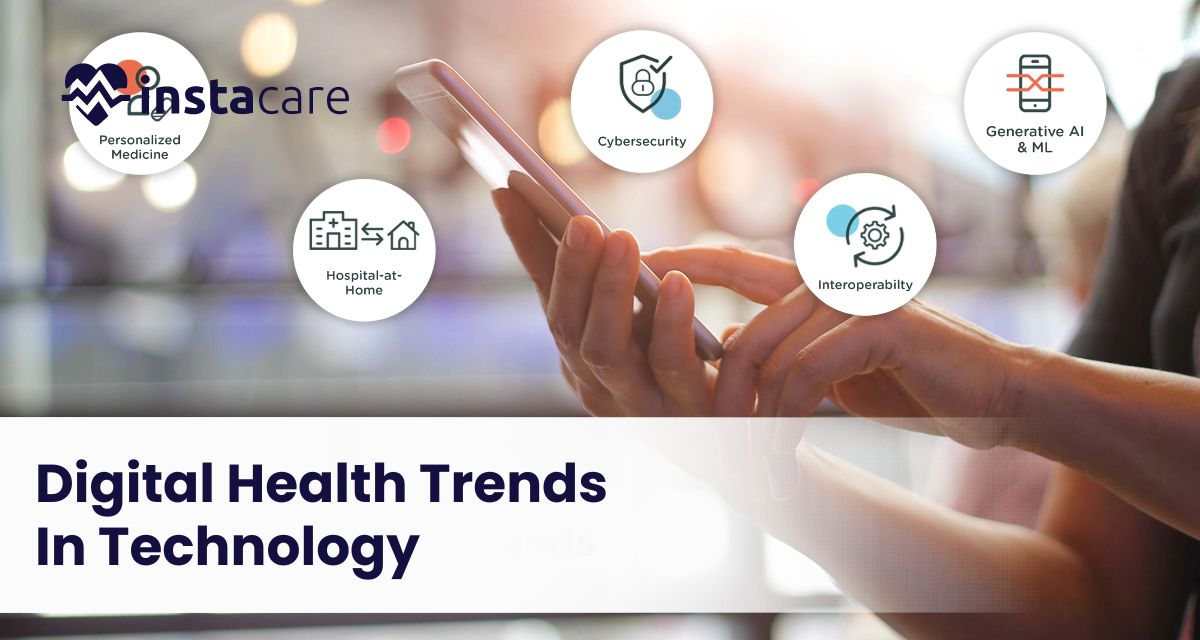
Here Are The Top 8 Digital Health Trends In Technology On account of innovation and forward leaps that significantly impact how we oversee and give medical care benefits, the medical care climate is evolving rapidly. Computerized well-being improvements, for example, telemedicine and man-made consciousness, are changing patient considerations, expanding proficiency throughout the medical services continuum, and further developing outcomes. We will take a gander at the main eight digital health trends In technology impacting medical care later on here. 1-Virtual Care And Telemedicine Patients may now talk with medical care specialists remotely because of telemedicine, which has turned into a crucial part of current medical services conveyance. Virtual consideration frameworks permit patients and specialists to impart progressively, disposing of the requirement for in-person visits for conclusion, treatment, and follow-up care. Accessibility And Convenience Patients might acquire medical care administrations from the solace of their homes by means of telemedicine, which takes out movement necessities and abbreviates stand by times. Better Access To Healthcare Individuals who live in remote or immature areas presently have better admittance to medical services on account of telemedicine, which permits them to talk with trained professionals and get care rapidly. Savings On Costs Telemedicine brings down medical services costs for patients and suppliers by wiping out the requirement for in-person arrangements and clinic stays. Improved Care Continuity Virtual consideration stages work with smooth correspondence between clinical experts, empowering collaboration and ensuring patients get steady treatment in different scenes. Care Quality Through safe video meetings, telemedicine maintains the norm of care by permitting clinical experts to do exhaustive assessments and oversee proof based treatments in a good way. Book Free Demo 2-Health Technology Wearables Digital Health Trends Wearable innovation, as smartwatches and wellness trackers, is empowering individuals to watch out for their wellbeing progressively. These contraptions screen imperative signs, movement levels, and rest designs, giving clients smart information on their overall wellbeing and prosperity. Monitoring Health In Real Time With the utilization of wearable wellbeing innovation, individuals may ceaselessly screen their pulse, oxygen immersion, pulse, and other imperative pointers to get constant criticism on their wellbeing. Monitoring Of Activities To propel clients to keep a functioning way of life and arrive at their wellness targets, wellness trackers and smartwatches track day to day action levels, including steps taken, distance voyaged, and calories consumed. Analysis Of Sleep To augment helpful rest, wearable gadgets measure rest examples, term, and quality. This assists clients with understanding their rest propensities and feature regions for advancement. Health Trends And Insights Wearable prosperity helps people with managing tenacious infections and changing their lifestyle proactively by giving them encounters into their overall prosperity plans through the examination of data collected for a really long time. 3-Augmented Reality (Ar) And Virtual Reality (Vr) Computer generated reality and increased truth are changing patient instruction, remedial therapies, and clinical preparation. Drenching careful reproductions and virtual recovery programs are just two instances of how these innovations give new ways to deal with work on understanding contribution and envision multifaceted clinical thoughts all these are part of new digital health trends. Training And Simulation In Medicine Clinical professionals and understudies might rehearse careful methods, physical analyses, and clinical situations in a protected and controlled setting with the assistance of VR and AR practical reproductions. Therapy And Education For Patients Through intelligent encounters, VR and AR applications show patients their clinical issues, accessible medicines, and recovery exercises, improving appreciation, adherence, and results. 4-Blockchain Technology In Medical Blockchain innovation is changing medical care through improved straightforwardness, interoperability, and information security. Blockchain further develops information honesty, speeds up regulatory systems, and grants safe trade of clinical records by laying out carefully designed, decentralized records. Safe Exchange Of Medical Records Blockchain makes it workable for patients, medical services experts, and different partners to safely share clinical records, bringing down the chance of information breaks and undesirable access while safeguarding patient security. Administrative Procedures Simplified Blockchain robotizes tasks, decreases desk work, and limits missteps to smooth out authoritative obligations including inventory network the executives, charging, and guarantees handling. This lessens expenses and increments functional proficiency. 5-Machine Learning And Artificial Intelligence By examining huge volumes of information to track down patterns, gauge results, and redo treatment regimens, man-made consciousness and AI advances are changing the medical services industry. Artificial intelligence is further developing clinical navigation and prodding advancement in tolerant consideration through applications, for example, prescient examination and analytic imaging. Analyzing Data And Identifying Patterns To track down examples, patterns, and relationships that take into consideration early sickness ID and individualized treatments, man-made consciousness calculations assess an assortment of medical care information sources, for example, hereditary information, electronic wellbeing records, and clinical imaging. Customized Care And Proactive Analytics Prescient investigation driven by computer based intelligence utilizes patient information to expect unfavorable occasions, treatment reactions, and the course of the infection. 6-Robotics In Telehealth Since they empower distant meetings and activities, telehealth mechanical technology is altering how care is conveyed. These innovations, which range from automated exoskeletons to careful robots, work on quiet results, give admittance to expert treatment, and widen the extent of medical services experts. Distant Consultations And Protocols In underserved or rural locations with limited access to experts, telehealth robots provide real-time interaction, examination, and diagnosis during remote consultations between patients and healthcare practitioners. Better Access And Better Results Healthcare practitioners may give prompt, personalized treatment to patients anywhere by utilizing telehealth robots. This reduces wait times, travel expenses, and healthcare inequalities, all of which eventually increase patient outcomes and satisfaction. 7-Remedial Arts Evidence-based treatments used to treat or manage medical diseases using software applications are referred to as “digital therapies.” These solutions, which range from diabetic management systems to applications for cognitive behavioral therapy, support conventional therapies and provide patients the tools they need to actively manage their health. Definition And Extent Digital therapies are a broad category of software-based interventions intended to improve general health and wellness or target particular medical disorders. These interventions use technology to provide evidence-based therapies,