
What Would A Post-corona World Look Like? Everyone nowadays is talking about coronavirus pandemic. The majority of people, all over the world are practicing social distancing, taking all the measures to protect themselves from catching the virus. It is depressing to be locked at home for such a long period, but at the same time, people are surely going to learn some positive habits. Everyone should be optimistic while thinking about the future. They should focus on the positivity it will leave behind. In this article, we will discuss how would a post-corona world look like. What impact would it leave on the whole world? Value of relationships No one would take relationships for granted in the post-corona world. We are seeing in the news these days that thousands of people have died due to COVID-19. Even young people are losing their lives. People are losing their parents, grandparents, siblings, and friends without even getting a chance to say goodbye. This would teach everyone, the value of relationships, spending time together with loved ones and cherishing every moment with them. Value of a handshake People did not use to value handshakes to such an extent as that they would do in the future. Shaking hands has now become a thing of the past. People in the post-corona world would value and appreciate the gesture of shaking hands. It would not annoy them anymore. Social distancing and all other preventive measures will teach them the beauty of staying other, staying close with each other. Since, valuing little things make your life easier, positive and healthy. Working from home Remote working was not a norm before coronavirus outbreak. People working from home were thought to be as lazy and unsuccessful. Normalizing remote working would have taken years if the coronavirus would not have arrived. In the post-corona world, people would indeed respect and value those working from homes. This would benefit the freelancers, remote workers, stay-at-home parents, women who have to stay at home and people suffering from any chronic illnesses. They would get more chances for jobs. This will also increase the working productivity because some individuals feel less stressed working remotely than working in offices. Living without junk food These days, restaurants are closed, at some places even food home delivery is also unavailable. People are cooking at home themselves. This will teach people who are addicted to junk food, that they can survive without junk food. Since it is unhealthy, but delicious at the same time so it is hard for people to stop eating junk food. In the post-corona world, people would know that they can make healthy eating a habit by cooking at their home. Appreciating little things People in the post-corona world will learn the art of appreciating every little thing in their life. They would not feel bad if they have to work more because they would think that they at least have a chance to work. People would like to meet others after practicing so much social distancing. They would know the importance of staying together. In the post-corona world, the hectic schedule would not annoy people anymore. They would know the importance of working. This would make people think more optimistically and will increase hopefulness. Since valuing little things make your life positive and beautiful. Value of going out Globally, people are confined to their homes. In the post-corona world, they will learn the value of going out. They would appreciate spending quality time outdoors with their friends and family, rather than spending time on their gadgets. People would know how it feels like staying at home and how going out rejuvenates them. They are going to love nature, the parks, the beach view and would value the liberty of going out. The habit of saving money In the post-corona world, people would have learned the benefits of saving money. Many people nowadays, during coronavirus outbreak are unable to earn money. This is a big crisis for all the people who do not have any savings for the rainy day. Some people are so obsessed to spend all the money they earn on expensive brands or luxuries which is not a necessity. These people would eventually learn to save some money for their bad time too. No one knows what the future holds for them, so it is good to have savings in hand for the future. Conclusion We all can hope to get out of this phase soon because, after darkness there is light. This coronavirus outbreak is so painful and damaging for humans, but at the same time, it will teach you lessons. We can hope for a happy and healthy time in the post-corona world. At this crucial time, people should gain hope by thinking about positive changes that this coronavirus pandemic will teach them. As Christopher Reeve says “once you choose hope, anything’s possible.”
How To Prevent Coronavirus COVID-19 is a highly contagious disease caused by a coronavirus that spreads from person to person via their respiratory droplets. The spread of coronavirus can be prevented by exercising some tips. In this article, we will discuss safety measures to prevent coronavirus and why are they necessary. It is important that along with the safety measures, we understand why are these measures necessary and what’s the logic behind these. For any further questions, leave a comment below. Washing Hands Frequently Wash your hands frequently, especially before eating, after blowing your nose, coughing, sneezing and when you come back home from outside. Wash your hands properly for at least 20 seconds because the soap requires at least 20 seconds to kill the virus and bacteria. Wet your hands with running water, then apply soap, scrub all the parts of your hands, rinse them with running water and then dry them with tissue paper or a clean towel. Use can also use an alcohol-based hand sanitizer on the go. Make sure it has at least 60% alcohol because high alcohol content helps in killing bacteria and viruses. Always wash your hands with soap and water, if they are visibly dirty. Washing your hands frequently is necessary because the coronavirus can stay on surfaces for a long time. If an infected person coughs or sneezes on that surface, and you touch that surface, you can easily catch coronavirus. Avoid Touching Your Face It is a part of human nature to touch the face, eyes, nose, and chin unconsciously. You should avoid touching them because hands touch many surfaces and can carry viruses and bacteria. This habit makes you prone to coronavirus infections, you can transmit the viruses and bacteria to your face that you have caught from surrounding or by touching other people. If you need to touch your face, make sure to wash your hands properly and then touch it. Stay At Home It is so important to stay at home, especially if you are having any flu-like symptoms or if you have a travel history of the past 14 days. It is beneficial for you and others as well. If you have traveled internationally, there is a chance that you are infected and your body is not showing any symptoms. You can infect others in this period, so it is necessary to quarantine yourself for at least 14 days to protect others from getting infected. Apart from any symptoms and travel history, it is good to stay at home as much as you can. Avoid exposure to crowded and closed places. The more you stay at home, the more protected you will be against coronavirus. Maintain A Social Distance Maintaining social distance is one of the most significant measures to prevent Coronavirus. You should maintain a distance of 3 feet (1 meter) from people who are having flu-like symptoms. Coronavirus is highly contagious, there is a high chance of getting infected if you are in close contact with someone who is suffering from it. A graphical illustration of social distancing is given below: Disinfect Surfaces Coronavirus can reside on surfaces. It is recommended to clean and disinfect high touch surfaces like doorknobs, switchboards, keys and cell phones, etc. There is a fair chance of transmission of coronavirus through these surfaces. If anyone touches them with contaminated hands, your hands can get contaminated too. You should also try to disinfect the products you are bringing home from the outside. You never know who has coughed, sneezed or touched them with contaminated hands. Cough And Sneezing You should cover your mouth with tissue paper while coughing and sneezing or cover it by an elbow. Throw that tissue paper in the dustbin and wash your hands with soap and water for at least 20 seconds. Wear A Face Mask It is necessary to wear a face mask if you are having an interaction with an infected person, or suffering from flu-like symptoms. It will protect others from getting infected. By wearing a face mask you would not transmit your infected respiratory droplets that would protect against coronavirus spread. Avoid Shaking Hands Stop shaking hands to greet people, instead, you can nod, bow or wave a hand to greet them. It is a tip to keep yourself and other people protected. Shaking hands can cause transmission of coronavirus from one’s hands to another. Conclusion Prevention is better than cure. You should exercise all the above-mentioned tips to protect yourself from catching a coronavirus infection. Everyone has to play their role to stop the dissemination of this coronavirus outbreak. You should take precautionary measures even if you are healthy because you can transmit it to someone with a weak immune system, an elderly or someone asthmatic. To them, it would be lethal, so everyone needs to take these safety measures to protect other people. If you need more information regarding coronavirus, you can visit InstaCare health articles for it.
Everything I need to know about Coronavirus COVID-19 before it gets me It’s March 2020, and within a few months, Coronavirus has made the lockdown of the whole country inevitable. Furthermore, the panic created among the masses is on top of that. But as they say, knowledge is power, you can better prevent yourself from the virus by learning more about it. So here is each and everything you need to know about novel Coronavirus aka COVID-19. WHAT IS COVID-19? The coronavirus belongs to the family of viruses that infects human beings and animals. The specific type of Coronavirus that the world is facing right now is SARS-Cov-2. The disease it causes is known as COVID-19. Since it’s a newly found virus, there has been very fewer studies on it. Hence we don’t know what actually happens when it enters the human body. But apart from that, we are aware of symptoms of COVID-19. One more thing we know about the virus is its highly contagious nature. The virus can cause mild to severe illness; which in worst cases, can turn into death. IS CORONAVIRUS A PANDEMIC? Globally 2,46,295 confirmed cases have been reported of coronavirus. Out of which 81,139 are from China, 35,713 from Italy, 17,361 from Iran, 14,769 from Spain and rest of them are from other countries like the United States, France, United Kingdom and many others. Total reported deaths from coronavirus until today are 1,018. Considering that situation, WHO (World Health Organization) has announced Coronavirus to be a pandemic. WHEN AND WHERE DID THE CORONAVIRUS EMERGE? COVID-19 is a new strain that has emerged from Wuhan, the city of China, in December 2019. It has now spread to different countries like the United States, United Kingdom, Italy, Spain, Iran, Pakistan and many others. There is no cure discovered for this disease yet. The patients are treated symptomatically. The Chinese centre for disease control has revealed that 80% of the suffering people faced mild symptoms, 15% of them faced severe symptoms, while 5% of the patients were critically ill due to the coronavirus. WHAT ARE THE SIGNS AND SYMPTOMS OF CORONAVIRUS? The signs and symptoms of novel coronavirus resemble the symptoms of common cold, flu and pneumonia. It causes fever, cough, sore throat, fatigue and shortness of breath. People with weak immunity may also suffer from nausea and diarrhoea. The emergency symptoms of coronavirus are; severe difficulty in breathing, confusion, bluish lips or face and persistent pain in the chest. At this stage, you should rush to the hospital emergency. HOW DOES CORONAVIRUS SPREADS? The coronavirus spreads from person to person through airborne droplets. If an infected person, coughs and sneezes in a close environment in front of others, the other people will eventually catch the infection. The virus can also transmit through high touch surfaces. If an infected person is carrying viruses on his hand and touches the surface, he will transmit the virus on the surface. If a healthy person touches that surface again, he can catch the virus easily. HOW CAN I PROTECT MYSELF FROM CORONA VIRUS? You can protect yourself from coronavirus by wearing a mask if you are coughing or sneezing. Wash your hands frequently and sanitize them with an alcohol-based sanitizer. Do not touch your face, nose and eyes with unwashed hands. Keep disinfecting the high touch surfaces like switchboards, doorknobs, fridge doors and keys etc. Avoid going to overcrowd places and maintain a distance of 1 foot from the one who is coughing or sneezing. Cook the meat and eggs at high temperature. Wash the fruits and vegetable properly before use. Try to isolate yourself at home as much as you can. Avoid going out for unnecessary tasks and also avoid international travelling.. WHY IS WASHING HANDS NECESSARY? Washing hands frequently is necessary because there is a fair chance of carrying the virus in your hand which you have caught by touching any surface. The coronavirus resides on the surfaces for a long duration, if you will touch the surface where viruses are present you can easily get infected. WHEN WILL I HAVE THE SYMPTOMS AFTER EXPOSURE? The incubation period for coronavirus may vary between 2 to 14 days. Within this period, the person will not show any symptoms. You will have the symptoms after 14 days of exposure. There is a chance of transmitting the virus to others in this phase as well. WHO IS AT RISK? The older adults, immunocompromised people and the ones with comorbidities like heart diseases, kidney diseases, diabetes and lung diseases are at higher risk of getting worse symptoms of coronavirus. DOES EVERYONE WITH SYMPTOMS NEEDS TO GET TESTED? No! Not everyone having flu symptoms needs to get tested for COVID-19. If you are suffering from cough, fever and sore throat, try to isolate yourself at home. Avoid exposure to other people, so that you do not transmit your infection to others. You should only go for a test if you are having severe symptoms like shortness of breath, high-grade fever, and severe fatigue. Not everyone with flu-like symptoms can be tested for coronavirus because it is not possible to test such a large number of people. WHAT SHOULD I TAKE AS TREATMENT? You should only take paracetamol if you are facing any of the coronavirus symptoms. Do not take anti-inflammatory medicines like ibuprofen, naproxen, and cortisone. They have shown adverse effects on the people suffering from coronavirus. Further, if you are uncertain about your health, connect with a professional doctor through Instacare Corona Response Unit for Corona consultation. Through this service, you’ll be able to get an expert opinion, remotely, safely, instantly. WHAT IF I HAVE A TRAVEL HISTORY? If you have a travel history in the past 14 days, you should self isolate yourself. You can transmit the virus to others, even if you have no symptoms. After 14 days it can be confirmed either you are infected or not. HOW IS TEST DONE FOR CORONAVIRUS CONFIRMATION? The confirmation test for coronavirus
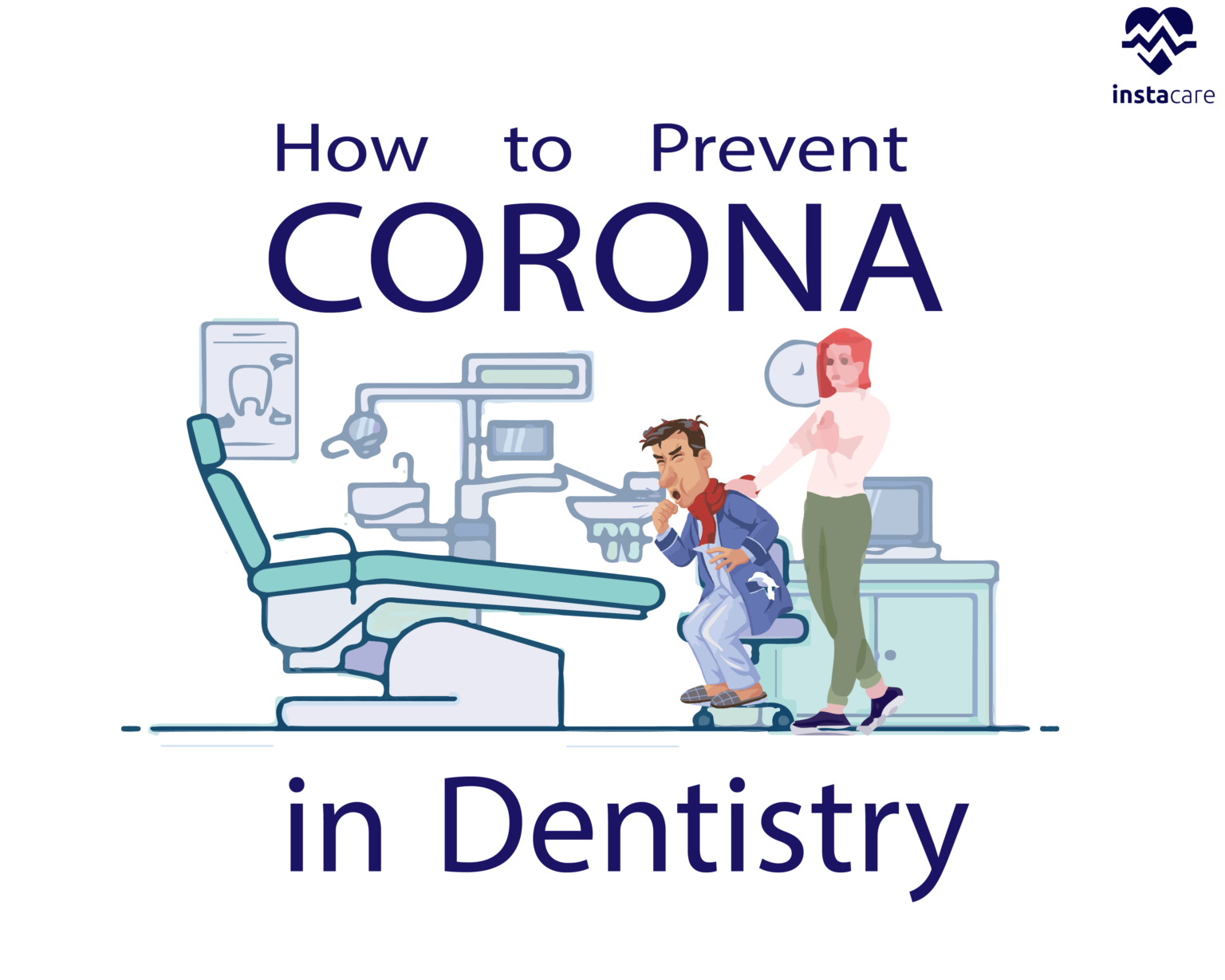
Can There Be Spread Of Corona Through Dentistry? Considering the situation worldwide, there are high possibilities that any kind of interaction between humans, animals or even objects contains a huge risk of the corona. Spread in 110 countries so far, it’s the immediate point of concern. As far as dentistry is concerned, being a profession that deals with the human mouth, it contains relatively more chances of spreading the virus. Corona through dentistry is something that is highly possible. The spread of Corona through dentistry According to research published in the International Journal of Oral Science, there are three major ways through which Corona can spread. These there are as following: Airborne Spread Contact Spread Contaminated Surfaces Spread Airborne Spread The dental papers indicate that numerous dental strategies produce pressurized canned products and beads that are polluted with the virus. Consequently, bead and airborne transmission of 2019-nCoV are the most significant worries in dental facilities and medical clinics, since it is difficult to maintain a strategic distance from the age of a lot of vaporized and bead blended in with patient’s salivation and even blood during dental practice. Notwithstanding the contaminated patient’s hack and breathing, dental gadgets, for example, fast dental handpiece utilizes rapid gas to drive the turbine to turn at high velocity and work with running water. At the point when dental gadgets work in the patient’s oral pit, a lot of vaporized and beads blended in with the patient’s spit or even blood will be produced. Particles of beads and pressurized canned products are sufficiently little to remain airborne for an all-encompassing period before they choose ecological surfaces or enter the respiratory tract. In this way, the 2019-nCoV can possibly spread through beads and pressurized canned products from tainted people in dental centers and emergency clinics. Contact Spread A dental expert’s continuous, immediate or circuitous contact with human liquids, tolerant materials, and defiled dental instruments or natural surfaces makes a potential course to the spread of viruses. Likewise, dental experts and different patients have likely contact of conjunctival, nasal, or oral mucosa with beads and pressurized canned products containing microorganisms created from a tainted individual and pushed a short separation by hacking and talking without a veil. Compelling contamination control methodologies are expected to forestall the spread of 2019-nCoV through these contact schedules. Contaminated Surfaces Spread Human coronaviruses such as SARS-CoV, Middle East Respiratory Syndrome coronavirus (MERS-CoV), or endemic human coronaviruses (HCoV) can persist on surfaces like metal, glass, or plastic for up to a couple of days. Therefore, contaminated surfaces that are frequently contacted in healthcare settings are a potential source of coronavirus transmission. Dental practices derived droplets and aerosols from infected patients, which likely contaminate the whole surface in dental offices. In addition, it was shown at room temperature that HCoV remains infectious from 2 h up to 9 days, and persists better at 50% compared with 30% relative humidity. Thus, keeping a clean and dry environment in the dental office would help decrease the persistence of 2019-nCoV. Preventing the spread of Corona through dentistry There are a few preventive measures that dentists must take to avoid any kind of transmission of Corona. A few of them are given as follows: Patient Evaluation If possible, make sure that you are aware of the patient’s history. With a person with positive Corona, it’s highly advised to be extremely careful. Use Instacare’s Telemedicine to have a complete medical session through a video call. This will reduce the chances of transmission. Hand Hygiene It’s been widely notified that washing hands regularly, significantly reduces the chances of virus transmission. Use a hand sanitizer in case you don’t have access to water. Personal protective measures for dental professionals Airborne droplet transmission of infection is the main route of spread, particularly in dental clinics and hospitals. Barrier-protection equipment is strongly recommended for all healthcare givers in the clinic/hospital settings during the epidemic period of 2019-nCoV. Like including protective eyewear, masks, gloves, caps, face shields, and protective outwear. Rubber dam isolation The use of rubber dams can significantly minimize the production of saliva- and blood-contaminated aerosol or spatter, particularly in cases when high-speed handpieces and dental ultrasonic devices are used. Mouthrinse before dental procedures Since 2019-nCoV is vulnerable to oxidation, preprocedural mouthrinse containing oxidative agents such as 1% hydrogen peroxide or 0.2% povidone is recommended, for the purpose of reducing the salivary load of oral microbes, including potential 2019-nCoV carriage. A regular mouthrinse is also recommended. Even after all these measures, make sure that you don’t interact unnecessarily. Even now, we know very little about it. So, keep your surroundings clean.