

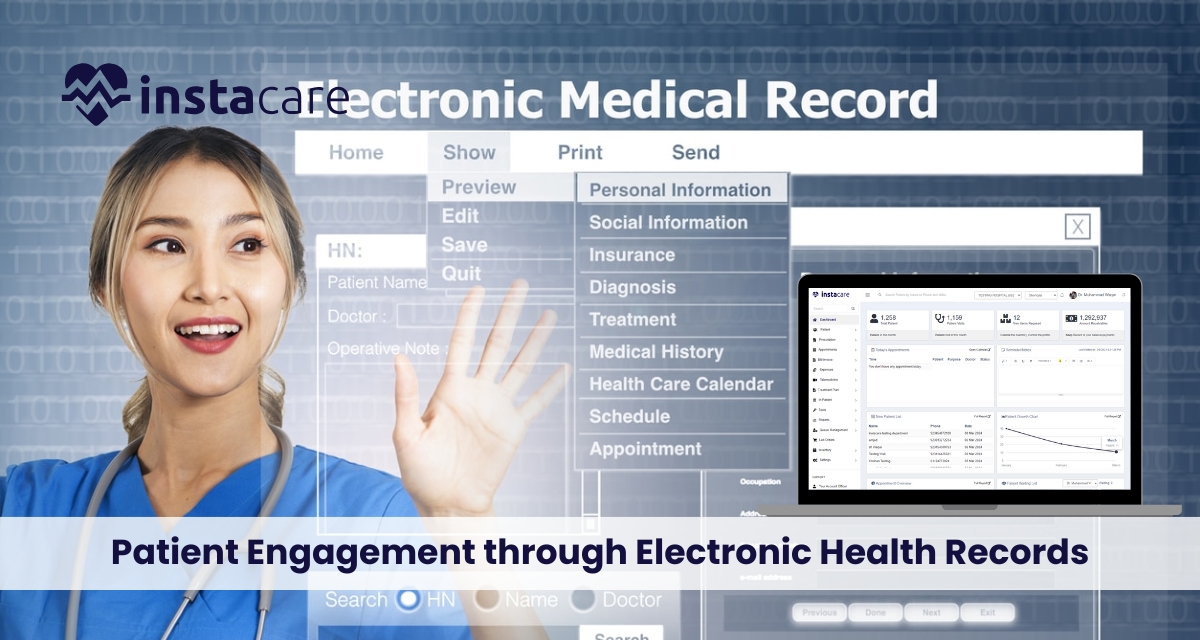
It is quite visible that there have been widely drastic changes in the health sectors due to Electronic Health Records over the last couple of decades. The change has simply been towards the way a patient’s record is filed, kept, and read. This, in this respect, brings so much transformation as far as impacts on the level of engaging patients in health care goes. However, though there are many advantages of this change, there are some limitations that have to be considered. This article explains the benefits and limitations of patient engagement through EHRs. What are Electronic Health Records? An EHR is an electronic version of the paper chart of a patient. The information which includes diseases, medications, treatments, immunizations, allergies, radiology images and lab test results is also stored in EHRs. Generally, EHRs are viewed by many providers and thus this improves the issue of continuity of care. Advantages of Patient Engagement through EHRs 1- Enhanced Access to Health Information Easier access to patient’s information is one of the biggest things that come with EHRs. There are those patient portals that enable the patient to view the patient’s history, laboratory results, and even the treatment options for him or her, online. This open attitude makes patients more receptive about their care. It has been observed that such persons accessing health data are more proactive with their health care providers in discussing, questioning, and planning the best course for treatment. 2- Enhanced Communication with Providers of Health Care EHRs enable better communication between patients and healthcare providers. Most EHR systems have safe messaging, which enables patients to have direct communication with their physicians. Patients can use it to ask questions, obtain prescription refills, or discuss other issues without visiting a healthcare provider. It would mean faster resolution of problems and a more customized experience for the patient. 3- Empowerment through Health Management Some of the benefits that are identifiable out of EHRs are that; EHRs enable patients to be more self-reliant when managing their health. Web technologies may give patient attributes including appointment making, and could also help the patient take medicine, and further help the patient learn about chronic diseases or any other diseases or conditions that affect the patient. In this regards, such features among others will enable patients with chronic illnesses manage their conditions better and strictly follow the laid down treatment regimens. Since patients become more empowered through active participation, an improvement of health outcomes can be achieved because more patients participate actively in managing their condition. 3- Better Care Coordination EHRs encourage care coordination because many providers can have access to the same information on a patient. This is particularly useful for patients who have complicated health issues and have to receive care from different specialists. This way, the more providers who can have access to the same records, the lesser is the chance of errors, duplication of tests, and conflicting treatments. Better coordination will help in enhancing the experience of the patient as well as health outcomes. 4- Data-Driven Insights EHRs gather and process patient information that is useful in patient care. Care providers would identify trends and patterns associated with the health status of the patients and thus intervene earlier. For instance, healthcare providers may identify those patients with a risk for certain conditions through data analytics, and so they can have early intervention and preventive measures for care. Thus, a data-driven approach brings about improved clinical results and efficiency in delivering healthcare services. 5- Patient Satisfaction Active patients appear satisfied. EHRs make this happen by allowing the patient to have access to the information and also involve the patient in the communication process. Happy patient is more compliant and compliant patient means that it is going to adhere to the programs, appointments etc. for follow up and associations with the practitioners. Book Free Demo Limitations of Patient Engagement through EHRs 1- Digital Divide Perhaps one of the major limitations of EHRs is the digital divide: those having easy access to digital technology and those without it. People with no access to the Internet, no digital literacies, or minimal devices cannot efficiently use health records in any meaningful way. Thus, disparities in health outcomes may arise because other people, lacking accessibility, cannot access vital information and support. 2- Privacy and security issues There are very grave concerns relating to the issue of patient privacy and security about EHRs. An EHR system may be made safe in design but break through the defenses and breach when it should not do so. A patient who thinks that their personal health information is vulnerable to breeching will probably not take too kindly to the trust in the safety of records. Thus, the sine qua non for the patient engagement culture to emerge is patient trust in the security of the EHR system. 3- Information Overload While access to health information enables patients, it also becomes overly complex. The EHRs contain complex medical data, which the patients may not grasp easily. A patient could misinterpret health information because they are not guided as to what is being delivered in the absence of direction by the healthcare providers. Therefore, healthcare providers need to be adequately prepared to direct the patient on how to handle the EHR and what the information provided is 4- Technical Issues Technical issues may undermine patient engagement with Electronic Health Records. This includes system crashes and slow operation, as well as problematic user interfaces, by which patients may become frustrated about using the EHR portal. Making sure an EHR system is not only patient-friendly but reliable is important in the promotion of a patient engagement. 5- Limited Personalization Electronic health records will probably make use of standardized forms that are applied in both recording as well as presentation of the data for the patient. In most cases, this usually leads to reduced personalization because the systems cannot catch the subtleties associated with the different experiences by different patients. A patient may feel he
Electronic Health Record systems basically revolutionize the delivery of health care services in a vast number of countries, including Pakistan. The digitization of patient records improves efficiency, accuracy, and quality of care delivered at hospitals. This blog examines EHR Software implementations in Pakistani hospitals, discussing their strategies and fruitful results and challenges. Introduction to EHR Systems: Electronic health records are computerized versions of patients’ paper charts. It comprises all the details related to the medical history, diagnoses, drugs, treatment plans, dates of immunization and test results. EHR systems will pave the way for enhanced healthcare services as they offer better data management hence giving easy access to the information about the diseases of patients to the health care providers. Significance of EHR in Pakistan There are several issues that the current health care system faces in Pakistan today; these include inefficiencies, problems related to miscommunication, and data management. EHR Software systems will help eradicate all these issues in the following ways: Patient Safety: Patient Safety by Making Medication Errors of Treatment Complicated Coordination of Care: Coordination of Care through Efficient Communication among the Physicians Administrative Simplification: Have all the administrative procedures simplified using less paper work and other administrative operations Data Analysis: Stream data analysis to improve public health management in making better decisions over policies. Case Study 1: Shifa International Hospital, Islamabad Background Shifa International Hospital is among the best in Pakistan; it is well-known for practice on quality care. In 2018, SIH thought of implementing the EHR Software system to improve operational efficiency and look after patients. Implementation Strategy SIH followed a step-by-step implementation of EHR. Needs Analysis: SIH conducted a comprehensive needs analysis that covered all the stakeholders; to be precise, physicians, nurses, and the IT staff. This ensured that the new system would cater to the peculiar needs of its users. Vendor Selection: From a wide array of EHR Software vendors, SIH selected one that could be customized easily and was user-friendly. The vendor provided comprehensive training and support. Phased Rollout: The rollout was phased. In the first instance, the hospital focused on outpatient services. Subsequently, the rollout to inpatient services was transitioned where the staff adapted and changed gradually. Training and Support: All the staffers were involved and given in-depth training on the new EHR system. During and even after the transition, continuous support was granted. Challenges Encountered Despite the planning done at SIH, the organization still managed to face some of the following challenges: Resistance to Change: Some of the employees were not willing to change their ways and opted to continue with their previous ways. Technical Problems: The technical problems in the system made it temporarily paralyze the work, and people became tired of the package. Book Free Demo Results EHR package in SIH led to; Streamlining of the administrative activities to ensure fast delivery service and less patient waiting time. It reduced medication errors and ensured overall patient safety in general. Quality information management: Accurate and timely patients’ information enhanced the efficiency and quick response of healthcare providers. Case study 2: Liaquat University of Medical and Health Sciences (LUMHS), Jamshoro Background The Liaquat University of Medical and Health Sciences is Jamshoro, and it is the most dominant academic and healthcare institution in the province of Sindh. In 2020, the university initiated a project to establish the EHR system to improve the healthcare at its teaching hospital. Implementation Strategy The LUMHS took a holistic approach to implementing their EHR. Stakeholder Involvement: It should have been brought into confidence all the faculty members, students, and administrative staff to ensure on-board support and all potential issues could be addressed beforehand. Tailor-made Solutions: It was in fact designed and customized to suit the teaching hospital of the university with which should be both academic and clinical functionality. Pilot Testing: The EHR system was tested under a controlled environment with pilot testing, even before full roll-out. Experience at the testing phase further informed the adjustments and improvement. Continuous Education: Continuous training programs were implemented to make sure that the user was knowledgeable about the functions of the system. Challenges Faced LUMHS was not left behind with its levels of challenges during the implementation: Funding Constraints: The budget initially constrained the provision of essential hardware and software. Infrastructure Issues: The IT infrastructure did not stand at par and therefore reflected technical issues that should have been met before the full implementation. Results The study indicates that LUMHS EHR implementation brings about the following results. Patient Care: The EHR system enhanced better communication and coordination among the service providers, yielding better patient outcomes. Research Opportunities: The digitized patient data opened new avenues for research opportunities and academic study. Increased Productivity: The administrative operations were streamlined thus enabling increased free time for the health care workers to concentrate their efforts on directing patient care. Case Study 3: Punjab Institute of Cardiology, Lahore Background Punjab Institute of Cardiology (PIC) is a speciality cardiac hospital that caters to the population of Lahore. In 2019, PIC determined that an EHR system would be implemented in order to enhance patient management and care delivery. Comprehensive Planning: PIC made comprehensive planning that explained timelines, responsibilities, and resource assignments. Collaboration with IT Experts: The hospital collaborated with IT experts to ensure that the EHR system was strong and safe. User-Centric Design: The system had a user-centric design in place so that all ease is ensured for the healthcare providers Mechanism of Giving Feedback: A mechanism of giving feedback has established continually to get more input from users in adjusting accordingly Issues Encountered Problems PIC faced with its EHR implementation were: Employee Education: Some employees had to be trained until they were proficient with the application of the new system. Interoperability Issues: It was technologically challenging to connect EHR with other application systems and databases. Outcomes The results of the implementation of the PIC’s EHR included some of the following: Improved Operations: The process of flow became streamlined which reduced some of the waiting time for
With this technological advancement and huge interest in health, a tremendous transformation has been witnessed in the health situation of Pakistan. From all these transformations, EHR software emerged as one of the innovations that will revolutionize healthcare delivery in Pakistan. The EHR system would be the foundation of profound innovation in healthcare and would help more healthcare providers offer better care with improved operational efficiency and better patient outcomes. We will write about the importance of EHR software, advantages, difficulties, and prospects that this might hold for healthcare in Pakistan. Understanding EHR Software EHR software is the electronic version of a patient’s paper chart. The EHR includes the medical history, diagnoses, treatment plans, medications, allergies, and laboratory results of a patient. Instead of paper records, it would have been used in older times. The EHRs were provided to enable providers to share the record through different channels and settings used in health care, thus providing real-time communication between health care providers. Importance of EHR in Modern Healthcare EHRs are very important for shaping a very current and living part of modern health care because they: Ensure centralization of patient information: EHRs provide an integrated, cohesive view of a patient’s health record from which decisions can easily be made. Improve communication: EHRs improve the communication among the healthcare providers as all parties dealing with the patient are allowed access to the same information. Improve Patient Safety: EHRs reduce the errors attributed to handwriting, misreading the notes, and medication management thereby contributing to improving patient safety. Support Data Analytics: EHRs enable health care organizations to analyze the data; from this analysis, the healthcare organizations are able to track public health and also enhance clinical outcome. Current Status of Healthcare in Pakistan Pakistan healthcare system faces the following disadvantages: Low access to quality care: Most of the rural areas lack facilities for healthcare provision; this brings a gap in access to medical treatment. Lack of proper health records integration: Paper-based records lack comprehensiveness, and it becomes challenging for healthcare providers to accommodate the population as a whole because of incomplete information that such documentation might lack. Inefficient Administrative Practices: The paper-based record-keeping elongates the process involved in the billing process. Long processes sometimes delay the appointment setting and handling of patients. Healthcare Professionals’ Lack: It lacks healthcare professionals who are skilled in the appropriate use of the health facilities’ technology. Required Technology-Based Solutions By adopting technology solutions in healthcare, which leads to the efficiency and betterment of care providers, challenges related to Pakistan’s health industry will be met. Modernization of a country’s healthcare system is facilitated by EHR software, which might bring more responsiveness to the needs of the patients. Book Free Demo Benefits of EHR Software in Pakistan 1-Better Patient Care EHR software enhances the quality of care offered to patients in the following way: it enables direct access by health care providers to extensive patient information. Direct access enables: Improved Diagnosis and Treatment: Health care providers can conduct a more comprehensive review of a patient’s medical history while making diagnoses and treatment plans for the patient. Personalized Health Care: An in-depth knowledge of a patient’s needs by changing treatment plans for such patients will lead to improved health outcomes. 2-Increase Efficiency It will automate clerical works, save time based on paperwork, and let healthcare providers get more personally involved with the patient. Some of the major efficiency improvements are: Automated Billing and Coding: EHR systems ensure that automated billing processes are accomplished without errors or revamping revenue cycles. Simplified Appointment Scheduling: EHRs make it easier to handle appointments and make it possible for clinics to avoid no-shows and optimize patient flow. Integrated Communication: EHRs will support integrated communication between healthcare providers, thus ensuring that consultations and referrals are made faster. 3-Enhanced Data Management EHR Software has enhanced data management in that: It centralizes patient records because patient information is held in one single location, and this information is very safe, thereby retrieval and updating are easier. It ensures safe sharing of patient information with other care givers, hence teamwork and continuum of care. Supporting Research and Public Health: aggregated data from EHRs may be used for research purposes, hence offering an avenue for health care organizations to identify trends in bettering public health initiatives. 4-Cost Savings One of the advantages of implementing EHR software for health providers is also saving on cost for instance: Minimized Administrative Costs: clerical work is most minimized with automation. Less Storage Cost: Electronic records do not need space to be stored, hence saving the money that would otherwise have been spent on maintaining paper-based records. Improvement in Revenue Cycle: Effectiveness in billing and coding allows quick payments and cash flow. Problems with EHR Software Implementation in Pakistan Although these are a few benefits the implementation of EHR software in Pakistan throws up quite some problems: 1-On-site Costs These systems may be very capital-intensive to establish for small clinics and other health facilities. The cost will come in terms of the software license, hardware, training, and later on, maintenance. 2-Fear of Change One is the fear of new technology by the healthcare providers themselves because it takes time to learn the working system. Further, the change in workflow may also be something that a healthcare provider fears most. 3-Data Security and Privacy Issues The digitized health record creates room for breaches of data security and unauthorized access to the sensitive information of patients. Thus, one of the problems that must be addressed in the implementation process is providing security for the EHR system. 4-Limited Infrastructure Internet connectivity and the technological infrastructure are rare in most areas of Pakistan, which is predominantly composed of rural areas and might become an issue if proper use is to be made of cloud-based EHR systems. Trends That Will Shape the Future Given that EHR software in Pakistan has tremendous potential, the following trends will shape the contours of its future: Interoperability: Future EHRs will symbolize interoperability in the sense that
Understand The Potential of AI in Electronic Health Records (EHRs) Electronic Health Record, known as EHR, now plays an integral role in holding patient information for effective service delivery in the healthcare system. With technology maturing day by day, AI technologies have the power to further make EHRs more transformational than the basic digitization of the record for improved efficacy, accuracy, and care of patients. In this blog post, we will delve deeper into the role of AI in EHRs and how it will continue to evolve, benefits, challenges, and further modifications and consequences considering the providers and patients. The Evolution of EHRs EHR is an acronym for Electronic Health Records, which contain patients’ information, including medical history, treatment plans, diagnoses, medicines, tests, and other essential information about receiving the care that one needs. EHRs have replaced paper medical records from many healthcare environments, offering nice benefits such as: They offer an improved means of accessibility: EHRs aid healthcare providers in availing information on one’s patients without much hustle and in good time. The EHR improves health care coordination, minimizing errors, and improving continuity in treatment. Patient Empowerment: Patients have access to their own EHRs that can give them a history of their medical background, lab results, and thus they are in a position to communicate with the care team more effectively. Patient Empowerment: The other challenges related to EHRs, in addition to the above benefits, are data security, the need for interoperability among other systems, and information overload. AI can be utilized to overcome these challenges and further enhance the newer capabilities of the EHR systems. Artificial intelligence generally refers to the simulation of human intelligence processes by machines, especially computer systems. Machine learning, natural language processing, and predictive analytics—all AI technologies—can be applied in the analysis of massive pools of data about a certain patient’s condition. This is aside from using these data to automate tasks and furnish real-time insights. Below are some of the ways in which AI is transforming EHRs: 1-Clinical Decision Support Clinical decision support systems are AI-based and involve the use of machine algorithms in the analysis of possible patient data, medical literature, and best practices to help healthcare providers make informed decisions. Indeed, the algorithm can help alert healthcare providers of possible drug interactions, suggest appropriate individual treatment plans based on the data about the patient, and further predict the outcomes of patients according to historical data. 2-Enhanced Data Handling and Reorganization AI can improve the information organization and management aspects of EHRs through automated sorting and summarization. Natural language processing algorithms in NLP enable retrieval of relevant information included in the unstructured data of the clinical notes, hence facilitating the health provider’s access and use of critical data in a clinical setting. 3-Predictive Analytics for Early Intervention AI algorithms can evaluate patterns of patient data to identify trends and predict possible health issues even before they appear clinically. For example, AI can predict the risks of readmission, identify patients at high risk for the onset of chronic illnesses, or flag deteriorating health baselines, determined based on subtle changes in vital signs and laboratory results. 4-Personalized Medicine By analyzing genetic data, medical history, and environmental factors, AI makes possible personalized medicine by the idea of designing treatment plans for each patient individually. This has the capability to optimize drug dosages, reduce adverse reactions to medication, and increase treatment results by considering each patient’s unique abilities and health trajectory. The respective AI-driven tools conduct appropriate documentation, such as updating patient records and coding diagnoses and procedures. Such tools would enable health providers to spend more time with the patients rather than on the process of documentation, which in long run reduces the burden of documentation Book Free Demo Benefits of AI in EHRs 1-Improve Efficiency and Workflow AI reduces the clinical workflow, increases the speed of execution of a repetitive function, and allows the clinical service provider to majorly focus on the care and treatment of a patient. Automated data entry, documentation, scheduling, and many other functions relieve administrative burdens and are a big boon for improving the productivity of clinical service providers. 2-Greater Precision and Clinical Outcomes Using the algorithms of AI, large sets of datasets can be mined at good speed with accuracy, helping in decreased errors in diagnosis. Not only that, it helps in planning curative through decreased errors in the selection of medical prescriptions and planning. Thus, decision-making and safety regarding the patient improve in chasing health outcomes. 3-Cost Savings and Resource Allocation The predictive analytics of the resource allocation and avoidance in hospitals through unnecessary procedures or admissions offer better saving of cost and allocation of resources by healthcare organizations. 4-Patient Engagement and Satisfaction EHR systems are also made engaging for patients with AI technology due to personalized health insights, remote monitoring features, and improved communication between the patient and the healthcare provider. Consequently, patient satisfaction is also increased and adherence to the plans set for the patient. Challenges and Considerations 1-Data Privacy and Security AI with regards to EHRs has raised many concerns over the issue of patient data privacy and security. At this point, it would be very important for a healthcare organization involved to implement rigid cybersecurity just to safeguard such kind of information from either access by unauthorized parties or even breaches. b. Interoperability The system should be able to work seamlessly. This therefore means that the system should be compatible with different EHR systems being used across healthcare setups and also with applications using artificial intelligence. Interoperability can be facilitated by standardized protocols and formatted data. 2-Ethical and Legal Implications These further include issues around how the process of algorithmic decision-making could be more transparent, biases in data and algorithms, and patient autonomy and consent in AI-driven healthcare literally. Integration and Adoption What it needs for AI integration and adaptation within EHRs is overcoming technical barriers, training healthcare professionals in becoming AI literate, and demonstrating the value of AI-driven solutions through pilot programs
How an Integrated EHR Improves Patient Relationships? Integrated Electronic Health Records, or EHR, improves patient relationships, alters the way healthcare providers need to manage information about their patients. Because they consolidate all of the information about a patient into one accessibly located platform, all medical history, test results, and treatment plans are easily accessible. Thus, healthcare professionals always have the ability to make the most accurate diagnoses and individually tailored treatment plans. For instance, a doctor can look up past treatments for a patient and drugs that a patient is currently taking in order to avoid prescribing medicines that conflict with any of those already prescribed; and this integration reduces error and improves the quality of care in general. Better Communication Amongst Healthcare Providers If all specialists, general practitioners, and nurses are viewing the same information regarding a patient, then collaboration is far more effective. All these share access so that all healthcare professionals are up to date on what condition their patient is at what stage of treatment. A specialist may read the notes and recommendations of a patient’s primary care physician so he can align his advice with ongoing treatments. All this reduces redundancy of tests, miscommunications or lost Instructions. What is more, integrated EHRs have the advantage of immediate update; hence, new test results or changes in treatment plans are made available to all concerned providers in real time. These above cited coordination and timeliness interject into a patient’s experience and outcomes. More Patient Engagement And EHR Improves Patient Relationships They can log in and see their health information and their progress and test results. It involves them with their care. They’ll understand more about their disease and treatment that way. A better decision develops. Some portals even permit the patient to schedule appointments request prescription refills and Inbox their health care provide. It saves time that could be wasted in making numerous phone calls or visiting the offices just to get information. It is saving time for both parties, the patient and the provider. More the patient feels they are in charge or better in control and informed of their care, the more they are going to trust doctors. Book Free Demo Reduce Administrative Burden One of the greatest advantages of integrated EHRs is the simplification of administrative processes. Paper records are challenges complete and full of errors. To this effect, if information about a patient after admission is entered in a single data field, it can automatically become available to other departments without having to capture the same information time and again. This, therefore, reduces errors meaning that patients’ records are updated and accurate. Besides, integrated EHRs make the billing process less tedious in that coding and billing goes on automatically. This leads to fast, accurate billing, which reduces lag time in payment processing and ensures there are fewer medical billing mistakes. Because their back offices run smoothly, physicians can now devote less time to administration and more to the care of their patients. Enhanced Data Security And Compliance Data is, in fact, an important asset from a security point of view in the field of healthcare, and integrated EHRs play a tremendous role in securing patients’ information. They are now provided with extended security features like encryption, access controls, and audit trailing to ensure that sensitive data rests in the safety of only authorized personnel. Compliance issues like that with the health insurance portability and accountability act have been taken care of within the system, which see to it that the patients’ information is handled according to the law. This kind of depth on security creates confidence for the patients that their personal health information is safe. In addition, integrated EHRs enable comprehensive monitoring and auditing of data access and data use. This aids in the rapid identification of the security problem and dealing with them before they have a negative impact. Hence, healthcare providers will have confidence that they are meeting the regulatory standards and safeguarding the privacy of the patient. Better Health Outcomes Through Data Analytics Integrated EHRs are also very helpful in enhancing health outcomes depending on data analysis. It can dive into vast, prolific amounts of data about patients that would otherwise be invisible if looked for conventionally. An example would be which treatments work best for given conditions or identification of early warning signs that may signal the potential onrush of Health problems. All this information allows doctors and other health care providers to arrive at better, more informed decisions and develop personalized treatment models. Also, predictive analytics can help identify patients’ risks of any chronic conditions to take early measures to prevent this from happening or reduce such problems if they develop. Facilitated Chronic Disease Management Integrated electronic health records, therefore make the management of chronic diseases easier both on the patient and the healthcare provider. The systems facilitate an unbroken update of the person with a chronic disease; thus, treatment is offered at the earliest and appropriate time, and treatment plans are changed if need be. For instance, a patient with diabetes may have their blood sugar levels monitored and trended overtime to see the effectiveness of the treatment given. Health care providers can then take this information and make the proper alterations and individualized health care plans. Another advantage of integrated EHRs is better coordination between varied health care providers who treat a patient. Everyone treating the patient has access to an updated record of the patient, reducing risks associated with incomplete information. Effective Management Of Emergent Situations Time is the essence in emergency situations, and integrated EHRs give a crucial edge to healthcare providers by giving them instant access to the most vital information about the patient. A patient’s history-everything from allergies to medications to treatments-can be instantly retrieved; something very important while making some of the most important decisions in the most pressurizing cases. This instant access to accurate information enables healthcare providers to make a huge difference to the result of emergency
Importance Of Digital Patient Files In Healthcare Industry 2024 Changing patient files to digital form in today’s healthcare industry is a big deal. It changes how we handle clinical records. Rather than piles of paper, everything is put away digitally. This makes things more straightforward for specialists and patients the same. Through this article, we’ll discuss why Digital Patient Files are significant and how they’re changing medical services in 2024. Go along with us as we investigate the effect of this shift on specialists, patients, and the medical care industry overall. Various Advantages Of Digital Patient Files In HealthCare Sector Digital patient files have numerous advantages, boosting healthcare organizations’ efficiency and enhancing patient care. There are several benefits to switching from paper records to digital ones: Simple And Easy Record Maintenance First, digital records are more straightforward to get to and make due. Nurses and doctors can quickly locate the information they require without having to examine through piles of paper. This recovers time and permits them to zero in additional on patients. Furthermore, advanced documents assist with working on the nature of patient consideration. With all clinical records put away by Digital Ally, medical services suppliers have a thorough perspective on a patient’s well-being history. This considers better determination and treatment choices, prompting further developed results for patients. Thirdly, advanced records smooth out managerial assignments. Undertakings like booking arrangements, handling charging, and overseeing protection claims become more proficient when done carefully. This saves staff time and diminishes the probability of mistakes. Changing to Digital Patient Files is a shared benefit for medical care suppliers and patients. It improves the nature of care while making authoritative cycles smoother and more effective. Book Free Demo Enhanced Efficiency And Accessibility Digital patient files offer healthcare providers a significant advantage in efficiency and accessibility. Not at all like traditional paper-based records that are defenseless to scattering, harm, or even misfortune, computerized documents offer a degree of unwavering quality and openness that is unrivaled. Medical services experts can easily access, update, and provide patient data across different stages with computerized records. This smoothed-out process dispenses with the requirement for lumbering manual care, diminishing the gamble of blunders and defers in getting to crucial clinical information. Besides, Digital Patient Files engages medical services groups to team up flawlessly, empowering them to pursue all-around informed choices quickly and successfully. Also, the openness of advanced patient records rises above geological limits, permitting approved staff to recover relevant data no matter their area. This adaptability upgrades the effectiveness of medical services conveyance and improves work on quiet results. In general, the progress to Digital Patient Files is a critical step in the right direction in modernizing medical services, offering a more dependable, proficient, and open method for overseeing patient data. Improved Patient Care With Digital Patient Files, medical care suppliers gain moment admittance to finish clinical accounts, demonstrative reports, and therapy plans. This entrance permits them to pursue very educated clinical choices and give customized care to patients. This smoothed-out admittance to data prompts better quiet results and higher fulfillment levels. Healthcare professionals can tailor their treatment strategies to meet each patient’s specific needs by having access to all relevant medical data, ultimately improving the quality of care provided. Digital patient files also make it easier for healthcare teams to communicate and work together, which makes the overall patient experience even better. By and large, the utilization of advanced patient records reforms how medical services are conveyed, accentuating effectiveness, precision, and patient-focused care. View More: Maximizing Efficiency with Smart Clinic Software Streamlined Administrative Tasks Carrying out advanced patient documents likewise improves regulatory obligations inside medical services offices. Undertakings like booking arrangements, overseeing charging, and handling protection claims have become more smoothed out through digitalization. This change diminishes desk work, reduces the gamble of mistakes, and paces up regulatory cycles. Accordingly, staff individuals can devote additional time and regard to giving quality consideration to patients. The decrease in authoritative weights upgrades productivity across the association, eventually prompting work on tolerant encounters and results. Security And Patient Privacy Concerns To protect sensitive patient data from indeed unauthorized access or breaches, healthcare organizations must implement strong security measures indeed such as data encryption, access controls, and obedience to regulations. These actions are fundamental for keeping up with patient trust and classification. By focusing on information security, medical care suppliers can relieve the dangers of putting away and getting to computerized patient records, defending patient protection, and guaranteeing the honesty of their clinical data. Integration With Digital Health Records (EHR) The smooth mix of Digital Patient Files with Digital wellbeing records (EHR) is pivotal for keeping up with the progression of care and working with data trade among medical services suppliers. Notwithstanding, interoperability challenges between different EHR frameworks endure, upsetting endeavors to accomplish consistent combinations. Despite these challenges, efforts are being made to address interoperability issues and enhance EHR platform compatibility. Defeating these difficulties is fundamental for improving joint effort and correspondence among medical services suppliers, ultimately helping patient consideration and results. Sustainability And Cost-Effectiveness Digital patient files not only improve operational efficiencies and patient care, but they also offer sustainability and long-term cost-effectiveness advantages. By diminishing dependence on paper records, medical care associations can reduce capacity costs, dispense with the need for actual space, and add to ecological manageability drives. This change not only saves money but also cuts down on waste and saves resources, which is in line with the healthcare industry’s larger goals for sustainability. By and large, the reception of Digital Patient Files offers monetary reserve funds and ecological advantages, making it a mutually beneficial answer for medical care associations and the planet. Conclusion The significance of digital patient records in the healthcare industry cannot be overstated. Organizations like InstaCare are driving the computerized change as we arrange the difficulties of contemporary medical care conveyance by offering state-of-the-art arrangements that empower medical care suppliers to give top-notch therapy, upgrade patient results, and advance functional greatness. FAQs What
7 Reasons Why Electronic Health Records Is Better Than Paper Records Leadership in your medical organization has likely concluded that moving to Electronic Health record is the best course of action because there are more drawbacks than advantages to maintaining paper-based records. Even if certain practices can get by using outdated paper, the adverse effects can no longer be disregarded. Paper records are too unsecured, and it is getting harder to defend, continuing to store patient files in this antiquated manner. In actuality, having considerably more control over information security is one of the benefits of using an electronic health record system or EHR software in Pakistan. Here are seven reasons Electronic Health records are more secure than paper records to assist you in persuading your team to move forward with an EHR. Authorized Users Can Only access EHRS Paper files are readily lost or forgotten, which could later result in significant issues for the patient. Even the most careful workers often make errors, such as missing a file during a hectic day or leaving it at the copier. These files cannot be changed back to their original format without a decryption key or password. Therefore seamless EHR software in Pakistan helps keep your data secure. Paper Records Are Modifiable Or Can Be Tempered Paper records can be changed in ways that can be challenging to spot. For instance, someone could provide a copy that has been edited or delete sheets from a report to replace the actual data. Encryption and robust login and password protection for electronic health records make it far more difficult for someone to also make unauthorized changes to the patient’s chart and other data. Using EHR software in Pakistan enables you to keep spotless records. Book Free Demo Information Is Kept Secure By Encryption A paper record is readily accessible, making it possible for anyone to view it, record details, create a copy, or even scan or fax the data to a third party. Contrarily, robust encryption techniques can be used to secure electronic records, protecting sensitive patient data from snoopers. Electronic Health records are more dependable than paper records in this regard, and your firm already has to take every precaution to adhere to HIPAA and other privacy laws. The robust security that an EHR automatically offers you and your patients is not available with paper records. On An EHR, Data Can Be Backed Up You need to consider security and backup storage while keeping sensitive patient information. You can use an offsite backup to restore private data onto your EHR in a natural disaster or cybercrime. However, this would not be viable if your clinic software in Pakistan only employs a paper-based system. Good Time Management By implementing an EHR, healthcare professionals can save time on tiresome administrative activities in eclinic software in Pakistan. To make the most of this cutting-edge technology, you must ensure you give your personnel the most excellent training on EHR best practices. Untrained personnel may spend more time navigating the system than they would be using paper files. View More: 5 Benefits Of Using Mobile App Technology In The Healthcare Industry EHRs Are More Environmentally Friendly Your use of paper and trash will be significantly reduced when you switch to EHRs, which is one of the most obvious advantages. Switching to EHRs is a no-brainer if you work to make your practice more environmentally friendly. With An EHR, You May Create An Audit Trail A secure record called an EHR audit trail keeps track of who viewed a file, when they looked at it, where they looked at it, and whether they made any changes to the data. Similar audits on paper records are nearly impossible to perform. Paper files are still susceptible to errors and adjustments, even if you could adequately construct an audit trail to utilize them. Conclusion We have seen the significant benefits of EHRs, and for the best software, InstaCare provides quality products to eclinic software in Pakistan. To get the best software applications, visit https://instacare.com.pk/ or contact them.