

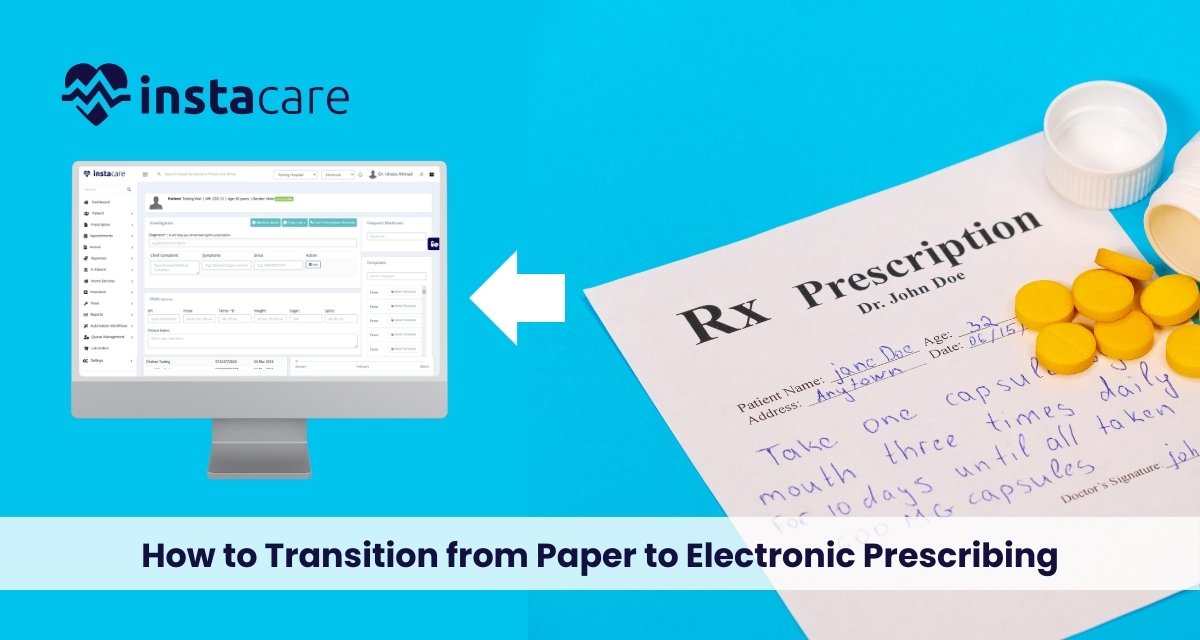
Changing to e-prescribing is a revolutionary step for the health providers in changing from paper. It is one of the techniques that make workflow streamlined, make it safe to patients, and improve efficiency in the delivery of health care. A careful plan and execution will help smoothen the process. This guide gives an all-out step-by-step way of accomplishing this efficiently. Introduction to E-Prescribing E-prescribing is an electronic write, transmit and refill of script of a prescription. The same communications technology enables health care providers to transmit prescriptions electronically and electronically signed prescription order forms to the pharmacy. It is also important to appreciate the fact which is inexistence in paper prescriptions; e-prescribing is intended to bring out more precision, interaction and coordinating of medication dispensation. Why Transition to E-Prescribing? E-prescribing reduces the chances of errors due to illegible prescriptions and informs against drug interaction and allergy, which means safe medication. Efficiency: E-prescribing eliminates the lost time in paper prescriptions. It also hastens the prescription as patients are given care timely. Better Communication: The direct communication between providers and pharmacies minimizes probable differences and delay in filling up the prescription. Compliance Rules: Healthcare rules and insurance demands are moving toward electronic prescription. The practice has to cope up with this change. Step 1: Review Your Present Process First and foremost, before arriving at an e-prescription, it is very important to look at the present process. Review Present Processes Identify Pain Points: Assess your paper-based prescribing process. Determine the issues associated with your process, such as prescription errors, delayed pharmacy communication, and time used in paperwork. Gather Feedback: Discuss with pharmacists, physicians, and administrative staff. They can give insights on where your system lacks in areas that are essential to change. Analyze Software Requirements Define Requirements: Define what functionality an e-prescribing system should possess. A few of the functionalities required include drug interaction check, alerting allergies, a refill manager, and connectivity with EHRs. Budget Implications: Establish the cost implications of e-prescribing systems, such as buying and implementing, training, and sustaining the system at large. Step 2: Selecting the Best Electronic-Prescribing Software Choosing the right e-prescribing software is very elementary to a seamless transition. Alternative Research Compare Companies: Compare various available e-prescribing systems in the market. Identify the vendors that have a robust feature that meets your practice’s needs. Asses Compatibility: Insure the tool is compatible to your existing electronic health record or EHR application otherwise it will conflict or trigger workflow. Book Free Demo Compatible can improve workflows and data much more. Assess Features User Interface Easy: Make software user-friendly whereby the system is to be maneuvered easily by one of the employees; this enables quick adoption without a long learning curve. Help and Training Support: The implementing vendor should support your staff well with proper training ensuring that technical matters that might emanate during this process are worked out. Step 3: Preparation for Implementation Good planning entails a smooth takeoff. Timeframe Establishing Milestones: The implementation setup stages might involve testing, training, and full deployment. Set deadlines for every phase to ensure that the project remains on course. Resource Allocation: Determine human and financial resources required for transition. Ensure there is enough resources in place to counter any challenge. Preparing the Staff Training Sessions: Schedule complete training to all the users. It will include physicians, nurses, and administration staff. The training must cover navigating through the system, prescription entry, and management of patient information. Step 4: Identify Champions: Find out the most techie staff and make them champions to help people while transitioning. Champions can be approached for any query or help and can reduce the learning curve. Test the System Testing is required before the complete deployment of the Electronic-prescribing system. Pilot Tests Small Scale Implementation: You would implement the e-prescribing system small scale with fewer populations and test whether that system could harbor problems which may emerge prior to mass adoption. Channel for Feedback: You would maybe allow an official process by which feedback was received from end-users within the pilots. Feedback through patients would indeed prove very effective at changes and revisions made within the system itself, as well as to patients’ workflow Analyze the Issues Technical Errors: These can be troubleshooter- resolved technical errors when encountered in a pilot test. Allow users the bug filing functionality while providing immediate response. Workflow Changes: Changes in workflows will be made based on user feedback to improve business efficiency and usability. This could be in terms of streamlining the workflow or redistributing tasks to fit the new workflows better. Step 5: Full Deployment This is when the e-prescribing system should go live, now that testing has been completed successfully. Launch the System: Roll out the full e-prescribing once testing is successful and any necessary adjustments are made. Share the launch date with employees who then prepare. Monitor Performance: Monitor performance of the system as issues are addressed promptly. Monitor prescription errors, user engagement, and general uptake of the new system. Continued Education Train the user on new things and best practices in the tools. Ongoing training will help create a culture of lifelong learning and adaptation. Listen to Users: Always be open to listening to feedback from users or other users who have issues or improvements to be made in such an application. Ongoing feedback keeps abreast of the ongoing issues and areas for enhancement. Step 6: Evaluation and Optimization Once the Electronic-prescribing application is implemented in the system, its impact should be evaluated for its optimization in further utilization. Outcome Measurement Track Measures: The key measures of performance regarding prescribing errors and time savings together with user acceptance be tracked. Effect on overall efficiency of practice related to patient safety of the e-prescribing system be measured. Seek the Views: Organize regular staff meetings to solicit perceptions about the experience of e-prescribing. Perceptions will form a very key basis for future development. State of the Art Improvement: Stay alert about latest software upgrade as well as introduction of new functionalities

Electronic prescription is a great technology that has taken over prescribing drugs in the healthcare facilities. This speeds up the medication administration process, greatly reduces the margin of error that comes with manual entry, and provides a more secure system to prevent drug errors. Several issues of the present article will discuss the advantages of implementing e-prescribing for both patients and providers to understand how it has impacted positive change in care delivery, patient safety and pharmacists’ work environment. Understanding Electronic Prescribing E-prescribing can be described as the creation, transmission and completing of medical prescriptions. This is mainly about direct transmission of prescriptions to the pharmacy which makes it that paper prescription is no longer required. Often such systems have incorporated features like the medication history, drug interaction check list and clinical decision support systems to help in the common prescription decisions for providers. Key Components of E-Prescribing Systems User Interface: This is a user-friendly interface that allows a provider to input and manage prescriptions easily. Drug Interaction Alerts: Alerts that warn providers of the potential adverse interactions of prescribed medications. Medication History: A patient’s history of prescribed medications, which helps in making proper treatment decisions. Refill Management: Tools that help manage refills on prescription medications. 1- Increased Precision and Safety Decrease of Errors Another very important benefit that can be cited about e-prescribing is a major reduction of errors related to medications. Written prescriptions often suffer misinterpretation; for example, from bad handwriting of a prescriber, sometimes prescriptions carry obscure instructions, among others. Electronic prescribing removes this risk because the prescription would thus be clear and readable. Drug Interaction Checks Clinical decision support is integrated automatically into any e-prescribing system, thereby incorporating into it the clinical reasoning that auto-checks the potential drug interaction and allergies. This feature in e-prescribing is very critical to patient safety since it helps ensure that any prescriber can identify possible issues before even the filling of a prescription. In example, if the prescriber is trying to prescribe a drug which might cause an adverse interaction with a patient’s other drugs which he or she is already taking, the system will alert the prescriber to reassess the treatment plan. This can prevent adverse drug events and therefore safer prescribing. E-prescribing enhances general patient safety by minimizing possible medication errors. Patients will be put on safer appropriate medication that actually cures health issues; such increases treatment result efficiency and decrease risks of secondary complication. 2- Increased Productivity The Efficiency Workflow E-prescribing is a process that expedites prescription operations for the healthcare provider. Prescriptions can be directly sent to pharmacies as electronic prescriptions, speeding up workflow operations, reducing telephone calls, or faxes and cutting down on paperwork, thus saving time for both providers and the pharmacy staff. For instance, once an appointment is completed, a provider can quite simply input the prescription into an e-prescribing system and then send the prescription to pharmacy for processing. The efficiency of the process saves time in the hands of providers since they are allocated more time directly to patient care. Fast Prescription Processing With e-prescribing, prescriptions can be processed more quickly than traditional methods. Pharmacies receive prescriptions immediately, allowing them to prepare medications without delay. This efficiency benefits patients by reducing wait times for medication pickup. Patients can walk into the pharmacy, and in most cases, can find their medicines ready for them, so waiting for prescriptions is not an issue. This also helps in those patients who really need the prescription as soon as possible, and this may benefit those who require medication to regulate chronic conditions. Improved Communication Thus, the e-prescribing benefits include improvement of relations between the providers and the pharmacies. For instance, if prescription contains an error, for instance the dose adjustment or the, or if the drugs are out of stock e-prescribing will allow the pharmacy to instantly communicate with the prescribing practitioner. Rapid communication will result in quick resolution of the problem, improving patient care. For example, if there is an issue related to a prescribed medication for a drug that a pharmacy has ordered, this could potentially convey the provider through an e-prescribing system such that the prescription would be clarified or corrected in real time. In this way, care coordination would be able to be impacted by healthcare providers and pharmacists. 3- Greater Convenience to the Patient Availability of Medication E-prescribing directly allows the electronic sending of prescription medication to one’s preferred drugstore. Thereby, saves the patients several frustrations as this way they have avoided the numerous hassle and annoyance of going back to the physician’s office just to gain a paper form prescription. For immobile patients or those living in remote areas, e-prescribing becomes the easy facilitator to access the drugs they need. A patient will be at liberty to settle on any pharmacy where it is considered to be more accessible for them, hence being more patient-centered. Book Free Demo Medication History Most of the current e-prescribing systems allow patients to view their medication history on the Web. This feature allows patients to keep a record of their prescriptions and be well-equipped about what to say when they go to new providers or pharmacies. The ability of all patients’ medication histories being available would be a control the patient can take over their care because they could tell the new providers what drugs they were receiving, hence lessening the occurrence of duplicate prescriptions or adverse reactions. Fewer Medication Errors at the Pharmacy Electronic prescriptions reduce the chance of an error that could result from the fill of a prescription. Easy and legible prescriptions create less ambiguity and prevent errors of dispensing. For instance, the paper prescription may fail to indicate clearly the medication, dosage, and route of administration. An e-prescription has it clear in terms of medication, dosage, and route of administration, thereby making the dispensing process much more reliable. 4- Efficient Prescription Refill Management Simplified Refill Requests It enables patients to request refills easily. Patients can request prescription refills
How Can Electronic Prescribing Software Improve Your Practice In 2022? In today’s digital world, virtually everything is being phased out in favor of its digital counterparts. Instead of going to a store to buy physical records, we enjoy streaming videos and digital music, and we read e-books in mobile apps rather than going to the library. E-prescriptions are currently prevalent in the healthcare sector in a similar way. E-Prescribing uses Electronic Health Record (EHR) software to send digital medication orders to pharmacies. Electronic prescribing software, whether used as a standalone module or as a component of a fully integrated EHR system, can assist practices in increasing their internal efficiency. Since there is also no paperwork for the pharmacist to interpret or prescriptions to call in, electronic prescribing improves accuracy, patient safety, and healthcare quality. Managing After-Hours Interruptions Many physicians no longer offer after-hours refill services. However, electronic prescribing software enables patient file access from any location with an internet connection for doctors who still provide such services. Before prescribing a new medication or approving refills, doctors can review chart notes and drug interactions or contraindications. The amount of time needed to accurately and completely respond to patient requests is decreased thanks to digital communication. Fewer Callbacks From Pharmacies The administrative staff is burdened, and unnecessary phone calls decrease office productivity. Electronic prescribing software solves issues previously brought on by sloppy handwriting and necessitates calls to the office to clarify dispensing orders. With digital RX orders, pharmacists hardly ever need to contact a doctor or nurse to double-check the prescription’s medication, dosage, or patient instructions. As a result, the practice saves time and money. It may also shorten patient wait times at the pharmacy, increasing patient satisfaction. Book Free Demo Shifting To Innovative Electronic Prescribing While it is true that entering electronic prescribing software takes a little bit longer than writing out a paper one, the time saved overall is significantly more significant when you take into account things like retrieving a digital file as opposed to manually looking for and pulling a paper file, finding the most recent prescription information, and reviewing any contraindications and allergy information. Enhancing Patient Services And Practice Management Our country’s healthcare system becomes more effective and accessible as more facilities, providers, and medical service providers adopt cloud-based technology. There is a push to implement electronic prescribing software and care coordination across the board for all healthcare professionals and support services. Thanks to portable files, patients are guaranteed high-quality care in their communities and whenever they travel for business or also pleasure outside their home country. Physicians face some difficulties and barriers. In the past, implementing a new electronic prescribing software was prohibitive. Numerous free and inexpensive point systems are available today for clinics of all sizes and specialties. Nowadays, more pharmacies than ever use electronic prescribing technology, so there are fewer communication issues preventing the adoption of universal electronic prescribing software policies, with the exception of those that still call for paper prescriptions for some controlled substances. Reducing The Administrative Burden By E-Prescribing Decrease the amount of administrative work with electronic prescribing software. The main issue with paper-based prescriptions is sloppy handwriting, which necessitates a call to the executive office to clarify the dispensing orders. With electronic prescribing software, fewer pointless phone calls are made, and pharmacists hardly ever need to check with a doctor before dispensing medication. E-prescribing reduces paperwork, patient wait times at the pharmacy, and overall costs, which raises satisfaction levels. Today, it is simple to implement e-prescribing in healthcare networks. It’s crucial to switch to digital health records in the modern healthcare sector. Portable files also ensure patients receive high-quality care in their own location and whenever they travel outside of their home region, as providers and the medical sector embrace cloud-based technology. Conclusion Doctors can improve patient experiences and streamline workflows using appropriate e-prescribing software. They can use the top e-prescribing programs offered by InstaCare by visiting the website.
What Is Electronic Prescribing? The capability of a prescriber to digitally transmit a precise, error-free, and intelligible prescription straight to a pharmacist from the point of care is known as Electronic Prescribing. It is a critical factor in raising the standard of patient care. The role of e Prescribing Software in lowering medication errors gained immense publicity, which helped raise relating to e-prescribing in improving patient safety. Electronic Prescribing For Controlled Substances (EPCS) The technique of electronically transmitting prescriptions using an electronic format is known as electronic prescribing for controlled substances (EPCS). Drug Enforcement Administration (DEA)-compliant software must be used by practitioners who write electronic prescriptions for restricted medications. The advantages of EPCS are numerous, including increased patient safety, workflow efficiency, reduced burden, and fraud prevention. What Is E-Prescribing Electronic Prescribing is when medical professionals input prescription data into a cloud-based system to deliver orders to the pharmacy instantly. While a patient is present, healthcare professionals can select and place an order for a prescription with only a few clicks. The most popular medications can frequently be put in a favorite library, enabling healthcare professionals to access their go-to drugs rapidly. When chosen, the prescription is safely sent to the participant’s chosen pharmacy, which may be changed at any time through all the client portals on the software systems, whether at admission or at any other time. When a request comes in from the other side, a pharmacy can fill the prescription immediately. e Prescribing Software eliminates time wastage and the possibility of a patient misplacing their prescription while traveling to the pharmacy. Book Free Demo Keeping Track Of Patient Care Using E-Prescribing The health system today heavily relies on medical software. At first, medical software was only thought of as a means of digitizing a patient’s medical records and charts. Ever since, medical software has developed to keep up with the rapid rise in the amount of data that contemporary healthcare providers now need to access. Manufacturers have made e Prescribing Software a core component to enhance performance and attract healthcare systems to use their technologies. This is advantageous since it allows a participant’s digital healthcare record to follow them even when they visit a medical office for the first time. In this manner, a people’s clinical history, including the prescriptions they are currently taking, can be quickly and easily seen by a new practitioner. Why Electronic Prescriptions Are Crucial The importance of Electronic Prescribing is due to: It gives patients with more options Increases the effectiveness of prescribing and delivering medications May lessen prescription and medication errors Encourages the use of electronic medication records in medical facilities and residential care homes It eliminates the need to handle and store a paper prescription. Promotes the use of telehealth services and other digital health services to maintain the continuity of patient care It offers a chance to safeguard community people and medical services Against contracting infectious infections (for example, COVID-19) Protects the confidentiality and accuracy of patient information. Effects Of Electronic Prescribing Consider the following advantages of electronic prescriptions when deciding whether to use medical software in your healthcare firm. Preventing Clerical Mistakes According to FDA research, over 95,000 prescription drug mistakes have been reported since 2000. The fact that numerous medications have similar sounds or spellings is a significant contributor to this issue. By comparing drug options side by side and allowing doctors to favorite their preferred prescriptions, e-prescribing clarifies this. Complete Medical Data For Patients The ability to organize data is the second most significant advantage of e-prescribing. Electronic prescriptions can redefine compliance by tracking prescriptions across numerous pharmacies and facilitating a more straightforward integration of states into prescription drug monitoring systems (PDMPs). Finally The electronic prescription record will eventually be integrated into managed healthcare systems by connecting to other medical record systems. Are you searching for an e-prescribing system? Contact InstaCare, which provides you with the most recent e-prescribing regulations and is always available.