
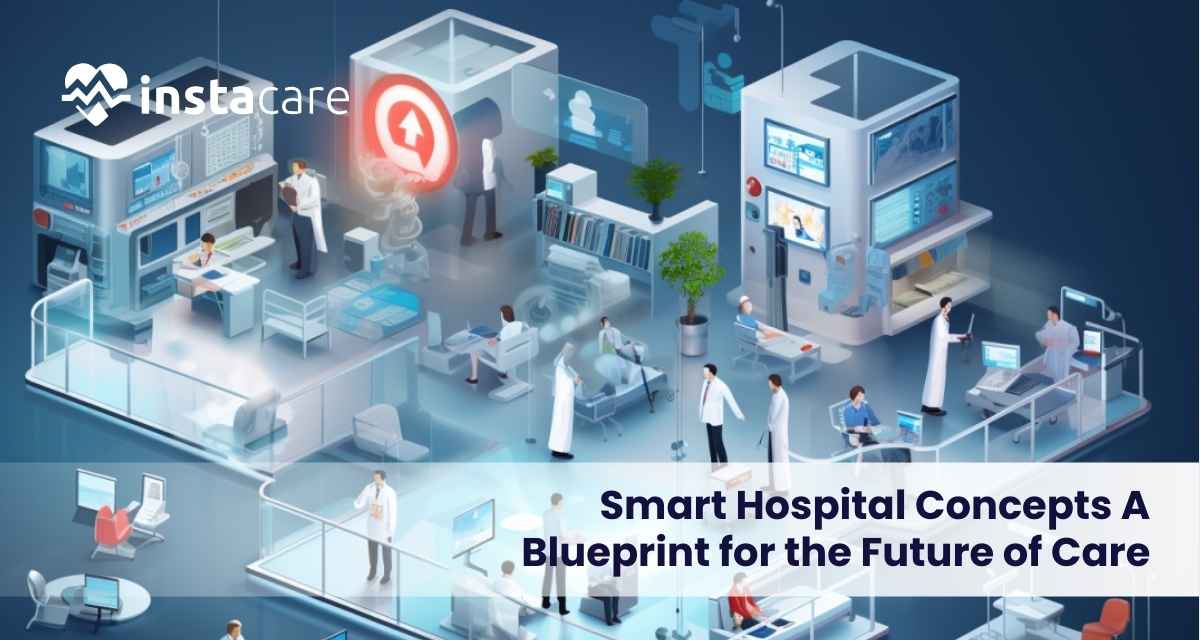
This is how this sector of health care is shifting in the age of fast-approaching technology expansions and the unrelenting pressure for better, more efficient patient care. Smart hospitals are transformational in delivering care by integrating IT support and data-chain drives with operational and practice advances to advance the quality of care in the delivery process. This article delineates the core concepts of smart hospitals, their benefits, challenges, and vision for the future of care. What is a Smart Hospital? A smart hospital leverages advanced technology and analytics to make possible improvements to all those activities involved in the delivering of health care. This includes integration of Internet of Things (IOT) devices, Artificial Intelligence (AI), telemedicine and electronic health record systems (EHR) to allow for efficient seamlessness from the patient end as well as from the health care provider’s perspective. This means better quality care at lower costs with greater patient satisfaction. Key Features of Smart Hospitals Connected Medical Devices: IoT-enabled medical equipment is used by the smart hospitals, so they can converse with one another and with central systems. Patient’s vital signs or medication adherence or any other health metrics can be monitored in real time using IoT. Advanced Data Analytics: Advanced data analytics tools are applied to patient data to identify trends and predict outcomes. It helps with proper clinical decisions and enhances operational efficiency. Telemedicine: Smarter Hospitals integrate remote consultations and telehealth services into their systems. This gives access to their medical care from the comfort of home, especially when they have chronic conditions or reduce a hospital visit. Automated Processes: It’s a big issue for workflow optimizing in hospitals. Automation can make administrative burdens that are associated with scheduling appointments and inventory management decrease and, hence, the risk of human error. It centers on the patient him/herself while designing spaces that better enhance the comfort and accessibility of patients. Features include navigation or wayfinding mobile apps, digital check-in kiosks, and patient portals-all aiming at a smooth healthcare journey. Environment-Friendly Practices: Most of the smart hospitals are constructed with sustainability as one of its prime objectives-the lesser consumption of energy, reduction of wastes, and using environment-friendly materials to reduce their ecological footprint. Advantages of Smart Hospitals 1- Excellent Patient Outcomes Smart hospitals use real-time data and analytics to ensure a better patient safety and effectiveness in the treatment. Monitoring would allow complications sooner that will lead to timely intervention so as to save life. 2-Improved Operational Performance Automation and data-driven decision help to automate the working processes of a hospital by removing delays and ensuring balanced resource allocation, which impacts the efficient usage of staff and facilities by a hospital, thereby reducing operational costs. 3- The New Patient Engagement The smart hospitals lead to patient involvement in the decision-making process on treatment through digital means of accessing healthcare information and educational inputs as well as communicating with healthcare providers. More active patients are more likely to adhere to the recommended lines of treatment and be involved in preventive care. 4- Cost Reduction Smarter hospitals could thereby significantly reduce the cost of healthcare by managing chronic conditions better and subsequently lowering hospital readmissions as well as operational efficiency. It also facilitates telemedicine, reducing in-person visits, which in turn cuts down on associated travel and expenses for patients. 5- Increased Collaboration Data exchange between various departments and external care providers facilitates collaboration and maintains continuity of care. Such an integrated approach will see much more effective treatment plans and better patient outcomes. Book Free Demo Barriers to the Implementation of Smart Hospital Concepts 1- Significant Start-Up Costs Implementation of smart hospital systems entails massive investment in infrastructure, software, and training. Many healthcare organizations lack adequate funds to finance such ventures. 2- Patient Information Confidentiality and Security Issue Greater reliance on digital systems also presents critical concerns about the privacy and security of patients’ information. The problem can only be fought with better cybersecurity incorporated into the IT system for protection of sensitive health information against breaches. 3- Inadequate Interoperability Seamless communication and data transfer among heterogeneous systems and devices are the essence of functionality in smart hospitals. The biggest issue with legacy systems is that most of them are not interoperable, which makes it challenging to integrate. 4- Change Management The transition towards the adoption of a smart hospital model calls for cultural and operations changes within the healthcare organizations. Even the staff may resist the new technologies or workflows and, thus, require all-inclusive training and change management strategies. 5- Regulatory Barriers Smart hospitals in healthcare settings face complex regulatory environments as one of the inherent challenges in their adoption. Observance of both national and local regulations tends to slow the adoption of such initiatives. Future of Smart Hospitals As technology advances, smart hospitals seem bright to shine forward. Some of the major trends that will delineate their evolution include: 1- Artificial Intelligence and Machine Learning This will be achieved with the help of machine and deep learning which will be the core platform for enhancing the probability of various diagnostic techniques and improving the treatment technologies and predicting the likely outcome of a patient. The technologies will process humungous data analysis to find patterns that even the human clinician misses. 2- Wearable Health Technology Plentiful wearables measuring health parameters will empower the patient to take control over his or her own health. Wearable device data may even be fed into intelligent hospitals to provide timely insights and interventions. 3- Virtual and Augmented Reality VR and AR technology can transform medical education, patient education, and even surgical practice. Already complex medical information can be visualized in new dimensions with this immersive technology to build better hands-on training for health practitioners. 4- Blockchain Technology in Health Data Management Blockchain will change how health information is handled by employing safe methods of storage and data sharing that decentralize patient data. Data privacies can be enhanced greatly while interoperability across health systems can be improved immensely. 5- Population Health Management Population
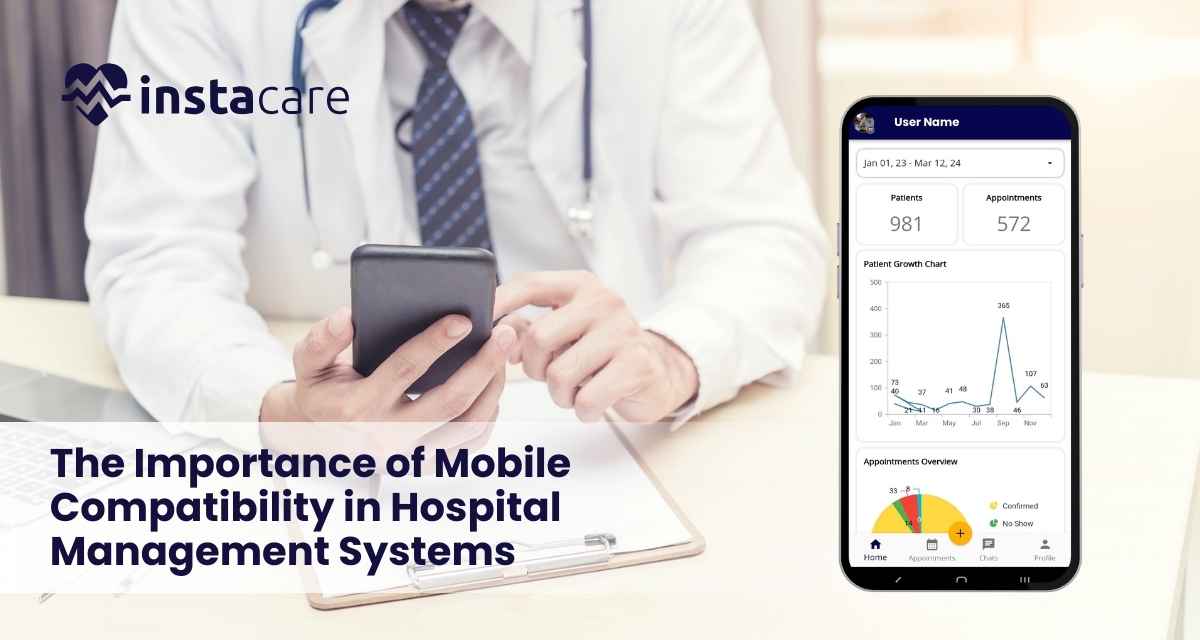
As the delivery of healthcare becomes mobile friendly, issues of compatibility of Hospital Management Systems (HMS) with mobile devices have emerged. Healthcare smartphone applications give healthcare professionals, patients, and health care administrators the ability to access important information in real time that can help to reduce redundancy and facilitate interaction. Improving Access for the Practitioner Mobile HMS allows the healthcare providers to use their mobile device to obtain different information, patients’ records, medical history, and the prescribed treatment. The concept removes the use of a computer terminal thus reduces time, relevant especially in busy centres such as ER & ICUs. When patient records are easily accessible, doctors and nurses would get to make the right treatment decisions faster; thus being of great assistance in emergency times. For consultants who can be required to provide information on patients online without having to see the patient physically, it is convenient to access patient’s information from anywhere. This access fosters co-ordination and guarantees that patients do not have to wait for the specialist in physically transporting them to the place hence, patient care is not interrupted. When a hospital is mobile-compatible the various stakeholders in the hospital will easily be in touch with the relevant information hence a better coordinated healthcare service provider. Simplifying Business Procedures There are so many administrative procedures that managers provide in hospitals including the daily management of bed schedule and staffing. Mobile-compatible HMS helps them to control and edit schedules, observe the patient flow and manage operational activities on their smartphones. They help to minimize bureaucratic constraints in operations thereby making it easier for a business to run efficiently throughout without considerable hitch during busy seasons. It also supports the approval of tasks of a higher level of authorization such as medication administration, and procedural decision. Supervisors gain the ability to approve or review the request from their mobile devices thus reducing the time between the request and delivery of services to a patient. This capability helps to simplify the processes, improving general productivity within a hospital and letting staff spend more time with patients rather than being busy with forms. Book Free Demo Enhancing Patient Participation and Satisfaction An HMS designed to be compatible with mobile devices enhances patient involvement in healthcare. The other benefit is that through a, patients have increased mobility which enhances the patient record access, lab results, prescriptions, as well as treatment plans. Also, through mobile platforms, patients can arrange an appointment, request a refill, or get a reminder of a further appointment or the result of a recent examination. It also saves time for patients and the health facility staff because the use of mobile applications eliminates the constant visiting of the hospital by patients seeking information. Moreover, the mobile HMS applications always help in communication within the application so patients have an option of asking questions, asking for clarification or even getting a follow up on the doctor’s instructions among others. It assists in enhancing patient satisfaction because patients are assured of being part and parcel of the health process. Enabling The Inputs And Control Of Live Data Operations The real-time data is most useful in healthcare because it enables the provision of efficient and accurate healthcare. When adding the HMS solution is integrated for mobile use, doctors along with nurses are able to input information into the HMS system as they attend to patients. This real-time entry minimizes some elements of error that would result from delay in data entry or perception of printed paper. For patients on chronic diseases or on critical conditions, the compatible systems allow constant tracking within the system through wearables and IoT integration. Patients can have real-time discharge with their healthcare professional via mobile application and get real-time tracking of physiological parameters including heart rate, blood pressure, glucose levels etc. Because patient vitals can be accessed instantly, patient conditions can also be addressed faster and treatment delivered more proactively. Increasing Security and Compliance The security of patient data is always a concern to any HMS due to the kind of information that is involved. Mobile-compatible systems are a fact that guarantees data accessibility by using sophisticated encryption and authentication options. To ensure the patients’ data confidentiality when accessed from mobile HMS, there is multi-factor authentication, biometric verification, as well as encrypted data transfer, compatible with mobile devices. Supporting Telemedicine and Remote Care Telemedicine has emerged in the last few years as a powerful source to reach patients living in remote or underserved areas. HMS plays a key role in facilitating the delivery of services through telemedicine with capability to support video calls by doctors to communicate with patients, access their history, and provide prescriptions all through a secured mobile interface. For patients who cannot physically visit a hospital, mobile access to HMS provides them with the avenues necessary for interaction with their healthcare providers and receive services from home. This allows an increased number of patients to access health care, decreases hospital congestion, and develops cost-effective utilisation of resources. Mobile-friendly HMS-based telemedicine guarantees that, even in cases where direct access to health care facilities is not possible, the continuity of care is maintained. Improved Efficiency of Inventory Management Another area very essential to a hospital is in the inventory management since access to all medical supplies and equipment in time determines how patients’ conditions are restored. The HMS is developed to be mobile-compatible that tracks stock levels in real-time and allows the different staff to update these stocks from their mobile. This is efficient enough such that it ensures availability when needed; hence, fewer chances of shortages that will delay patient treatment. Streamlining Communication and Collaboration Hospitals form a network of departments which must communicate effectively with each other for the smooth flow of patient care. Mobile-friendly HMS allows for effective interdepartmental communication as members can send secure messages, share notes, and contribute to treatment planning in real time. For example, radiologists can share the imaging results directly with the surgeons, and urgent decisions