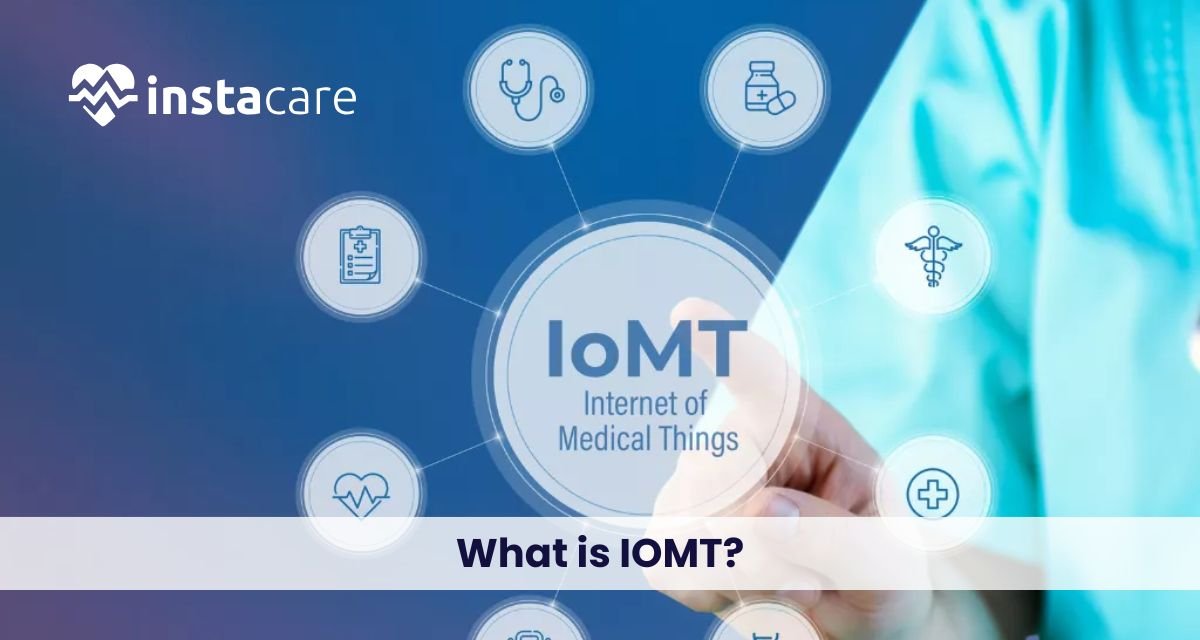
Internet of Medical Things (IoMT): Applications, Benefits, Devices & Future in Healthcare Internet of Medical Things devices (IoMT) are transforming the health industry at a very fast rate by integrating health-related devices, IoMT applications in healthcare, and services with internet technology. As healthcare systems globally are shifting towards value-based care, IoMT in health offers a promising array of solutions to enhance patient outcomes, business performance, and decision-making in real-time. For B2B healthcare stakeholders such as device companies, payers, health IT companies, and hospitals, understanding IoMT is essential to be competitive and future-ready. From telemedicine patient monitoring to AI-driven diagnostics, IoMT is revolutionizing the delivery, management, and experience of care. What is IoMT? These devices are really great, they do a lot for the patient who interprets health data collected by the devices into a digital platform. For instance, these devices send real-time health data to reporting systems, and clinicians can view patient health information continuously to avoid problems sooner and make decisions quickly, based on relevant data. IoMT brings physical devices such as monitors, wearables, and other hospital-based medical equipment into cloud computing and analytics. Unlike traditional IoT, however, it is a rollout extension specifically catalyzed in a healthcare environment and follows healthcare standards and regulations. With the digital revolution picking up momentum, the IoMT medical devices market is to grow exponentially with the growth fueled by trends of chronic disease management, aging populations, and telemedicine delivery. How does IoMT Works? IoMT operates on a technologically advanced yet efficient chain of networked devices, cloud infrastructure, and analysis engines. This is how it works: Data Acquisition: Patient data is gathered through sensor-based devices such as heart rate monitors and other blood sugar monitoring devices like oxygenation sensors for blood levels. Linkage: Such information is transmitted wirelessly over Bluetooth, Wi-Fi, or through cellular networks for uploading from the healthcare systems into cloud-enabled platforms. Collation: This information is cataloged and saved in Electronic Health Records (EHRs) and in various other clinical databases. Analysis: Pattern detection among deviation finding and action-taking is done by the data through Machine Learning and Artificial Intelligence algorithms. Alerts and Actions: Live alerts are sent to healthcare providers, allowing for faster response rates and improved-quality delivery of care. This is the foundation for patient monitoring and asset tracking, inventory tracking, and process improvement in healthcare organizations. IoMT Device Types There are a variety of IoMT medical devices, each with a different application in the healthcare delivery process: 1. Wearables Such as devices like smartwatches, ECG monitors, and fitness trackers monitor physical health information and transmit them real-time to physicians or mobile applications. 2. Home Monitoring Devices They are online-enabled blood pressure meters, electronic thermometers, glucometers, and oxygen levels monitors. They are pivotal to home monitoring of patients and management of chronic diseases. 3. Implantable Devices Pacemakers, insulin pumps, and neurostimulators are some of the products that fall under this category. The products continuously monitor and report round the clock, and this has the impact of enhancing patient safety as well as early detection. 4. Clinical-Grade Hospital Equipment In the hospital context, IoMT in hospitals involves smart beds, mobile imaging devices, and networked infusion pumps that track usage, maintenance requirements, and patient response. 5. Telemedicine Kits IoMT allows high-quality remote consultations with equipment such as digital stethoscopes, high-definition video cameras, and real-time diagnostic devices. Advantages of IoMT IoMT offers various strategic advantages to health care institutions and technology vendors. The major advantages of IoMT are: 1. Real-Time Remote Monitoring With IoMT and tele-patient monitoring, physicians can track patients’ vital signs remotely, minimizing hospital visits and chronic care enhancements. 2. Operational Efficiency IoMT also maximizes functionality by enabling predictive equipment maintenance, supply chain automation, and patient flow optimization via data analytics. 3. Lowered Costs Complication prevention, reduced readmissions, and less workload via manual reduction, IoMT enables healthcare systems to minimize the cost of care while not affecting quality. 4. Enhanced Patient Engagement Home wearables and monitoring sensors that engage patients have a greater likelihood of adopting proactive disease management, increasing adherence and outcomes. 5. Data-Driven Decision-Making Inextricably linked, IoMT platforms offer clinicians real-time data, enabling earlier and more individualized treatment protocols. Book Your Free Marketing Consultation Challenges and Risks of IoMT While optimistic, IoMT also faces several technical as well as operational challenges that need to be tackled by the stakeholders: 1. Cybersecurity Threats IoMT cybersecurity in healthcare is of the utmost importance. These devices are vulnerable targets unless secured. Vulnerabilities include data breaches, ransomware, to illegal entry into underlying systems. 2. Confidentiality and Compliance Handles sensitive patient information with great concern for data protection laws like HIPAA (USA) or GDPR (EU). IoMT patient data protection is both technical as well as regulatory. 3. Interoperability Issues IoMT devices are on various platforms or standards, and it is difficult to integrate them with the hospital system. Poor interoperability not only does it inhibits scalability but also affects accuracy in data. 4. Implementation Costs Although long-term ROI is desirable, front-end costs, device purchase, IT infrastructure replacement, and employee training, are conceivable. 5. Reliability and Accuracy of Devices Medical devices are required to provide accurate, trustworthy information. Device failure or false signals can result in tardy or misguided treatments. Future of IoMT in Healthcare The future of IoMT is also surrounded by big healthcare innovation and digital health trends. This is what’s coming next: 1. AI-Powered Healthcare The integration of IoMT and AI in healthcare will provide advanced diagnostics, workflow automation, and real-time clinical decision support. 2. Edge Computing & 5G Improved and faster connectivity will allow devices to provide local computation (edge computing) in hopes of reducing latency and delivering real-time insights in the majority of acute care settings. 3. Blockchain for Data Safety Blockchain was investigated as the technology for safe, open, and tamper-evident records for IoMT patient data safety. 4. Predictive and Preventive Care More smart IoMT will make predictive

7 Ways LIMS Can Automate Your Lab As more laboratories embrace digital technology, automation is now fast becoming an essential building block of laboratory operations. Automation helps keep track of huge volumes of samples, maintain data integrity, remain compliant, and assists in Optimized lab workflows to be highly competitive in scientific research or diagnostic operation. A Laboratory Information Management System (LIMS) provides all the solutions necessary. By implementing a LIMS, laboratories can automate processes, minimize human errors, and enhance productivity in all aspects of work. This article discusses what LIMS automation is all about and delves into seven tremendous ways it can automate and revolutionize your lab. What is LIMS Automation? LIMS automation involves the method of using computerized software functions and tools within a Laboratory Information Management System to carry out routine or intricate operations automatically. To enhance precision, reduce turnaround time, and increase the efficiency of operations in the laboratory. LIMS automation enhances the automation of operations such as data capture, scheduling of tasks, management of workflows, reporting, and complying with regulations to lead to maximized performance of the laboratory. Learn more about LIMS Automation. Significance of Automation in Today’s Laboratories Meeting the Needs of High-Volume Operations: Today’s laboratories need to analyze thousands of samples and produce high volumes of data daily. Manual data entry and documentation just can’t meet this need. Automation allows laboratories to manage higher workloads without sacrificing speed or accuracy. It guarantees results are delivered on time, eliminating backlogs and turnaround times. Improving Accuracy and Data Integrity: Human error is among the major sources of erroneous results in laboratory settings. Automated systems provide uniform performance through reduced human intervention. Whether it is data input, computation, or sample traceability, automation guarantees that each process follows predetermined protocols. Thus, the integrity of better data and reproducible scientific results. Automated Compliance and Reporting: These rigorous regulatory demands upon laboratories, which include comprehensive documentation and traceability, are known. The logs automatically kept by the system provide an accurate record of all actions for audits, minimizing human error to the extent possible, which is vital for inspections and maintaining certifications. Assisting Laboratory Personnel: By means of automation in routine and administrative jobs, laboratory professionals can concentrate on the analytical, research, and strategic aspects of work. This boosts job satisfaction, and it consolidates the lab as an innovational and scientific space. Here are 7 Ways LIMS Can Automate Your Lab 1. Automated Data Capture Manual entry of data is one of the most prone-to-error operations within laboratories. LIMS offers automated capture of data, capturing data directly from devices and instruments. There is no manual transcription, which minimizes the risk of typographical errors or missing information. Such equipment as robotic pipettes, spectrophotometers, and chromatographs can interface with LIMS for accurate and real-time data acquisition. With automation, traceability is facilitated, as well as decision-making time using sound results. 2. Task Scheduling in the Laboratory A well-organized lab operates like a well-oiled machine, and that’s where scheduling tasks in the lab comes into play. LIMS can automatically schedule task assignment by calculating resource availability, prioritizing urgent samples, and assigning staff and equipment usage in an optimal way. For instance, routine quality control tests, instrument calibration, and maintenance schedules can be automated without manual intervention. It ensures that there are no skipped tasks, balanced workloads, and timelines consistently met, increasing overall lab productivity. 3. Effective Lab Workflows Workflows form the foundation of any lab process. LIMS enables labs to achieve effective lab workflows by defining step-by-step processes for different sample types, tests, and quality controls. These workflows are electronic and eliminate vagueness and guarantee consistency for several departments or sites. LIMS incorporates conditional logic, which allows the lab to reroute samples to re-test or further analyze them automatically based on initial results. This structured automation not only makes the lab more efficient but enhances the lab’s scale-up capabilities. 4. Automated Compliance within Laboratories Automated compliance in laboratories with regulatory standards such as ISO, CLIA, and FDA is necessary. Automated laboratory compliance with LIMS ensures that every activity and data point is monitored with appropriate timestamping, user IDs, and version control. Automated audit trails and compliance reporting decrease the administrative workload of laboratory personnel. Automated reminders for calibration, validation, and certification due dates ensure laboratories remain compliant and inspection-ready at all times, therefore eliminating the potential for penalties or shutdowns. 5. Remote Access to Laboratory Management The modern lab environment is usually in the form of remote workers or multi-location facilities, and therefore remote access to lab management becomes increasingly important. A cloud LIMS allows trained staff to access lab data, monitor workflows, and generate reports remotely. This is advantageous when lab managers, researchers, and QA personnel need to manage processes without being physically present. Real-time dashboards with user-specific access control support operational transparency and data safety. 6. Lab Calculations Done Automatically Laboratories typically require lengthy and monotonous mathematical computations for some tests and experiments. Manual computation is time-consuming and error-prone. LIMS provides Automated calculations in labs by combining algorithms and formulae into the system. Reproducibility, accuracy, and speed are provided across analysis by this. In case it’s for the calculation of concentration, dilutions, or rate velocities, computer-assisted computation makes the burden light on the workers in laboratories and ensures reproducible and accurate outcomes. 7. Reporting and Documentation Automation Accurate and timely documentation is the key to lab performance, regulatory compliance, and client communication. Reporting and documentation automation becomes a piece of cake with LIMS. The system is able to generate standard reports, custom formats, data summaries, and trend analysis automatically. Reports can be run at pre-specified intervals or triggered by some events, like completion of a test or approval of a sample. This automation saves time, makes things more transparent, and allows labs to maintain an orderly digital repository of all the important documents. Book Free Demo Facilitating Capabilities for Lab Automation Inventory and Sample Handling: A good LIMS possesses Inventory and sample management modules that monitor

Why InstaCare Is the Best Clinic Management System for New Practices With the fast-paced nature of the healthcare industry, clinics need efficient mechanisms for everyday operations that deliver quality patient care. InstaCare, as the Best Clinic Management Solution, offers a holistic solution to oversee everything from patient records to scheduling and billing, automating clinic procedures and guaranteeing hassle-free clinic operation. For modern-day healthcare practice, InstaCare makes administration easy and helps clinics stay organized while delivering quality care. InstaCare is not merely a software solution, but an overall system that streamlines clinic efficiency, minimizes overhead, and maximizes patient satisfaction. The centralization of several clinic management tasks within one system allows medical professionals to dedicate themselves to curing patients and as little time as possible to administration. InstaCare Clinic Management Software Features InstaCare as the Best Clinic Management Solution could come with a variety of powerful features for making the life of the clinic easy for both solo practitioners and health centers having multiple staff members. Be it a one-person practice or a coordinated team of healthcare professionals, InstaCare Clinic Management Software Features will deliver flexibility and usability associated with a tailored solution ideal for the specific requirements of particular clinics, resulting in simplified operations and ultimately increased efficiency. Patient Records Management: InstaCare combines patient records, providing instant access to medical history, test results, and treatment plans. With all the necessary information within reach, healthcare providers can make faster, more informed decisions with less effort. Appointment Scheduling: InstaCare’s user-friendly scheduling module allows easy scheduling of patient appointments. Auto-sent reminders to patients and clinic staff avoid no-shows and maintain the clinic’s smooth operation. Billing and Invoicing: InstaCare streamlines billing, enabling accurate billing and payment tracking. It provides financial reports that enable clinic administrators to track cash flow and avoid missing any payments. Inventory Management: InstaCare monitors medical supplies in real time, so clinics never run out of vital supplies. Low stock alerts enable clinics to prepare in advance, avoiding any disruption to patient treatment. Reports and Analytics: InstaCare’s reporting capabilities provide live information on all aspects of clinic operations. Patient load, revenue streams, and other critical statistics are at the disposal of managers and owners and can be utilized for taking decisions. These features make InstaCare the Best Clinic Management Solution today because it enables them to automate operations and enhance efficiency on all sides of operations. Advantages of Deploying InstaCare in Clinics There are many Benefits of using InstaCare for Clinics; it provides a simple method by which clinics can maximize efficiencies, reduce administrative costs, and enhance patient care. InstaCare automates and enables clinics to streamline scheduling, billing, and record management, allowing them to focus more on patient outcomes than on administrative tasks, ultimately enhancing the success of their practices. Improved Efficiency: InstaCare removes redundant administrative tasks like scheduling, billing, and record-keeping. This enables clinic staff to spend more time on patient care and streamlines workflow. Enhanced Patient Experience: With features such as appointment reminders and rapid check-ins, InstaCare enhances the patient experience. Decreased patient wait times and enhanced clinic layout are the consequences, thus improving patient satisfaction. Decreasing Costs: With no requirement for labor and reduced administrative mistakes, InstaCare saves clinics money in operations and staff expenses. Electronic billing and automatic stock management dispense with waste and errors too, bringing cost-saving benefits. Improved Decision Making: Built-in analysis features of InstaCare offer owners of clinics useful information about their clinics. From the financial status to patient trends, an analytics-driven model enables the clinics to take evidence-based decisions, resulting in improved outcomes. Compliance and Data Safety: InstaCare is fully compliant with industry regulations, and patient data is stored securely. The software utilizes robust encryption methods to secure sensitive data, ensuring clinics remain compliant and avoid incurring substantial fines. InstaCare is not simply automation; InstaCare assists clinics in lowering overhead, enhancing patient satisfaction, and making informed expansion decisions. Get InstaCare to Optimize Your Practice While the demands of administration and other non-patient-centered activities can take their toll on the quality of patient care, InstaCare enters the scene to fit the bill. Where InstaCare, as the Best Clinic Management Solution, comes in, all patient history, appointment, billing, and inventory can be considered from one point, and there are no more multiple systems or manual processes to deal with. This great reduction in concurrency will drastically Streamline Your Practice with InstaCare, saving time and increasing efficiency and minimizing errors even more. Seamless Integration: InstaCare combines a number of clinic functions such as scheduling, billing, and patient management into one. InstaCare makes it easy to manage the clinic and provides good communication between staff. Time-Saving Automation: InstaCare is saving time for employees and patients in clinics with task automation such as appointment reminders and billing. Automation of these routine tasks keeps them on schedule, freeing up employees to tackle more pressing issues when it comes to patient care. Streamlined Communication: InstaCare streamlines communication within from real-time patient information, scheduling, and inventory levels. This eliminates the likelihood of miscommunication and ensures that everyone on staff is on the same page. By implementing InstaCare, clinics can significantly reduce their administrative burdens, streamline processes, and allocate more time to delivering exceptional patient care. The convenience of the software in eliminating manual tasks and facilitating streamlined processes makes it an essential tool in healthcare businesses today. Conclusion Overall, InstaCare, as the Best Clinic Management Solution, offers revolutionary practices in the healthcare sector with a one-stop shop for daily management. With patient record management, scheduling, billing, and inventory management features, InstaCare helps clinics operate efficiently and reduce administrative costs. The capacity of InstaCare software to automate processes and optimize efficiency in clinics makes it the best solution for any clinic that can invest in improving patient care as well as ramp up operations. InstaCare is a whole package that not only assures clinics undergo a shift in adapting to their in-house challenges but also promotes patient satisfaction and