
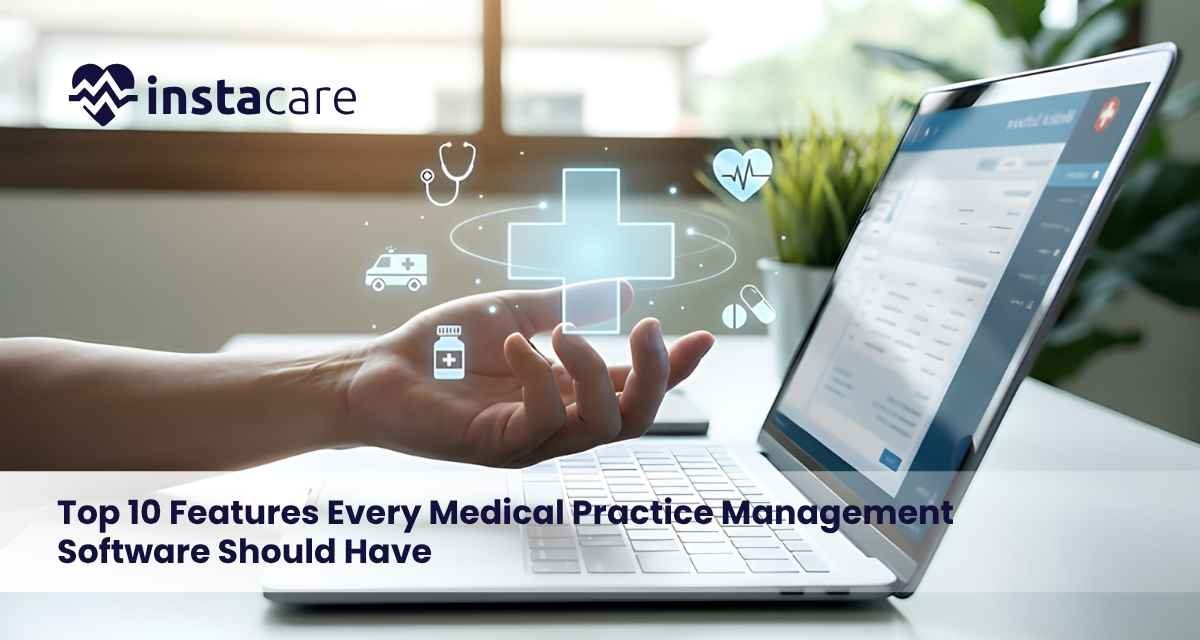
Top 10 Features Every Medical Practice Management Software Should Have Healthcare practice management goes beyond the necessary provision of quality healthcare. Daily management of patient schedules, billing, records, claims, reports, etc. demands efficient management. Completely automating these daily tasks with medical practice management software provides better healthcare workflows as well as a better patient experience. Practice management software varies in offered capabilities. To smooth practice operations, it is essential to have a solid understanding of software features that will support core functionality. Below are the features we consider as the most essential that a medical practice management software solution should have. Scheduling and Calendar Management Practice management software should provide a powerful, efficient employee scheduling system. Staff should be able to reliably schedule, reschedule, and cancel patient appointments with minimal staff and scheduling conflicts. An effective and comprehensive scheduling module is one that supports: Multiple provider calendars Real time appointment availability Automated reminders Waitlist management Recurring appointments Color-coded scheduling views Email and text appointment reminders can also facilitate less missed appointments and improved patient engagement. Patient Registration and Demographics Practice management software should provide the capability to easily and securely collect and organize patient information. Practice management software should provide the capability to maintain patient profiles and provide patient contact, insurance, and emergency contact information, medical history, and consent documentation. An effective patient registration system should eliminate or reduce the paperwork and improve data accuracy as well as administrative staff data accessibility. Electronic Billing and Invoicing Integrated premium medical practice management software should significantly streamline the practice billing and invoicing process. Automated practice management software should be able to create invoices and charge, process payment, and manage collections. Helpful billing features include: Automatic invoicing Flexible payment methods Payment and balance tracking Financial summaries Refunds Billing efficiency strengthens cash flow and lessens the admin burden. Insurance Claims Management Manual insurance claims and poor insurance workflow equal increased claims processing times, as well as a higher probability of claim denials. A good practice management solution facilitates the entire claims process and eases the burden of tracking claims. Key claims management features include: Submitting certified electronic claims Checking eligibility Claims status tracking Detection of claims submission errors Denial management Resubmission of claims Increased claims processing times and decreased claims denials are direct results of these features. Electronic Health Record (EHR) Integration Though practice management software primarily focuses on the practice management aspect of the operations, integration of EHR Software is a great way to increase operational efficiency. Systems integration allows clinicians to access the clinical data they need, billing data, and scheduling data, without having to switch between multiple systems. Advantages include: Less duplication of data entry Enhanced communication Timely patient check-in Accurate documentation Greater coordination of care Patient Portal Today’s patients expect digital offerings when it comes to healthcare. A patient portal streamlines communication and lessens the volume of calls to healthcare staff. A patient portal allows patients to: Schedule appointments View scheduled appointments Access and download their medical notes and billing Request prescription refills Change personal information Send messages The self-service option is the best way to streamline operations and increase patient satisfaction. Reporting and Analytics Built-in reporting tools help managers view and analyze the performance of the business in both the financial and operational segments. Valuable reports might consist of: Revenues Stats on Appointments Productivity of Provider Demographics of Patients Balances Reimbursements from Insurances Rates of Cancellations Performance of Collections Analytics identify patterns. These can focus on better ways of doing things and promote growth that lasts. Managing Inventory and Supplies In many healthcare practices, management of some form of medication, vaccines, medical supplies and equipment takes place. A good inventory management system allows practice managers to keep control of their supplies and avoid wasting stock. Some helpful features of good inventory management systems are: Tracking of Stock Alerts for Low Stock Monitoring of Expiration Dates Management of Purchase Orders Management of Suppliers Reports on Usage Control of inventory means good management of finances, by having in stock what is needed and everything required to practice. Protection of Data and Compliance Healthcare practices are custodians of sensitive data about patients. System security and privacy compliance of data protection have high priority. Some of the security features of importance are: User Verification Access Control Based on Role Security of Data through Encryption Backups of Data to the Secure Cloud Audit Trials Logs Monitored Automatically Protection of Data along with Compliance of Security of Data is highly needed. Accessibility on Mobile Devices and Via the Cloud Practitioners in healthcare are increasingly required to have access to healthcare practice data from many different locations. Software that resides in the cloud allows users authorized access to data via a laptop, tablet, or mobile phone. Some of the advantages of cloud access include: The Ability to Schedule Remotely The Ability to Bill on the Go Access to Data with Instant Updates Automatic Updates of the Software Less Required Hardware Assistance with Recovery From a Disaster Cloud-based Systems are also a great benefit for Practices that have more than one location. Some Additional Features Worth Considering Aside from what is listed above, the modern practice management system can offer features that make things easier. Other functionalities can include: Automated patient notifications Telehealth Digital management of documents Online payments Staff Scheduling Task Management Referrals Lab Integration Prescriptions Managing multiple locations Voice Integration Dashboards Scaling operations, practice management software takes both staff productivity and patient satisfaction to the next level. Book Your Free Marketing Consultation Advantages of Medical Practice Management Software The robust features offered by modern practice management software have brought numerous improvements in the practice of healthcare.Some of these improvements are: Less admin work Easier to manage appointments Streamlined billing and payments Corrected claim submissions Higher patient satisfaction Better staff and patient communication Increased efficiency Improved operations Better finances and financial reporting Increased security of patient data and practice More time to be with patients Greater patient satisfaction The new software does the tedious
EHR vs Practice Management Software: Key Differences, Features & Benefits Technology has continued to define the core of healthcare in this era, allowing doctors to deliver quality patient care at affordable rates. The most crucial digital tools are Practice Management Software (PMS) and Electronic Health Records (EHR). Both applications have transformed the operations of clinics, hospitals, and private practices. Both are used concurrently but separately from one another. Every small and big healthcare practice needs to understand the distinction between EHR and a practice management system. Though EHRs are focused more on the enablement of clinical operations, PMS supports operations and administration. This article presents an elaborate comparison of EHR and practice management systems, the Difference between EHR and practice management software, outlines their advantages and disadvantages, and analyzes how integration will unlock the complete potential of a healthcare practice. What is an Electronic Health Record (EHR)? An Electronic Health Record (EHR) is not a computerized copy of the patient’s record. It is a single system that brings together all of the patient information into a system that can be accessed. EHRs are utilized by providers to: Capture patient demographics, history, and diagnoses Track medications, allergies, and immunizations Store laboratory test results and radiology images in one location Develop treatment plans and prescriptions Provide clinical decision support, i.e., drug interaction alerts According to practice management software capacity, EHRs are clearly miles ahead in terms of clinical care capacity. What is Practice Management Software (PMS)? Practice Management Software (PMS) makes medical centers operate smoothly from a functional perspective. It can also be referred to as the business engine of a practice as it enables everyday operations without interruption or glitch. A few of the key functionalities of PMS are: Scheduling and Appointments: Automatically sends reminders and reduces no-shows. Billing and Claims: Sends claims electronically to payers, tracks denials, and accelerates payments. Patient Registration: Automates check-in and updates demographics in the proper order. Reporting and Analytics: Provides financial reporting, productivity reporting, and performance metrics. Insurance Verification: Validates coverage before patient visits to minimize denied claims. PMS has a completely different role in the EHR and practice management system comparison debate, it is less about clinical records and more about practice efficiency. While EMRs and EHRs are doctor-centric, PMS brings the financial and business aspects of medicine into alignment. Key Differences Between EHR and PMS Though EHR and PMS complement each other, both serve to solve one unique problem. Let us examine Workflow differences in EHR and practice management differences a bit deeper: Core Purpose EHR: Stores and maintains patient health info for diagnosis and treatment. PMS: Managed by billing, scheduling, and administrative productivity. End Users EHR: Used primarily by clinicians, nurses, pharmacists, and lab techs. PMS: Managed by front-desk, billing, and administrative managers. Data Types EHR: Clinical information such as medical history, test results, and medication. PMS: Insurance, demographic, and financial information. Impact on Workflow EHR: Direct impact on the quality of patient care. PMS: Maintains business operations in a smooth running. Benefits of EHR The benefits of EHR software are numerous, and most go beyond patient documentation. Care organizations adopt EHRs for a plethora of reasons: Improved Patient Safety Embedded reminders alert practitioners about allergies or toxic drug interactions, preventing errors in medical practice. Improved Clinical Outcomes Having complete patient histories available, physicians can make well-informed decisions, leading to proper diagnosis and treatment plans. Provider Interoperability EHRs simplify data sharing between networks, and therefore, patients are not required to be re-run for tests or redo data. Efficiency in Record Maintenance EHRs are accessible and can be altered in real time, and are different from paper records. Patient Engagement Patient portals are standard in most EHRs, where one can receive lab test results, schedule appointments, or even interact with providers face-to-face. Advantages of Practice Management Software (PMS) Advantages of practice management software are financial inclined, and if effectively adopted, it can transform the productivity of a practice. Smooth Scheduling and Check-In Email or text reminders minimize no-shows and enhance patient flow. Efficient Billing and Revenue Cycle Management PMS reduces claim denials and increases reimbursement to practices. Administrative Effectiveness Administrative staff have fewer hours on monotonous work, free to spend more time attending to patient satisfaction. Improved Patient Experience Patients get quicker scheduling, quicker billing, and a smoother process in general. Data-Driven Insights Financial and operations reporting with PMS helps practices prepare for growth. Book Your Free Marketing Consultation EHR + PMS: Why Integration Is Important Having the two systems integrated is one of the best options to enhance practice operations. EHR and practice management integration bridges the communication gap between clinical and administrative processes. Advantages of Integration: Single Data Entry: Patient data keyed once into the PMS rolls forward into the EHR, saving time and minimizing errors. Quick Billing: Clinical documentation in the EHR can automatically populate billing codes in the PMS. Optimized View of Practice Performance: Financial and clinical results are measurable by providers. Improved Patient Experience: Patients enjoy continuous communication from scheduling to follow-ups. Choosing the Right Software for Your Practice Choosing the correct system is not easy. Some of the selection determinants are as follows: Practice Size and Specialty A sole practitioner may initially concentrate on EHR or billing and practice management software. Large hospitals require a complete, system EHR solution. Budget Implications EHR and practice management software is based on licensing fees, implementation, training, and support. Cost of EHR and practice management software. Long-term return on investment has to be calculated. Integration Capabilities Integrated offerings are offered by certain vendors or otherwise separate EHR and PMS offerings are designed to be integrated by others. Ease of Use Employee acceptance is key. The systems have to be easy to use and need minimal training. Vendor Reputation When selecting the Best EHR and practice management software, look for vendors who exhibit high customer support, compliance credentials, and successful scaling. Real-World Examples and Use Cases In a comparison of Practice management software vs EMR vs EHR, consider how each application

Investing in practice management software can really boost efficiency and profitability for a health care practice. But calculating its return on investment is more challenging. This guide is going to walk you through the key considerations and metrics to effectively evaluate the return on investment of your practice management software. Understanding ROI in Practice Management Software What is ROI? ROI or return on investment is considered as an important tool used to make a measure of investment profitability depended upon its investment cost. It is usually put forth in percentage and computed using the following formula, ROI=Cost of Investment Net Profit×100 While reviewing PMS, one needs to look at both tangible as well as intangible benefits. Why is it Essential to Assess ROI? Evaluating ROI is important for many reasons: It makes practices realize whether the investment is worth making. Budget Justification: The ROI calculation clearly provides justification for the budget. Identification of Improvement Areas: Through the ROI, it may point out where the software is underperforming and needs adjustments or improvements. Critical Metrics in Determining ROI 1- Cost Savings One of the biggest benefits of practice management software is that it offers operational efficiency, hence saving costs. Consider the following: Reduced administrative costs- Find out how many hours employees save by way of administration in these areas, including scheduling, billing, and managing the patient. For example, if the PMS cut down 20% time in those activities, calculate the monetary saving from salaries for such staff members. Reduced Billing Errors: Determine the ways in which the software has reduced billing errors, which translate into costly claim rejections and delays. Estimate the average cost of billing errors pre and post implementation of the software. Workflow Streamlined: Determine the ways the software has streamlined workflow processes and improved productivity. For example, if the software allows for check-in of patients more rapidly and scheduling of appointments more rapidly, determine the amount of time saved. 2- Revenue Generation Besides saving costs, practice management software can also help in generating revenue. Analyze the following key areas: More patients retained: The enhanced experiences of patients-for example, online scheduling and reminder capability-will enhance patient retention. Calculate the value gain of retaining more patients during a year. More patients will come as there would be easy scheduling and probably better marketing capabilities through software. Therefore, work out your additional income on extra patients. Faster realization of money from the insurance companies It could make for speedier claims processing which contributes to faster cash flows and improved cash flows are often brought with quicker payments. 3- Intangible Benefits While the tangible metrics can be useful, do not overlook the intangible benefits of practice management software. Improved Patient Satisfaction: It is likely that a patient will experience better satisfaction based on better scheduling, wait times, and communication; although this is a non-quantifiable result, satisfied patients are likely to return and recommend the practice. Staff Morale and Retention: An effective system reduces burnout and encourages high job satisfaction among staff; hence, a small rate of turnover occurs. It can calculate how many to hire and train so that savings can be figured out. Compliance and Risk Management: Determine how the software is helping to maintain compliance with healthcare regulation. Non-compliance can lead to fines or litigation. Software that makes it easy to maintain compliance with these requirements may save a lot of costs on fines. Book Free Demo Calculating ROI: A Step-by-Step Approach Step 1: Gather Data Accumulate pertinent information both prior and post-deployment of practice management software. Some of the necessary points to include would be Staff salary and hours used on administrative tasks Billing errors percentage along with cost of the error Count of patients retained plus retention percent; volume details Revenue from service Step 2: Step 2: Cost Accounting Calculate all costs that the practice spends on software by the following; Entry Costs: This would be software acquisition/implementation along with equipment purchased. Operational Expenses: subscription or service charges, and any other training cost. Step 3: Step 3: Savings and Income Based on the data gathered, find: Administrative Costs and Billing Error Savings: calculate how much of administrative costs and billing error would be decreased. Income Generation: calculate the income produced with improved patient retention and high volume of patients. Step 4: Compute Net Income Now, subtract the total costs from the combined cost saving and increased revenue to calculate the net profit: Net Profit = Total Savings + Increased Revenue – Total Costs Net Profit=Total Savings + Increased Revenue−Total Costs Step 5: Calculate the ROI Finally, in conclusion, use the formula for ROI to calculate the percentage return on your investment: ROI = Net Profit – Total Costs × 100 ROI= Total Costs Net Profit ×100 The fees of software implementation in new practice management in medical practices are $30,000 one time and $5,000 yearly in form of maintenance. The estimated billing error averaged around 15 per cent before the practice acquired the new software system, which cost them about $20,000 each year. Step-by-Step Calculation Cost Savings Administrative cost savings from saved time in scheduling and billing: $10,000 Less incurring because of fewer billing errors: $15,000 or a decrease assumed from accuracy More patients coming in: $25,000 (new patients brought in by improvement in marketing) Patient retention: $10,000 (increase in revenue from retained patients) Total Savings and Revenue: Total Saving: $10,000 + $15,000 = $25,000 Total Increase in Revenue: $25,000 + $10,000 = $35,000 Net Profit: $25,000 + $35,000 = $60,000 Total Costs: Cost initially: $30,000 Annual Maintenance Cost: $5,000 Total Costs: $30,000 + $5,000 = $35,000 Net Profit: Net Profit = $60,000 – $35,000 = $25,000 ROI Calculation: ROI = 25,000 35, 000 × 100 = 71.43 % 35,000 25,000 ×100=71.43% Conclusion of Case Study In this case, the practice management software returned a 71.43% ROI. This means it is very profitable to invest in it. Such analysis will assist similar practices to decide their potential software investment. FAQs 1- What factors do I need to consider in selecting practice management software? When you select practice management software, consider the following factors: Functionality: It should
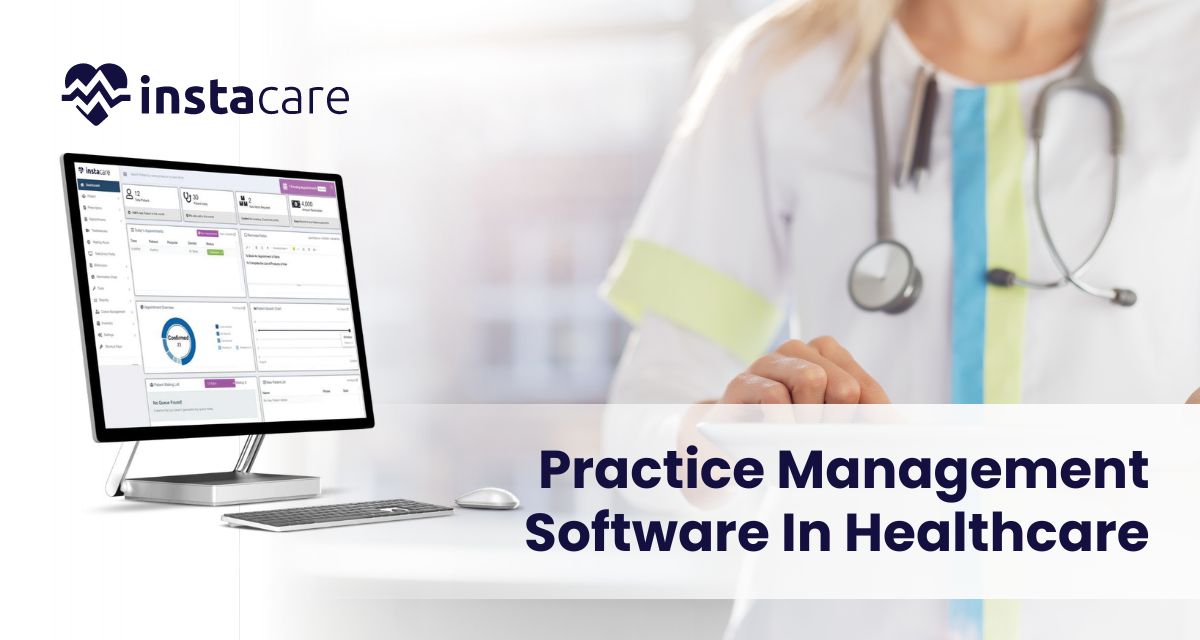
What Is Practice Management Software In Healthcare? Practice management software, often known as PMS, is an important tool in modern healthcare as it helps medical practices organize day-to-day activities. It ranges from schedule making of appointments to charges that are to be levied and from keeping records of all the patients in hospitals to any other Administrative duties that may be asked of it. In this article we shall discuss on a topic, what is practice management software; fundamentally reviewing features and benefits of practice management software showing how it makes difference in the success of healthcare practices. Introduction to Practice Management Software Practice management software on the other hand is an electronic system that is used for organizing the running of a medical practice. It eliminates the time otherwise spent on activities such as appointment making, patient registration, billing, and production of reports in that it frees up a lot of time for healthcare practitioners to attend to patients. Normally, practice management software is implemented in medical offices, clinics, and hospitals to help in organizing the practice in that the flow of operations and management of administrative procedures is enhanced. The software can be hosted on the web, meaning that the users can access from any place, or local, depending on the need of the practice. List of Characteristics of Practice Management Software Appointment Scheduling Another key practice of use of practice management software is in managing appointments. It can be used to book, modify, and generally control patients’ appointments by the staff. Other features could be in the nature of alerts in form of short messages or electronic mails to remind a patient not to miss an appointment or to adhere to the appointed date. Patient Registration And Record Management Patient registration is a standard module that is integrated in the practice management software that is used for storing of patient data including their demographic details and insurance details and medical history. This database makes the information to be easily retrievable and can be changed anytime; this makes the continuity of care to be achievable. Billing And Claims Processing Billing is an important activity in any healthcare practice, and the practice management helps in the simplification of billing activities. The possibilities of the software are the ability to create invoices, payments, and insurance claims. It can also encompass coding support to guarantee the appropriateness of the billing codes thus minimizing rejection of the claims. Reporting And Analytics Most of the practice management software has reporting features that enable the identification of different performance aspects of the practice. Such reports may include information concerning the organization’s financial performance, information on the patients, and the appointment schedule among others. This way of decision making enables the healthcare providers to make good decisions on the development and the improvement of the practice. Book Free Demo The Use Of Integration With Electronic Health Records: Some of the features of practice management systems are that many of them can be easily interfaced with the EHR systems. This integration means that both the clinical and the administrative data collected will be combined hence avoiding the duplication of data entry. Advantages of Practice Management Software Increased Efficiency When it comes to the functions like appointment scheduling, billing and patient record management, practice management software cuts down the overall time greatly. This automation means that much of the work that administration used to do will be done by the system hence freeing time for staff to perform other activities that cannot be automated. Improved Patient Experience It also improves health care by reducing time taken to secure an appointment with the doctor, reducing time spent waiting for a doctor and having comprehensive and updated records of the patient. This is also useful when it comes to patient satisfaction as they do not have to be often reminded regarding the bill that they have to pay. Enhanced Financial Management The practice management software also enables the healthcare providers to enhance the management of their financial needs. The software allows for revenue tracking, for expense control and financial reporting. Efficient and proper billing and claims processing also avoids revenue leakages from wrong or denied claims. Data Security And Compliance Many Non-small organizations are needed to practice many regulations such as HIPAA in the United States that specify the protection of patient information. Security measures are incorporated in practice management software in the form of data encryption and user authentication, with audit trails to check on the compliance of the practice with the legal requirements regarding protection of patient data. Scalability In this case, the target healthcare practice increases its operation overall requirement as it expands. An example of elemental software is the practice management software and this is a product because it is scalable where it can accommodate the needs of a growing practice. Incorporation of new providers, extension of services, and establishment of more offices, among others can be made easily because the software can be configured to meet the change without causing disintegration of the practice. Selection of Right Practice Management Software Choosing the right practice management software for your healthcare practice is very important if the advantages are to be realized. Here are some factors to consider: User-Friendliness Essentially the software should be friendly to everybody in staff irrespective of the level of their computer literacy. A good user interface minimizes the training aspect so that everyone within the team embraces the software. Customization Options Customization is a feature that may be equally valuable for every healthcare practice because practices have different needs. This could be in the form of field templates for bills, reports or to and from patients that should be integrated but can be modified or added to depending on practice needs. Integration Capabilities If your practice is already utilizing an EHR system or other technologies, there must be an opportunity to choose practice management software with a clear compatibility with all those tools. Interoperability means that information bypasses the limitation
The Benefits Of Implementing Practice Management Software In Your Practice Do you ever feel like the day-to-day operations of your practice are getting in the way of caring for patients? It’s a common issue that all health practitioners face, but it can often be solved with an additional resource such as practice management software. In this blog post, we’ll discuss why implementing practice management software can benefit your healthcare business – from streamlining administrative tasks to improving patient care and satisfaction. Read on to learn how investing in this technology could transform your clinical environment for the better! What Is Practice Management Software and How Does It Work Practice management software is a tool that streamlines administrative tasks and improves communication in a workplace. It has become increasingly popular in Pakistan in recent years, with more and more businesses turning to software solutions to increase efficiency and productivity. Practice management software can help with scheduling appointments, managing patient or client data, tracking billing and payments, and much more. These software solutions are designed to make work more manageable and to reduce the amount of time spent on administrative tasks. By using practice management software, businesses can focus on providing top-quality services to their clients or patients. Book Free Demo Advantages of Practice Management Software For Your Practice As a healthcare provider, managing your practice involves a lot more than just seeing patients. From scheduling appointments, managing patient records, to coordinating insurance claims, there are several important administrative tasks that need to be taken care of. This is where practice management software comes in. By using practice management software, healthcare providers and organizations in Pakistan can streamline various aspects of their practice and focus on what they do best – providing quality care to patients. With features such as automated appointment scheduling, patient record keeping, and real-time billing, practice management software can help save time, reduce administrative errors, and ultimately improve the efficiency of your practice. Tips for Choosing the Right Software for Your Practice As a healthcare professional, choosing the right practice management software can be a daunting task. With so many options available in the market, it can be overwhelming to determine which one will best suit your needs. However, selecting the right practice management software is crucial for the success of your practice. Not only does it streamline scheduling, billing, and record-keeping, it also improves the overall efficiency of your practice. In Pakistan, there are several options for practice management software, but it’s essential to choose one that fits your specific requirements. Take the time to research and compare software features, customer support, and pricing to determine which software is the best fit for your practice. View More: 6 Tips How To Choose Practice Management Software Benefits Of Automating Your Practice With Practice Management Software The benefits of automating your practice with practice management software are numerous, especially in the context of Pakistan. Practice management software helps streamline administrative tasks such as scheduling appointments, managing patient records, and billing. Adopting this software in Pakistan’s medical industry can significantly reduce errors, increase efficiency, and ultimately improve patient care. Additionally, practice management software can help healthcare providers manage their workload and track progress, allowing them to focus on what they do best – providing quality care to their patients. Therefore, those who are looking to enhance their medical practice should consider investing in practice management software in Pakistan, and take advantage of the benefits it has to offer. Key Features To Look Out For In The Best Practice Management Software Solutions When it comes to finding the best practice management software, potential buyers should focus on specific features that can make a significant difference in how efficiently and effectively their practice runs. In Pakistan, practice management software has become an increasingly popular tool for healthcare professionals as it simplifies time-consuming processes such as appointment scheduling, patient records management, and billing. Some key features to look out for include flexible scheduling options, intuitive record-keeping capabilities, and a user-friendly interface. Additionally, prioritizing software providers with reliable customer support and secure data storage measures can ensure a smooth transition to a paperless system. By investing in the right practice management software, healthcare professionals in Pakistan can streamline their operations and focus on providing excellent care to their patients. Overcoming Resistance to New Technology in Your Office Environment In today’s fast-paced world, technology plays an integral role in optimizing businesses and improving productivity. But for many office environments, the resistance to new technology can be a real challenge. That is why it is important to understand the benefits of integrating practice management software in your office, even if it is met with some initial pushback. Practice management software streamlines various aspects of running a business, including scheduling appointments, managing electronic medical records, and tracking finances. In Pakistan, the use of practice management software in office environments has become increasingly popular and can make a huge difference in managing tasks and increasing efficiency. By embracing new technology, your office environment can stay ahead of the curve and experience first-hand the many benefits and efficiencies of practice management software.
How Practice Management Software Can Help You Run a More Efficient Practice? Running a successful practice is complex. From staying up to date on government regulations, managing your staff, and providing quality patient care, the list of tasks can sometimes seem overwhelming. However, having the resources in place to help make these complicated tasks more efficient and streamlined can greatly improve both staff morale and operational outcomes. This is where practice management software comes in! Here we’ll take an in-depth look at how effective use of such technology can benefit health practices of all sizes when it comes to organization, communication, billing processes and more – helping you run a thriving business with happy patients who will return time after time. What practice management software can do for your business? Practice management software has become an essential tool for businesses of all sizes. This software has the ability to enhance the efficiency of operations and improve overall productivity. In Pakistan, the use of practice management software is becoming more widespread due to its ability to manage appointments, billing, patient records, and administrative tasks. With the assistance of this software, businesses can save time and streamline their workflows. Additionally, practice management software provides valuable business insights such as financial reports and performance analytics. By implementing practice management software, businesses in Pakistan can enjoy increased efficiency and productivity, ultimately leading to improved business outcomes. Focus on the five key features of practice management software that can streamline office operations Practice management software is a vital tool for healthcare practitioners in Pakistan, as it helps streamline office operations and improve overall efficiency. There are five key features of practice management software that can make a real difference in how efficiently a medical practice operates. These features include appointment scheduling, electronic medical records (EMRs), billing and invoicing, reporting and analytics, and patient communication tools. By adopting a comprehensive practice management software, healthcare professionals in Pakistan can effectively manage their practice and focus on delivering top-quality patient care. It is essential to select software that aligns with your practice’s unique needs and requirements to ensure optimal results. View More: Choosing the Right Practice Management Software for Your Firm Investigate how to set up and integrate the software into your existing infrastructure For healthcare providers in Pakistan, using practice management software is becoming increasingly vital to ensure smooth and efficient operations. But setting up and integrating this software into an existing infrastructure can be a daunting task for those who are unfamiliar with the process. Fortunately, with proper investigation and planning, this challenge can be overcome. It’s important to research the different types of practice management software available in Pakistan and determine which one would best suit your practice. Additionally, consider consulting with a professional who has experience in software integration to ensure a seamless process. With the right steps in place, the integration of practice management software can greatly benefit healthcare providers in Pakistan. Learn how to maximize automation capabilities with the software Practice management software is an essential tool for businesses, especially in Pakistan where efficiency is valued. With the right software, businesses can automate various tasks to free up time for more important things such as attending to clients’ needs. It’s important to note that automation does not mean a lack of human touch. Instead, it’s about streamlining workflows and providing an even better experience for your customers. By learning how to maximize automation capabilities with the practice management software, businesses can save time, increase productivity, and improve customer satisfaction. With its benefits, it’s no wonder why practice management software in Pakistan is gaining popularity. Explore ways to make sure you’re compliant with HIPAA policies and other regulations As a healthcare provider, it is crucial to stay compliant with the relevant regulations to avoid potential legal and reputation issues. One effective way to ensure compliance with HIPAA policies and other regulations is by implementing practice management software. This software includes features such as secure messaging, electronic document management, and patient portal, which can help healthcare providers to securely store, share, and access patient information in compliance with regulations. Pakistan, in particular, has seen a surge of practice management software in recent years, which makes it easier for providers to manage their administrative tasks, reduce paperwork, and ultimately, provide better patient care. By utilizing the right practice management software, healthcare providers can stay ahead of regulatory compliance, streamline their workflows, and focus on improving patient outcomes. Discover how to use the software’s analytics tools to track your progress and adjust strategies as necessary If you’re running a practice in Pakistan, then you’re likely already using practice management software to streamline operations. But did you know that this software also comes equipped with analytics tools to help you track your progress and adjust your strategies as necessary? By digging into your software’s analytics, you can better understand areas of your practice that are thriving as well as those that may need improvement. With insights on everything from patient satisfaction to revenue growth, you’ll be able to make data-driven decisions that can help take your practice to the next level. So don’t let this valuable feature of your practice management software go to waste – start exploring your analytics today! Conclusion Overall, utilizing practice management software can provide huge benefits to any medical practice. Using such software simplifies the burden of filing and updating medical records, allowing you to focus more on patient care. Furthermore, it also provides security for patient data and prevents you from having to run multiple programs for different tasks. All of these aspects contribute to an improved workflow, organization and efficiency within your business operations. Ultimately, these qualities are key in helping you build sustainability within your practice. By being able to complete tasks with greater accuracy and less time spent completing them, you are giving yourself the ability position yourself at a greater competitive advantage amongst other local practices. So don’t wait another day—explore the various features offered by

Boost Your Productivity with Practice Management Software Are you looking for ways to increase your productivity and efficiency? Practice management software is one solution that could be the key to helping you achieve both of these goals. Not only can this type of technology help streamline processes, but it also offers a variety of features designed specifically with health care professionals in mind. From electronic health records (EHRs) integration to allowing secure messaging between patients and providers, practice management software provides much-needed support within busy clinics, hospitals, or even solo practices. Read on to learn more about how implementing this system could boost your productivity and maximize workflow! Understand the Benefits of Practice Management Software Practice management software is an essential tool for any business that wants to run smoothly and efficiently. It is especially important in the field of healthcare, where there are many different aspects of patient care to keep track of. In Pakistan, practice management software is becoming increasingly popular due to the numerous benefits it offers to healthcare providers. This software can help streamline administrative tasks, improve patient care, and increase overall productivity. By using practice management software, healthcare providers can save time, reduce costs, and provide a higher level of service to their patients. Whether you are a small clinic or a large hospital, practice management software can help you manage your practice more effectively. How to Find the Right Solution for Your Business In today’s digital age, finding the right solution for your business can make all the difference in streamlining operations and boosting productivity. For businesses in Pakistan, implementing practice management software can be a game-changer. But with so many options available, it can be difficult to decide which one is the best fit for your unique needs. To find the right solution, it’s important to do your research, ask for recommendations from industry peers, and test out different software options before committing to one. By taking the time to carefully evaluate your options, you can ensure that the practice management software you choose will help take your business to the next level. Book Free Demo Get Organized – Develop a Clear Workflow In today’s fast-paced world, it’s essential to stay organized to keep up with daily tasks. The best way to do that is by developing a clear workflow. One of the key tools you can use to help you achieve this is practice management software. With its ability to streamline everything from scheduling appointments and billing to client communication and data analysis, it’s worth investing in a good one. Pakistan has seen an increase in adoption of practice management software, which has resulted in faster and easier work processes for legal, medical, and accounting professionals. By taking advantage of this technology, you’ll free up your time and resources, allowing you to focus on more substantial business matters. Automate and Streamline Administrative Tasks Streamlining and automating administrative tasks is essential for any business to operate effectively. The use of practice management software has gained popularity over the years by providing solutions for organizing and automating day-to-day administrative tasks. This software offers several features ranging from scheduling appointments, recording patient data, generating reports and invoices, to managing finances. Practice management software in Pakistan has allowed healthcare professionals to improve their workflow, enhance patient care, and reduce the likelihood of errors. By automating routine administrative tasks, medical professionals can focus on what matters most – providing quality care to patients. View More: Streamline Your Workflow with Practice Management Software Increase Efficiency With Instant Access to Information and Resources In today’s fast-paced world, businesses are always seeking ways to increase efficiency and productivity while simultaneously reducing costs. This is especially true for healthcare providers who need to manage their practice efficiently to ensure patients receive the best possible care. One of the most effective ways to achieve this is by implementing practice management software. With the increasing availability of such software, even in countries like Pakistan where the healthcare system is constantly evolving, healthcare providers now have instant access to patient and administrative data. With streamlined processes, automated communications, and efficient workflows, practice management software in Pakistan is helping healthcare providers optimize operations and, ultimately, enhance the quality of patient care. Make Scheduling Easier with Online Appointment Bookings Managing appointments can be a tedious task, especially in a healthcare setting where time is of the essence. However, the introduction of practice management software has made scheduling a whole lot easier. Now you can efficiently manage your appointments with online booking systems, such as those provided by practice management software in Pakistan. These systems are designed to save time and streamline administrative processes, allowing you to focus on patient care. With online appointment bookings, patients can easily book their appointments, receive reminders and even fill out forms before their visit. Practice management software has proven to be a valuable tool for healthcare providers, simplifying the process of appointment scheduling and leaving more time for patient care. Conclusion Ultimately, your business cannot afford to overlook the benefits of a practice management software system. By organizing and automating tedious tasks, practice management systems can help you increase productivity and optimize your workflow over time. As technology continues to evolve and progress, this type of software often becomes more reliable, user friendly, and cost effective than ever before. From streamlining client payments to tracking employee performance, practice management software is an unparalleled tool for businesses everywhere looking to achieve superior efficiency in their operations. By arming yourself with the right information, you can make an informed decision that best suites your individual business needs when it comes to selecting a practice management system. Start improving your organization today with the help of a trusted and innovative practice management system!

Choosing the Right Practice Management Software for Your Firm Choosing the right practice management software for your healthcare firm can be a daunting task. No matter what size business you run, finding the ideal solution that fits into your budget and supports your specific needs is critical to its success. With so many options out there – from comprehensive all-in-one suites with integrated services, to more aimed solutions such as electronic health records (EHR) – selecting the best one for you involves detailed consideration of functionality, compatibility and cost. This blog post seeks to help narrow down this decision by discussing some key features of quality practice management software and example applications available on the market today. Identify the type of practice management software you need When managing a practice, it’s important to have the right tools and resources, and one of the most important resources is practice management software. With so many options available, it can be overwhelming to determine which one is the best fit for your specific needs. Particularly if you’re operating practice in Pakistan, it’s essential to choose a software solution that’s designed to cater to local requirements and regulations. Whether you need software for appointment scheduling, billing and payments, patient records, or all of the above, it’s crucial to take the time to research and choose a practice management software that aligns with your objectives and budget. With the right software at your disposal, you can increase your efficiency, reduce errors, and focus on delivering the best possible care to your patients. Consider your budget and the cost associated with each option When it comes to managing a law firm, choosing the right practice management software is essential to ensure smooth operations. In a country like Pakistan, where the legal industry is rapidly growing, it’s important to invest in a software solution that can streamline your firm’s administrative tasks and improve productivity. However, with so many options available in the market, it can be overwhelming to pick the right one. One crucial factor to consider is your budget and the cost associated with each option. A solution that works great for one firm may not be feasible for another. To make the most informed decision, it’s important to analyze your firm’s unique needs and evaluate the cost and benefits of each practice management software option. With careful research and planning, you can choose the perfect software to optimize your firm’s management and boost your success. Book Free Demo Evaluate the features offered by each product and determine which are most important to your firm When it comes to managing a law firm, practice management software can be an invaluable tool. But with so many options available, it can be difficult to determine which one is the right fit for your specific needs. That’s why evaluating the features offered by each product is so important. Take the time to identify what aspects are most crucial to your firm, whether it’s document management, time tracking, billing, or something else entirely. And don’t forget to take into account any particular needs or challenges your firm might face. With the right practice management software in Pakistan, you can streamline your workload, improve organization, and ultimately provide better service to your clients. Research user feedback and reviews to get a better understanding of each product’s usability As a law firm in Pakistan, choosing the right practice management software is a critical decision. With many options available, it can be challenging to determine which software will best meet your business’s needs. One way to gain a better understanding of each product’s usability is to research user feedback and reviews. By scanning what others are saying, you can get a more accurate picture of each software’s strengths and weaknesses. It’s essential to consider the features that matter most to your firm and compare them to the feedback you find. With this approach, you can be confident in your choice and feel secure knowing that the practice management software you have chosen is the right fit for your firm. Prioritize security and data protection, especially if handling sensitive client information Choosing the right practice management software for your law firm is a critically important decision that can have far-reaching implications. In Pakistan, where the legal landscape is rapidly changing and becoming more complex, this decision is increasingly important. One of the key factors to consider when evaluating practice management software is security and data protection. With the ever-increasing amount of sensitive client information that law firms handle, ensuring that this information is secure and protected is vital. As you begin your search for the right practice management software for your firm, make security and data protection a top priority. Look for features like two-factor authentication, encryption, and regular security updates. Ensuring that your practice management software is secure will help you protect your clients and your reputation, and give you peace of mind knowing that the data you handle is safe. Research customer support services before making a commitment When it comes to choosing the right practice management software for your firm, there are a few things to consider. One of the most important aspects is the quality of customer support services that the provider has to offer. Especially in a fast-paced industry like law, time is valuable and any software issues can hinder the productivity of your firm. Therefore, it is important to research the customer support services of different providers, particularly if you are based in Pakistan, where practice management software providers may vary in the level of support they offer. By ensuring that the customer support is reliable and efficient, you can maintain the smooth running of your firm and feel confident in your choice of practice management software. Conclusion Ultimately, selecting the right practice management software for your firm is an important decision to make. The most successful implementations occur when you have identified the exact needs of your business and searched for a solution that meets those

Streamline Your Workflow with Practice Management Software Are you frustrated with the lack of efficiency and organization in your medical practice’s workflow? Trying to juggle patients, appointments, prescriptions, paperwork and more can be a daunting task. Practice management software can become an invaluable tool by assisting healthcare providers like yourself in streamlining processes and bringing order to everyday tasks. In this blog post, we’re going to explore how using modern practice management software can help save time while improving patient satisfaction at the same time! What is Practice Management Software? Practice management software is a vital tool for any business to run its operations smoothly. It is particularly significant in the healthcare sector, as it helps medical professionals manage their day-to-day activities efficiently. Practice management software in Pakistan, in particular, has been gaining popularity in recent years due to its ability to reduce costs, improve patient care, and streamline operations. Practice management software is an all-in-one platform that helps healthcare providers streamline multiple tasks, from scheduling appointments to managing patient information and billing. Integrating this software allows medical professionals to spend less time on administrative tasks and more time on patient care, which ultimately leads to better health outcomes. Whether you are running a small clinic or a large hospital, practice management software is an essential tool that can help improve the overall efficiency of your business. Why Practice Management Software is important for medical professionals In today’s fast-paced world, medical professionals are facing the daunting task of managing their practice efficiently and effectively. With the increase in the number of patients, managing appointments, patient information, and billing processes has become increasingly complex. This is where practice management software comes in. Practice management software is an essential tool for medical professionals in Pakistan, providing them with a range of features to streamline their practice, save time, and improve patient care. From scheduling appointments to maintaining patient records to the automated billing system, practice management software makes the day-to-day tasks of running a medical practice much easier. It’s no wonder that many medical professionals in Pakistan are now turning to practice management software to improve their working efficiency and ultimately, patient outcomes. Book Free Demo Benefits of Utilizing Your Practice Management Software In today’s digital age, the use of technology in healthcare has become essential for streamlining operations and improving patient care. Practice management software is one such powerful tool that is gaining popularity among healthcare providers in Pakistan. This software can automate and organize various tasks, such as scheduling appointments, billing, and maintaining patient records, making processes more efficient and accurate. With features like customizable dashboards, real-time data analysis, and easy integration with other healthcare systems, practice management software can significantly improve practice profitability, staff productivity, and patient satisfaction. By embracing this modern technology, healthcare providers can stay ahead of the curve and provide the best care possible to their patients. How to Set-up Your Practice Management System Setting up a practice management system can be a daunting task, but it can streamline your practice, leading to better patient care and more efficient operations. With the increasing availability of practice management software in Pakistan, it is important to select the right system for your practice. First, determine your practice’s needs and budget. There are cloud-based systems that may be less expensive but may have less functionality than software installed on-premise. Once you have selected a system, make sure all staff members are trained on how to use the software and establish protocols for data entry and management. Regularly evaluate the performance of your practice management system to ensure it is meeting your needs and adjust accordingly. By following these steps, you can set up a successful practice management system that can ultimately benefit your patients and your bottom line. Streamline Your Billing Process with Practice Management Software Managing a healthcare practice can be challenging, especially when it comes to billing. However, with the use of practice management software, this important task can be streamlined and made much more efficient. Whether you’re a small practice in Pakistan or a larger healthcare provider, practice management software can provide a range of benefits. Not only can it automate billing tasks, but it can also help to automate other areas of your practice such as scheduling, patient communication, and even inventory management. So, if you want to make your billing process easier and more efficient, consider implementing practice management software into your healthcare practice today. View More: A Comprehensive Patient Record Management System for Healthcare Providers Automate Scheduling & Reminders with a PMS Managing a medical practice in Pakistan can be a daunting task. With countless patients, appointments, and administrative duties, the workload can quickly become overwhelming. However, with the right tools in place, you can streamline your workflow and focus on what matters most: providing quality care to your patients. That’s where practice management software comes in. By automating scheduling and reminders, this software can help you stay organized and save time and effort. With practice management software in Pakistan, you don’t have to worry about manually tracking appointments or following up with patients. Instead, you can rely on technology to handle these tasks for you, allowing you to focus on your patients’ needs and your practice’s growth. Add Additional Functionality with Third-Party Integrations As more and more healthcare providers in Pakistan switch to digital practice management software, they are discovering the ease and convenience that these systems provide. However, many practitioners are not taking full advantage of the third-party integrations that can be added to their software. These integrations can add a range of useful features, from patient reminders to telemedicine capabilities. By utilizing these integrations, doctors and clinics can improve patient care, streamline workflows, and increase efficiency. So take a look at what third-party integrations are available for your practice management software, and consider adding some new functionality to take your practice to the next level. Conclusion In conclusion, practice management software is a great way to streamline your workflow

14 Tips To Run A More Successful Clinic Using Practice Management Software Do you want to leverage the latest advancements in healthcare to run a more successful clinic? Look no further! Use practice management software. With 2023 right around the corner, it’s time to get proactive and start planning your strategies for setting yourself up for success. In this blog post, we’ll be providing 14 tips that will give your practice the upper hand – from incorporating high-tech hardware into everyday operations and taking a data-driven approach when optimising patient care through remote monitoring technology or practice management software. Read on to find out how you can make the most of these tech advances during the coming year – and set yourself up for ongoing success into 2024 and beyond. Adopt A Tech-Enabled Approach To Improve Clinic Efficiency In today’s fast-paced world, adopting a tech-enabled approach to streamline clinic processes is more important than ever before. By utilizing software and digital tools, clinics can reduce the burden of manual paperwork, better manage patient information, and enhance communication among staff. The benefits of implementing technology in a healthcare setting are significant, allowing for greater efficiency, improved accuracy, and ultimately, better patient care. These advancements can include electronic health records (EHR), practice management software, appointment booking systems, and automated billing processes. Embracing technology can also improve the overall patient experience, as they will have access to their medical information and be able to communicate with healthcare providers in a more streamlined manner. By embracing these advancements, clinics can improve their operations, streamline workflows, and create a pathway to a more modern healthcare system. Set Up An Electronic Medical Record (Emr) System To Streamline Patient Care As the healthcare industry continues to evolve, one of the most significant advancements has been the widespread adoption of electronic medical record (EMR) systems or practice management software. By transitioning from traditional paper records to digital records, healthcare providers can streamline patient care processes and improve the overall quality of care provided. Implementing an EMR system allows healthcare professionals the ability to easily access a patient’s medical history, prescribed medications, test results and other important information at any point in time. This ensures that patients receive the best possible care and that healthcare providers have the necessary information needed to make informed decisions regarding treatment options. EMR systems are also cost-effective, efficient and contribute to a paperless environment, further contributing to the healthcare industry’s efforts towards becoming more environmentally friendly. Overall, incorporating an EMR system into your healthcare facility is a valuable investment that can greatly benefit providers and patients alike. Utilize Telemedicine Services To Reach More Patients And Maximize Appointment Availability Telemedicine services offer a convenient and cost-effective way to reach a larger number of patients while maximizing appointment availability. With telemedicine, patients can receive medical care from the comfort of their own homes, eliminating the need for lengthy travel times and reducing the risk of exposure to other illnesses. Additionally, telemedicine provides greater flexibility in scheduling appointments, allowing patients to receive care at a time that works best for them. This type of service is especially beneficial for individuals who live in rural areas, who may have difficulty accessing medical care otherwise. By utilizing telemedicine services, healthcare providers can improve patient outcomes, increase patient satisfaction, and reduce healthcare costs. Book Free Demo Invest In The Latest Medical Technologies Practice Management Software Investing in the latest medical technologies is essential for healthcare providers to offer superior treatments to their patients. With the constant advancements being made in the medical field, it is imperative that healthcare providers stay up to date with the latest technologies to improve patient outcomes and overall satisfaction. These technologies allow for quicker and more accurate diagnoses, minimally invasive procedures, and effective treatments for a wide range of medical conditions. By investing in these cutting-edge tools, healthcare providers can provide their patients with the highest level of care and ensure that they are receiving the best possible treatments available. It is a wise investment that pays off in the long run for both the patients and the providers. Increase Your Online Presence Through Social Media, Blogging, And Website Optimization In today’s digital age, having a strong online presence is crucial for businesses and individuals alike. From social media to blogging and website optimization, there are numerous avenues to promote your brand and engage with your target audience. Social media platforms like Facebook, Twitter, LinkedIn, and Instagram offer a cost-effective way to connect with potential customers and build brand loyalty. Blogging is an excellent way to establish yourself as an expert in your field and create content that resonates with your audience. Website optimization ensures that your website is user-friendly, easy to navigate, and search engine optimized to drive more traffic to your site. By utilizing these tools, you can increase your online presence and ultimately grow your business. Focus On Customer Service – Respond Quickly To Emails, Follow-Up With Phone Calls, Etc. For any business, customer satisfaction is the key to success. And one of the most effective ways to ensure that your customers are satisfied is by providing excellent customer service. This includes responding quickly to emails, following up with phone calls, and making any necessary arrangements promptly. By doing so, you can build trust with your customers, show them that you value their time and concerns, and ultimately create a better shopping experience. You can use practice management software. It may take some effort and time to provide top-notch customer service, but the long-term benefits are definitely worth it. Provide Excellent Patient Care Providing excellent patient care is crucial for medical practitioners to not only gain the trust of patients but also to ensure their successful recovery. Patient care involves treating patients with respect, empathy, and understanding. You can use practice management software. It also means informing and educating patients about their medical conditions and treatment options in a manner they can comprehend. In addition, medical practitioners need to be
- 1
- 2