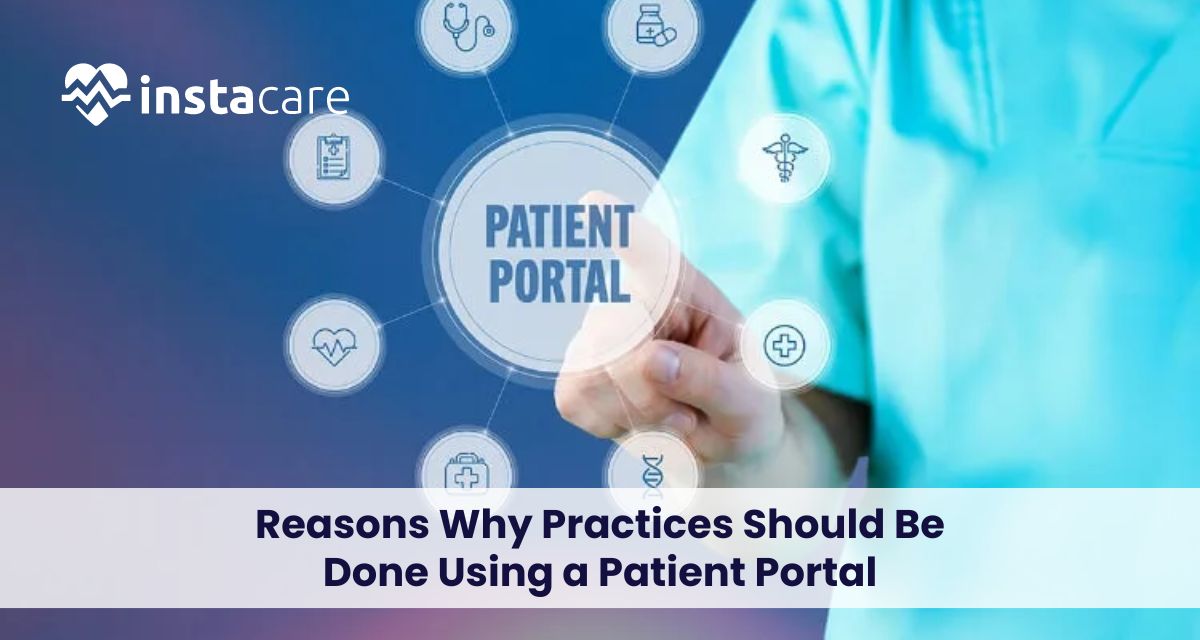
Primary Reasons Why Practices Should Be Done Using a Patient Portal Under the modern healthcare circumstance, a patient portal has proved to be a rich transformer and can enhance practical functions for medical practices with strategies to engage patients better. A patient portal is a comprehensive web-based platform from which patients are allowed to access a wide scope of healthcare services and information, such as viewing medical records and lab results, and managing future appointments—all from the comfort of one’s home or even on the go, that is why practices should be done using a patient portal. Here We discuss about some reasons why practices should be done using a patient portal!! Enhanced Patient Engagement Patient engagement is very instrumental for better health outcomes and the creation of a proactive wellness culture. A patient portal is a web-based platform that healthcare providers can put in place to allow easy access to health information by their patients, motivating them towards taking an active stance towards addressing their health-related needs. It allows patients to easily view the results of their tests, track their progress over time with graphic trends, and communicate in complete security with their healthcare team—all functionalities that make patients feel more active and informed about their care journey. Enhanced Communication Efficiency Effective healthcare delivery is based on effective communication. Patient portals provide one avenue for a patient to communicate with a health provider through features for secure messaging. Besides calling a doctor’s office or physically coming to the office, one can contact his or her doctor for any non-urgent issue, request refill of prescriptions, or clarify the prescription regime. This saves time for both the doctor and the patient and, at the same time, reduces the likelihood of miscommunication or sending messages without passing on the information. Streamlined Administrative Work Normally, administrative work devours a hefty resource in healthcare environments. Patient portals put a check to this by essentially automating the routine processes in appointment scheduling, pre-registration form filling, and the processing of billing and payment transactions online. This is, in fact, going to free up staff time, which is usually deployed in the more critical aspects of attending to patients, thus enhancing overall practice efficiency and patient satisfaction. Enhanced Patient Satisfaction This goes to the very convenience and quality of health care delivery to them. The greatest contribution that a patient portal can make in relation to the betterment of patient satisfaction is in the easy availability of personal health information and services by the patients themselves that is why recommendation for experts are Practices Should Be Done Using a Patient Portal. An interface designed to be friendly implies that the patients end up in greater control over their interactions in healthcare practices, something that assures highly enhanced patient experiences. They can view their medical records, know the treatment plans, and send a secure message to health providers, which promotes an increase in customer satisfaction and the retention of patients. Book Free Demo Allows Care Coordination Care coordination is very important in patients with complicated medical conditions or those who receive help from several service providers. Patient portals act as key promoters in sharing between health practitioners. Providers share medical records, test results, treatment plans, and other statutorily required information very securely to continue with the care process without repetition of medical errors. Such collaborative care management promotes overall health outcomes and makes the experiences of the patients more integrated. Empowers Patient Education Education is such a strong tool toward accomplishing health literacy and goes further in empowering patients to make appropriate decisions regarding their health. One of the key channels through which a healthcare provider can directly deliver education materials, preventive care guidelines, and an individual’s health information is a patient portal. Practices Should Be Done Using a Patient Portal, Portals encourage patient education and knowledge regarding diseases, treatment plans, and adherence to a healthier lifestyle. It allows easy access to current and precise information concerning health issues. This proactive approach to patient knowledge makes the health outcomes better and builds the trust-based sound association between patients and health providers. Facilitates Care Coordination It’s important that every provider of service in healthcare ensure the privacy of the patients and comply with strict personal data protection legislation—for instance, the Health Insurance Portability and Accountability Act of the United States. Security features prevent unauthorized access and protect sensitive health information in a patient portal. This technology provides very strong encryption protocols for safeguarding information, secure authentication procedures, and access control from any kind of unauthorized access, manipulation, or divulgence. Ensuring the integrity of the health information and allowing healthcare practice to instill confidence in patients about matter pertaining to confidentiality is a sure way of securing trust from them coupled with ensuring adherence to stipulated regulations. Supports Remote Healthcare Delivery In fact, this is really when telehealth services and a global pandemic like COVID-19 have brought out their need the most: for remote delivery of healthcare. Patient portals support virtual consultations, telemedicine appointments, and remote monitoring of a chronic (. These digital platforms offer a chance for patients to access healthcare providers from any point and thus get medical advice at the right time to receive the needed healthcare services without moving physically to reach them. Flexibility in the delivery of healthcare does increase patient convenience, but simultaneously also guarantees continuity during emergencies or disruptions in the traditional healthcare settings. Conclusion This allows medical practices to effectively gain in operational efficiencies and patient satisfaction by harvesting the digital platform for communication, administrative streamlining, and empowerment of patients with education and accessibility to health information. This paper concludes by stating that patient portals are certainly an information technology tool category that brings modernity into health delivery and calls for patient-centered care. Medical practices can effectively benefit in operational efficiencies and patient satisfaction by harvesting the digital platform for communication, administrative streamlining, and patient empowerment with education and access to health information. In summary, as a result of patient portals

Explore Document Management System in Healthcare Sector 2024 In today’s world, where technology is rapidly evolving, the healthcare field is also changing drastically. One significant change is how we handle documents. Instead of sticking to old-fashioned paper files, many healthcare organizations are now shifting towards electronic document management systems (EDMS). These systems make it easier to keep track of important medical documents and information by storing them digitally. This means less paperwork, easier access to patient data, and better protection for sensitive information. Sense Of Digitalization Imagine living in a world where computers, rather than filing cabinets, house all of your medical documents. Electronic document management systems operate on that premise. They save time and lower the possibility of errors by assisting healthcare providers in better organizing and managing their documentation. They also facilitate the safe exchange of information with other healthcare providers and organizations. Playing by the Rules In order to safeguard patient privacy and the security of patient data, the healthcare industry is highly regulated and subject to stringent rules and regulations. Regulations like as HIPAA and GDPR have to be followed by healthcare institutions in order to stay out of legal trouble and keep the confidence of patients. Patient information can be kept safe and secure by putting best practices for document management, like encryption and access controls, into practice. Streamlined Workflow In any healthcare setting, time is precious. That’s why it’s essential to streamline workflow processes as much as possible. Electronic document management systems can help by automating tasks and reducing the need for manual data entry. From scheduling appointments to updating patient documents, these systems make it easier for healthcare professionals to focus on what matters most: providing quality care to patients. Book Free Demo Improving Communication and Collaboration Healthcare is a team effort, and effective communication is key to providing the best possible care. That’s where interoperability comes in. By adopting interoperable document management solutions, healthcare organizations can ensure that information flows smoothly between different systems and departments. This makes it easier for healthcare providers to access the information they need when they need it, leading to better coordination of care and improved patient outcomes. Putting Patients First At the end of the day, it’s all about the patients. Electronic document management systems not only benefit healthcare providers but also empower patients to take control of their health. By giving patients easy access to their medical documents and other relevant information, healthcare organizations can encourage them to play a more active role in their care. This leads to higher satisfaction levels and better health outcomes for everyone involved. Preserving Accuracy and Reliability In the healthcare sector, accuracy and reliability of patient data are paramount. Electronic document management systems play a crucial role in ensuring data integrity by providing mechanisms for version control, audit trails, and data validation. This helps healthcare organizations maintain accurate and up-to-date documents, reducing the risk of errors and ensuring the quality of patient care. Enhancing Disaster Recovery Preparedness Disasters can strike at any time, posing a significant threat to the continuity of healthcare operations. Electronic document management systems offer robust disaster recovery capabilities, allowing healthcare organizations to backup and restore critical data in the event of emergencies such as natural disasters or cyberattacks. By safeguarding patient information against loss or damage, these systems ensure continuity of care and minimize disruptions to healthcare services. Facilitating Remote Access In our ever more connected society, having remote access to healthcare data is becoming increasingly vital for providing prompt and effective care. Electronic document management systems play a crucial role in enabling healthcare providers to securely access patient information from any location with an internet connection. This flexibility fosters seamless collaboration among healthcare professionals, irrespective of where they are physically situated. Ultimately, this capability leads to enhanced patient outcomes and satisfaction, as it ensures that medical teams can access and share vital information promptly, make informed decisions, and provide timely interventions regardless of geographical barriers. Thus, electronic document management systems not only streamline workflow processes but also contribute significantly to improving the overall quality of patient care in today’s digital healthcare landscape. Supporting Evidence-Based Decision Making Data-driven decision making is fundamental to improving healthcare outcomes and optimizing resource allocation. Electronic document management systems provide healthcare organizations with valuable insights into patient trends, treatment outcomes, and resource utilization. By analyzing this data, healthcare providers can identify areas for improvement, implement evidence-based practices, and ultimately deliver more effective and efficient care to patients. Reducing Paper Waste and Carbon Footprint In addition to improving efficiency and patient care, electronic document management systems also contribute to environmental sustainability by reducing paper waste and carbon emissions associated with traditional paper-based processes. By digitizing documents and embracing electronic workflows, healthcare organizations can minimize their ecological footprint and contribute to a healthier planet for future generations. Conclusion In conclusion, effective document management is essential for the success of healthcare organizations in today’s digital age. By embracing electronic document management systems, ensuring regulatory compliance, streamlining workflow processes, promoting interoperability, and prioritizing patient-centric care, healthcare providers can position themselves for success in an increasingly complex and competitive environment. By staying ahead of the curve and embracing innovation, healthcare organizations can deliver high-quality care while driving positive outcomes for patients and stakeholders alike. FAQs 1-What is an Electronic Document Management System (EDMS), and why is it important in healthcare? An electronic document management system, also known as an EDMS, is a piece of software that enables healthcare organizations to digitally manage their documents. It makes it simpler to organize, access, and secure medical documents and information by replacing traditional paper-based processes. Because it improves data security, reduces errors, and streamlines operations, EDMS is essential in the healthcare industry. 2-How do electronic document management systems guarantee that they adhere to HIPAA and GDPR regulations? To safeguard patient data and comply with regulations like HIPAA (Health Insurance Portability and Accountability Act) and GDPR (General Data Protection Regulation), electronic document management systems employ a variety of