


Lahore Chamber of Commerce and Digital Health | Bridging the Gap for Innovation The Lahore Chamber of Commerce and Industry (LCCI) is one of Pakistan’s leading trade organizations. It supports the business community by promoting economic growth, advocating for business interests, and driving industrial advancement. The LCCI fosters innovation and collaboration across various sectors, including the digital health landscape, where Instacare, a corporate member, plays a significant role. How is Instacare Contributing to Digital Health through LCCI? Instacare is an innovative leader in the health sector, offering a wide range of healthcare services through its telemedicine platforms. As a corporate member of LCCI, Instacare leverages its expertise in digital health to collaborate with other industry leaders, aiming to enhance healthcare accessibility and drive digital transformation within the healthcare industry. What Role Does Bilal Amjad Play in LCCI? Bilal Amjad, the CEO of Instacare, actively represents the Integrated Marketing Committee as a member of LCCI, contributing to the development of the healthcare sector in Pakistan. He works to promote digital solutions and advocate for modern healthcare systems within the business community. His involvement reflects the growing importance of leveraging technology and innovation in the healthcare sector. By contributing to LCCI’s marketing strategies, he ensures that digital health solutions are highlighted and integrated into broader business discussions. The Growing Significance of the Healthcare Industry in Pakistan The rise of health technologies in Pakistan is not just a trend but a critical response to some of the country’s most pressing healthcare challenges. With a population exceeding 230 million, Pakistan faces significant gaps in healthcare accessibility, particularly in rural areas. Digital health services, including virtual consultations, health apps, and digital records, can help bridge these gaps by providing efficient, cost-effective, and timely healthcare services. For instance, telemedicine enables patients in remote areas to consult qualified doctors without needing to travel, while e-prescriptions offer easy and reliable medication management. Digital health also has the potential to improve healthcare outcomes by promoting preventive care through health-tracking devices, empowering individuals to monitor their health closely and take early action to prevent diseases.
Efficacy Of Telemedicine For The Management Of Every Disease In the scenario of fast-changing positions in the healthcare industry, telemedicine appeared as a force of change, challenging the approaches of telemedicine for the management of every disease. Telemedicine is a practice that involves the provision of care through technology. This includes tele-diagnosis, tele-treatment, and tele-surveillance. Tele-diagnosis refers to the process whereby patients receive a diagnosis without necessarily having to visit the hospital physically. From being able to consult healthcare providers and specialists through video calls and other forms of communication to even keeping track of chronic diseases through virtual means, telemedicine means that patients can get care from their doctors regardless of the distance. Top Notch Advantages & Efficacy of Telemedicine For The Management Of Every Disease 1-Improved Access to Healthcare: Telemedicine helps in ensuring that despite the barriers in geography, healthcare facilities that need to be provided can be made available to those who lack access for one reason or the other in a certain region of the country. Now, patients who want access to anyone in a healthcare provider’s office can do so from the comfort of their homes and without having to leave their homes, spend money on travel, or take time doing so. 2-Enhanced Patient Convenience: Telemedicine enables patients to access care services when they want and within their comfort without the need to be in a healthcare facility since they took time off from work to attend a hospital. Health care accessibility has been known to enhance the engagement of the patient thereby bringing about enhancement in producing better results. 3-Disease Management Made Easy: Telemedicine allows a doctor not only to oversee the patients with such diseases as diabetes, hypertension, or heart diseases using tools for remote supervision and regular consultations through the Internet. This makes it easy for the doctor to intervene early enough and modify the system of treating the disease as a way of enhancing management of the disease. 4-Saves money: Telemedicine makes it more affordable to provide quality care to patients while saving a lot on healthcare. It saves time off work, sitting fees, and transportation costs by patients and cuts overhead costs by health providers. 5-Better Continuity of Care: Telemedicine offers a proper and smooth way of communication among health providers. It, therefore enables a comprehensive and integrated approach to the care of patients. It may result in a more harmonious continuation of patient care, reduction of medical errors, and improvement in outcomes. Book Free Demo The Efficacy of Telemedicine in Managing Various Diseases Several chronic conditions, such as diabetes, hypertension, and heart failure, have been found to benefit under telemedicine. Remote monitoring devices and virtual consultations have been helpful in closely following up with a patient, adjusting patient’s medication, and providing timely interventions, therefore ensuring better control of disease and reduced hospitalization. Infectious Diseases In the care and management of infectious diseases, telemedicine has been valuable in ensuring remote screening, diagnosis, and follow-up. It assists in minimizing the potential for transmitting diseases while ensuring patients get needed medical attention without having to physically visit the physician. Dermatology Telemedicine has been applied successfully to handle dermatology cases through virtual consultation and the use of digital photography by a healthcare professional to assess and treat skin conditions. This has vastly improved access to specialized care, particularly for individuals living in areas with limited dermatological services. Pediatrics It has emerged as an effective tool in the care of children, which allows parents to consult a healthcare professional remotely in times other than emergencies, such as routine check-ups, minor ailments, or behavioral issues. It is most helpful for families living in rural areas, or those with limited access to pediatric care. Challenges and Considerations Of Telemedicine For The Management Of Every Disease Although telemedicine is one of the promising solutions for improving health care services in remote, underserved, and rural areas, there are also certain obstacles and factors that should be taken into consideration while implementing the solution. 1-Technological Barriers: Challenges of access, availability and the reliability of internet connection and networking devices, including computers, are also a challenge, especially to rural and other unserved premises. To this end, it is important for these mentioned technological barriers to be addressed in order to allow provision of equitable telemedicine services. 2-Regulatory and Legal Considerations The uptake of telemedicine services must stick to some regulations and laws, which may differ from country to country. Intensely it creates many difficulties for healthcare providers who need to follow all these rules to provide patients with the best possible service. 3-Patient Privacy and Data Security Telemedicine involves communication of highly confidential patient information and thus requires fitness of high data security standards not overlooking the patient’s rights to privacy as enshrined by the health insurance portability. 4-Reimbursement and Funding This is due to fact that telemedicine services are a relatively new concept and therefore their sustainability continues to be a concern in that appropriate financial models which can be used by insurance firms and health care systems to fund these services have not yet been developed. 5-Patient Acceptance and Engagement So, although the adoption rate of telemedicine has accelerated due to a pandemic, there may still be reluctance or skepticism among some individuals. There is a need for continued patient awareness campaigns to make virtual care adoption more successful and the norm in society. Conclusion Telemedicine is defined as the use of information and communication technologies to support the healthcare delivery process, either in part or in entirety, to patients in locations remote from clinicians. Here, telemedicine has the promising and farther-reaching possibilities of fundamentally changing the model of the healthcare delivery by providing patients with accessing to the quality health care, increasing patients’ convenience and improving the efficiency of sickness treatment. FAQs What level of efficiency does telemedicine have aimed at chronic diseases management compared to traditional in-office treatment? Telemedicine has been widely effective in the treatment and control of such chronic diseases as diabetes, hypertension,
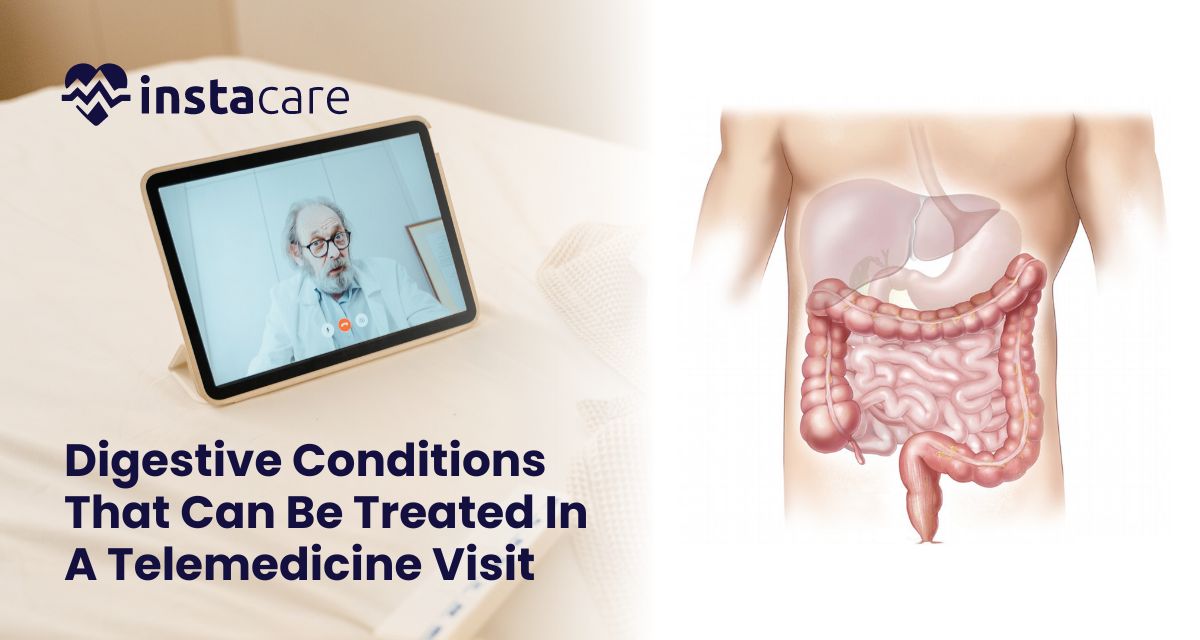
Digestive Conditions That Can Be Treated In A Telemedicine Visit With the development of telemedicine, receiving professional attention from the comforts of one’s home is now easier than it has ever been in recent memory. This is very useful for managing a few Digestive Conditions. Many stomach-related problems can be accurately diagnosed and treated with an online appointment with a physician. You can speak with your vital consideration doctor over the phone or on your computer instead of going to the expert’s office. In this blog post, we’ll look at a few common stomach-related ailments that can be treated with telemedicine. You will discover which stomach-related difficulties can be managed online, how they can help you save time and improve your mental state, and which problems can be resolved in that manner. Gastroesophageal Reflux Disease GERD is a chronic stomach disease in which stomach acid frequently runs back into the throat, producing symptoms like indigestion, nausea, and difficulty swallowing. If GERD is not addressed, it might eventually damage the esophageal coating and cause more severe problems. How Could Telemedicine Be Used To Treat GERD? Generally speaking, a telemedicine visit is an effective means for a provider of medical services to assess and manage GERD: 1-Side Effect Survey The provider can learn more about the frequency, severity, and impact of their GERD side effects, including indigestion, vomiting, and difficulty swallowing. Clinical history: The provider can ask about the patient’s past medical history, particularly any GERD or related illness medications. 2-Management Of Medications The physician or nurse can recommend or administer over-the-counter or prescription drugs for mild to moderate GERD in order to lower stomach acid production, relieve symptoms, and monitor the patient’s reaction. 3-Lifestyle Recommendations The doctor may advise avoiding foods that worsen GERD, decreasing weight, and increasing sleep as ways to improve one’s diet and way of life. 4-Follow-Up Care To monitor the patient’s development and make any required modifications to the treatment plan, the physician might schedule routine telemedicine follow-up appointments. 5-Irritable Bowel Syndrome Constant abdominal pain, swelling, blockage, or even looseness of the bowels are symptoms of irritable bowel syndrome (IBS). Although the exact cause isn’t entirely understood, a variety of factors, such as food, stress, and modifications in stomach movement, are acknowledged. Book Free Demo How Could Telemedicine Be Used To Treat IBS? Generally speaking, telemedicine can work well for medical service providers in monitoring and evaluating IBS side effects: 1-Assessment Of Symptoms The physician can oversee a thorough evaluation of the patient’s IBS side effects, taking into account factors including repetition, severity, and impact on daily life. By inquiring about certain foods, stress levels, or alterations in routine, they can assist in identifying possible factors. 2-Nutritional Advice The provider may suggest changing the diet to identify trigger foods, such as increasing fiber intake, limiting foods that release gas, or trying an end-of-cycle diet. Together, they can create a personalized meal plan that will help control the patient’s IBS symptoms. 3-Medications A doctor may give the same medication to treat additional symptoms, assist control bowel movements, and ease stomach discomfort in those with moderate to severe IBS. They are able to monitor the patient’s response to medication and adjust as necessary. 4-Life Path Direction In order to reduce the side effects of IBS, the provider may recommend work-out plans, pressure-board procedures, and other lifestyle adjustments. They can provide guidance and support to enable the patient to implement these adjustments. Constipation Constipation is a common digestive disease that manifests as infrequent bowel motions, difficulty passing stool, or the feeling of an incomplete evacuation. It could very likely be caused by a variety of factors, such as changes in routine, medication side effects, food, or underlying health issues. How Might Telemedicine Be Used To Treat Constipation? Most of the time, telemedicine can be an effective method for providers of medical services to evaluate and manage harmful side effects: 1-Assessment Of Symptoms The healthcare professional can examine the patient in detail to determine the cause of their constipation, including frequent bowel motions, difficulties passing stool, and any related pain or discomfort. They can ask questions to identify potential contributing factors, such as prescription use, active work, diet, and hydration. 2-Nutrition And Lifestyle Ideas To enhance the patient’s intake of fiber, the healthcare professional may recommend dietary modifications, such as adding more fruits, vegetables, and whole grains. Additionally, they can recommend methods to improve hydration and vigorous work, both of which can help regulate entrail capacity. The provider can provide guidance on how to set up a dependable bathroom use schedule to promote usual defecations. Ulcerative Colitis And Crohn’s Disease Among the most well-known types of inflammatory gastrointestinal diseases (IBDs) are Crohn’s disease and ulcerative colitis. Even though they are somewhat similar, their causes, consequences, and approaches to therapy are very different. 1-Ulcerative Colitis This chronic illness is characterized by inflammation and ulceration of the membranes surrounding the colon and the rectum. Possible symptoms include weight loss, diarrhea, rectal bleeding, abdominal pain, and an urgent desire to pee. Typically, only the colon and rectum are irritated. 2-Crohn’s Disease Crohn’s disease is a chronic inflammatory illness that can affect any part of the digestive system, but it typically affects the wall of the ileum, which ends the small intestine, and the beginning of the colon. Possible symptoms include weariness, diarrhea, weight loss, hunger, and abdominal pain. Patches of diarrhea may occur, with healthy tissue scattered in between bad areas. Methods In Telemedicine Telemedicine can be used effectively for the two situations for initial evaluation, ongoing monitoring for side effects, and prescription delivery. Physicians can review a patient’s past medical history, assess their present symptoms, and modify therapies as needed during virtual sessions. Remote monitoring and more regular check-ins are made possible by telemedicine in the treatment of chronic, relapsing-remitting illnesses such as IBD. For more serious episodes or consequences, the telemedicine worker might recommend an in-person assessment and potential care promotion, like a referral to a physician. Additionally, telemedicine can facilitate