
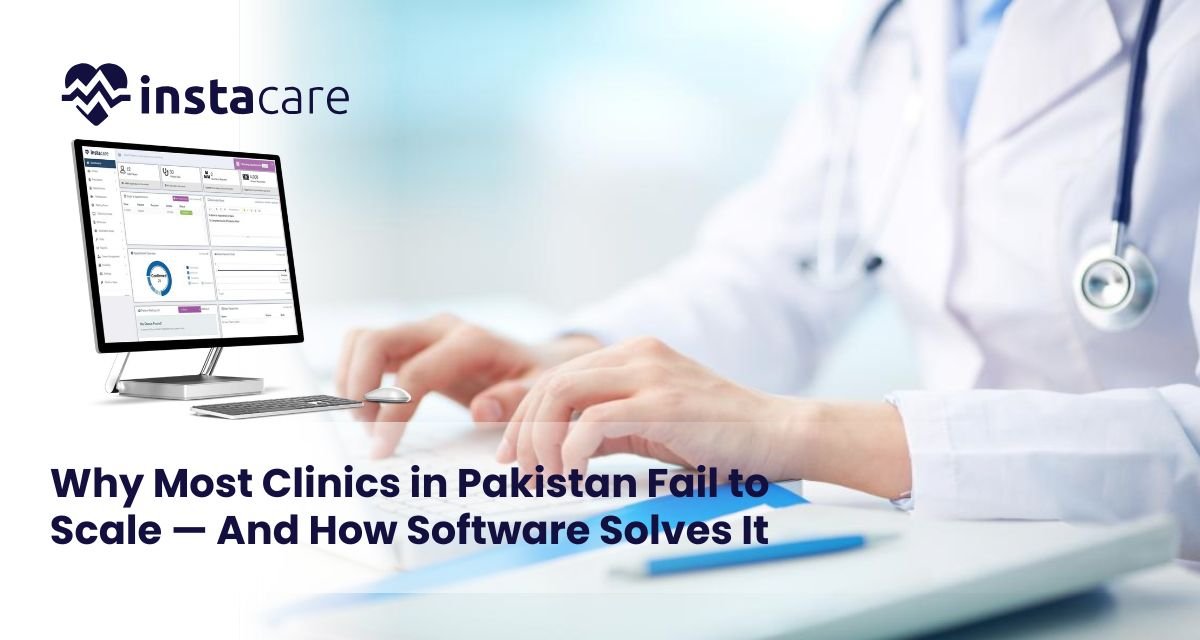
Why Most Clinics in Pakistan Fail to Scale — And How Software Solves It? The rapidly evolving healthcare industry of Pakistan depends heavily on clinics and small medical practices, which provide essential medical care to numerous patients throughout urban and rural areas. These medical facilities treat patients across millions of individuals throughout cities as well as remote areas. Despite performing critical functions, most clinics in Pakistan encounter difficulties expanding their operations past one clinic or doctor location. The expansion of clinics into multi-location healthcare groups remains rare even within densely inhabited areas. Many clinics in Pakistan face growth limitations which leads to a fundamental inquiry about the causes and solutions for this situation. The solution requires an integration of structural problems with business process weaknesses, coupled with weak digital capabilities as the primary reason for growth stagnation. The implementation of digital health record systems and solutions, combined with clinic management software systems, begins to eliminate the barriers that hinder clinic expansion and sustainable scalability. Understanding The Scaling Problem in Pakistani Clinics The objective of scaling a private clinic business exceeds merely extending patient volume across multiple branches. The goal is to develop standardized systems that provide uniform patient care throughout every operational contact point. The majority of clinics in Pakistan battle organizational excellence because of multiple essential factors, and require the best clinic management system in Pakistan 1. Manual Record Keeping and Data Loss Reliable patient documentation records persist on paper at most clinics that operate in the small to mid-sized category. The lack of proper data management produces various problems, which include lost patient history records along with difficult follow-up procedures and increased chances of data loss. Financial expansion through patient data management proves impossible when retrieval capabilities cannot ensure clinical data accessibility. 2. Lack of Operational Visibility The majority of Pakistani clinic owners together with their medical staff operate their clinics without knowing their operational efficiencies. Clinics are effectively making use of the available appointment times. The medical staff manages to follow their scheduled work protocols. What amount of income does the clinic lose through patients who fail to show up and through incorrect inventory management? These important questions remain unanswered because clinics have insufficient monitoring systems. A data-driven strategy is essential for making strategic expansion decisions since the absence of insights will turn important decisions into mere speculation. New clinic branches reflect identical inefficient operational methods from existing facilities, which produce failure instead of growth. 3. Staff Dependency and Lack of Standardization Multiple clinics in Pakistan rely heavily on selected personnel who grasp their operational systems because only these workers enable proper performance. When essential staff members exit, the system fails to function properly. The facilities lack standard operating procedures (SOPs) to train staff and manage flow operations while processing payments. Business expansion depends on standardized operating systems that serve the company beyond individual employees. The absence of automation and enforcement software preserves the fragile and inconsistent operational status of clinics. 4. Financial Leakage and Untracked Expenses Examining monetary movements remains a significant obstacle for businesses trying to expand their medical operations. Several clinics fail to establish proper systems that track both income and expenses, discounts and patient refunds. Petty cash goes unrecorded. Patient payments might be under-reported. The inability to track financial data undermines any possibility of comprehending whether a clinic makes enough profit to grow. The lack of software-backed patient tracking systems results in conflicts about revenue sharing among doctors who share revenue at multi-practitioner clinics. Book Free Demo How Smart Clinic Management Software Solves These Problems? Digital transformation functions across all healthcare institutions, starting from large hospitals to small clinics. A patient management software platform transforms all medical facilities, even in small clinics, through automated operations and improved patient care and data analytics. Here’s how: 1. Automated Appointment Management When patients use clinic software, they can make appointments using a computer or a mobile device options which cuts both telephone congestion and human mistake rates. Software management tools help doctors schedule appointments better so patients obtain their appointments on time, which decreases missed appointments. Real-time updates maintain constant alignment between clinic personnel as well as medical staff. 2. Electronic Medical Records (EMRs) The EMR software for clinics functionality enables clinics to maintain safe storage of patient information including medical records, laboratory reports and clinical prescriptions. The health care quality measures enhance as the system allows patients to keep their medical history accessible across different network doctors or clinics. 3. Centralized Billing and Payments The central billing feature of clinic management software joins all financial operations, including payments and receipt handling together. The software system provides instantaneous transaction recording and report production, and minimises financial loss through cash theft. Seamless payment processing occurs when certain platforms link with POS equipment and digital payment solutions. Benefits of Centralised Billing: Eliminates manual errors Enables transparent revenue-sharing between doctors The software system allows clinic owners to determine their revenue numbers according to service type and department. Patients have better trust in billing processes because items appear separated in statements. 4. Inventory and Pharmacy Management Clinic automation solutions enable clinics with in-house pharmacies to track supply quantities and expiration dates as well as automatically request reorders for consumable materials. The system prevents unnecessary stocking while ensuring essential drugs, together with consumables, remain available during needed. Advantages of inventory automation: Avoids medicine shortages By implementing this measure, expired products cannot reach the market for sale Reduces theft or unaccounted losses The system generates up-to-the-minute evaluations of clinic stock 5. Multi-Branch Management Through software for multi-branch clinics, users can visualise and control various locations through a unified dashboard. Clinic owners gain centralised oversight of all locations’ activities, which include an appointment system along with revenue generation and employee performance tracking, even when they are not physically present. Courting expansion becomes possible for clinics since they gain direct oversight and control across all their new locations. Conclusion Modern medical facilities that will prosper within Pakistan’s changing healthcare environment must begin their

6 Tips to Attract More Patients to Your Clinic In today’s competitive healthcare industry, bringing new patients through the door is one of the biggest challenges for medical professionals. Whether you’ve just opened your clinic or are looking to expand your medical practice, it’s essential to employ effective patient acquisition strategies to attract and retain more patients. These six tried-and-true methods will help you develop clinic foot traffic and attract more patients without discouraging your current patients’ interest and satisfaction. 1. Establish a Strong Online Presence Patients nowadays conduct internet research before choosing their healthcare provider. A clinic that lacks a presence in local listings, along with an unprofessional website, will never be considered. Start with a clean, mobile-optimized website that showcases your services, address, contact information, and doctor profiles to increase clinic foot traffic. Add a blog with valuable content, ranging from health tips to wellness guides, to create organic traffic. Another critical part of your online presence is local search visibility. That is where Local SEO for doctors comes into play. Claim and optimize your Google Business Profile. Optimize page titles and meta descriptions using locally focused keywords. Encourage patients to leave reviews and share photos to establish credibility and visibility in your region. When potential patients can locate and trust your clinic online, it becomes simpler to turn clicks into appointments. 2. Take Advantage of Online Reviews and Reputation Patient’s Online reviews for clinics do work when attempting to get someone to make an appointment. They want to know they will be treated well, and online review sites for clinics often make a first impression. Motivates good patients to provide honest reviews about your practice on Google, Facebook, Healthgrades, and other online health-related directories. Post positive feedback on your website and social media accounts. And for goodness’ sake, don’t let that bad review just remain there, too. Respond fast, take the responsibility, and attempt to repair. A positive web presence further enhances trust and serves as the crown jewel for all your efforts in patient generation. Include review requests in your follow-up process, and consider allowing automated platforms to facilitate them for added convenience. 3. Leverage Targeted Digital Advertising Campaigns Advertising is no longer done with the widespread use of blanket flyers and road signs. These are changing times, where digital marketing for clinics serves as a targeted form of reaching patients in need of their services. Google AdWords and Facebook paid posts enable you to target users based on age, location, interests, and even their web search history. If your clinic is also linked with dermatology, contact the users searching for “skin treatment near me.” Effective campaign methods are: Targeting the public by medical need or age group Writing wonderful titles with hard-and-fast benefits to the patients Including professional images or patient endorsements in the advertisements Incorporating call-to-action buttons like “Book Your Visit” or “Schedule Now” Including seasonal specials on check-ups or specialty procedures Email marketing is an affordable way to keep your clinic top of mind. Remind patients regularly of services, wellness tips, or success stories to stay connected with your audience. 4. Optimize Your Clinic for Patient Retention Acquiring new patients is just half the battle; retaining them is what creates long-term growth. A seamless, patient-focused clinic visit is the key to patient retention. How to attract new patients. Begin with small but effective changes, such as streamlining scheduling (whether by phone or online), reducing wait times, and educating staff to be empathetic communicators. Provide customized care plans and follow up on critical treatments to ensure optimal patient outcomes. To improve patient retention: Put in place reminder systems for regular checkups Provide patient reward or loyalty programs Provide post-visit surveys to get feedback Provide flexible scheduling or telehealth visits Satisfied patients will become brand advocates, referring co-workers, family, or friends by word of mouth, one of the most valuable sources of healthcare promotion. 5. Network Locally and Partner Perhaps the most effective way to expand clinic volume is by forming genuine relationships within your local community. Look beyond your clinic doors and locate businesses with similar values. Partner with local gyms to sell wellness packages or with pharmacies to sell check-up vouchers. If your clinic is a children’s clinic, consider partnering with local schools for regular health check-ups or health education seminars. Good Local Networking Ideas: Join local business associations or local chambers of commerce Partner with local cafes or salons and provide cross-promotions Host free camps on health in local shopping centers or community halls Host offline or online awareness programs Advertise space in local newsletters, local dailies, or local community radios Partnering at a local level not only makes you credible but also generates buzz where it will have the greatest impact, within your target community. 6. Monitor Results and Make Changes Often What gets measured gets managed. Regardless of how creative your clinic’s Healthcare marketing concepts are, they will succeed only if you regularly monitor their performance. Utilize software such as Google Analytics, Facebook Insights, or CRM software to monitor where new patients are coming from. Monitor key metrics such as: Website traffic and bounce rate Appointment booking by channel ROI of ad campaigns Social media engagement rates Rebooking and referrals Clinic Marketing Tips for Faster Growth: Online campaign conversion rates Cost per acquisition of new patients Average patient lifetime value Trends in feedback from reviews or surveys Best services or procedures All of that information will help you to tailor your approach and double down on what is working best. Conclusion Being clinically competent in today’s healthcare system does not fulfill the requirements. Your successful adoption of digital trends, combined with effective community engagement, superior patient experiences, and a robust Clinic Management System, controls your pace for acquiring fresh patients as well as holding onto existing ones. Your medical practice’s success will increase through the

Telehealth for Elderly: A Modern Shift in Senior Healthcare Telehealth for Elderly is transforming how elderly people are treated medically. Using technology, elderly people can get treated at home, reducing hospital visits. Telehealth facilitates virtual consultations, regular check-ups, medication management, and round-the-clock monitoring, all from the comfort of their own homes. In recent years, especially after the COVID-19 pandemic, the healthcare industry has experienced an overnight boom in virtual care solutions for elderly individuals. Ranging from home-based to mobile health applications, older individuals are gradually adopting digital healthcare solutions for chronic condition management, specialty care, and well-being. The Advantages of Telehealth for Seniors The Benefits of Telehealth for Seniors are numerous and contribute to their overall well-being. By minimizing travel time and providing quicker access to medical consultation, elderly people have both comfort and improved healthcare. Less stress and travel expense Quicker consultation for chronic conditions Less exposure to infectious diseases Easy access to experts Improved medication compliance with digital reminders The main advantage is regular contact with primary care practitioners. Regular contact allows for case following up on medical trends, recording early signs of deterioration, and preventing emergencies, particularly among the elderly with multiple states of illness or living alone. Principal Telemedicine Services to Older Patients Older patient telemedicine care has expanded exponentially. They include virtual consultation, online counseling of the mind, physical rehabilitation guidance, and monitoring of chronic diseases. The following are the Telemedicine Services for Elderly Patients: Video call-based first care visits Post-hospital discharge follow-ups Treatment of anxiety and depression remotely for mental health Electronic management of prescriptions Tracking vital signs with wearable technology Telemedicine facilitates greater care coordination among specialists, caregivers, and family members. Doctors can share electronic notes on the same platform and refer patients to physical therapists or nutritionists as needed. How Seniors Can Use Telehealth? We must realize How Seniors Use Telehealth to develop systems ideally suited to their requirements. Older persons primarily utilize telehealth via smartphone, tablet, or desktop computers to call physicians, ask for medication refills, or attend therapy. Today’s older population increasingly makes appointments online, receives follow-up test results via telehealth portals, and even consults a dietician remotely to ensure nutrition. Others utilize devices connected to telehealth systems, which allow physicians to analyze health in real time. Proper training and technical assistance make seniors capable telehealth users. Technology Barriers in Elderly Telehealth One of the biggest challenges in the growth of technology barriers in elderly telehealth is the digital divide. Most elders have trouble with: No access to high-speed internet Lack of familiarity with smartphones or computers Physical disability (hearing, vision, dexterity) Concerns regarding privacy and data security Technophobia is another significant barrier. Sure, seniors are unwilling to accept telehealth because they are unfamiliar with it, leading to frustration or avoidance. This can be addressed with easy-to-use sites, guides, and quick technical support. Steps are also taken to provide low-cost or subsidized internet plans and easy-to-use devices to seniors. Caregiver support and community education classes also facilitate seniors’ use of Telehealth for Elderly equipment. Senior-Friendly Telehealth Sites To be used optimally, telehealth sites utilized by seniors must be easy to use. Easy-to-use features with fewer complexities are: High-contrast color and large print Easy one-click scheduling Captions and audio cues Technical support via phone or chat HIPAA-safe secure connections A good platform is not merely interested in appearances; it also considers seniors’ motor skills and brain processes. Simplification, reducing the number of steps, and using graphical icons rather than textual menus are examples of usability. Some health practitioners now have senior helplines and tutorial videos specifically for seniors. These provide seniors with the capability to receive Telehealth for the Elderly easily. Remote Healthcare for Older Adults Remote Healthcare for older adults isn’t a band-aid; it’s an effective model for continuing care. Physicians can detect early signs of declining health by conducting continuous remote checks and adjusting care plans accordingly. Remote medicine also enhances chronic disease management, such as: Hypertension Diabetes Arthritis Heart disease COPD It improves patient outcomes and decreases hospital readmission. Seniors no longer need to wait for signs and symptoms to worsen before visiting a physician; timely care via digital is now available. Home-Based Telehealth for Seniors: Bringing Care Close Home-based telehealth for Seniors brings medical services to their doorsteps virtually. They no longer have to take the highway to clinics for all those minor complaints. The advantages of Senior-Friendly Telehealth Platforms are: Off-site diagnosis through mobile applications Regular follow-ups conducted through video consultations Home-based drug delivery according to prescription Health counseling and lifestyle counselling This model is useful, particularly for elderly individuals living in rural or dispersed environments. It offers level access to quality service and avoids excluding them on geographic grounds. In addition, home care is economic. It keeps ambulatory treatment, ER usage, and unwarranted admission to a minimal level. It also maintains minimal stress and an environment conducive to peaceful healing. Telehealth Solutions for the Aging Population Creating effective Telehealth Solutions for the Aging Population requires a combination of medical expertise and technology based on user experience. The solutions tend to include: Easy-to-use personalized apps 24/7 virtual nurse phone helplines Telehealth-connected emergency alert systems Live health monitoring using smartwatches Coordination between experts, caregivers, and family members These technologies, including tools like a Clinic Management System, bridge the gap in medical care for elderly people who need regular consultations with a physician. They also empower older adults
How Communication Tools Reduce Errors in Healthcare Settings Effective communication stands as the essential building block which supports high-quality healthcare delivery. Patient care complexity creates environment for greater risks of medical errors. Modern communication tools function as healthcare resources which reduce errors and increase patient safety while advancing the quality of medical care. Various communication systems deployed throughout health care operations work to reduce mistakes and improve patient healthcare results. Understanding the Impact of Communication in Healthcare Importance of Communication Communication in healthcare refers to the flow of information among healthcare providers, patients, and their families. When communication fails between medical staff and patients the result becomes misinterpretation as well as prescription errors and mistreated diseases and numerous critical safety issues that threaten patients. A study shows that communication breakdowns stand as the leading source of sentinel events that create unexpected healthcare incidents causing death or severe injuries. The Joint Commission Journal on Quality and Patient Safety published research showing miscommunications between healthcare professionals cause 70% of sentinel events. Types of Healthcare Errors Healthcare errors can take several forms, including: Medication Errors: Using inappropriate dosages, wrong medicine, or drug interactions. Error Detection: Poor diagnosis or miscommunication and late diagnostic communication. Operative Errors: In or after surgical treatment due to miscommunication at surgery. Communication Errors: Because the patient did not know what the prescriptions were and did not report new or worsening symptoms to their treating physicians. These failures in communication with ramifications for their health and safety make interventions to address these most effective. Healthcare Communication Tools Electronic Health Records (EHRs) All medical records exist as Electronic Health Records (EHRs) which function as digital representations of patient paper data. The transmission of critical information enhances healthcare communication between providers and patients along with providers across the board. Benefits of EHRs Information deposited in an already connected database where the chances of communication gone wrong or data loss are ruled out. Real-Time Updates: The information about patients with EHRs can be updated real-time by the health care providers; thereby, all individuals concerned with a patient’s treatment will be up to date if there are changes. Medication Management: The EHR contains tools for managing medication, especially where most have alerts about interactions between drugs, allergies, and contraindications. Secure Messaging Systems Secure messaging systems enable the direct contact between the health care provider and also directly with a patient in the most confidential ways. Most the messaging systems applied are HIPAA compliant and other laws concerning patient’s information, such that the privacy of the information remains assured. Benefits of Secure Messaging Timely Communication: It enables providers to send and receive messages within the shortest time possible hence reducing delays in care and decision-making. Explanation and Follow-Up: With secure messaging, patient concerns or care plans are easily followed up on so as to clear up any misconceptions. Patient Involvement: With the use of secure messaging, patients can question their providers or even report their symptoms, which increase communication and involvement in care. Telehealth Platforms Telehealth has seen rapid adoption during the last few years and particularly accelerated strongly since the COVID-19 pandemic. Through virtual consultations patients use Telehealth service platforms to connect with health providers without leaving their home. Book Free Demo Advantages of Telehealth Accessibility: It makes care easier for patients with mobility issues and those living in remote areas. Barriers to communication are significantly reduced. Real-Time Interaction: Video consultations will allow real-time discussion with providers. This will ensure providers can visually see the patients and assess them verbally. Documentation: Most telehealth systems can interface with the EHR so that the entire healthcare team can view the patient visit. Clinical Decision Support Systems (CDSS) Health-care professionals using Clinical Decision Support Systems make treatment decisions based on patient-relevant data that follows best practices defined by clinical guidelines. Advantages of CDSS: Evidence-Based Recommendations: This will be reducing the dangers of a risk of error from diagnosis missed due to specific evidence-based recommendations to be given to such a need as the case. Alerts and Reminders: The system sends the provider important information regarding a patient, such as overdue screenings or drug interactions. Improved Collaboration: Consolidation of data from several sources helps health teams collaborate by giving a holistic view in care provision. Less Mistakes through Better Communication Team Coordination Improvements The effective communication tools promote collaboration between healthcare teams, thus reducing errors. When team members share information and work out the roles and responsibilities of each member, chances of errors lessen. Interdisciplinary Rounds: The different health care professionals can meet together, come up with a feasible communication with teamwork, and ensure that the patient get quality care. Clear Protocols: Such clear communication protocols as standardized handoff help information are transferred at the transitions of care. Empowering Patients Communication tools empower patients to take charge of their own care. If the patient is informed and engaged, the patient tends to adhere to treatment plans and raise their concerns. Patient Education: Information can be made available to patients regarding their conditions and options for treatment in order to avoid confusing them. Shared Decision-Making: Shared decision-making tools empower the patient to be an active participant in his or her care, which then leads to more informed decisions and, therefore, compliance. Monitoring and Feedback Communication tools enable providers to track the progress of a patient and get immediate feedback. In this manner, problems are detected earlier, and the error does not continue any further. Patient Monitoring Systems: Wearable devices and remote monitoring tools assist the healthcare team in monitoring the health metrics of the patient and, therefore, intervene on time. Feedback Mechanisms: The systems through which feedback can be received from the patients and families may assist in identifying points for improvement in communication and care. Challenges in Implementing Communication Tools Though the benefits of the communication tools abound, challenges in implementing them persist: Training and Adoption: Staff within healthcare organizations need training to master new communication tools along with potential rejection of change as a barrier for
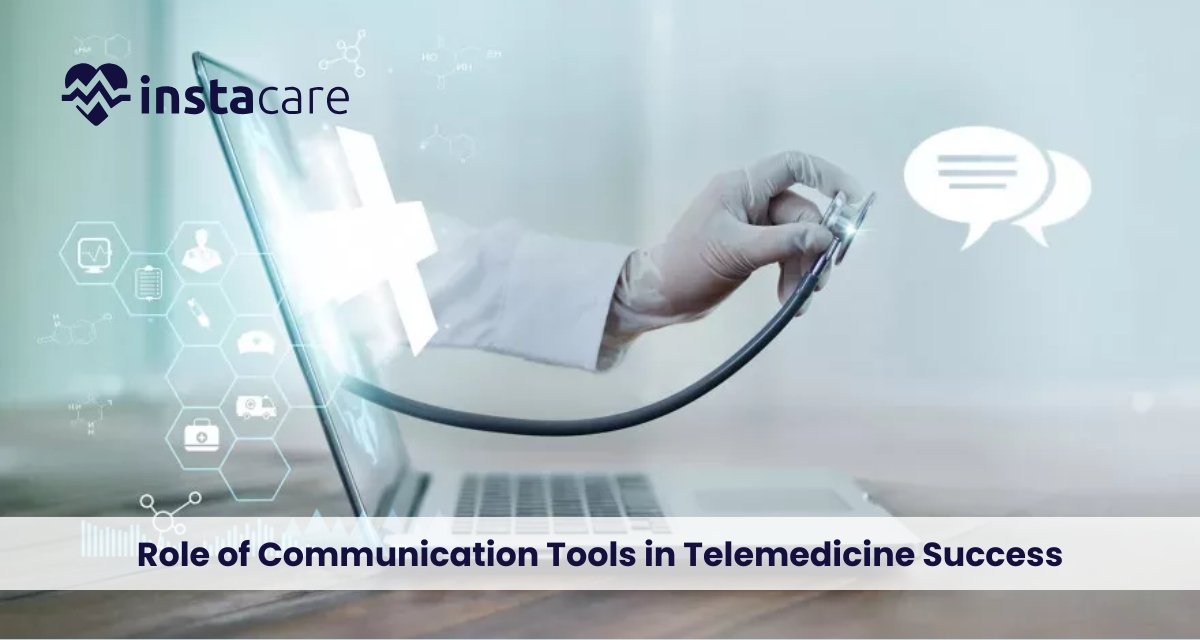
The Role of Communication Tools in Telemedicine Success Telemedicine is one of the transformations that the health sector has experienced, considering the last global events that have called for accessible and efficient medical care. The communication tools at the center of this shift are those which make interaction between healthcare providers and patients possible. In this article, critical roles communication tools play in telemedicine success, benefits, challenges, and future prospects are discussed. Understand Telemedicine Doctors perform health care procedures across distances using advanced technology. Telemedicine includes different medical services that include digital patient visits as well as tracking patient status from a distance with smartphone apps. The most critical aim of telemedicine is enhancing access to health care without lowering the quality of care or increasing it. Why Communication Matters in Telemedicine Communication plays an important role in telemedicine for the following reasons: Patient Engagement: There is an effective and transparent communication which engages the patient in his health care journey so that he becomes better aware of the conditions and the treatment available. Interdisciplinary Collaboration: There are usually a number of different healthcare providers with diverse specialties, which makes up a telemedicine setting. Good communication will ensure all the members on the team understand the approach being used to patient care. Data Sharing: There is the need to have appropriate timely sharing of information among the patients, particularly where there is an indication of complicated medical conditions that would require such information. Critical Communication Tools for Telemedicine Several communication tools are important to the success of telemedicine implementation. Some of them include: Video Conferencing Platforms: Such platforms include Zoom, Microsoft Teams, and others dedicated specifically to telehealth, enabling providers and patients to engage in face-to-face, real-time video consultations. Secure Messaging Systems: Secure messaging systems help health care providers to communicate efficiently and effectively. Secure messaging allows them to quickly exchange information, seek clarification in case of need, and provide patient care follow-up. Electronic Health Records (EHRs): EHR is the central core of the telemedicine systems. Using telemedicine, any physician can quickly obtain necessary data of a patient about their history, drugs and medicines, test reports, and all that he wants to decide wisely about their patient’s medical problem. Remote Monitoring Devices: The devices monitor in real time such vital signs and many other health metrics; this data will be sent directly to healthcare providers. This allows the use of communication tools for sharing and analysis of the data, making it possible for proactive care. Patient Portals: These are online platforms through which patients can view their health information, schedule appointments, and communicate with healthcare providers. Patient portals are designed to enhance engagement and streamline communication. Using Communication Tools to Enhance Telemedicine Success Improve Patient-Provider Interactions Video conferencing tools allow for real-time interaction that mimics face-to-face visits. This way, health care providers can assess patients better, creating a connection sometimes lost in text-based communication. Example: A doctor can identify important patient communications through their body language during video visits that standard forms or telephone exchanges might miss. Care Coordination Improvement Secure messaging systems improve the quality of communication among healthcare teams. Providers can share updates very quickly, discuss treatment plans, and consult with specialists as necessary to keep everyone who participates in a patient’s care up to date about what is happening. Patient Engagement The patient portal lets people see their health data and talk to their healthcare team without barriers. When patients can see all their medical records they become more involved in managing their healthcare needs. Streamlining Data Sharing The healthcare system uses EHRs to give providers easy access to patient information. EHR enhancements plus telemedicine links enable healthcare teams to view and change patient records while making better decisions faster. Book Free Demo Advantages of Communication Tools in Telemedicine Increased Accessibility: Communication tools enable patients to receive medical services from home through digital platforms that overcome transportation and scheduling problems. Cost-Effectiveness Improved Health Outcomes Ease and Convenience Challenges in Implementing Communication Tools The communication tools can improve telemedicine, but it is not an easy task as there are several challenges, which include: Technical Barriers: Not everyone has access to reliable internet and devices for using telemedicine. Healthcare providers need to consider such differences and find means of accommodating such patients who would face technological barriers. Privacy and Security Concerns: Healthcare organizations need to guard patient information at all times. Healthcare facilities must use patient data systems that obey HIPAA rules when they connect with patients. User Resistance: Some healthcare providers and patients will resist the new technologies. Training and support can ease this transition and encourage the use of communication tools. Quality of Care: Telemedicine is effective in such situations; however, some conditions require personal evaluation. The professional judgment of the providers must decide when telemedicine is appropriate and when a physical evaluation is required. Future Prospects of Communication Tools in Telemedicine Telemedicine, along with its communication tools, holds promising futures. Innovative advancements in technology are most likely to further enhance telemedicine capabilities: Artificial Intelligence (AI): AI will help telemedicine through patient data analysis, prediction of health trends, and helping the healthcare providers to make better decisions. Wearable Technology: Healthcare providers can value health metrics measured in real time with devices. Proactive care management will be facilitated, and tools for communication will be necessary for the exchange and analysis of data. Integrated Platforms: Integrated platforms will abound as telemedicine grows. In this regard, telemedicine will facilitate more integrated communication tools, EHRs, and remote monitoring into a smooth interface for the provider and the patient. Conclusion Effective communication tools help telemedicine succeed by improving contact between patients and healthcare providers as well as between healthcare teams and promoting patient participation while managing medical information more effectively. Telemedicine offers many ways to improve healthcare but technology advances too quickly for us to take advantage of them all. Health care organizations must handle telemedicine challenges and accept new communication technology to keep delivering medical care efficiently. Using the latest
Best Healthcare Communication Solutions for Modern Clinics Communication in the health sector is highly prominent in modern clinics where satisfactory servicing of patients and efficient operations are also the top priorities. Digital technology is on the rise, and this has helped clinics to have different communication solutions that can streamline processes, enhance patient engagement, and overall delivery of healthcare services. This article is set to discuss the best communication solutions tailored for modern clinics, including their features, benefits, and practical applications. Importance of Effective Communication in Healthcare Effective communication in healthcare is the transfer of information between the health care providers, patients, and administrative staff. It is an essential aspect to guarantee: Patient Safety: Better patient results depend on the prevention of communication mistakes during patient care. Patient Engagement: Involving patients in their care encourages trust and adherence to the treatment plan. Operational Efficiency: Simple exchanges between staff help lower patient wait times and make better appointment statements and work together better. Data Management: Effective communication enhances data sharing and management, which is a huge reason for monitoring patient histories and outcomes. Considering all these factors, the modern clinic requires effective healthcare communication solutions. Top Healthcare Communication Solutions 1- Telehealth Platforms Telehealth platforms gained increased usage during the COVID-19 pandemic period. With these services clinics can now arrange digital appointments so patients can connect with medical support from any home location. Features: Video Conferencing: Allows for secure video calls for real-time patient-provider interaction. Appointment Scheduling: Patients can book and manage appointments online. Prescription Management: Providers can send prescriptions electronically. Integrated EMR: Telehealth platforms connect directly to Electronic Medical Records (EMR) systems to send medical data between them. Benefits: Convenience: Saves the need for a visit and saves time both for the patients and the providers. Accessibility: Healthcare services become easier for people to reach because of their physical or location barriers. 2- Patient Portal Solutions Patients gain secure online access to their medical records when they sign in to their patient portal to speak with doctors and manage their healthcare. Features: Health Record Access: Test results, prescription, and medical advice accessible to a patient Inpatient Secure Messaging: The facility can allow communication directly between patients and providers when dealing with routine concerns. Self-management of the Appointment: This patient can be enabled to schedule an appointment, postpone an appointment or even cancel View and payment of medical Bill online Benefits: It Empowers the Patient. This creates the responsibility towards one’s own health care condition which results in improved outcomes Efficient for it reduces clinic call and paper works. Effective Communication: It will ensure timely communication between patients and providers. Book Free Demo 3- Secure Messaging Solutions Secure messaging solutions are peculiar to healthcare. It enables the provider to securely and efficiently communicate with each other. Features: HIPAA Compliance: All communications will be guaranteed to be private. Group Messaging: It will enable care teams to communicate together for collaborative decision-making. File Sharing: Enables the secure sharing of patient documents and images. Read Receipts: Providers can confirm that messages have been received and read. Benefits: Speed: It facilitates quick communication, reducing response times for patient inquiries. Security: Guards sensitive patient information while communicating. Enhanced Coordination: Better patient health comes from stronger teamwork between medical professionals. 4- Cloud-Based Collaboration Tools Cloud-based collaboration tools enable teams in healthcare organizations to collaborate regardless of where the members are. Features: Collaboration tools: Share, and work securely on patient information and treatment plans. Task list: Assigning and tracking healthcare team tasks Video conferencing: Conduct a virtual team meeting and case presentation Real time updates: Accurate information in real time for use in dealing with patients Benefits Work flexibility: The modern healthcare calls for it; remote or off-site teamwork is facilitated by the tool. Streamlined Workflow: It makes processes streamlined and turns the team effective. Better Care for Patients: It aids in communication and coordination for the patient’s care appropriately. Integrated Health Information Systems (HIS) The integrated health information systems amalgamate almost all aspects related to the process of delivering healthcare, ranging from a patient’s account to billing and scheduling, together under one format. Holistic Data Management: It offers access to central access for patient-related data and administrator work. Interoperability: It provides flexibility in data exchange through integration with an external healthcare system or provider Analytics and Reporting: Helps for the monitoring of the performance metrics in addition to results Tools of Patient Engagement: Improves Communication and Education due to patients Smoothen Operations: reduces workload with Administrative Tasks with added efficiency Proper Decision: This gives proper information to all the providers on hand to draw judgements at all times Better Experience for Patients: From scheduling the appointment all the way through to follow-up care, patients has a smooth experience 1- Select the Right Health Communication Solution When clinics select the health communication solution, they must look out for a few issues Usability: The solution should be friendly to use to both the patients and the employees. Integration: Solutions to be integrated with the current software and workflows must be sought after. Security: The solution should ensure HIPAA and other privacy legislation compliance. Scalability: A scalable solution that may keep up with the clinic’s changing needs should be chosen. Cost: Considerations about cost of ownership, and there shouldn’t be any maintenance update fees, if applicable. Future of Health Communication Health care communications will become more advanced due to technological advancement. Artificial intelligence, machine learning, and telemedicine would make healthcare communication more efficient and effective. AI-Powered Chatbot AI-powered chatbot can provide patients with answers for some of their queries almost immediately, help them with appointment scheduling, and walk them through the process of even routine things. These tools will make the administrative load lighter and bring about a rise in patient engagement. Advanced Analytics on Data In the future, these communication solutions would have high-quality and advanced analytics built into them so that clinics could know and understand the patient’s behavior, preferences, and outcomes. These would help more in giving
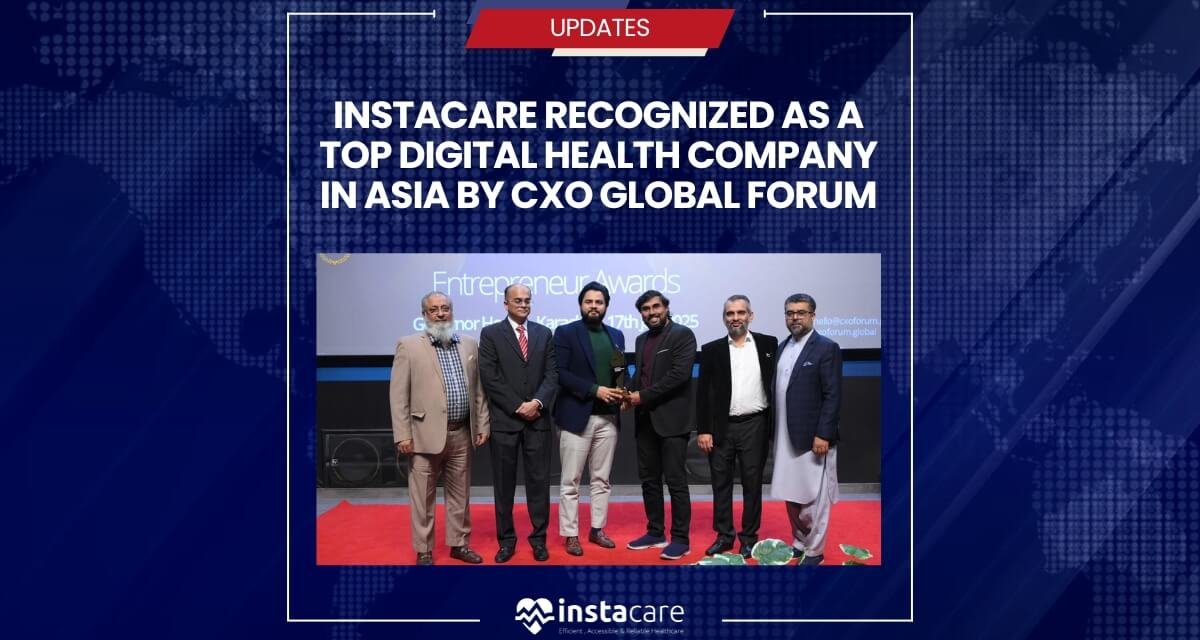
Top Digital Health Company in Asia by CXO Global Forum InstaCare is proud to announce that the CXO Global Forum has honored it with the prestigious ‘Top Entrepreneur Award’. This recognition reinforces InstaCare’s position as the Top Digital Health Company in Asia and a pioneer in revolutionizing the healthcare landscape. Our innovative solutions and unwavering commitment to healthcare excellence have also earned it multiple accolades, including: Top Digital Health Company in Pakistan Best Healthtech Startup in Pakistan Best EMR and Practice Management Company in Asia These achievements reflect InstaCare’s dedication to leveraging technology to enhance healthcare accessibility, efficiency, and outcomes across the region. Bilal Amjad Reflects on InstaCare’s Commitment “This award is a testament to our mission of transforming healthcare through advanced digital solutions,” said Bilal Amjad, CEO of InstaCare. “We are committed to empowering healthcare providers and patients with tools that elevate care delivery and contribute to a healthier future for everyone.” As a leading digital health platform, we continue to innovate and deliver impactful solutions, including: Electronic Medical Records (EMR) Practice Management Systems Telemedicine Patient Engagement Tools Our efforts are bridging the gap between patients and healthcare providers, ensuring that healthcare is more accessible, efficient, and affordable across Pakistan and beyond. The recognition by CXO Global Forum underscores InstaCare’s vision of setting new benchmarks for healthcare technology, bringing innovation, and making a lasting impact on the healthcare industry.
The last few years have mainly transformed the health care sector and made it much more digital. This is mainly achieved through mobile app development. Health care providers are investing more and more in mobile applications to ensure effective patient engagement, operational efficiency, and simple communication. The article elaborates on the major reasons for this trend and describes how mobile applications are transforming the health care delivery model. 1- Higher Patient Engagement This is the reason health service providers are interested in mobile application development. Patients expect access to their medical information with an increase in mobile phones. Applications developed for use on mobile apps allow patients a friendly interface through which one can manage the appointment, acquire access to health records, or get reminders about medication or check-ups. Advantages of Higher Involvement Better Communication: The mobile app allows the patient and healthcare provider to communicate with each other directly, hence to questions and concerns response promptly. Personalized Experience: Apps can provide health information and reminders based on the data being collected from individual patients. Thus, adherence to treatment plans can be improved. Empowerment: Mobile apps give patients the ability to control their health information and thus to become active participants in their healthcare journey. 2- Greater Efficiency and Productivity Mobile applications make healthcare professionals much more effective and productive. They automate different administrative tasks that allow more time for patients than paperwork. How Mobile App Development Boost Efficiency Appointments: Patients can easily schedule their appointments and even manage them by using mobile apps. This would save the administrative staff a significant amount of time they spend in scheduling appointments. Telemedicine: Increased telehealth allows healthcare professionals to engage in telemedicine consultations to conserve time for patients and doctors. Data Management: Collecting and processing of data through mobile apps could further make it readily available for healthcare workers to look at and consider the patient’s information quickly. 3- Improved Care for Patients The investment in the development of applications in healthcare providers helps to provide patients better care. Many applications provide beneficial tools and resources for both patients and providers in providing care and enhancing the quality of care. Features Improving Patient Care Health monitoring: The health monitoring features of some mobile applications enable patients to monitor certain vital signs, the patient’s symptom monitoring, and the monitoring records of the use of medicines. Information shared with a healthcare provider can be used in making decisions. Educational resources: Mobile apps provide access to educational material that lets the patient know more about his or her disease as well as alternatives for treatment. Remote Patient Monitoring: The applications can track patients who are suffering from chronic diseases at remote locations to facilitate early intervention and subsequent course corrections in the treatment plan Book Free Demo 4- Cost-Effectiveness Healthcare providers have only begun to open their eyes and recognize that designing mobile applications does come with its share of one-time investment towards generating huge returns later on. Financial Benefits Rare No-Shows: the appointment reminders created through mobile applications reduce no-shows as well as increase revenues. Less Administrative Cost: The use of mobile applications to automate administrative work reduces additional staff costs and error chances. This again saves money in the long term. Improved Operational Efficiency: All the processes get simplified with mobile technology, which reduces the operational cost and healthcare providers can also handle resources properly. 5- Compliance and Security With growing data privacy issues, it is highly crucial that healthcare providers adopt compliance towards such regulatory requirements like HIPAA. Mobile application development serves the purpose of incorporating strict security measures so that unauthorized access is prevented towards such sensitive patient information. Compliance Data Encryption: Mobile applications can make use of data encryption protocols in order to encrypt patient data before transmission and at rest. Access Control: A care provider should be restrictive in letting a few into knowing specific information Audit Trails : The mobile app has activity log thus making is easy to audit compliance and actual security breach occurrence 6- Competitive Advantage As competition in health care environment also grows, people have a will to be aggressive. The significant means of having competitive advantage and aggressive is doing the development in mobile apps. How Mobile Applications Give Competitive Advantages Patient Attraction for the Tech-Savvy Patients: With increased dependency on technology, more would seek health care services from ones who are innovative in their solutions offered through mobile apps. Ease of service delivery: With features in appointment scheduling besides tracking health and telehealth, more patients will be attracted to it and keep it because they will have the benefits of ease and convenience. Building Brand Loyalty: To become better by satisfying the service needed with them, patients bring the patients for successive visits via oral recommendation. 7- Real-time availability of information Health care delivery providers can reach the needed decision through proper evaluation of healthcare, only with real-time access on apps. Also with the advent of real time access, improvements regarding patient services along with streamlined and efficient processing processes can take place. Benefits when accessed real-time data: On-Time Interventions: With the real-time data, medical practitioners can identify any health condition early and initiate the intervention procedures for better health results. Correct Treatment Decision: Information about a patient through updated patients’ medical information timely helps the clinician in making the right treatment decision; therefore, quality care delivery is facilitated. Efficiency Workflow: Timely data can ease workflow, causing less delay, thereby enhancing general efficiency. 8- Increased Demand for Telemedicine The COVID-19 pandemic would increase the demand for telehealth services and most importantly, that of mobile application. As soon as patients are going to be in search for virtual health care, the investment in the mobile application will no longer be inevitable. The telemedicine feature would include Mobile Application Video Consultation. It is a safe video consultation done through a mobile application where one can meet the healthcare provider directly from his comfort zone. Symptom Checkers: Most health applications are equipped with a

Lahore Chamber of Commerce and Digital Health | Bridging the Gap for Innovation The Lahore Chamber of Commerce and Industry (LCCI) is one of Pakistan’s leading trade organizations. It supports the business community by promoting economic growth, advocating for business interests, and driving industrial advancement. The LCCI fosters innovation and collaboration across various sectors, including the digital health landscape, where Instacare, a corporate member, plays a significant role. How is Instacare Contributing to Digital Health through LCCI? Instacare is an innovative leader in the health sector, offering a wide range of healthcare services through its telemedicine platforms. As a corporate member of LCCI, Instacare leverages its expertise in digital health to collaborate with other industry leaders, aiming to enhance healthcare accessibility and drive digital transformation within the healthcare industry. What Role Does Bilal Amjad Play in LCCI? Bilal Amjad, the CEO of Instacare, actively represents the Integrated Marketing Committee as a member of LCCI, contributing to the development of the healthcare sector in Pakistan. He works to promote digital solutions and advocate for modern healthcare systems within the business community. His involvement reflects the growing importance of leveraging technology and innovation in the healthcare sector. By contributing to LCCI’s marketing strategies, he ensures that digital health solutions are highlighted and integrated into broader business discussions. The Growing Significance of the Healthcare Industry in Pakistan The rise of health technologies in Pakistan is not just a trend but a critical response to some of the country’s most pressing healthcare challenges. With a population exceeding 230 million, Pakistan faces significant gaps in healthcare accessibility, particularly in rural areas. Digital health services, including virtual consultations, health apps, and digital records, can help bridge these gaps by providing efficient, cost-effective, and timely healthcare services. For instance, telemedicine enables patients in remote areas to consult qualified doctors without needing to travel, while e-prescriptions offer easy and reliable medication management. Digital health also has the potential to improve healthcare outcomes by promoting preventive care through health-tracking devices, empowering individuals to monitor their health closely and take early action to prevent diseases.
The Role of Telemedicine in Modern Clinic Management Systems Among other disruptive innovations in recent years, telemedicine has turned upside down the management of clinics and access by patients to interventions. Just think about a patient who can consult with a doctor from the comfort of his house and avoid a long waiting in a crowded waiting room; this is not a dream, it’s the reality developed by telemedicine. Technical requirements of telemedicine develop the opportunity to get integrated into the modern healthcare system through streamlining the services in the clinics. However, there exists a dire need of understanding the concept of telemedicine, benefits, challenges, and thus, what the future holds. Understanding Telemedicine In simple language, it means the use of technology in delivering clinical health from afar. It includes everything from simple consultations on the phone to comprehensive video. This model allows health professionals to access their patients irrespective of their location, which improves their access to medical care immensely. Key Features of Telemedicine Following are some of the key features of telemedicine that go a long distance in improving the patient experience and the functioning of a clinic: Virtual Consultation: The term simply means that one consults his doctor through video calls for convenience, enabling one to get care without necessarily having to make a visit to the clinic. In this regard, remote monitoring will facilitate continuous monitoring of patients suffering from any chronic condition with wearable devices and mobile applications. This also facilitates proactive management of their health. Access to Specialists: Distance would mean little in such aspects as consulting specialists, since it covers distances for patients unable to consult specialists due to geography or other reasons without the added burden of travel. Cost-Effectiveness: The method does reduce travel costs and time for both patients and health professionals; hence, this would be most effectively making healthcare more accessible and time-effective. Integration of Telemedicine in Clinic Management Systems The present-day clinic management system has been designed in order to assist the administrative, patient data, and billing-related tasks to be managed in an organized manner. The integration of telemedicine into the same would tend the clinics to be in a better position in accomplishing functionality on many more counts besides being able to cater to the patients in a better manner. Advantages of Integration Smoothening of operations: Once telemedicine gets integrated into the CMS, appointment scheduling, follow-up of patients, and maintenance of records all become quite smooth and easy. This efficiency frees up more time for the staff since there are less administrative burdens; staff can then be more caring for their patients. Improved Patient Convenience: This in itself improves the experience of patients in seeking home care. One need not worry about long waits in the clinic or taking time off from work. Appointments are easily attended to in comfort. Improved health outcomes: Through regular monitoring and timely follow-ups, telemedicine will offer better management of chronic diseases, reduce hospital admissions, and thus improve health outcomes in general. Data Management: Telemedicine generates a great amount of data; this, integrated with CMS, enables clinics to do better analyses of the patient trends and work toward positive modification of the care protocols for improved outcomes in patients. More Significant Revenue Streams: With telemedicine services, the clinic is afforded the chance to take more patients on board without the use of space. This may lead to increased revenues while catering much-needed care to more patients. Challenges of Telemedicine in Clinic Management Though these benefits are considered significant in number, there have been certain challenges that must be overcome if telemedicine is to find appropriate alignment with clinic management systems. Book Free Demo Compliance and Regulatory Issues Telemedicine faces different regulations that may be very different from region to region. They have to take into consideration a lot of complicated legal issues for clinics to make sure they follow the laws of patient privacy and licensing. This might get particularly tricky for those operating their services across state or national lines. Technology Barriers Not all patients have access to the technology that such services require, let alone reliable connectivity to the Internet. This creates a digital divide in access to care, and for this reason, clinics should begin seeking solutions that will help in realizing equity in the health care provided. Resistance to Change It is generally true that change is quite scary, more so to the health facilities that have been in operation for many years. A few health professions may not embrace the idea of telemedicine because they are conversant with other technologies or have no faith in the technology. Thus, substantial training and continuous support would be required to overcome any such resistance. Quality of Care Concerns Debates are gaining momentum amongst experts whether telemedicine could assure a level of care equivalent to what is received during clinic visits. For that, the clinics need to establish protocols and guidelines that guarantee telemedicine consultations meet high standards of quality in order to maintain the quality of care the patients expect. The Future of Telemedicine in Clinic Management The future of telemedicine in clinic management systems is bright and is going to be shaped by a variety of trends. Artificial Intelligence and Machine Learning AI and machine learning are already being incorporated into the telemedicine platform in the hope of creating an utterly new model of patient care. The technologies analyze massive volumes of patient data, predict health outcomes, and provide personalized care plans. It is a level of sophistication that opens up the possibility of such a service being more efficient and effective. Wearable Health Technology Wearables are increasingly deployed in service to monitor vital signs and health parameters. The integration of such data from wearables into clinic management systems allows practitioners to track patient health status in real-time. This capability allows for timely interventions, thereby improving patient outcomes. More Emphasis on Mental Health However, telemedicine proved to be of particular service in the case of mental health provisions by