

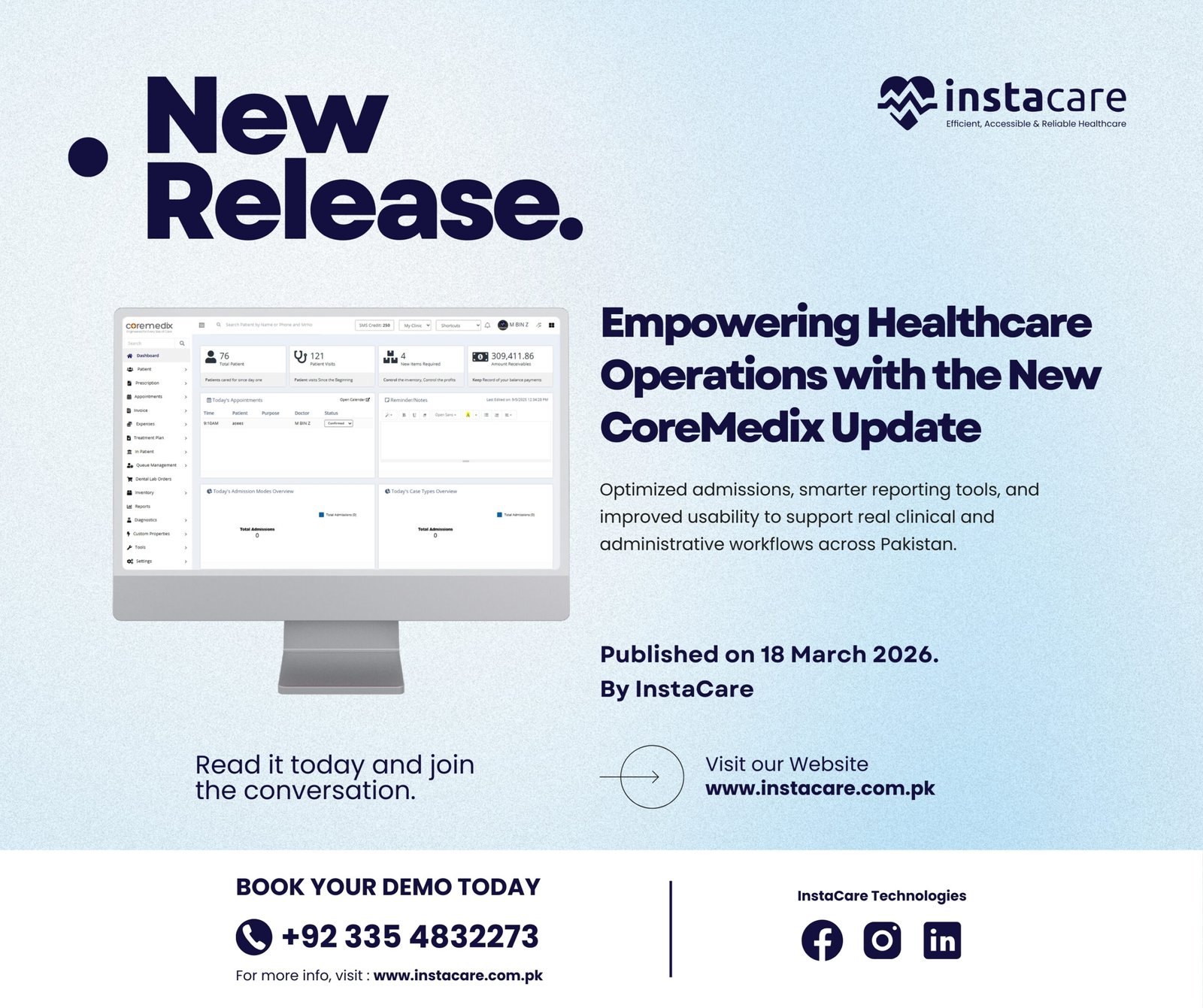
CoreMedix Healthcare Software Update 2026 Healthcare organizations require software that is fast, reliable, and designed for real clinical and administrative workflows. From managing admissions and appointments to generating financial reports and patient records, every module must work smoothly for healthcare teams handling high daily workloads. This latest CoreMedix platform update introduces performance improvements, enhanced reporting capabilities, dynamic dashboard insights, and usability updates across several modules. These updates strengthen CoreMedix as a reliable Healthcare Software in Pakistan built for clinics, hospitals, pharmacies, and diagnostic labs. If you are evaluating clinic management software, hospital management software, pharmacy management software, or lab management software, this update addresses several day-to-day operational challenges faced by healthcare providers. What’s Included in This Healthcare Software Update This release focuses on improving system responsiveness, reporting accuracy, and dashboard visibility across multiple modules. Key highlights include: Faster performance for admission and patient lists Expanded reporting capabilities for clinic administrators Improved financial and appointment reports Dynamic dashboard cards for real-time operational insights Enhanced search field usability across reports Improved visit history data visibility These enhancements help healthcare teams work more efficiently while maintaining accurate patient and operational records. Admission & IPD Workflow Enhancements (For Hospitals & Clinics) Efficient patient admission and discharge management is a critical component of hospital information systems. This update introduces performance and workflow improvements to ensure smoother IPD operations. Optimized system performance for the Live Admissions list, allowing faster loading of active patient admission records. Export and Print options are now available in the IPD Discharged Patients list, enabling hospitals to easily generate records for reporting and documentation. Improved column labeling in the Discharged Patients module, ensuring clearer visibility of available actions. These enhancements help hospital administrators and staff manage inpatient workflows more efficiently. Reporting & Financial Insights Improvements (For Clinics, Hospitals & Finance Teams) Accurate reporting is essential for operational analysis and financial monitoring in healthcare software systems. This release introduces improvements across multiple reporting modules: Added Serial Number (S.No.) column in the Appointment Report for easier data tracking. Serial Number columns are now available across all Checkups Reports, improving report structure and readability. Introduced a Category-Wise Summary Report within financial reports to help administrators better analyze revenue by service category. Improved Invoice Summary service filtering, ensuring invoices appear correctly when filtering by specific services such as Emface Cheeks Applicators. Enhanced responsiveness of the Remaining Amount (Descending) filter to improve financial report performance. These updates provide clinic managers and finance teams with clearer insights into patient services and revenue trends. Book Your Free Marketing Consultation Dynamic Dashboard Visibility Enhancements Modern healthcare software requires quick access to operational insights. This update enhances the CoreMedix dashboard with improved dynamic data cards, allowing administrators to monitor system activity in real time. Dynamic dashboard cards have been enhanced for the following modules: Admissions List Appointments List Visit History Invoices List Prescriptions List Patients List These dashboard improvements provide healthcare teams with a clearer overview of patient activity, financial data, and operational performance from a single interface. System Performance & Interface Updates Several usability and interface improvements have been implemented across the system to improve navigation and clarity. Key improvements include: Visit data in the Edit Visit → Past Visits section now displays correctly, improving access to historical patient records. Added descriptive hover tooltips for Edit and Delete actions within the Visits Form Designer to guide users more clearly. Added search field placeholders to improve usability in: Diagnostic History Report Checkup History Report Account Receivables Report Improved search field layout by removing unnecessary icons that previously appeared inside search inputs in: Checkup Reports (Treatments & Cases) Checkup History Report Diagnostic History Report Corrected text labeling in the Lab → Reports → Sales Report interface to ensure accurate wording. These updates improve everyday usability for doctors, administrators, and support staff working within the system. Why This Update Matters for Healthcare Providers Healthcare organizations increasingly depend on Healthcare Software in Pakistan that supports real clinical workflows and administrative processes. This update strengthens CoreMedix by improving: System performance for patient admission and operational workflows Reporting accuracy for financial and administrative teams Dashboard visibility for management and staff Usability across reporting and clinical modules Whether you operate a clinic, hospital, pharmacy, or diagnostic lab, these enhancements help streamline daily operations and reduce friction in healthcare management. About CoreMedix CoreMedix is an integrated healthcare technology platform offering: Clinic Management Software Hospital Management Software Pharmacy Management Software Lab Management Software Designed specifically for healthcare providers in Pakistan, CoreMedix focuses on reliability, operational efficiency, and real-world usability, helping medical facilities digitize workflows, improve patient care, and manage operations through a unified cloud platform.
Digital Medical Records for PHC Compliance in Pakistan Healthcare systems in Pakistan are rapidly shifting toward digital transformation as regulatory authorities emphasize the importance of structured, accurate, and accessible patient data. The Punjab Healthcare Commission (PHC) requires healthcare establishments to maintain proper medical records as part of its compliance framework. Traditional paper-based systems often fail to meet modern healthcare standards due to issues like incomplete documentation, data loss, and lack of traceability. To address these challenges, hospitals and clinics are increasingly adopting digital medical records systems, also known as Electronic Medical Records (EMR). This guide explains how digital medical records support PHC compliance, patient safety, and operational efficiency in healthcare facilities across Pakistan. What Are Digital Medical Records? Digital medical records, commonly referred to as Electronic Medical Records (EMR), are electronic versions of patient health information stored within a healthcare system. These records typically include: patient demographics medical history consultation notes prescriptions diagnostic reports treatment plans Unlike paper records, digital medical records allow healthcare providers to store, retrieve, and update patient information in a structured and secure format. Why PHC Requires Proper Medical Records PHC places strong emphasis on accurate and complete medical record management as part of its regulatory standards. Medical records are essential for: ensuring continuity of patient care supporting clinical decision-making maintaining legal documentation enabling accountability during inspections improving patient safety Incomplete or missing records are one of the most common reasons healthcare facilities fail PHC inspections. Limitations of Paper-Based Medical Records Many healthcare facilities still rely on manual documentation systems, which create several operational challenges. Common issues include: illegible handwriting missing patient files duplicate patient records delayed access to medical history difficulty in retrieving past records lack of audit trails These limitations make it difficult for hospitals to maintain compliance with PHC standards. How Digital Medical Records Support PHC Compliance Digital systems help healthcare facilities maintain structured and reliable patient records that align with PHC requirements. 1. Accurate Patient Documentation Digital medical records ensure that all patient information is recorded in a structured format. Healthcare providers can maintain: complete consultation notes treatment history medication records diagnostic reports This improves documentation quality and supports compliance during inspections. 2. Unique Patient Identification Digital systems assign a unique identifier to each patient, reducing the risk of duplicate records. This helps healthcare facilities maintain accurate patient histories and ensures data consistency. 3. Easy Access to Patient Records Healthcare providers can quickly access patient records from a centralized system. This improves: clinical decision-making patient care coordination treatment continuity 4. Audit Trails and Data Traceability Digital systems maintain logs of all activities related to patient records. Hospitals can track: who accessed records when changes were made what updates were performed This is critical for regulatory audits and PHC inspections. 5. Secure Data Management Digital medical record systems provide secure data storage and access controls. This helps healthcare facilities: protect patient confidentiality prevent unauthorized access maintain data integrity 6. Integration with Hospital Systems Digital records can be integrated with other hospital systems, including: laboratory systems pharmacy systems radiology systems This creates a connected healthcare environment where patient data flows seamlessly across departments. Role of EMR Systems in Healthcare Facilities Electronic Medical Record systems play a central role in modern healthcare operations. EMR systems help healthcare facilities: Manage patient data efficiently Reduce paperwork Improve workflow efficiency Support regulatory compliance Hospitals using EMR System are better equipped to meet PHC documentation requirements and improve overall service quality. Key Features Required in a PHC-Compliant EMR System Healthcare facilities should ensure that their digital systems support essential features required for compliance. Important features include: Structured patient record management Unique patient identification Secure access controls Audit logs and activity tracking Integration with hospital departments Reporting and analytics These features help healthcare providers maintain accurate records and prepare for regulatory inspections. How Hospitals Can Transition to Digital Medical Records Hospitals planning to move from paper-based systems to digital records should follow a structured approach. Recommended steps include: Assess current documentation practices Identify gaps in record management Select an EMR system aligned with PHC requirements Train staff on digital workflows Gradually digitize patient records A phased transition helps healthcare facilities adopt digital systems without disrupting daily operations. Benefits of Digital Medical Records for Healthcare Providers Healthcare facilities that adopt digital record systems experience several benefits. Improved Patient Care Doctors can access complete patient histories, leading to better diagnosis and treatment decisions. Faster Operations Digital systems reduce time spent on paperwork and improve workflow efficiency. Better Compliance Hospitals can maintain structured records required for PHC inspections. Reduced Errors Digital documentation reduces human errors associated with manual record-keeping. Book Your Free Marketing Consultation Common Challenges in Digital Transformation While digital transformation offers many benefits, healthcare facilities may face challenges during implementation. Common challenges include: Staff resistance to change Training requirements System integration issues Initial setup costs Proper planning and staff training can help overcome these challenges. Future of Digital Healthcare in Pakistan Healthcare systems in Pakistan are moving toward fully digital operations as regulatory authorities emphasize transparency and accountability. Digital medical records will play a key role in: improving healthcare quality enhancing patient safety enabling data-driven healthcare decisions supporting regulatory compliance Hospitals that adopt digital systems early will be better positioned for long-term growth and compliance. Conclusion Digital medical records are becoming essential for healthcare facilities aiming to meet PHC compliance requirements and improve operational efficiency. By replacing manual documentation systems with structured digital solutions, hospitals and clinics can ensure accurate patient records, improve clinical workflows, and prepare for regulatory inspections. Adopting EMR systems is not just a technological upgrade it is a necessary step toward modern, compliant, and patient-centered healthcare delivery in Pakistan.
Health Information Technology: What Is it? A Complete Guide Healthcare is also changing rapidly with technology being incorporated in it and patient care is made more efficient and accurate. Health Information Technology (HIT) is one of the greatest developments in this direction. It is an important part of medical information control, better communication, and better healthcare facilities. Knowing the Health information technology definition aids in understanding what HIT is in the healthcare sector and why it is necessary in the modern day. Since the storage of patient records to aid clinical decision making, HIT has changed the way healthcare providers conduct their operations utilizing the sophisticated healthcare data management systems. What Is Health Information Technology? Health Information Technology (HIT) is the application of digital systems and tools to store, control, and exchange health information. It also encompasses a broad scope of technologies which are meant to enhance healthcare delivery and patient outcomes. To explain in simple terms, HIT in healthcare is the utilization of computers, programs and networks in managing medical information effectively. Examples of health information technologies are common examples that involve electronic health records (EHR), telemedicine platform, and hospital management system. HIT is one of the components of contemporary digital health technology that can enable healthcare providers to access precise patient data at any time or place. Key Components of Health Information Technology There are a number of significant elements that make up Health Information Technology and how they collaborate to enhance healthcare systems. Electronic Health Records (EHR) Electronic health records (EHR) denote electronic copies of medical histories of patients. They include the information like the diagnosis, medications, and the outcomes of tests. Healthcare IT Systems Healthcare IT systems are software and platforms that are employed in hospitals and clinics to facilitate operations, billing, and treatment of patients. Health Information Systems Health information systems are more extensive systems meant to gather, store and analyze healthcare data to make improvements on decision making. Digital Health Tools These are mobile applications, wearable gadgets, and telehealth solutions that aid in monitoring and interacting with patients. These aspects collectively show how IT can enhance the field of healthcare by making medical data efficient, precise, and more accessible. Benefits of Health Information Technology There are Benefits of health information technology to the patients as well as healthcare providers. Improved Patient Care The doctors are able to get correct patient data in a short time resulting in improved diagnosis and treatment. Enhanced Data Management Sophisticated healthcare data management systems have safe and structured storage of medical records. Better Communication HIT enhances communication among the health workers, minimizing mistakes and duplication of the tests. Increased Efficiency Tasks, such as scheduling and billing, are automated, which saves time and has a decreasing number of people working in the administration. Patient Engagement With electronic health records (EHR), patients have access to their records and this encourages openness and participation in their care. The benefits reveal how digital health technology is increasingly becoming relevant in the contemporary healthcare systems. Book Your Free Marketing Consultation Challenges of Health Information Technology HIT also has a number of challenges even with its advantages. High Implementation Costs Implementation of the healthcare IT system is costly in terms of software, hardware, and training. Data Security Concerns The health information systems have a significant challenge of protecting sensitive patient information. Technical Issues Malfunction of a system or a bug in software may interfere with healthcare services. Resistance to Change The healthcare workers might be timid about the use of new technologies as they might be untrained or unfamiliar with them. Interoperability Issues Various systems are not likely to be integrated with each other, which influences the smooth transfer of information. These obstacles should be overcome in order to implement HIT successfully. The Future of Health Information Technology HIT has a bright future and the healthcare sector is being enhanced by new changes that keep on taking place. The new trends in digital health technology are artificial intelligence, big data analytics, and remote patient monitoring. These novelties will contribute to the further development of the Role of IT in healthcare as it will allow personalized treatment and foreseeing care. Also, healthcare data management systems will be better integrated to enable data to be shared across platforms easily. It also becomes significant to understand health informatics vs health IT since informatics pays much attention to data analysis whereas HIT is more concerned with technology systems. All in all, the future is intelligent and interconnected healthcare. Conclusion Health Information Technology is radically changing the face of healthcare by enhancing management of data, communication and treatment of patients. The definition of health information technology and what is HIT in healthcare show the relevance of assessment of health information technology in the contemporary digital world. HIT has improved the efficiency and accuracy in the provision of healthcare, all the way to electronic health records (EHR) and advanced healthcare IT systems. Nevertheless, the rising use of digital health technology guarantees an improved and more patient-focused future. FAQs What does Health Information Technology mean? This is because the definition of health information technology is the use of digital tools and systems to store and share healthcare information. What could be given as examples of health information technology? The most frequent Examples of health information technology are electronic health records (EHR), telemedicine, and hospital management systems. What are the advantages of health information technology? Health information technology has the advantage of better patient care, data management, and efficiency.
Electronic Medical Records (EMRs) Explained: Benefits, Features, and Uses The global healthcare systems are becoming more digitalized to enhance the medical care and patient records. EMRs are one of the most significant inventions in this sphere. These systems substitute the use of paper files with computerized medical records that enable the healthcare provider to store, retrieve, and process patient records more effectively. The increased adoption of EMR technology in the healthcare sector has changed the manner in which hospitals and clinics process patient data. With EMR software for hospitals, medical workers can enhance the accuracy of the documentation, simplify the work processes, and contribute to enhanced healthcare decision-making. The role of EMR in healthcare today can be emphasized by being aware of how EMRs operate, their advantages, and the role they play in contemporary healthcare. What Are Electronic Medical Records (EMRs)? EMRs are the computerized replicas of the paper charts of patients utilized in hospitals and clinics. These electronic medical records include the comprehensive data on the medical history of a patient, his/her diagnosis, medications, treatment plan, laboratory results, and physician notes. The use of EMRs is aimed at accessing the information required by the healthcare professional who is authorized to access the information in a particular medical facility. They assist in substituting manual records keeping and are critical medical record keeping systems that arrange and store patient information in a safe environment. EMRs enable the medical industry to be more efficient by ensuring that record accuracy is high and that health care information on patients is readily accessed when required. How EMRs Work? The knowledge of how EMR systems operate contributes to the understanding of their popularity in healthcare facilities. EMR systems act as digital repositories of patient information and are centrally located databases in electronic format. When a patient comes to a hospital or clinic, clinical specialists input data into the EMR system, such as medical history, symptoms and diagnoses, prescriptions, and test results. Such data is incorporated into the electronic record of the patient and can be viewed by the personnel. These systems also interconnect with other healthcare data management systems including the laboratory software, pharmacy systems and imaging equipment. It has integrated such that medical professionals can see the entire patient data in a single location to enhance coordination and decision-making. Key Features of Electronic Medical Records Current EMR systems comprise numerous tools that will enhance patient care and medical records. Knowledge on EMR features and functions can assist healthcare organizations be able to utilize their benefits to the fullest extent. Patient Information Management EMRs contain personal information, medical history, allergies, medication history and treatment records in structured electronic records. Clinical Documentation EMR software allows doctors and nurses to document the symptoms, diagnosis, and notes regarding treatment of patients electronically. Laboratory and Test Results Integration EMRs enable healthcare providers to retrieve the laboratory results and imaging reports in real-time with built-in healthcare data management systems. E-Prescribing Physicians are able to transmit prescriptions to the pharmacies electronically and save a lot of mistakes and enhance efficiency. Access control and Data Security The current EMRs have security measures like encryption and restricted access to ensure the safety of patient information. These EMR capabilities and functions contribute to find the way to simplify the medical records and enhance patient care. Benefits of EMRs in Healthcare EMRs have had a great impact on the operations and management of health care. The significance of EMR in healthcare is manifested through some benefits. Improved Accuracy The electronic records minimize the errors of handwriting, and enhance the accuracy of documentation. Quickter access of patients data Digital Medical Records enable healthcare providers to access their digital medical records in a short time, thus saving time when attending to patients. Better Coordination of Care EMRs enable different healthcare providers to access the pertinent information about the patient by integrating with the healthcare data management systems. Enhanced Efficiency Mechanized processes minimize the administration and enhance the productivity of the hospital. Better Data Analysis Patients Hospitals are able to use the data on patients to draw conclusions about trends and better treatment and aid in medical research. These advantages indicate the fact that EMR implementation in hospitals is increasing globally. EMR vs EHR What Is the difference? Electronic Medical Records (EMRs) and Electronic Health Records (EHRs) are the terms that many individuals mix though they are somewhat different. EMRs refer to electronic copies of patient records applied to one healthcare organization. They primarily facilitate medical documentation and clinical processes within a company. EHRs, in their turn, are more universal systems, ensuring the possibility of sharing the patient information with several healthcare organizations. Hospitals, clinics, specialists communicate much better with the help of EHRs. Both systems lead to the better management systems of medical records, but EHRs are more operable among healthcare providers. Book Your Free Marketing Consultation Challenges of Implementing EMRs Despite all the advantages of EMRs, there are some challenges that healthcare organizations can encounter during the implementation of EMRs in hospitals. High Initial Costs The installation of EMR Software is a costly activity in terms of software, hardware, and personnel training. Staff Training The use of EMR software in hospitals may require time and these professionals may need to learn how to operate it. Data Security Concerns EMRs contain delicate information about patients, and therefore hospitals should ensure they have excellent cybersecurity protections against breaches. System Integration Issues At times, combining EMRs with the current healthcare data management systems can bring technical issues. Nonetheless, the benefits of the strategies usually surpass the challenges in the long-term. The Future of Electronic Medical Records It can be predicted that the future of electronic medical records will also be characterized by more sophisticated technologies and better integration on a digital basis. EMR technology in the healthcare sector will probably improve with the help of artificial intelligence, cloud computing, and advanced analytics. The technologies can assist physicians in the more efficient analysis of patients data and aid in

PHC MSDS Standards Explained for Hospitals and Clinics in Pakistan Healthcare quality and patient safety are central to the regulatory framework established by the Punjab Healthcare Commission (PHC). To ensure healthcare facilities maintain safe clinical practices and consistent service quality, PHC has introduced the Minimum Service Delivery Standards (MSDS). These standards define the minimum operational, administrative, and clinical requirements that hospitals, clinics, and diagnostic centers must follow in order to maintain regulatory compliance. Understanding MSDS standards is essential for healthcare establishments preparing for PHC inspections and long-term compliance with healthcare regulations. This guide explains the PHC MSDS standards, their core categories, and how healthcare facilities can meet these requirements. What Are PHC Minimum Service Delivery Standards (MSDS)? The Minimum Service Delivery Standards (MSDS) are a set of regulatory guidelines developed by PHC to ensure healthcare facilities deliver safe and reliable medical services. These standards define how healthcare establishments should manage: patient care medical records staff qualifications infection control clinical operations healthcare infrastructure MSDS standards help establish uniform healthcare quality across hospitals and clinics operating in Punjab. Healthcare facilities are evaluated against these standards during PHC inspections and licensing processes. Why MSDS Standards Are Important MSDS standards help improve the overall quality of healthcare services by establishing clear expectations for healthcare providers. The primary objectives of MSDS include: improving patient safety standardizing healthcare operations ensuring accountability in healthcare services strengthening regulatory oversight promoting transparency in healthcare delivery Hospitals and clinics that comply with MSDS standards are more likely to maintain consistent service quality and pass PHC inspections successfully. Core Categories of PHC MSDS Standards PHC organizes MSDS standards into several key categories that cover different aspects of healthcare operations. 1. Access and Assessment of Care (AAC) The Access and Assessment of Care standard ensures patients receive appropriate medical attention when they visit healthcare facilities. Hospitals must establish processes that allow patients to receive timely and appropriate clinical assessments. This includes: patient registration procedures initial medical evaluation triage and prioritization of emergency cases documentation of patient history and symptoms These processes ensure patients are assessed accurately before treatment decisions are made. 2. Care of Patients (COP) The Care of Patients standard focuses on how hospitals manage patient treatment and clinical services. Healthcare providers must ensure that patient care follows professional medical guidelines and is properly documented. Hospitals should maintain systems that support: treatment planning medication management ongoing patient monitoring discharge planning and follow-up care Proper patient care management ensures that treatment decisions are safe, effective, and consistent with medical standards. 3. Medication Management (MOM) Medication management standards ensure that healthcare facilities handle medicines safely and responsibly. Hospitals must establish processes for: medication prescribing drug storage and labeling dispensing procedures pharmaceutical inventory tracking Proper medication management reduces the risk of medication errors and improves patient safety. 4. Healthcare-Associated Infection Control (HIC) Infection control is a critical part of healthcare safety. Healthcare facilities must implement policies and procedures that help prevent infections within medical environments. These measures may include: sterilization protocols infection monitoring programs safe waste disposal systems hygiene procedures for healthcare staff Effective infection control protects both patients and healthcare workers. 5. Information Management Systems (IMS) Healthcare facilities must maintain reliable systems for managing clinical and administrative information. Information management standards focus on: patient medical records data security and confidentiality documentation accuracy healthcare data management Digital healthcare systems can help hospitals maintain structured and accessible records. 6. Continuous Quality Improvement (CQI) Healthcare providers are expected to continuously monitor and improve the quality of services they deliver. Continuous quality improvement programs help hospitals identify operational weaknesses and implement improvements. CQI processes may involve: performance monitoring incident reporting systems internal audits quality improvement initiatives These programs help healthcare organizations maintain high service standards. 7. Human Resource Management (HRM) Healthcare facilities must ensure that staff members are properly qualified and capable of performing their responsibilities. Human resource management standards require hospitals to maintain records of: staff credentials training documentation professional certifications employment history Proper staff credential management ensures healthcare services are delivered by qualified professionals. Book Your Free Marketing Consultation How Hospitals Can Meet PHC MSDS Requirements Healthcare facilities can improve compliance with MSDS standards by implementing structured operational systems. Hospitals should focus on: maintaining accurate patient records documenting staff credentials implementing infection control protocols managing pharmaceutical inventory establishing complaint management systems conducting internal compliance audits These steps help hospitals prepare for PHC inspections and maintain regulatory compliance. Role of Digital Healthcare Systems in MSDS Compliance Modern healthcare software systems help hospitals manage compliance more effectively. Digital hospital management platforms support: electronic medical record management staff credential tracking laboratory and pharmacy integration regulatory documentation management quality improvement monitoring These systems help healthcare facilities maintain accurate records and streamline compliance processes. Preparing for PHC MSDS Inspections Healthcare establishments preparing for PHC inspections should regularly review their operational procedures and documentation. Recommended preparation steps include: review MSDS compliance requirements Maintain organized patient medical records Verify staff licensing and training documentation Implement infection control policies Conduct internal compliance audits Regular compliance reviews help healthcare facilities stay prepared for inspections and maintain high standards of patient care. Conclusion The Minimum Service Delivery Standards (MSDS) introduced by the Punjab Healthcare Commission play a critical role in improving healthcare quality and patient safety. Hospitals and clinics that understand and implement MSDS standards are better prepared for regulatory inspections and long-term healthcare compliance. By maintaining proper documentation, implementing structured operational procedures, and adopting digital healthcare management systems, healthcare facilities can ensure they meet PHC requirements while delivering safe and effective patient care.
What Is Healthcare Technology? A Complete Guide to Modern Medical Innovation Medical technology has now become a necessity of medicine. Technology is changing the way healthcare services are managed and delivered through the digital patient records to sophisticated surgical equipment. These new health care technologies assist in enhancing diagnosis, treatment and care of patients in hospitals and clinics. The increased relevance of healthcare technology is evident in efficiency, effectiveness of communication between medical workers, and patient outcomes. Health information technology (HIT) and electronic health records technology can enable healthcare providers to manage and retrieve patient information more easily. Technology is increasingly becoming important in determining the future of healthcare as medical systems keep on changing. What Is Healthcare Technology? The technology of healthcare is the tools, systems, and innovations aimed to enhance medical care, patient management, and healthcare services. It comprises physical medical machines as well as computerized systems that assist in medical processes. These Technology used in hospitals vary between diagnostic equipment and surgical apparatus on the one hand and digital platforms that process patient data on the other. Examples of the use of technology in healthcare today, include the use of IT systems, telemedicine system, and digital monitoring systems. Role of technology in healthcare is maximizing efficiency, increasing accuracy of treatment and assist healthcare professionals in providing better care. Hospitals and clinics can achieve faster diagnosis, improved treatment plans, and better monitoring of the patient by incorporating sophisticated systems and digital tools. Types of Healthcare Technology Types of healthcare technology is a broad category of tools and systems utilized in a medical setting. Health Information Technology (HIT) Health information technology (HIT) refers to electronically controlled records of patients. This also incorporates electronic health records technology that enables physicians to view the history of patients in a safe and fast manner. Medical Equipment and Diagnostic Products Most of the hospitals are dependent on hi-tech machines like MRI scanners, CT scanners, and even ultrasound machines. The tools assist the doctors to identify diseases at the initial stages and make precise diagnosis. Telemedicine Technology Telemedicine has enabled physicians to meet patients at a distance using video or electronic gadgets. This technology enhances the access to health care, particularly to patients in remote locations. Surgical Technology Robotics The high-tech robots facilitate the surgeons in the carrying out of complex surgeries more accurately. These Modern healthcare innovations are a significant technology that is applied in hospitals to enhance surgical results. Wearable Health Devices Health trackers and Smartwatches track vital signs that include heart rate, sleep patterns, and physical activity. These gadgets assist users and physicians to monitor health information on a real-time basis. Key Benefits of Healthcare Technology Benefits of healthcare technology are numerous to both the patients and healthcare providers. Improved Patient Care Digital technology is used to assist physicians in diagnosing diseases at an earlier stage and also tracking the health of patients more precisely. This results in improved patient safety and outcomes of treatment. Better Data Management The technology of healthcare IT systems and electronic health records enables healthcare givers to keep and retrieve patient data in a convenient manner. This saves paper work and enhances inter-departmental coordination. Greater Productivity in Hospitals Digital systems and automation simplify the work of a hospital, and such processes as scheduling, record keeping, and billing are facilitated and more efficient. Enhanced Communication Technology enables medical practitioners to communicate and exchange information within a short time. This enhances patient care and decision making. Increased Healthcare Accessibility Telemedicine and mobile health applications also increase the accessibility of healthcare services especially to patients in rural or underserved regions. These are the strengths of the increasing usefulness of healthcare technology in contemporary medical apparatus. Book Your Free Marketing Consultation Challenges of Healthcare Technology Healthcare technology has numerous issues as well as benefits, despite the obvious advantages of using technology in the healthcare sector. High Implementation Costs Modern medical equipment and computer systems are costly to invest in. Mini health institutions might fail to cover such technologies. Data Security and Privacy Patient information is sensitive and stored by digital healthcare systems. The security of this data against cyber attacks and unauthorised access is a significant issue. Training and Adoption Medical workers should be educated on how to operate new systems. Technology can fail to provide its advantages without adequate training. Technical Issues Healthcare can be interrupted by system failures or software errors. To avoid any downtime, hospitals should have a good infrastructure. The challenges should be addressed in order to make the best out of healthcare technology and make its implementation safe. Future Trends in Healthcare Technology Healthcare technology is a developing field that operates at a quick rate of digital and medical development. Artificial Intelligence in Medicine. AI is assisting physicians in interpretation of medical images, disease prediction and clinical decision-making. Remote Patient Monitoring Home-based devices to monitor patient health are on the increase as it saves them the hassle of having to visit the hospital on a regular basis. Personalized Medicine Technology is facilitating personalized treatment to individual patients depending on genetic and health information. Smart Hospitals Hospitals are now shifting to the use of integrated digital systems that bind the equipment, patient records, and hospital management tools. These technological advances are some of the popular Healthcare technology trends and they illustrate the . Impact of Healthcare Technology on Patients and Providers The healthcare technology has tremendously transformed the interaction between patients and healthcare providers. Digital tools provide patients with rapid diagnosis, easy access to telehealth, and access to health information. Wearables and mobile applications allow patients to monitor their health. In the case of healthcare providers, technology enhances efficiency and precision. IT systems in healthcare are used to facilitate the work of physicians to handle patient records, to communicate with other professionals and to make effective treatment decisions. In general, technology enhances the interactions between providers and patients and increases the quality of provided care. Conclusion Modern medicine is changing due to technology in healthcare,
PHC Inspection Checklist for Hospitals and Clinics in Pakistan Healthcare facilities operating in Punjab must comply with the regulatory standards set by the Punjab Healthcare Commission (PHC). These standards ensure that hospitals, clinics, and diagnostic centers maintain safe healthcare practices, proper patient documentation, and quality medical services. To verify compliance, PHC conducts inspections of healthcare establishments to assess whether they meet the Minimum Service Delivery Standards (MSDS). For many hospitals and clinics, PHC inspections can feel complex because inspectors evaluate multiple areas including patient records, staff credentials, infection control, equipment management, and clinical documentation. This guide provides a complete PHC inspection checklist to help healthcare facilities understand what inspectors evaluate and how they can prepare for regulatory compliance. What Is a PHC Inspection? A PHC inspection is an official evaluation conducted by the Punjab Healthcare Commission to ensure healthcare establishments comply with regulatory standards and patient safety guidelines. During inspections, PHC teams assess: Healthcare service quality Clinical documentation Facility safety standards Infection prevention measures Staff credentials and licensing Patient record management Healthcare facilities that fail to meet compliance standards may receive corrective notices, penalties, or operational restrictions. Healthcare Facilities Subject to PHC Inspection PHC inspections apply to different types of healthcare establishments, including: Private hospitals Specialist clinics General medical clinics Diagnostic laboratories Maternity homes Healthcare centers providing outpatient services Larger hospitals often undergo more comprehensive inspections due to the complexity of their operations and clinical services. PHC Inspection Checklist To prepare for a PHC inspection, healthcare facilities should ensure that the following areas are properly documented and managed. 1. Hospital Licensing and Registration Healthcare facilities must maintain valid documentation confirming their registration and licensing with the relevant regulatory authorities. Inspectors may review: PHC registration certificate Healthcare establishment license Ownership documentation Facility registration records These documents confirm that the facility is legally authorized to provide healthcare services. 2. Staff Credentials and Professional Licensing Healthcare providers must ensure that all medical staff members are properly licensed and qualified to perform their duties. PHC inspectors may verify: Doctor registration with medical councils Nursing staff certifications Specialist qualifications Staff credential documentation Employment and training records Proper credential management helps maintain professional accountability within healthcare facilities. 3. Patient Medical Records Accurate medical records are essential for safe patient care and regulatory compliance. During inspections, PHC teams may examine whether hospitals maintain: Complete patient medical histories Consultation records Treatment documentation Prescription records Diagnostic reports Hospitals should ensure patient records are organized, accessible, and securely stored. Book Your Free Marketing Consultation 4. Infection Prevention and Control Healthcare facilities must implement infection control protocols to protect patients and medical staff. Inspectors may review: Sterilization procedures Sanitation practices Infection control policies Waste disposal systems Use of protective equipment Effective infection prevention programs reduce the risk of hospital-acquired infections. 5. Laboratory and Diagnostic Services Hospitals providing laboratory services must ensure diagnostic processes meet professional standards. PHC inspectors may evaluate: Laboratory test documentation Sample handling procedures Diagnostic reporting accuracy Laboratory equipment maintenance Quality control protocols Proper Laboratory Management Software ensures reliable diagnostic results for patients. 6. Pharmacy Management Hospitals and clinics operating pharmacies must ensure proper medication management and storage. Inspection checks may include: Prescription verification processes Medication inventory management Drug storage standards Pharmaceutical documentation Medication dispensing records These practices help ensure patient safety and medication accountability. 7. Medical Equipment Management Healthcare facilities must maintain medical equipment to ensure patient safety and service reliability. PHC inspectors may assess: Equipment maintenance logs Calibration records Equipment usage documentation Safety inspections Regular equipment monitoring helps prevent operational risks in healthcare facilities. 8. Patient Complaint Management Hospitals must maintain systems for addressing patient complaints and feedback. Inspectors may review: Complaint registration procedures Complaint tracking records Investigation documentation Resolution processes Effective complaint management improves healthcare quality and patient trust. 9. Facility Safety and Emergency Preparedness Healthcare facilities must maintain safety systems for emergency situations. Inspection areas may include: Fire safety equipment Emergency evacuation plans Disaster response procedures Staff emergency training Preparedness ensures healthcare facilities can respond effectively to emergencies. Common Reasons Healthcare Facilities Fail PHC Inspections Healthcare establishments may fail inspections due to several common compliance issues. Typical problems include: Incomplete patient documentation Missing staff credential records Poor infection control practices Lack of equipment maintenance logs Inadequate complaint management systems Healthcare facilities should conduct internal audits regularly to ensure compliance with PHC standards. How Healthcare Software Helps Prepare for PHC Inspections Modern healthcare management systems help hospitals maintain organized records and ensure regulatory readiness. Healthcare software platforms support: Electronic medical records management Digital staff credential tracking Integrated laboratory and pharmacy systems Automated reporting and documentation Compliance audit trails These systems help healthcare facilities maintain accurate documentation and prepare for inspections more efficiently. Preparing Your Healthcare Facility for PHC Inspection Hospitals and clinics can improve their inspection readiness by following several key steps. Recommended actions include: Review PHC compliance standards regularly Maintain accurate patient documentation Verify staff credentials and licensing Implement infection control policies Maintain equipment maintenance records Establish structured complaint management systems Regular compliance reviews help healthcare facilities stay prepared for regulatory inspections. Conclusion PHC inspections play a vital role in ensuring healthcare facilities maintain safe, transparent, and accountable medical practices. Hospitals and clinics that maintain organized documentation, proper staff credential records, infection control procedures, and patient safety protocols are more likely to pass inspections successfully. By adopting structured healthcare management systems and maintaining regulatory awareness, healthcare providers can ensure long-term compliance with PHC standards while delivering high-quality patient care.
Robots in Healthcare: Transforming the Future of Medicine Robotics is changing the healthcare sector not only in terms of precision and efficiency but also patient outcomes. Robotic-assisted surgery and hospital service robots are only some of the innovations that are redefining care delivery. Robotics assists in the alleviation of human error, improved accuracy of surgery, and patient recovery. As the medical robotics technology increases, more hospitals and clinics will be able to provide safer, faster, and more personalized care. With this knowledge of the uses, advantages, and difficulties of automation in healthcare robotics, it is important to influence the future of medicine. What Are Robots in Healthcare? Healthcare robots are devices, which are meant to carry out functions that would assist medical practitioners and enhance patient care. They are available in terms of surgical equipment to computerized service systems that offer support in other clinical and operational procedures. These robots are capable of doing monotonous tasks, assisting in surgeries, assisting with the mobility of patients, and logistics in hospitals. Robotic patient care systems can also help to monitor vital signs, administer drugs, or guide patients and decrease the workload of medical personnel and efficiency. Types of Robots Used in Healthcare Robotics in healthcare may be broadly divided into functional groups: Surgical Robots Robotic-assisted surgery involves the use of delicate tools managed by surgeons to produce minor surgeries. These systems minimize complications and enhance the recovery rates. Service Robots Hospital robots that perform duties like administering drugs, cleaning tools, or transporting supplies help to minimize the amount of manual work done by employees. Rehabilitation Robots Rehabilitation robots are used to help injured or surgical patients regain their mobility by assisting them in physical therapy. These robots will be programmed to follow the requirements of patients and monitor their progress. Diagnostic and Surveillance Robots There are certain robots that assist in monitoring patients, routine check-ups, or even aiding in the diagnosis process in order to provide stability and timely identification of complications. Book Your Free Marketing Consultation Benefits of Robots in Healthcare There are several benefits of healthcare robots: Precision and Accuracy: Robotics in surgery enhance the accuracy of the procedure and minimize human error. Efficiency and Productivity: Service robots can be used to deal with routine operations and other medical staff can attend to urgent cases. Improved Patient Care: Robots can be used in rehabilitation and patient monitoring, which enhances patient outcomes. Safety: Automation will decrease staff exposure to infectious environments. Data Collection: Patient progress can be monitored with the help of robotics systems and delivered as useful analytics to treat patients. Such advantages provide an insight into the increased role of Applications of robotics in healthcare, both in clinical and operational fields. Challenges and Limitations Healthcare robots have some difficulties despite their benefits: Expensive to use: First time cost and upkeep may prove pricey to hospitals. Training Needs: The personnel should be trained to use robotic systems. Technical Limitations: Robots might have a problem with unforeseen circumstances or with complicated patient-specific cases. Ethical Issues: Excessive use of robots can lead to the lack of interaction and care. Integration Problems: Implementation of robots into the current hospital operations may be a problematic process. These are just some of the challenges that must be addressed in order to achieve success in adoption of surgical robot technology and other systems. Future of Robotics in Healthcare Healthcare robotics are on the upward trend and the future of AI, machine learning, and sensor technologies promises to be bright. Future of robotics in healthcare could be: Wholly autonomous robotic care of patients to monitor and deliver medication. Smarter rehabilitation robots that can adjust to real time patient progress. Incorporation of remote surgery technology in medical robotics combined with telemedicine. Better automation in healthcare robotics to optimize workflow and logistics in the hospitals. The developments will widen the scope of healthcare, improve patient safety, and boost treatment effectiveness. When Hospitals Should Adopt Robotics? Robotics should be considered to be adopted by hospitals in case they: Precision and patient safety in surgery should be improved. Automation of repetitive tasks can be done to release personnel. There should be regular, quantifiable support in rehabilitation programs. Control of infection and safety is vital. The decision to invest in robotic-assisted surgery or hospital service robots will be in line with long-term operational objectives. The successful implementation of the new system depends on proper planning, staff training, and integration of workflow. Conclusion The use of robotics in the healthcare field is changing the practice of medicine by enhancing the accuracy of surgery, patient care, and making operations more efficient. These technologies are influencing the future of healthcare by removing the need to have a surgeon manually carry out minor surgical interventions, and by providing rehabilitation robots. Although issues such as the cost and training cannot be ignored, the advantages of robotics application in healthcare make it a vital element of modern medicine. Implementation of medical robotics technology in hospitals will help to enhance the performance of hospitals in terms of output, safety, and efficiency. FAQs What are the primary healthcare robots? The main types of surgical robots that are applied in hospitals and clinics are surgical robots, service robots, rehabilitation robots, and diagnostic or monitoring robots. What is the advantage of the use of robots in patient care? Robots enhance accuracy, minimize mistakes, contribute to rehabilitation, watch patients and enable healthcare personnel to concentrate on essential duties. Do the surgical robots have common usage in the hospitals? Yes, robotic-assisted surgery is progressively becoming a common
Emotion AI in Healthcare: Transforming Patient Care with Emotional Intelligence The field of healthcare is being revolutionized by incorporation of new and sophisticated technologies and Emotion AI in healthcare is a revolution that is taking shape. This is a technology that examines the emotions of humans based on artificial intelligence and this will allow the providers to comprehend the emotional condition of the patients in addition to their physical condition. Emotional intelligence is able to be integrated with clinical data to enable healthcare providers to provide more individualized care, enhance patient interaction, and streamline clinical processes. Emotion AI can be used in mental health monitoring, patient communication and behavioral health interventions, which is why this technology is a force to introduce into the modern healthcare system. What is Emotion AI? Affective computing or emotion AI is an AI hominoid technology that detects, analyzes, and reacts to human emotions. It works by using algorithms to handle facial expressions, speech patterns, voice tone and physiological signatures. These systems are useful in the healthcare setting to detect emotional distress, anxiety, depression, or stress in patients. Contrary to the conventional AI that is solely concerned with clinical outcomes, Emotion AI integrates AI sentiment analysis in healthcare, enabling the practitioner to comprehend the psychological and emotional aspects of health, which are fundamental in the overall well-being. How Emotion AI Works in Healthcare? Emotion AI works with the analysis of various kinds of information gathered during the interactions with the patients: Facial Recognition and Expression Analysis AI algorithms read micro-expressions, eye movements, and facial expressions that reveal emotions. Voice and Speech Analysis Tone, pitch, and speech cadence may indicate anxiety or depression (or any other emotional state). Behavioral and Physiological Data Wearable sensor, Skin conductance, and Heart rate, information show the level of emotional stress. With these inputs and the clinical records, AI for behavioral health monitoring can detect patterns that would have otherwise been ignored. The AI system then provides actionable insights to the physicians, therapists, and care teams, which enables prompt intervention. Applications of Emotion AI in Healthcare There are several applications of emotion AI in a healthcare environment: Patient Engagement AI emotion recognition systems may direct patient communication, changing to suit emotional responses to enhance comprehension and adherence. Mental Health Monitoring Patients who show emotions can be analyzed continuously, and the provider can identify the first signs of depression, anxiety, or stress in order to implement proactive measures. Therapeutic Support AI can be used to give feedback during therapy sessions to assist psychologists and counselors in designing treatment applications depending on how patients emotionally react. Scientific Research Emotion AI will be used in patient-centered science by measuring the emotional states enhancing the quality of research in behavioral health. These applications also improve patient care and clinical effectiveness, and emotional health is monitored both with physical health. Benefits of Emotion AI in Healthcare Emotion AI in healthcare is associated with many benefits: Better Patient Experience By knowing how the patients feel, providers will be able to react empathetically, and they will be able to make their care environment more comfortable. Early Intervention in Mental Health Problems The constant observation will identify emotional disturbances before it degenerates into serious cases. Data-Driven Insights AI emotional analytics in healthcare empowers making evidence-based decisions to use an individualized treatment plan. Improved Clinical Workflow Automated emotional analysis lessens the need to resort to manual observation to enable the healthcare personnel to concentrate on treating patients. Remote Patient monitoring Emotion AI is useful in telehealth to analyze emotions during virtual visits and increases care quality without meeting in person. All in all, Emotion AI enhances relationships between patients and providers and makes the medical services more efficient. Book Your Free Marketing Consultation Challenges and Ethical Concerns Emotion AI presents numerous challenges, in spite of its potential: Data Privacy and Data Security Emotional information is sensitive and should adhere to the regulations to avoid abuse or violation. Bias and Accuracy There are some cultural, linguistic, and demographic variations that may affect emotion recognition and, therefore, accuracy. Patient Consent Patients should know how the data of their emotions are gathered and utilized. Integration Complexity Implementing Emotion AI into the current Electronic Health Records (EHR) systems needs technical skill and training. To make AI-based patient care effective and ethical, healthcare organizations should take care of those problems. Future of Emotion AI in Healthcare Emotion AI for patient care has a bright future, and the new applications are improving not only diagnostics but also patient care: Predictive Behavioral Analytics Complex AI systems will anticipate emotional distress and mental health issues in advance. Connection with Virtual Health Assistants Emotion AI will complement AI assistants in the form of emotional responses upon interacting with a patient. Individualized Therapy Advice A combination of emotional feedback, cooperating with medical records, will enable highly personalized treatment plans in the field of behavior health. Growth in Telehealth Services Emotion AI will keep enhancing remote patient-emotion monitoring, adding to the access to mental health services. With the advancement in the technology, AI psychology and healthcare technology will form a foundation of the comprehensive treatment of the patient in addition to the usual clinical approach. Conclusion The use of emotion AI in healthcare is changing the way patients are treated as it is offering emotional intelligence to the clinical decision process. To mental health tracking and enhanced interaction with patients, emotion recognition systems based on AI assist providers in offering personalized, sumpter, and effective care. Although issues such as data privacy and integration are present, the advantages of using Emotion AI are more significant, which makes it an essential tool in the healthcare delivery of the present day. FAQs What is the value of Emotion AI in patient care? Emotion AI interprets and analyzes signs of emotion (facial expression, voice tone, and behavioral information) to deliver personal insights that allow the provider to react more empathetically and customize treatment plans. Does Emotion AI jeopardize patient privacy? Yes. With appropriate measures to

Claude AI for Healthcare: Transforming Patient Care and Clinical Workflows AI is changing the healthcare sector in a very dramatic way. Claude AI in Healthcare is becoming one of the most popular solutions that promote clinical processes, lighten patient care, and optimize operation. Claude AI, a combination of sophisticated AI models and healthcare systems, assists providers in analyzing complex medical data, facilitating clinical decision-making, and automating routine tasks. What Is Claude AI for Healthcare? Claude AI is an open-source AI platform that was created with healthcare in mind. Claude AI, in contrast to traditional AI tools, is a natural language processing system with medical domain knowledge. This enables it to read patient records, summarize clinical notes, and give insights that will help in better patient care. Some of the important Claude AI for Healthcare applications are: Helping physicians with AI clinical documentation tools. Producing summaries of patient care. AI patient data analysis Automation of administrative processes. Using AI assistants in healthcare, hospitals and clinics will be able to decrease the administrative workload and pay more attention to patient-centered care. How Claude Helps Patients Claude AI enhances the patient experiences in a variety of ways: Individualized Health Advice. AI algorithms examine the history of patients and offer specific insights on preventive treatment, lifestyle modifications, and chronic disease management. Quickened Information Access. AI-powered chat interfaces can answer health-related questions instantly and provide patients with instant feedback. Improved Diagnostics Claude AI can be used to detect the medical conditions early by analyzing the lab results, imaging reports, and symptoms to support healthy interventions. Medication Management Claude AI assists patients in monitoring medications, alerts, and possible drug interactions, enhancing their compliance with prescription treatment. Such Claude AI medical use cases eventually enable patients to be equipped with actionable information and active healthcare management. Book Your Free Marketing Consultation How Claude Supports Healthcare Providers Claude AI helps doctors, nurses, and administrative staff to simplify their work: Clinical Documentation Automated AI tools for doctors for clinical documentation systems produce progress notes, discharge summaries, and referral letters and minimize the manual workload. Decision Support Claude AI analyzes patient records, identifies deviant trends, and recommends possible diagnoses, helping medical workers to make the right decisions. Workflow Automation AI-powered healthcare automation makes operational procedures easier and efficient, as the process of appointment scheduling, insurance claim processing, etc. Research and Analytics Claude AI for medical research is capable of large-scale data processing, pattern recognition, and clinical trials, which can make progress in the field of medicine. With the implementation of AI solutions among physicians, hospitals will be able to better allocate resources, as well as enhance patient outcomes in general. Data Security and Compliance Sensitive health data should be given great attention in terms of security. Claude AI incorporates: Patient data end-to-end encryption. Adherence to HIPAA, GDPR and others. Role-based access to be used to make sure that only authorized personnel have access to sensitive information. Single-use storage and audit log of all transactions. These precautions ensure that Claude AI healthcare applications are safe to be incorporated in the hospital information systems and clinical workflows. Benefits of Using Claude AI in Healthcare The benefits of introducing Claude AI would be: Less Administrative Stress: Automates records and procedures. Improved Patient Care: Gives specific recommendations and prompt notifications. Greater Precision: Minimizes the risks of human mistakes in information analysis and presentation. Time Efficiency: Allows quicker response time and enhanced use of resources. Data-Driven Insights: Helps in predictive analytics and clinical decision-making. Scientific studies can also be expedited by the adoption of Claude AI in medical research, and healthcare can be enhanced by this technology. Challenges and Considerations Even with this potential, Claude AI has certain challenges: Complexity of integration: Making sure that it is easily integrated with the current Electronic Health Record (EHR) systems. Data Privacy Issues: Patient data privacy in AI-based analytics. Training Needs: The health care employees should be trained to use AI. Reliance on Data Quality: AI-recommendations are as good as the data they are based on. These issues have to be balanced by organizations because Claude AI healthcare applications will be effective and safe. Future of AI in Healthcare AI holds a bright future in healthcare. Emerging trends include: Generative AI in healthcare to develop predictive algorithms and summarize the medical literature. Complex imaging-assisted diagnostics AI in CT scan analysis and AI in MRI diagnostics. Improved patient interaction using virtual Healthcare AI assistants. AI growth in administrative role, research and clinical trials. Claude AI vs ChatGPT healthcare applications are bound to complement one another and give research insights and provide a solution to patients in the long run. Conclusion Claude AI in Healthcare is transforming patient care and clinical workflows by automating routine activities, assisting medical decision-making, and enhancing patient engagement. Its applications extend to clinical documentation, patient monitoring, research, and administrative automation. When integrated with Clinic Management Software, Claude AI can further streamline scheduling, patient records management, and operational processes within healthcare facilities. Although challenges related to data security and system integration still exist, Claude AI presents a significant opportunity for healthcare providers to improve efficiency, reduce errors, and deliver more personalized care to their patients. FAQs Does Claude AI have a safe possession of patient information? Yes, Claude AI uses encryption, HIPAA and GDPR compliance, and role-based access to guarantee the privacy and security of the data. What is the benefit of Claude AI to a doctor in his everyday work? Claude AI helps in clinical documentation, decision support, workflow automation, and data analysis to minimize the amount of manual work and enhance efficiency. Are patients able to draw a direct interaction with Claude AI? Indeed, through AI-based interfaces, patients are able to receive personalized health advice, monitor medications, and get insights on the basis of their health history.