
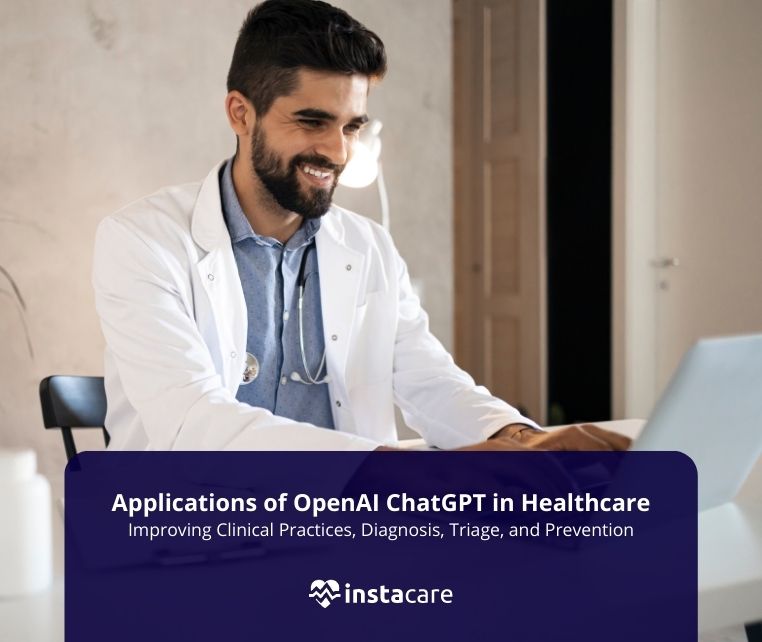
Last Updated on 1 year ago by Ahmed Usman 5 Powerful Applications of OpenAI ChatGPT in Healthcare Revolution Today, Let’s discuss the role of OpenAI ChatGPT in Healthcare and how it will transform the future of medical practitioners. Artificial intelligence (AI) in healthcare has been rapidly growing over the past few years, and one of the most promising AI technologies is natural language processing (NLP). OpenAI ChatGPT, a language model developed by OpenAI, is a leading example of how NLP can be applied in healthcare. This article will explore how OpenAI ChatGPT can improve healthcare outcomes, from medical diagnosis to patient care. Improving Patient Care in Clinics with OpenAI ChatGPT in Healthcare ChatGPT can be used in clinics to develop virtual assistants that can interact with patients and provide them with personalized healthcare advice and support. ChatGPT can analyze patient data, medical literature, and clinical notes to identify patterns and trends to help healthcare providers make more informed decisions and improve patient outcomes. Additionally, virtual assistants can help patients manage their health, monitor their symptoms, and provide guidance on healthy lifestyle choices. For example, a patient visits a clinic with symptoms that are difficult to diagnose. The healthcare provider could use OpenAI ChatGPT to analyze the patient’s medical history, symptoms, and test results to help develop a more accurate diagnosis and treatment plan. For example, if a patient has a complex medical history and presents with multiple symptoms, ChatGPT can assist the healthcare provider in identifying potential diagnoses and recommending appropriate tests or treatments. Medical Diagnosis with OpenAI ChatGPT in Healthcare One of the most exciting applications of OpenAI ChatGPT in healthcare is medical diagnosis. ChatGPT can interpret and analyze large amounts of medical text, such as electronic health records (EHR), medical literature, and clinical notes. By analyzing this text, ChatGPT can assist healthcare providers in making more accurate diagnoses and developing effective treatment plans. For example, ChatGPT can analyze a patient’s symptoms and medical history to suggest potential diagnoses or review medical literature to provide healthcare providers with the latest research on a particular disease or treatment. This can help healthcare providers make more informed decisions and improve patient outcomes. Patient Triage with OpenAI ChatGPT in Healthcare Another application of OpenAI ChatGPT in healthcare is in patient triage. ChatGPT can be used to develop healthcare chatbots that can interact with patients and provide them with information and guidance on their healthcare needs. Chatbots can ask patients about their symptoms, provide primary medical advice, and direct them to the appropriate healthcare provider or service. Chatbots can also help healthcare providers prioritize patients based on their needs. Chatbots can use ChatGPT to analyze patient symptoms and medical history to identify patients who require urgent medical attention and direct them to the appropriate healthcare provider or emergency service. Medical Chat Assistants with OpenAI ChatGPT in Healthcare In addition to chatbots, OpenAI ChatGPT can be used to develop medical chat assistants that can provide personalized healthcare advice and support to patients. Medical chat assistants can help patients manage chronic conditions, monitor their health, and guide healthy lifestyle choices. Chat assistants can also help healthcare providers by collecting patient data and identifying patients who require additional care or attention. Chat assistants can identify patients at risk of developing certain conditions by analyzing patient data and providing early intervention and support. Telemedicine with OpenAI ChatGPT in Healthcare Telemedicine is another area where OpenAI ChatGPT can make a significant impact. Using ChatGPT to analyze patient symptoms and medical history, healthcare providers can conduct virtual consultations, diagnose medical conditions, and develop treatment plans. ChatGPT can also be used to develop virtual assistants to assist with telemedicine consultations. Virtual assistants can provide patients with information and guidance on their healthcare needs, help them navigate the telemedicine platform, and assist with any technical issues. Disease Detection and Prevention with OpenAI ChatGPT in Healthcare Finally, OpenAI ChatGPT can be used to improve disease detection and prevention. ChatGPT can analyze medical literature and patient data to identify patterns and trends that may indicate the presence of a disease or condition. ChatGPT can also identify patients at risk of developing certain conditions by analyzing patient data and providing early intervention and support. This can help healthcare providers prevent chronic conditions and improve patient outcomes. Summary About OpenAI ChatGPT in Healthcare OpenAI ChatGPT is a powerful tool that can improve healthcare outcomes in various ways. From medical diagnosis to patient care, ChatGPT has the potential to revolutionize the healthcare industry and provide patients with better care and support. As more healthcare providers and organizations adopt AI technologies like ChatGPT, we expect significant improvements in healthcare outcomes and patient experiences.

Last Updated on 1 year ago by Ahmed Usman Top Entrepreneur in Pakistan: Bilal Amjad Received Presidential Award Bilal Amjad, a leading healthcare entrepreneur in Pakistan, is transforming the industry through innovative solutions like InstaCare and the Oral Cancer Registry Foundation. His impactful contributions have earned him a second presidential award, highlighting his dedication to revolutionizing healthcare in the country. This article explores his achievements and vision for a healthier Pakistan. Healthcare Entrepreneur in Pakistan Makes Waves in the Industry Bilal Amjad, a top entrepreneur in Pakistan, has been making significant contributions to the healthcare industry with his innovative solutions and determination to improve the lives of millions. Recently, Bilal was awarded his second presidential award for his efforts in revolutionizing the healthcare sector in Pakistan. In this article, we will explore Bilal Amjad’s accomplishments as the founder of InstaCare and highlight the inauguration of the Oral Cancer Registry Foundation at the Islamabad Chamber of Commerce. Bilal Amjad: A Prominent Healthcare Entrepreneur in Pakistan Bilal Amjad, the founder of InstaCare, is a visionary healthcare entrepreneur in Pakistan. His dedication to improving the country’s healthcare system has earned him recognition both nationally and internationally. With a strong focus on bridging the gap between advanced medical technologies and their implementation in Pakistan, Bilal has successfully pioneered several innovative healthcare projects. Second Presidential Award: A Testament to Bilal’s Dedication Bilal’s second presidential award is a testament to his unwavering commitment to improving the healthcare landscape in Pakistan. The award was conferred upon him in recognition of his efforts in revolutionizing healthcare in the country, including establishing InstaCare. Read About the First Presidential Award InstaCare: Bridging the Gap in Healthcare Technology InstaCare is a groundbreaking healthcare technology platform founded by Bilal Amjad, which aims to connect patients, healthcare providers, and medical facilities seamlessly and efficiently. The platform offers various services, including: Online appointment scheduling with healthcare providers. Artificial Intelligence-Based Centralized electronic medical record system for Patients and healthcare providers. A comprehensive directory of medical facilities, pharmacies, and diagnostic labs. Access to telemedicine services, enabling remote consultations with healthcare professionals. Integration with healthcare management systems for improved efficiency and patient care. InstaCare is revolutionizing how patients and healthcare providers interact in Pakistan by offering these services, ultimately improving the overall quality of care. The Inauguration of the Oral Cancer Registry Foundation The Oral Cancer Registry Foundation, recently inaugurated at the Islamabad Chamber of Commerce, is a separate initiative to address the rising incidence of oral cancer in Pakistan. The foundation aims to create a comprehensive database of oral cancer cases, enabling researchers, medical professionals, and policymakers to understand better the disease’s prevalence, risk factors, and patterns. Mission and Objectives The mission of the Oral Cancer Registry Foundation is to reduce the burden of oral cancer in Pakistan through the following objectives: Collecting and maintaining accurate and up-to-date data on oral cancer cases in Pakistan. Providing a platform for researchers to access and analyze this data for better understanding and identifying trends. Collaborating with national and international organizations to develop effective prevention and control strategies. Raising awareness about oral cancer and its risk factors among the general public and healthcare professionals. Advocating for improved oral cancer screening, diagnosis, and treatment services nationwide. Collaborative Efforts and Partnerships The Oral Cancer Registry Foundation is built on strong collaborative efforts and partnerships with various stakeholders, including government agencies, healthcare institutions, research organizations, and NGOs. By working together, these entities can contribute their expertise and resources to help the foundation achieve its mission and objectives. Islamabad Chamber of Commerce: Supporting Healthcare Initiatives The Islamabad Chamber of Commerce has actively supported healthcare initiatives and innovations in Pakistan. The chamber has demonstrated its commitment to fostering a healthier and more prosperous Pakistan by hosting the inauguration ceremony for the Oral Cancer Registry Foundation. Bilal Amjad: A Beacon of Hope for Healthcare in Pakistan Bilal Amjad’s journey as a healthcare entrepreneur in Pakistan serves as an inspiration for others to follow in his footsteps. His dedication to addressing pressing healthcare issues in the country has earned him well-deserved recognition and accolades. The second presidential award is a testament to his tireless efforts in revolutionizing the healthcare sector in Pakistan, with InstaCare being a prime example of his commitment to innovation and improvement. In addition to InstaCare, Bilal has actively supported other healthcare initiatives, including the Oral Cancer Registry Foundation, by leveraging his expertise and connections in the industry. His involvement in various projects highlights his dedication to positively impacting the lives of millions of Pakistanis. Future Prospects and Expansion Plans As a top entrepreneur in Pakistan, Bilal Amjad continues to explore new opportunities and areas where healthcare services can be improved. With InstaCare’s ongoing success, the company is poised for further growth and expansion within Pakistan and internationally. Potential areas of development include extending telemedicine services to underserved rural areas, integrating artificial intelligence to improve patient care, and forming strategic partnerships with global healthcare technology providers. Furthermore, Bilal’s influence and leadership in the healthcare industry are expected to inspire a new generation of entrepreneurs to focus on innovative solutions addressing the healthcare challenges in Pakistan. This wave of innovation is critical for the country’s healthcare system to overcome existing barriers and cater to the growing population’s needs. Conclusion As a top entrepreneur in Pakistan, Bilal Amjad’s work in the healthcare industry, mainly through InstaCare, has profoundly impacted the lives of countless patients and healthcare providers. His second presidential award is a testament to his dedication and commitment to revolutionizing healthcare in Pakistan. With continued support from stakeholders like the Islamabad Chamber of Commerce and the Oral Cancer Registry Foundation’s collaborative efforts, Bilal Amjad leads the charge to create a healthier, more prosperous Pakistan for all.
Last Updated on 1 year ago by Ahmed Usman How to Maximizing Potential with Hospital Management System? In a country as vast and populated as Pakistan, accessible healthcare is an essential part of providing quality living standards. But due to the lack of investment in necessary medical infrastructure and facilities, widespread access to public health care can often be difficult for citizens. With the current situation in mind, exploring available hospital management systems that have potential to upgrade Pakistan’s healthcare capabilities could potentially be beneficial for its population. In this blog post, we will take a look at what life looks like with regards to health in Pakistan, before diving into how better hospital management system could revolutionize the nation’s overall standard of care. An Overview of Pakistan’s Healthcare System Pakistan’s healthcare system has evolved significantly over the years. It is a complex system that is still growing and requires improvement in several areas. The government has made efforts to develop and regulate the sector, but the result is still far from satisfactory. Hospitals and clinics struggle with shortages of essential medicines, equipment, and health workers. Nevertheless, there have been substantial improvements in areas such as maternal and child health, immunizations, and communicable diseases. Pakistan faces several challenges, including a high burden of non-communicable diseases, weak primary healthcare, a lack of health insurance, and inadequate funding. Addressing these issues requires a comprehensive approach that involves all stakeholders, including policymakers, healthcare providers, and citizens. Nonetheless, Pakistan has made progress in healthcare, and with continued efforts, there is hope for a better future. Book Free Demo The Need for Hospital Management System in Pakistan In Pakistan, there is an urgent need for a robust hospital management system that can effectively streamline and manage healthcare facilities. The country’s healthcare system is burdened by various challenges, such as inadequate resources, inefficient processes, and limited access to critical medical supplies. These challenges have negatively impacted the quality of care patients receive and the overall effectiveness of hospitals. However, implementing a comprehensive hospital management system can help overcome these challenges by automating and optimizing processes, coordinating patient care, and improving communication among healthcare providers. By leveraging the power of technology, hospitals in Pakistan can enhance their ability to provide high-quality care to patients and ultimately drive better healthcare outcomes. Benefits of Implementing Hospital Management System Implementing a hospital management system can bring numerous benefits, including improved patient care, streamlined processes, and enhanced communication between staff members. With the ability to manage patient records and medical histories electronically, medical staff can quickly access critical information, reducing the risk of errors and ensuring that patients receive the care they need. Additionally, the system can automate administrative tasks, freeing up staff time and resources to focus on providing quality care. With improved communication between staff and departments, accountability and efficiency are maximized, resulting in a more effective healthcare system. Overall, the implementation of a hospital management system can improve the quality of care, reduce costs, and increase patient satisfaction. View More: How Hospital Management Systems are Revolutionizing Healthcare in Pakistan? Challenges Faced During Implementing Hospital Management Systems in Pakistan The implementation of hospital management systems in Pakistan is a significant challenge due to several factors that affect the healthcare industry in the region. One of the fundamental challenges is the lack of digital infrastructure, which makes it difficult to integrate these modern systems into existing healthcare facilities. Additionally, inadequate IT training and awareness among healthcare professionals and limited financial resources also hamper the implementation process. Despite these challenges, the use of hospital management systems in Pakistan is becoming more widespread, and efforts are being made by the government and private sector to address these issues. With time, it is hoped that the implementation process will be smoother, making it possible to enhance healthcare outcomes and improve patient care. Exploring Different Solutions to Overcome the Challenges Overcoming challenges is something that we all must face at some point in our lives. Whether it’s a personal struggle, work-related stress, or a global crisis, taking a step back and exploring different solutions can help us overcome even the most difficult obstacles. The key is to approach the problem with an open mind and a willingness to try new things. Sometimes the solution may seem obvious, while other times it may be hidden beneath layers of complexity. By breaking down the problem into manageable pieces, seeking input and advice from others, and remaining flexible in our approach, we can find unique ways to overcome challenges and achieve success. Advantages of Using Hospital Management Systems in Medical Facilities in Pakistan In today’s ever-evolving world, hospital management systems are becoming increasingly important for medical facilities in Pakistan. With the advent of advanced technology, the healthcare industry has undergone significant changes, and hospital management systems have become a valuable tool to streamline hospital operations. These systems aid in patient care, resource use, scheduling, and financial planning, resulting in improved efficiency, cost-effectiveness, and patient outcomes. In addition, hospital management systems allow for better communication and collaboration between departments while reducing the risk of errors caused by manual record-keeping. Overall, the advantages of implementing hospital management systems in Pakistan’s medical facilities are undeniable and can significantly enhance the quality of healthcare delivery in the region.

Last Updated on 1 year ago by Ahmed Usman Why Your Clinic Needs A Clinic Management System In Pakistan? As a clinic owner or operator in Pakistan, it can be hard to keep up with the ever-changing demands and modernizing healthcare industry. It can feel like there is no time for important tasks such as taking care of your patients and making sure that their needs are met in an efficient manner. In order to manage these ongoing challenges, many clinics have turned to utilize the clinic management system in Pakistan (CMS). Clinic management systems offer you the opportunity to remain organized while providing quality patient care at the same time. Here we will discuss why your clinic needs a CMS, how they work, as well as what benefits it could bring your practice. A Clinic Management System (CMS) provides efficient patient care and streamlines operations In today’s fast-paced healthcare environment, delivering efficient patient care has become the cornerstone of every medical facility. To cater to this ever-growing demand, a Clinic Management System in Pakistan has emerged as a game-changer in the healthcare industry. By organizing the patient data in a centralized electronic repository, this system enables healthcare providers to streamline their operations, minimize redundancy, and improve overall efficiency. With the help of a Clinic Management System, healthcare professionals can also access patient records easily, manage appointments and schedules, track billing and payment, and provide billing and payment updates in a timely and efficient manner. Overall, adopting a Clinic Management System can significantly enhance the quality of patient care and enable medical providers to deliver optimal treatment results. A CMS allows doctors and staff to easily access patient records and provide quality healthcare services A clinic management system in Pakistan is a software that enables medical staff to easily access, manage, and share patient records. With this system in place, doctors and their teams can deliver quality healthcare services to their patients. The CMS simplifies time-consuming administrative tasks such as scheduling appointments, managing patient medical history, and billing. By doing so, medical staff can focus on providing personalized care and attention to their patients. CMS also helps in maintaining confidentiality of patient information, making it easier to comply with HIPAA regulations. With the growing need for efficient healthcare services, a Clinic Management System is becoming a vital tool in the medical industry. Book Free Demo A CMS helps increase efficiency by automating administrative tasks A CMS, or Clinic Management System, is an essential tool that helps healthcare providers to automate their administrative tasks such as appointment scheduling, billing, and medical record management. This tool is specifically designed to increase efficiency in healthcare facilities by eliminating time-consuming manual processes that can hinder productivity. With a clinic management system in Pakistan, healthcare providers can easily manage their patients’ health records, keep track of appointments, and streamline their billing processes, all in one platform. By automating these tasks, healthcare providers can free up their valuable time, enabling them to focus on more important matters, such as providing quality healthcare to their patients. A CMS enables secure data sharing between doctors, nurses, and other medical personnel In the fast-paced world of healthcare, effective communication is critical to delivering top-quality care. Collaboration between doctors, nurses, and other medical personnel is essential to promote speedy recovery of patients. However, sharing critical information can be a daunting task in a complex and highly regulated industry. A Clinic Management System In Pakistan, or content management system, is a valuable tool that enables secure data sharing between healthcare professionals. A CMS makes sharing information between disparate systems simple and secure, ensuring that everyone involved in patient care is on the same page. As a result, patients receive timely and accurate care in a safe, efficient, and cost-effective manner. View More: How Patient Management Systems are Transforming Healthcare in Pakistan? It provides a secure platform for medical data storage & retrieval Medical data storage and retrieval is a critical aspect of modern healthcare. With the need to maintain the confidentiality and security of patient information, it is essential to have a platform that offers a secure system. Fortunately, there are systems that have been designed specifically for this purpose. These systems provide the perfect solution for healthcare providers, enabling them to store and retrieve data easily, quickly, and securely. The information can be accessed from anywhere, which offers added convenience to doctors, nurses, and other healthcare professionals. With this platform, healthcare providers can rest assured that patient information is kept confidential, secure, and easily accessible when needed. A CMS simplifies the process of tracking patient progress through Electronic Health Records (EHRs) A CMS or Clinical Management System is an essential tool for healthcare providers to streamline the process of tracking patient progress through Electronic Health Records or EHRs. With the use of a CMS, healthcare providers are able to easily access patient information, track their treatment progress, and record any changes in their medical history that might occur. This allows for a more efficient and effective treatment process, as providers can quickly identify any potential issues or concerns and adjust treatment plans as needed. Additionally, a clinic management system in Pakistan can help to reduce errors and improve patient outcomes by providing a comprehensive view of a patient’s health history and treatment plan. Overall, the use of a CMS is critical for healthcare providers looking to enhance patient care and improve clinical outcomes.
Last Updated on 1 year ago by Ahmed Usman How To Choose The Right Clinic Management System In Pakistan For Your Clinic? Are you running your own clinic in Pakistan? Are you looking for ways to streamline and manage patient records, billing processes and appointment bookings? Investing in a good clinic management system in Pakistan can help make the process much smoother. However, it’s important to consider all of the features offered by different systems when choosing the right one for your business. In this blog post, we’ll talk about the top factors that should be considered while selecting the clinic management system in Pakistan that best fits your needs. We’ll also discuss why having an efficient medical management system is so important to ensure the smooth operations of your clinic! Understand your clinic’s needs As a healthcare provider, it is crucial to understand your clinic’s needs to effectively serve your patients. By identifying and addressing your clinic’s strengths and weaknesses, you can implement strategic improvements that will enhance patient care, increase operational efficiency, and ultimately improve the financial health of your practice. Taking the time to evaluate your clinic’s needs will also help you stay up-to-date with changes in the healthcare industry and adapt to the evolving needs of your patients. With a clear understanding of your clinic’s needs, you can create a roadmap for success that will benefit both your patients and your practice as a whole. Determine what type of system you need Choosing a system can be an overwhelming task, especially if you’re not tech-savvy. However, determining what type of system you need is crucial in making the right decision. This process involves figuring out what exactly you’ll be using the system for and what features are essential for your needs. Is it for personal use or for your business? Do you need a system with high storage capacity, or one that can handle extensive multitasking? These questions will help you narrow down your choices and select the best system for your unique situation. Once you’ve identified your requirements, you can compare different systems that match your specifications and make an informed decision. Remember, the right system can make a significant difference in your productivity and satisfaction, so it’s worth investing some time and effort into the selection process. View More: How Patient Management Systems are Transforming Healthcare in Pakistan? Consider the technical infrastructure of the clinic When we think about the technical infrastructure of a clinic, it may not be the first thing that comes to mind, but without reliable and up-to-date technology, patient care could suffer. From electronic medical records to medical devices, the technology used in a clinic plays a crucial role in maintaining accurate patient information and providing efficient care. With advancements in telemedicine, clinics can now extend their reach to patients in remote areas, and virtual consultations have become more prevalent. The technical infrastructure of a clinic also plays a critical role in securing patient data and ensuring compliance with privacy regulations. As technology continues to advance, clinics must stay up-to-date to provide the best care possible. Research different options in Pakistan Pakistan is a country with a rich history and diverse culture, making it an exciting destination for travelers. When planning a trip to this beautiful country, it’s essential to research the different options available to ensure an unforgettable experience. From the stunning natural beauty of its northern regions to the vibrant cities in the south, there is something for everyone. Explore the bustling urban centers of Lahore and Karachi, immerse yourself in the vibrant culture of the Sufi shrines, or trek through the awe-inspiring mountain landscapes of the Karakoram range. With so much to discover, Pakistan is a destination that is sure to leave a lasting impression. Book Free Demo Look at customer reviews and feedback When it comes to making a purchase, whether it’s a new product or a service, it’s always wise to do your research ahead of time. And what better way to gain insight into a business or product than by reading through customer reviews and feedback? Not only do these reviews offer an honest evaluation of the item, but they also provide a sense of what to expect in terms of customer service, shipping time, and overall quality. In a world where advertisements and promotions can often be misleading, unbiased reviews from previous customers can be incredibly valuable in helping you make an informed decision. Get a demo or free trial of the system before making a purchase Investing in a new system can be daunting, especially when you’re unsure of how it works or if it will fit your needs. That’s why it’s crucial to take advantage of demos or free trials before making a purchase. By getting hands-on experience with the system, you can evaluate its functionality and decide if it’s worth the investment. Demos and free trials allow you to navigate the system, explore its features, and assess if it’s the right fit for your business operations. Don’t hesitate to request a demo or free trial – it’s the best way to ensure that you’re making an informed decision. Conclusion In summary, when choosing a clinic management system in Pakistan for your clinic in Pakistan, it’s important to consider the functionality of the system, its security measures,and assess how well it meets your needs. It’s also wise to research past customer reviews and understand what kind of support the vendor provides. You should always keep in mind that software updates can help you stay current with trends in health IT and ensure compliance with relevant regulations. Finally, make sure that you communicate regularly with your vendor so that you’re informed and up to date on any changes or updates to their products. By staying informed and researching all of these topics, you are set on a path to finding the right clinic management system in Pakistan for you and your business in Pakistan.
Last Updated on 1 year ago by Ahmed Usman How Hospital Management Systems are Revolutionizing Healthcare in Pakistan? Healthcare delivery in Pakistan is transforming from brick and mortar hospitals to more accessible digital healthcare. By leveraging the evolving technology and infrastructures, state-of-the-art hospital management systems are making it easier for patients to access quality care without having leave their homes. These high tech solutions offer up a range of dynamic options that can save time and money for all involved parties. In this blog post we will explore just how Hospital Management Systems (HMS) are revolutionizing healthcare services in Pakistan. Need for Modern Hospital Management Systems in Pakistan With an increasing demand for quality healthcare services in Pakistan, it has become essential for the healthcare industry to incorporate modern hospital management systems. These systems are designed to enhance the overall efficiency and effectiveness of healthcare operations by offering a range of powerful tools for information management, patient care, and financial management. Such systems provide hospitals with real-time data access and analysis, helping medical personnel to optimize treatment plans, resources, and reduce errors. With the implementation of modern hospital management systems in Pakistan. It is expected that patient satisfaction, as well as the quality of care, will improve tremendously, making it easier for healthcare providers to deliver high-quality services to the community. Benefits of Implementing Hospital Management Systems The healthcare industry has made significant strides over the years, particularly in the field of Hospital Management System. The implementation of these systems has revolutionized the way hospitals and healthcare facilities operate, enabling them to improve their efficiency, productivity, and profitability. By utilizing HMS, hospitals can manage their administrative and clinical processes seamlessly, streamline patient care, and access critical data accurately and efficiently. Furthermore, HMS ensures a secure and safe management of medical records and data to avoid any data breach. With technology continuously evolving, and healthcare becoming more data-driven, it is vital for hospitals to adopt HMS to provide quality care, stay competitive, and keep up with the ever-changing landscape of the healthcare industry. Book Free Demo How Hospitals are Adopting Advanced Technology? Hospitals have come a long way in adopting advanced technology to improve patient care and operational efficiency. From telemedicine to electronic health records, there are many tools available to hospitals to help them deliver better care. One area that has seen significant growth in recent years is the use of artificial intelligence and machine learning. These technologies can help doctors diagnose diseases, predict patient outcomes, and automate routine tasks. For example, AI-powered chatbots can triage patients, answer common questions, and even book appointments. With the potential to save time and reduce errors, it’s no wonder that hospitals are embracing these new technologies. As healthcare becomes more complex and demand for services continues to grow, the adoption of advanced technology will be essential to meet patients’ needs. Assessing the Efficiency Gains and Cost Savings of Implementing Hospital Management Systems The healthcare industry is constantly evolving with new technologies and advancements. One such technology is the hospital management system. Implementing a hospital management system can not only streamline processes but also result in significant efficiency gains and cost savings for healthcare organizations. This system can help with managing patient data, scheduling appointments, and automating billing systems, among other things. These improvements can lead to higher productivity, better resource utilization, and an overall improvement to the patient care experience. By assessing the efficiency gains and cost savings of implementing the hospital management system, healthcare providers can make informed decisions about which system is right for them and ultimately provide better care to their patients. View More: What is Patient Record Management Software? New Features and Capabilities of Modern Hospital Management Systems Healthcare has always been an essential aspect of our daily lives, and with the advent of modern digital technology, managing hospital systems has become a seamless process. Today, hospitals are equipped with state-of-the-art systems that help streamline operations, enhance patient care, and promote efficient communication between hospital staff. By exploring the new features and capabilities of modern hospital management systems, healthcare professionals can take advantage of innovative technologies that allow for better patient outcomes. Whether it’s providing real-time patient data or automated workflows that improve patient safety, these systems are empowering healthcare management to be more productive, efficient, and effective than ever before. By staying at the forefront of healthcare technology, healthcare professionals can focus more on patient care and deliver better health outcomes. The Impact of these Innovations on Quality of Care in Pakistan Innovation is the key to progress and development, and nowhere is this truer than in the healthcare sector. The impact of new and emerging technologies on the quality of care in Pakistan is a topic of great interest and importance. From telemedicine to electronic health records, these innovations are transforming the way healthcare is delivered and accessed in the country. By improving efficiency, increasing access, and enhancing the accuracy and timeliness of diagnoses, they have the potential to greatly improve the health outcomes of millions of Pakistanis. However, it is important to examine these innovations critically and evaluate their impact, both positive and negative, on the quality of care. Only by doing so can we ensure that they are being used in a way that truly benefits patients and healthcare providers alike.

Last Updated on 1 year ago by Ahmed Usman How Patient Management Systems are Transforming Healthcare in Pakistan? Healthcare in Pakistan is facing a major transformation due to the introduction of patient management systems. With an increasing number of people having access to healthcare resources, there has been significant progress made in ensuring that those with medical needs are able to take advantage of these resources. Patient management systems can provide immense benefits for both patients and providers, streamlining operations and making life easier for everyone involved by providing faster response times and better support when it matters. This post will explore how these innovative technology solutions are revolutionizing healthcare across Pakistan while also highlighting some areas where more work still needs to be done. What is Patient Management Systems? Patient Management System is software tool designed to help healthcare providers maintain accurate and up-to-date information about their patients. These systems can range from simple appointment scheduling tools to comprehensive electronic health record (EHR) systems that keep track of a patient’s medical history, current medications, allergies, lab results, and more. In today’s fast-paced and digital world, Patient Management Systems are becoming increasingly important as healthcare providers strive to deliver high-quality care while managing large volumes of patient data. With these systems in place, doctors and nurses can quickly access patient information, track treatment plans, and communicate with other members of the care team to ensure that each patient receives the best possible care. Benefits of Patient Management Systems As healthcare continues to evolve and become more complex, Patient Management Systems (PMS) have become increasingly important for hospitals and medical providers. One of the primary benefits of a PMS is improved efficiency in patient care. With a centralized system, doctors and nurses can quickly access patient records, medications, and test results, allowing for faster diagnoses and treatment. PMS also help to reduce errors and improve communication between healthcare professionals, resulting in better patient outcomes. Additionally, PMS can improve access to patient data, which can be used for medical research and population health management. With all of these benefits, it’s no surprise that more and more healthcare providers are implementing PMS into their practices. Book Free Demo Impact of Patient Management Systems in Pakistan Pakistan has seen a significant improvement in healthcare with the introduction of Patient Management Systems (PMS) in hospitals and clinics. These systems allow for seamless patient care by providing physicians with real-time access to patient data, reducing the risk of errors and delays. Patients can now easily book appointments, check-in, and receive reminders about upcoming visits through a mobile app or website. Furthermore, the PMS leads to improved communication between doctors and patients, as physicians are able to share test results, medication instructions, and other important information directly with patients through the platform. The impact of PMS is undeniable, and with continued investment in this technology, healthcare in Pakistan can become more efficient and effective. How Technology is Transforming Healthcare in Pakistan? Pakistan’s healthcare system has undergone a remarkable shift with the advent of technology. Technology is changing the way healthcare providers function and deliver care to patients. It has enabled doctors to make more precise diagnoses and has allowed for more effective treatment plans. Telemedicine and remote patient monitoring have made healthcare accessible to more people in remote areas. Patients now have access to their medical records, test results, and can even schedule appointments online, making their healthcare experience more seamless. Furthermore, technology has contributed towards research and development in the pharmaceutical industry, leading to the discovery of new treatments and drugs. The transformation that technology has brought to the healthcare industry in Pakistan is nothing short of revolutionary, improving patient outcomes and raising the standard of care. View More: 5 Benefits of Using Video Consultation Software Cost Savings for Patients and Caretakers Navigating the healthcare system can be challenging, especially when it comes to expenses. However, with the availability of cost savings options for patients and caretakers, seeking medical attention doesn’t have to create a financial burden. From insurance plans to government programs, there are various avenues for individuals to save on healthcare costs. By taking advantage of these options, patients can focus on their health, rather than worrying about the cost of treatment. For caretakers, cost savings can also alleviate some of the financial stress that comes with providing care for a loved one. With the right resources and information, cost savings for healthcare can make a significant difference in the lives of patients and their caretakers. Strategies for Adopting and Implementing Patient Management Systems Adopting and implementing patient management systems is a crucial aspect of any healthcare organization’s success in the modern era. However, with so many different strategies and options available, it can be difficult to know where to begin. One effective approach is to start by selecting a system that aligns with your organization’s values and goals, whether that be increased efficiency, improved patient outcomes, or greater financial stability. Once you’ve determined the best fit, focus on fostering a culture of collaboration and communication among staff to ensure a smooth transition and ongoing use of the system. Additionally, consider investing in training and ongoing support to keep staff up-to-date on the latest functionalities and capabilities of the system. By following these steps, your organization can successfully adopt and implement a patient management system that will improve the overall quality of care for your patients. Conclusion In conclusion, the utilization of patient management systems (PMS) is proving to be incredibly beneficial for healthcare organizations in Pakistan by reducing patient wait times and improving overall efficiency. With continued adoption of PMS technologies and techniques, there’s no doubt that Pakistan’s health sector will continue to strive to improve its standards across its various healthcare establishments, ensuring newly implemented processes are adopted effectively. Moreover, it is crucial that patients have an understanding of the systems so they can access the necessary treatments in a timely manner, leading to a higher quality of care- something that