

The Implementation of EHR Software has brought a sea change in the healthcare landscape around the world. With the implementation of EHR systems in Pakistan, patient care will be enhanced and operations streamlined with efficient data management at healthcare facilities. However, the journey towards successful implementation is challenging and hostile. This article discusses several drawbacks faced by healthcare providers during the EHR system adoption process, strategies to overcome these drawbacks, and practical solutions for achieving successful implementation. Definition of EHR Software EHR software is an electronic version of a patient’s chart that provides an individual with the complete information involving the medical care of a patient, diagnosis, drugs, treatment and medication plans, dates of immunization, allergies, radiology images, and laboratory test results. With EHRs, health care settings may be shared, and there can be better coordination and continuity of care than in traditional paper records. Benefits of EHR Systems What precedes the discussion of the challenges of EHR systems is the benefits that accrue from their use. These include: Improving Patient Care: Access by healthcare providers to instantaneous patient data can improve clinical decisions made about a patient’s care and subsequently impact outcomes. Efficiency: EHRs remove most of the administrative workload in healthcare settings by reducing paperwork and making workflow more efficient. Data Analytics: EHRs facilitate data analytics, and by doing so, healthcare service providers can derive information in respect of patient populations, treatment results, and operational efficiencies. Regulatory Compliance: EHRs can ensure that the healthcare organizations meet their regulatory requirements in the form of maintaining patient records with maximum precision. However, on the other side, EHR software implementation in Pakistan has its own difficulties. Challenges in Implementing EHR Software 1-Infrastructure One of the many bottlenecks within EHR implementation in Pakistan is low-level robust IT infrastructure. Most healthcare centers lack hardware, appropriate software, and internet connectivity to support EHR systems, especially in rural areas. Solution: To mitigate this challenge, the government and the private sector need to be willing to spend on IT infrastructure. This includes high-speed internet access, investment in modern hardware, and ensuring that software solutions are compatible with existing systems. Setting up partnerships with the technology companies can also do this. 2-Resistance to Change Healthcare professionals have a reputation as being notorious change resistors. In addition, change is often linked to technology. All these factors can pose a threat: from the lack of understanding of EHR systems to any fear of the unknown or real concerns over one’s job. Solution: To overcome resistance, it is the responsibility of health care organizations to prepare significant training programs for their staff members to educate them about the merits of EHR systems. Training programs must concentrate on actual practice so that healthcare professionals become accustomed to the technology. In addition, including the employees in decision-making and involving them in an activity to address their fears helps to create a culture of acceptance. Book Free Demo 3-Data Privacy and Security Concerns This is also likely to raise quite a number of concerns over data privacy and security in digitized patient records. When cybercrimes are on the rise in Pakistan, healthcare providers must ensure that EHR systems adhere to data protection regulations and secure information for patients. Solution: Strong security measures must be in place in order to protect the patient’s data. For example, encryption, access controls, and regular security audits are part of the overall package. In addition, health care providers must educate workers about best practices on data privacy and why confidential information must be protected. Collaboration with cybersecurity experts will help organizations stay ahead of the emerging threats. 4-High Implementation Costs Such a thing may even prove quite expensive to implement for smaller healthcare facilities since implementing EHR software can be very costly. These costs include the amount charged for software licenses, hardware acquisition, training, and maintenance support. Solution: The financial pressure can be reduced by acquiring government programs or NGOs’ aid. Health care organizations can also partner with the vendors in technology so as to have more discounted rates or accommodation terms. Introducing EHR systems in a phased implementation manner allows the spreading of the costs over time. 5-Interoperability Issues It refers to the ability of disparate EHR systems to communicate and share information with each other. In Pakistan, many healthcare facilities have disparate systems that are unlikely to be compatible with one another, hence fragmented patient information. Solution: In consideration of interoperability, the government should make an effort to establish standards for EHR systems in Pakistan. Encouragement to vendors to take on the standards should ensure data shared between all different health care facilities with no interoperability issues present. Additionally, embracing open-source EHR solutions will support interoperability. 6-Limited Awareness and Understanding Not many people, including health care providers, in Pakistan know about the EHR system, its functions, and advantages. This can also be a barrier to the full adoption of EHR technology. Solution: Educating healthcare providers as to how EHR systems benefit their patient care is a good strategy; ideally, this should begin with awareness campaigns that healthcare organizations can conduct. Tapping into medical associations and conducting workshops or seminars can sensitize more healthcare providers towards the adoption of EHR systems. 7-Cultural and Linguistic Barriers Pakistan is a multi-linguistic country with diverse cultural practices. The adopted EHR systems, if not aligned to the local context, may face difficulties. Solution: EHR software needs localization so that different languages and cultural practices could be incorporated within the software. It will also ensure that the local healthcare providers are engaged in the development process so that a system will be delivered that takes care of the needs of those Pakistani healthcare providers. 8-Data Migration Problems Migration of the existing paper records to EHR: This is a laborious process. There are chances of some entry error, incompleteness, and voluminous information that needs digitizing. Solution: Phased data migration can minimize the complexities involved in such a process. It would be more beneficial for healthcare providers to maintain patient information at the

With the fast-changing healthcare landscape, electronic health record systems have become integral in improving the efficiency and quality of patient care. InstaCare provides a robust cloud-based EHR software solution especially developed for small clinics in Pakistan. While ensuring smooth administrative work, the system boosts patient care greatly, so healthcare professionals can appropriately manage their practices. In light of this, this article addresses the benefits and features of InstaCare’s EHR software and the practical implementation thereof in order to provide a comprehensive overview to small clinics considering this solution. What Is Cloud-Based EHR Software? It is about the electronic storage and management of patient health information on remote servers accessible through the internet. What may differ for a cloud-based EHR from other EHR systems is that in EHR systems, one would have to house his or her servers in the premises. Cloud-based solutions, however, will be allowing a small clinic health provider to work from any location where internet connectivity exists to access patient records and other information critical for decision making. This may be helpful to small clinics whose budgets may not be quite as good and may not have capabilities for robust IT support. Important Features of InstaCare’s EHR Software Usability of the Interface InstaCare’s EHR software is an application that is easy to use, friendly to the user interface. Such an interface makes it possible for healthcare providers to easily find the patient’s historical records, treatment plans, and schedules of appointment with the client. The learning curve has been reduced through a user-friendly interface, which ensures that clinic staff spend their precious time more on direct patient care rather than spending it on a difficult-to-understand application. Solid Patient Data Management Health care is one of the various industries that mostly need data security. InstaCare adheres strictly to local regulations in regards to all local encryptions of patients’ data and storage. Therefore, such a commitment to data security develops trust in patients and safeguards sensitive information from outsiders who may try to access it. Editable Templates It has customizable templates for different specialties; hence, healthcare providers can make their own documentation appropriate for their specific needs. This makes them more efficient since the time spent in paperwork is decreased and at the same time ensures that all important information is collected properly. Scheduling and Reminders for Appointments The EHR system of InstaCare owns impressive scheduling abilities that aid in the efficient management of clinic appointments. This system auto-generates reminders to patients through SMS or email, thus minimizing no-shows and making clinic operations easier. Billing and Insurance Management InstaCare’s EHR streamlines the billing process since it automatically generates invoices and claims for insurance. This might minimize the administrative load on the staff of the clinic and recover payments in time, which is a significant cause of concern for small clinics regarding their financial health. Telemedicine Integration Through growth in demand for telehealth, the InstaCare EHR software can be used to conduct virtual consultations. Using the integration this way allows healthcare providers to access any of the patients over telemedicine with ease while expanding access to care and accommodating those who may have a problem visiting the clinic in person. Reporting and Analytics InstaCare provides powerful reporting tools that are helpful for clinics in analysis of patient data and performance. The insights derived from the analytical tool can help make informed decisions and improve areas that require clinic, thereby enhancing overall operational efficiency. Book Free Demo Benefits of Small Clinics Utilizing InstaCare’s EHR Software 1-Improved Patient Care One of the biggest and most important merits of InstaCare’s EHR software is that it allows better care for the patient. It does so by being able to provide all administrative tasks at once and making all information regarding the patient absolutely immediately available to the providers. With complete records and data, it becomes much easier for the providers to make decisions toward treatment and to guide them in developing a treatment plan in the best interests of each patient. 2-Efficiency Some processes, like scheduling and billing, are automated, reducing the administrative work on the people in clinics. This means that the care providers get more time for treating patients and running their practice more efficiently. Further, clinics can minimize discrete steps and hence work less hassle-ful and with a lower error probability. 3-Cost-Effectiveness It’s a highly cost-effective choice for smaller clinics that operate on shoestring budgets. InstaCare’s cloud-based EHR software allows little to no hardware, and its maintenance cost is also less in comparison; the clinic can make proper use of resources while reaping advanced technology benefits. It also enables small clinics to compete with the big healthcare providers. 4-Scalability As clinics increase in size, it is possible that the needs of their practice may change. InstaCare EHR software is scalable, therefore clinics can add feature or expand usage as required. This allows growth of the system itself coupled with the growth of the practice, which can accommodate more patients and services. 5-Improved Collaboration InstaCare’s EHR system fosters effective communication among the healthcare team. There is multiple access to the patient record, so the providers can communicate and collaborate more effectively with each other in the practice. This kind of collaboration would result in good outcomes for the patients because the providers would be able to coordinate better, leading to good results for the patient, the practice, and also the provider. 6-Better Patient Activation InstaCare’s EHR software helps in patient engagement through tools that facilitate two-way communication between the patient and provider. Patients can view their health records, schedule an appointment, and even receive reminders, thus engaging an active role in their health. 7-Complete History Access to whole patient history: The future of good care lies in having an entire patient history. EHR software from InstaCare allows care providers quick and easy access to a collection of prior medical records, lab results, and treatment plans in one place. Overall-picture information can assist healthcare providers in informed decision-making, thus avoiding errors or gaps
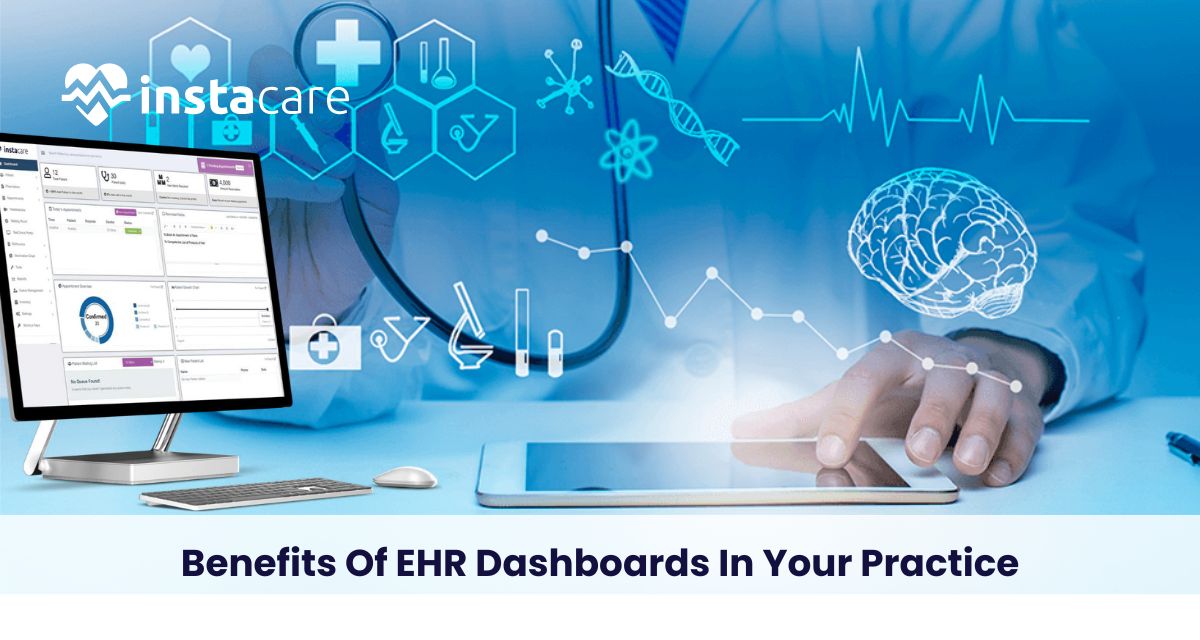
8 Benefits Of EHR Dashboards In Your Practice Under the changes in the healthcare framework, Electronic Health Records (EHR) have emerged as an essential component in medical practices. Of course, other functions that EHR systems can have are numerous; however, among these functions, the most valuable are the dashboards that help save time and increase the efficiency of the work performed. EHR dashboards give the healthcare professional a single-point graphical interface through which he can get the overall data of a patient and the summary of indicators of the health system. Administrators can also prioritize their goals and objectives through directed bulletins. In this blog, we’ll detail 8 essential uses for EHR dashboards and how they directly improve your practice’s efficiency and, as a result, patient outcomes. Here Are 8 Benefits Of EHR Dashboards ! 1- Streamlining Patient Data Management Clinicians value EHR dashboards because they make the management of patients’ data much easier and more efficient. Whereas patients’ records or test results would take time to retrieve from physical files or even search through databases, a healthcare provider gets the complete picture of a patient at a single click of a button. Such ease of access not only a lot of time but also minimizes the chances of making mistakes that translating into better decision-making processes that are faster. Overwhelming heaps of information can be well managed by EHR dashboards, which, in turn, redirect healthcare providers’ attention to patients and their needs. 2- Enhancing Communication and Collaboration EHR dashboards are significant in medical practices due to the influence of efficient communication. Since all authorized personnel view the EHR and the data, EHR dashboards foster cooperation among healthcare workers. This is because integrated communication tools enable members of the team to share information, review cases, and adequately come up with care plans. It eliminates time-consuming meetings or phone calls and ensures everyone is informed and the patient is not the one to suffer in the process. 3- Improving Scheduling and Workflow Management EHRs could otherwise be scheduled inefficiently, resulting in loss of time and money, which EHR dashboards possess more robust features to manage. These dashboards make it easier to have real-time schedule visibility to allow staff to control the flow of patients. Such a system helps to remind people of the appointments, hence curtailing on no-shows while overbooking or canceling; it is easy to tweak. In this regard, EHR dashboards that integrate scheduling and workflow features assist the practices in achieving maximum practice efficiency. Book Free Demo 4- Tracking Performance Metrics and Quality of Care Another benefit of creating an EHR dashboard is that it helps track and check the organization’s and practice’s performance against its intended quality-of-care standards. These dashboards are analytical since they use KPIs like the number of patients waiting for doctors, recovery rates, and patient satisfaction statistics. By monitoring these metrics, the healthcare providers can determine any shortcomings and thus make changes with a view of improving the quality of services as well as efficiency. 5- Policies Improving Data Security and Compliance With an ever-increasing rate of data breach incidences, EHR dashboards provide strong and secure user interfaces to guard patient’s sensitive information. These dashboards incorporate data encryption, RBAC, and audit trails that allow only authorized users to view or alter the data. These security features also enhance the protection of patient data while helping the practices concerned to remain in conformity with regulations such as HIPAA, hence minimizing on possible penalties. 6- Facilitating Billing and Revenue Cycle Management Billing and revenue cycle are the essential areas that define the practice of any healthcare facility, and the EHR dashboards can a great addition to it. Organizing the patients’ billing information at the EHR Lower Layer dashboards eliminates the problem of errors and increased time compared to its unstructured format. This integration is beneficial in ensuring that the claims are correctly sent and in the right time so that there is maximum reimbursement and adequate cash flow. In addition, real-time exposure to billing metrics gives practices a timely outlook on any problem affecting revenue. 7- Supporting Clinical Decision-Making EHR dashboards are very helpful resources in the context of clinical decision-making. By giving crucial patient information, clinical pathways, and evidence-based advice to healthcare providers, such things as these allow for real-time decision-making at the point of care. This allows doctors to refine their initial diagnoses and final treatment plans since they have easy access to patients’ past histories, current medications, and most up-to-date test results. Although increases patients’ benefits and satisfaction, it also raises the productivity of the practice in general. 8- Reducing Administrative Burden The stability of EHRs may also contribute to what some clinicians consider their biggest drawback: the cumbersomeness, which can eat up a large percentage of a health care provider’s day. EHR dashboards address this challenge. This way, the EHR dashboards save time that would have otherwise been spent of carrying out routine tasks like reminding patients of their appointments, follow-ups, and generation of reports among others hence allowing the provider to concentrate more on patients. The change of work procedures and using technology help to decrease the number of mistakes during data input. Conclusion It can be noted that dashboards have become valuable tools in health care practices, facilitating productivity and patient care. The above-classified dashboards help the healthcare providers by ensuring effective patient data management, efficient communication, and performance metrics, scheduling and cutting down the manager’s loads which in turn help in delivering better care more efficiently. With such changes in focus continuously occurring in the healthcare field, the practices that will efficiently harness all the aspects of EHR dashboards will be able to stand for the future and meet the challenges by delivering the best results to the patients. FAQs What is the purpose of an EHR dashboard in a healthcare practice? An EHR Dashboard is a single page that is part of an Electronic Health Records system. It provides clear access to patient information, highlights organizational performance metrics,

Top EHR Trends for 2024 and Beyond: What You Need to Know In the ever-changing healthcare environment, EHRs become prominent considerations in improving patient care, raising efficiency, and innovating healthcare. Entering 2024 and beyond, various EHR trends are in line to shape the future of EHR systems, ready to turn a new leaf in how healthcare providers deliver services and handle information related to their patients. Electronic health records have evolved from simple digital storage of a patient’s information to comprehensive systems that facilitate efficient healthcare delivery. Such systems offer more than just storage for the data of patients: they offer ways through which healthcare providers can make informed decisions, engage patients, and streamline administrative tasks in healthcare organizations. For healthcare providers who want to leverage technology to ensure improved patient outcomes and operational efficiency, Staying Informed On The Latest EHR Trends is Relevant. 1-Artificial Intelligence and Machine Learning Integration One of the gigantic steps in health technology is Artificial Intelligence and Machine Learning that are both integrated into the EHR Trends. Fundamentally, AI algorithms do analysis in blocks of vast amounts of data in EHRs, find patterns in them, and help to predict outcomes, hence acting as decision-supporting systems for the clinician. For example, it will help in disease diagnosis, readmissions, and tailoring treatment plans with respect to historical data tapering to the needs of specific patients. The learning process of ML algorithms never stops; it refines its insight with any new data input to enhance accuracy. One trend that would accelerate in 2024 is empowering health providers for proactive and personalized outpatient care. 2-Interoperability and Data Exchange Interoperability remains a highly critical issue within healthcare, but several developments help in smooth interoperability between different EHRS systems and healthcare providers. Interoperable EHRs allow secure patient information availability and sharing over several healthcare settings, thus enhancing coordination in care and lightening the administrative burden. Standardized protocols and APIs are critical to interoperability; they enable efficient communication across interoperating systems, providing clinicians with a complete view of patient data at the point of clinical decisions. 3-Telehealth and Remote Patient Monitoring The COVID-19 pandemic increased the adoption of telehealth services, clearly bringing into focus the need to integrate telehealth capabilities with the EHR. In 2024 and beyond, EHRs are likely to further facilitate telehealth visits, including virtual consultation, remote patient monitoring, and care for chronic conditions. Connected RPM devices to EHRs allow for the constant monitoring of patients’ vital signs and health metrics, providing data in real-time to the clinicians and truly empowering patients with self-management capability. 4-Blockchain for Data Security Blockchain technology has recently been under extremely widespread attention in healthcare due to its promising capability of strengthening EHR security, promoting data integrity, and ensuring patient privacy. This data is gathered and secured by blockchain through the decentralization of data storage, aided by cryptography. Smart contracts within blockchain networks can facilitate automation of health care transactions, from processing insurance claims to supply chain management. At the same time, this powerful tool was available to safeguard sensitive health information against ever-changing cyber threats and maintaining patient confidence in EHRs. Book Free Demo 5-Patient-centered design of EHR User experience and principles of patient-centered design are increasingly playing their roles in EHR system development. It puts many efforts into enhancing the usability, intuitiveness, and accessibility of the EHR interface in contemporary EHR interfaces. The features are pointed at enhancing the efficiency of clinician workflow with increased patient engagement. For example, using patient portals for the lookup of all personal health records to schedule appointments easily and have real-time communication with health professionals. This can facilitate the better adoption of EHRs among clinicians and can also foster better relations between patients and providers. 6-Data Analytics and Population Health Management Having voluminous data backed by the EHRs offers opportunities concerning the use of analytics to drive population health management ventures. The data analytics tools physically located within EHR systems analyze aggregated patient data to determine trends in population health, assess disease burden, and predict healthcare resource needs. Those health organizations can therefore apply such findings to institute targeted interventions and ensure improved public health and enhanced efficiency in resource allocation as a result. With predictive analytics, EHRs allow proactive healthcare delivery, which will lead to favorable patient outcomes and lesser costs to the healthcare sector. 7-Mobile EHR Applications The areas revolutionizing healthcare delivery include mobile technology; more healthcare providers have started using mobile EHR applications. Mobile EHR applications will help clinicians view patient information on-the-go, supporting flexibility and efficiency in the delivery of care. Some of the functionality that this type of application supports includes the following: electronic prescribing, clinical documentation, and instant messaging among members of health teams. Equipping clinicians with mobile, secure access to EHRs empowers healthcare organizations with care coordination and response time to most significantly enhance the overall state of patient satisfaction. 8-Regulatory Compliance and EHR Standards It remains to be that powerful force for regulatory compliance which turns out to be what many healthcare organizations attain when applying and managing systems of EHRs. In 2024, adherence to such regulatory provisions as the United States’ Health Insurance Portability and Accountability Act, Europe’s General Data Protection Regulation, and other local data protection laws around the world will go on and play a pervasive role in the development and implementation strategies of the EHR. Healthcare professionals should ensure, therefore, that their EHR systems meet industry standards and regulations regarding the safeguard of patient data privacy to avert risks and regulatory penalties. Conclusion The fast-changing technology and healthcare requirement drive the future of Electronic Health Records. These constitute the key trends that healthcare organizations need to adopt and pursue beyond 2024, seeking to unlock this enormous potential of EHRs toward enhancing the quality of care provided to patients, underpinning clinical decision-making, and boosting operational efficiency. Therefore, investing heavily in AI-driven insights, interoperable systems, telehealth capabilities, blockchain security, patient-centered design, data analytics, mobile applications, and regulatory compliance will position the model for a connected,
Understand The Potential of AI in Electronic Health Records (EHRs) Electronic Health Record, known as EHR, now plays an integral role in holding patient information for effective service delivery in the healthcare system. With technology maturing day by day, AI technologies have the power to further make EHRs more transformational than the basic digitization of the record for improved efficacy, accuracy, and care of patients. In this blog post, we will delve deeper into the role of AI in EHRs and how it will continue to evolve, benefits, challenges, and further modifications and consequences considering the providers and patients. The Evolution of EHRs EHR is an acronym for Electronic Health Records, which contain patients’ information, including medical history, treatment plans, diagnoses, medicines, tests, and other essential information about receiving the care that one needs. EHRs have replaced paper medical records from many healthcare environments, offering nice benefits such as: They offer an improved means of accessibility: EHRs aid healthcare providers in availing information on one’s patients without much hustle and in good time. The EHR improves health care coordination, minimizing errors, and improving continuity in treatment. Patient Empowerment: Patients have access to their own EHRs that can give them a history of their medical background, lab results, and thus they are in a position to communicate with the care team more effectively. Patient Empowerment: The other challenges related to EHRs, in addition to the above benefits, are data security, the need for interoperability among other systems, and information overload. AI can be utilized to overcome these challenges and further enhance the newer capabilities of the EHR systems. Artificial intelligence generally refers to the simulation of human intelligence processes by machines, especially computer systems. Machine learning, natural language processing, and predictive analytics—all AI technologies—can be applied in the analysis of massive pools of data about a certain patient’s condition. This is aside from using these data to automate tasks and furnish real-time insights. Below are some of the ways in which AI is transforming EHRs: 1-Clinical Decision Support Clinical decision support systems are AI-based and involve the use of machine algorithms in the analysis of possible patient data, medical literature, and best practices to help healthcare providers make informed decisions. Indeed, the algorithm can help alert healthcare providers of possible drug interactions, suggest appropriate individual treatment plans based on the data about the patient, and further predict the outcomes of patients according to historical data. 2-Enhanced Data Handling and Reorganization AI can improve the information organization and management aspects of EHRs through automated sorting and summarization. Natural language processing algorithms in NLP enable retrieval of relevant information included in the unstructured data of the clinical notes, hence facilitating the health provider’s access and use of critical data in a clinical setting. 3-Predictive Analytics for Early Intervention AI algorithms can evaluate patterns of patient data to identify trends and predict possible health issues even before they appear clinically. For example, AI can predict the risks of readmission, identify patients at high risk for the onset of chronic illnesses, or flag deteriorating health baselines, determined based on subtle changes in vital signs and laboratory results. 4-Personalized Medicine By analyzing genetic data, medical history, and environmental factors, AI makes possible personalized medicine by the idea of designing treatment plans for each patient individually. This has the capability to optimize drug dosages, reduce adverse reactions to medication, and increase treatment results by considering each patient’s unique abilities and health trajectory. The respective AI-driven tools conduct appropriate documentation, such as updating patient records and coding diagnoses and procedures. Such tools would enable health providers to spend more time with the patients rather than on the process of documentation, which in long run reduces the burden of documentation Book Free Demo Benefits of AI in EHRs 1-Improve Efficiency and Workflow AI reduces the clinical workflow, increases the speed of execution of a repetitive function, and allows the clinical service provider to majorly focus on the care and treatment of a patient. Automated data entry, documentation, scheduling, and many other functions relieve administrative burdens and are a big boon for improving the productivity of clinical service providers. 2-Greater Precision and Clinical Outcomes Using the algorithms of AI, large sets of datasets can be mined at good speed with accuracy, helping in decreased errors in diagnosis. Not only that, it helps in planning curative through decreased errors in the selection of medical prescriptions and planning. Thus, decision-making and safety regarding the patient improve in chasing health outcomes. 3-Cost Savings and Resource Allocation The predictive analytics of the resource allocation and avoidance in hospitals through unnecessary procedures or admissions offer better saving of cost and allocation of resources by healthcare organizations. 4-Patient Engagement and Satisfaction EHR systems are also made engaging for patients with AI technology due to personalized health insights, remote monitoring features, and improved communication between the patient and the healthcare provider. Consequently, patient satisfaction is also increased and adherence to the plans set for the patient. Challenges and Considerations 1-Data Privacy and Security AI with regards to EHRs has raised many concerns over the issue of patient data privacy and security. At this point, it would be very important for a healthcare organization involved to implement rigid cybersecurity just to safeguard such kind of information from either access by unauthorized parties or even breaches. b. Interoperability The system should be able to work seamlessly. This therefore means that the system should be compatible with different EHR systems being used across healthcare setups and also with applications using artificial intelligence. Interoperability can be facilitated by standardized protocols and formatted data. 2-Ethical and Legal Implications These further include issues around how the process of algorithmic decision-making could be more transparent, biases in data and algorithms, and patient autonomy and consent in AI-driven healthcare literally. Integration and Adoption What it needs for AI integration and adaptation within EHRs is overcoming technical barriers, training healthcare professionals in becoming AI literate, and demonstrating the value of AI-driven solutions through pilot programs
Top 8 Best EHR for Private Practice (Mental Health) When dealing with a EHR for private practice (mental health), one has to be very careful about the selection of the right EHR system, as it critically impacts efficiency, care provided to patients, and overall practice management. This in-depth guide reviews eight of the leading EHR solutions designed for mental health professionals and goes deeper into their features and benefits to find fitting solutions for variously sized or inclined practices. Let’s Learn About The 8 Leading EHR for Private Practice (Mental Health)!! 1-TherapyNotes There is hardly any other therapy software more well-regarded by any given mental health professional than TherapyNotes, because of a user-friendly richness to the set of tools available for both therapists and counselors. In-built integration across the board from scheduling to notes, on to billing, and finally, secure patient portals, streamlines daily activity functioning but also allows practitioners to free up more time with patients and less worrying about administrative work. These customized templates enable each therapist to shape documentation in a way that caters to the specific needs of their practice. This ensures that everything flows smoothly through while also being standardized for record-keeping purposes. From the perspective of protecting data, TherapyNotes is second to none in terms of rigid HIPAA compliance measures. This instills trust and lays a foundation for compliance in today’s healthcare landscape. 2-SimplePractice SimplePractice is the #1 EHR for mental health providers seeking ease and functionality. Built for user-friendliness, it offers an intuitive interface through which practitioners may handle appointments, progress notes, billing, and telehealth with ease. This lets practitioners continuously practice while improving practice efficiency. Obviously, one of the key features of SimplePractice has to do with deepening support for telehealth by providing secure and HIPAA-compliant video sessions. The feature has been pivotal in contemporary healthcare since it offers therapists a chance to interact with clients from wherever while remaining compliant with freedom to information provisions. In addition to these, the billing features make running your revenue cycle easy with automated invoicing and payment processing 3-TheraNest TheraNest is designed to meet all that which mental health professionals require in one package: practice management and client care. It’s also noted for its ease of use, and more importantly, customizability in supporting efficient workflow management. TheraNest’s major advantage is appointment reminders that save hours of scheduling and reduce no-shows. Personalized treatment plans create customized progress notes that allow one to key in on perhaps a major reason a client comes through the door: the uniqueness of his or her needs and the goals of his or her treatment. For reporting and analytics, get real insights into your practice’s performance and performance outcome tracking for making informed decisions. 4-Kareo Kareo offers an integrated EHR and practice management solution, designed especially for individual mental health specialists. Advanced features such as scheduling, billing, and telemedicine provide a user-friendly platform that definitely includes this as one of the more favored choices among practices looking to streamline operations and bring improved efficiency into them. Another major strength of Kareo is its fully integrated billing solution to make revenue cycle management very easy and timely in terms of reimbursement. It allows mental health professionals to create invoices, track payments, and manage claims easily, reducing administrative work in order to maximize cash flow. Even better, with this telemedicine component, therapists can easily and effectively hold consultations with their clients from any location while ensuring the same quality of care. Book Free Demo 5-Cerner Behavioral Health Cerner offers behavioral health solutions to meet the large mental health practices or healthcare systems with complex needs, scalable EHR solutions that underpin integrated care delivery. Rich in features from population health management and interoperability to advanced analytics, it is one of the reasons this is going to be a go-to choice for any organization looking towards the best patient outcomes and operational efficiency. Cerner Millennium Behavioral Health has specifically boosted this with its population health management capabilities that empower practices to know and deal with health trends within their patient demographics. Proactive care in the form of preventive care can be instituted and further adds to better wellness outcomes. Interoperability implies that groupings of people from different healthcare settings on this platform will have flawless communication, hence coordinated care, without duplicating efforts. 6-Epic Systems On another note, Epic Systems is; therefore, known for the big extent of adoption by healthcare systems and even goes ahead to produce a broad and deep EHR platform, which is purpose-built to meet mental health providers’ needs. This platform has strong clinical documentation, pretreatment plan development with clinical decision support tools, and patient engagement. It offers both coordination and communication within healthcare networks. One of the unique capabilities of Epic Systems is interoperability, which enables practitioners to securely view and share information about a patient in a variety of healthcare settings. Interoperability supports coordinated care delivery, ensuring real-time access of patient data to every member of the care team for better treatment outcomes and patient safety. 7-AdvancedMD AdvancedMD offers an EHR solution in the cloud, which focuses on improving mental health practice management and clinical workflows. The EHR platform does a few other things by integrating detailed EHR functionality with practice management tools in one, convenient, centralized location where patient records, billing, and reporting matters could be managed easily. AdvancedMD contains the key strengths regarding its tailored templates and ease of use of its interface, which empowers therapists to customize their documentation to fulfill the particular needs of each practice. This type of customization supports standardized documentation so that clinicians can focus more time on treating their patients and less on paperwork. 8-NextGen Healthcare NextGen Healthcare has an integrated EHR for mental health practices that combines advanced EHR functionality with telehealth capabilities. This will allow seamless integration of clinical workflows and patient management to improve practice efficiency and delivery of care in one platform. Key among the features of NextGen Healthcare are its telehealth integrations, which provide for secure
What Are The Benefits of Cloud-Based Internal Medicine EHR Solutions In the fast-moving world of internal medicine—efficiency, accuracy, and patient-centered care have been hallmarks of care for years. Providers can navigate that maze in many ways to make modern healthcare delivery work, but contact with innovative solutions is not an option. One of those innovative solutions is Cloud-Based Internal Medicine EHR Solutions. Here Are Some Of The Valuable Benefits To Know The following are a number of benefits in which Cloud-Based Internal Medicine EHR Solutions change health delivery for health providers by maintaining patient records, managing workflows, and providing care up to the best of one’s ability. Let’s analyze the advantages in great detail. 1-Improved Accessibility and Flexibility Gone are the days when healthcare providers were restricted within the four walls of their office premises for their patient records. With cloud-based EHR solutions, a doctor can have a secure way of accessing patient information at his convenience from virtually anywhere, round the clock. Be it from the hospital, clinic, or even at one’s home, the ability to fetch critical patient data on the go means that more informed decisions can be made promptly. This improved accessibility not only optimizes efficiency but also enables healthcare providers to extend their service well beyond the walls of traditional healthcare environments. 2-Better Collaboration and Coordination Healthcare is primarily a team sport in which effective collaboration and coordination is the name of the game. Cloud-based EHR systems support the achievement of this collaboration through the development of a single centralized platform through which various healthcare professionals access and update real-time patient records. From primary to specialty care physicians, nurses to pharmacists, everyone involved in a patient’s care journey will have a chance to contribute to and make use of a single view of patient information. This enables easy sharing of information and teamwork, finally leading to comprehensive and patient-centered care. 3-Greater Data Security and Compliance In a time when the threat of a data breach is ripe, the ability to secure patient information is most important. Cloud-based EHR solutions come with state-of-the-art and cutting-edge security measures that will protect sensitive health data against access, breach, and other potential cyber threats. Utilizing advanced techniques for encryption, robust authentication protocols, and frequent updates in security guarantee that the sensitive patient information remains safe and that stringent regulatory requirements, such as HIPAA, are met. Inherent risks can be lowered by healthcare organizations, who store their data with reputable cloud providers, without losing patient trust and maintaining the level of confidentiality. 4-Cost Effectiveness and Scalability Healthcare organizations that have traditionally implemented and maintained on-premise EHR systems require heavy upfront investments in terms of hardware, software, and infrastructure. On the other hand, cloud-based EHR solutions, by their nature, are predictable with low-cost alternatives, including subscription-based pricing. The scalability and flexibility offered by cloud are such that a healthcare organization won’t have to invest in capital expenses upfront or face the associated maintenance costs down the line. Additionally, these solutions can expand with small independent practices and large healthcare institutions as per their needs, and their scalability is actually up and down. All these processes free the organizations concerned from the limitations imposed by a physical infrastructure. Book Free Demo 5-Workflow and Productivity Improvement Healthcare providers are all too aware of the administrative burden that accompanies paper-based or legacy EHR systems. Cloud-based EHR solutions alleviate that by automating routine administrative tasks, streamlining workflows, and reducing manual errors. Features that tend to streamline operations, including electronic prescribing, appointment scheduling, and billing integration, allow the healthcare professional to focus more on the right patient care and less on the paperwork associated with it. In addition, intuitive user interfaces and template options further boost documentation efficiency, enabling more time for providers to be with patients rather than trying to work through intricate systems. 6-Enhanced Patient Engagement and Satisfaction In the world of digital health, patients are increasingly informed and active in their health and care journey. Cloud-based EHR solutions make patients feel empowered with online portals that offer secure access to their health records, booking appointments, asking for prescription renewals, and communicating with health providers. The transparency of information fosters a sense of empowerment, trust, and collaboration between patients and providers, leading to improved patient satisfaction and outcomes. By enabling patient-centered technologies, healthcare organizations can further grow the bond between patients and providers, driving positive patient experiences. 7-Advanced Analytics and Insights Cloud-based EHR solutions act as repositories of patient data but also serve as a conduit to extract meaningful and actionable insights using advanced analytics. By making use of machine learning algorithms and predictive analytics, healthcare providers can come up with significant trends, patterns, and potential risk factors associated with the patient populations. From predicting disease progression to identifying opportunities for early and preventive intervention, this information will equip the provider to take intelligent decisions that will further support optimization of not only patient outcomes but the most efficient utilization of resources. In addition, analytics capabilities facilitate a health organization to measure and monitor key performance indicators, identify areas for improvement, and drive continuous quality improvement initiatives. 8-Interoperability and Integration In a modern healthcare ecosystem, interoperability and integration of information from different systems must be seamless to ensure coordinated and comprehensive care. As such, cloud-based EHR solutions become the backbone for the exchange and aggregation of health data from across various healthcare settings and stakeholders. Cloud-based EHR systems, through standardized data exchange protocols such as HL7 and FHIR, seamlessly integrate with other healthcare applications in use at facilities, including laboratory information systems, imaging systems, and telehealth platforms. Conclusion In conclusion, Cloud-Based Internal Medicine EHR Solutions are transformative to health provision, which is a bouquet of benefits that empowers healthcare providers to deliver high-quality, patient-centered care in a progressively digital world. Ranging from increased access and collaboration to security and efficiency, the benefits of cloud-based EHR solutions are immense. The operations of healthcare facilities that embrace these innovative technologies will be future-proofed while enhancing
Unveiling the Best EHR for Psychiatry Practices: Practice EHR An EHR system should be effective in psychiatric care for the best patient outcomes to be achieved—one at the top of its class in practice management. In such context, Practice EHR becomes an indispensable tool for psychiatry practice, being tailored especially for psychiatry and offering a lot of stuff to ensure a step up in quality and workflow. Psychiatry typically presents its own set of unique challenges for medical practice—not shared with other disciplines. Practice EHR aims to deliver powerful features that respond to the unique needs of the psychiatrist and their patient population. As it is made easy through Practice EHR to manage complex medication regimens right up to the last detail of documentation supporting even a minor alteration in mental health assessment, this allows the clinician to focus more on the care aspect rather than its administering. Here we discuss about some steps for best EHR for psychiatry practices!! Simplified Patient Management Through Practice EHR Productive psychiatric practices are born from effective patient management. And when it comes to patient management, Practice EHR takes you beyond—an interface that is simple to use, making scheduling, charting, and communication simple for the psychiatrists and their teams so that they can juggle appointments, update the records of the patients on the fly, and maintain full and comprehensive treatment histories—all from a simple, clean, and easily accessible platform increasing their efficiency. It also reduces the chances of errors that might come up while handling records manually. This enables the psychiatrist to dedicate further time to the patient without getting engrossed in management, which in turn fosters increased patient satisfaction and better patient outcomes. Psychiatric Care Templates That Can Be Customized The differentiating factor for Practice EHR stands out in its psychiatric care customizable templates—brilliantly developed to capture effective and salient points in psychiatric evaluations, progress notes, and treatment plans. This allows psychiatrists to set up templates that go in line with specific practice preferences and patient demographics so that all encounters are always thoroughly and accurately achieved. This further enhances efficiency in the clinical encounter by allowing the psychiatrist to focus their full attention on the patient instead of the computer. The approach is further customized to enhance overall workflow efficiency and allows for the optimization of the personalized patient care provision, which will improve the relationship between doctors and their patients. Facilitate Clinical Decision-Making This is attributed to the fact that EHR for Psychiatry Practices ensures that, as psychiatrists go about their work, they get the most state-of-the-art and up-to-date support and clinical decision-making tools in order to shed light on the way forward in treatment. These, among very many others, comprise prompts for medication management, integrated screening assessments, and reminders for follow-up care—all equally instrumental in supporting evidenced-based treatments and interventions by the clinicians. By incorporating the best clinical guidelines within the EHR, the system allows direct following of best practices within the system. This is highly proactive in nature and is valid in improving the level of treatment outcomes while minimizing the risk of any overlook or error by the doctors, thus enhancing the overall patient safety and satisfaction level. Book Free Demo Secure Communication And Collaboration Effective communication is key to psychiatric care settings, where multidisciplinary collaboration is often necessary. Practice EHR improves the collaboration by offering communication channels such as secure messaging, which allows for encrypted, HIPAA-compliant communication among members of a care team. It makes collaboration possible through this secure means of communication. The team members are fully updated and informed on patient progress and treatment in real-time, related or critical updates. Consultation with a psychologist, coordinating care with a social worker, or reporting information to support staff will no longer be experienced as stressful by the doctors, as the latter can depend on Practice EHR to guarantee them smooth information interchange leading to better care coordination and patient outcomes. Compliance And Data Security There is no room to allow for excuses in the healthcare environment when compliance is maintained within the confines of regulations as strict as HIPAA. Practice EHR is designed from the ground up for data security and regulatory compliance, and that’s why it enforces very powerful security using standards. This further builds confidence between the clinicians and the patients since sensitive data is safeguarded. The psychiatrists will be able to fully depend on Practice EHR for the patient’s privacy and breaches mitigation, while changing laws in the healthcare provides assurance of the highest quality of ethical practice and proper patient confidentiality. Scalability And Integration Practice EHR is designed from the ground up to be interoperable, therefore allowing it to seamlessly integrate with other systems and health applications. It also boosts usability and functionality with other platforms, such as laboratories, billing software, and telehealth, across the healthcare ecosystem. This interoperability not only provides an easier transition between different systems but also maintains scalability as psychiatric practices grow or adopt new technologies. Utilizing the provided integrated solutions, psychiatrists are able to ease administrative workflow, enhance information sharing, and improve overall practice efficiency without compromising quality of patient care. The Future Of Psychiatry EHR for Psychiatry Practices As psychiatric care advances, so too must the tools that support it. Practice EHR represents the future of psychiatric practices through its forward-thinking solution, adapting to most current trends and clinical advancements. Its user-centric design and rich feature set positions Practice EHR as an invaluable asset in modern psychiatric healthcare. Through the adoption of Practice EHR, psychiatry practices have a chance to increase operational process efficiency, raise patient care standards, navigate mental health management through its complexities, and do so with confidence and assurance of negotiating this course effectively. Conclusion When psychiatry practices are looking for an EHR solution that offers sophisticate intuitive usability combined with specialized functionalities, Practice EHR emerges the winner. From customizable templates and advanced clinical support tools, including robust security measures, to the completely included, fully integrated capabilities, Practice EHR has been designed to
Essential Features to Look for in a Gastroenterology EHR System Throwing light on the continuously expanding horizon of technology, it has become imperative to define the best Electronic Health Record (EHR) for your gastroenterology practice. Unfortunately, with the current trends, many choices are available and it can be quite deceiving to know what aspects of the program are fundamental. Here is a guide to the features where one needs to focus to sort out the overwhelming options and determine which specific gastroenterology EHR system components are most effective. Seamless Integration with Practice Workflow Gastroenterology EHR System It indicates that the best gastroenterology EHR System for your practice this year should work well within practice’s existing environment without adding complexity or inefficiency. Choose the system with aspects like easy scheduling, patient charting, clear billing, and effective reporting features. LIMS compatibility with other systems, for instance, laboratory connectors and imaging equipment guarantees the automation of data transfers and minimizes the possibility of human error. Comprehensive Endoscopy Documentation Review of endoscopy records is paramount to any gastroenterologist in practice. Ideally, any EHR system should incorporate detailed templates for different forms of endoscopic examinations: colonoscopies, sigmoidoscopies, and upper endoscopies. These should cover basic information like the findings on a procedure, biopsy report, and recommendations for the next course of action. Moreover, the photographic competence of capturing images and videos into the patient’s record provides better documentation and helps to share the information efficiently with care team members. Customizable Templates and Note-taking Tools It is, therefore, necessary for professional to ensure they develop personalized documentation to capture the unique experiences with patients in GI practice. There should be the possibility of selecting the templates and the tools for note-taking, which would be convenient for a worker. It is preferable for these templates to address a broad range of gastrointestinal disorders, surgeries, and management strategies so that the note-taking process can be streamlined without compromising the incision’s precision. Book Free Demo Built-in Decision Support and Alerts Implementing clinical decision support tools can have pervasive importance in the process of improving patient safety and patient care in practice of gastroenterology. An enhanced EHR design should have clinical decision support mechanisms like medication interaction check, Allergy check, Preventative care check etc. These alerts are used in real time during patient care and enhance a healthcare provider’s decision-making process, thus reducing the likelihood to make mistakes. Furthermore, decision support tools may help clinicians to reduce the deficits in their knowledge and practice in accordance with the guidelines and best practices, therefore enhancing the quality of the care provided to patients. Secure Communication With Organize and Embed Telemedicine ESP functionality for secure communication and telemedicine are critical features that are required within a modern gastroenterology EHR system in the digital era. To select from EHR vendors, search for such characteristics as the capacity to support safe healthcare provider and patient communication as well as provide demanding access in reference to the physicians they referred within the EHR. EMA provides real-time communications, coordination, and patient engagement, thus filling a gap in information sharing. Also, telemedicine is a possibility of distant communication with patient, as well as patient monitoring, which makes telemedicine a beneficial tool in healthcare with regard to the availability of health service and triumph over its limitations. Robust Reporting and Analytics Thus, evidence-based analytics and GI practice findings are of great importance for its enhancement and lasting effectiveness. Select an EHR system with optimal reporting features specifically designed based on the metrics of gastroenterology. It allows practices to monitor several indicators, assess the results, and determine possible future step. Whereas in the past, there may have been only basic reports static reports on procedure volumes and reimbursement important for billing and collections today’s reports offer quantifiable measures of quality, patient satisfaction, and other key indicators. With the aid of data analytics, gastroenterology practices can identify appropriate actions that need to be taken, introduce specific changes, and assess practice activities outcomes. Further, reporting functionalities help in meeting requirements of legal regulations and engaging in quality reporting initiatives, which in turn, improve practice workflows, patient results, satisfaction, and overall care. Scalability and Interoperability As the gastroenterology practices become more practice entities and expanding, issues of scale and integration emerge as key factors to consider on EHR systems. Select a large-scale system that will capable of being expanded as the practice grows, the volume of patients increases or as further specialty services are added or new legislation/regulations are enacted. Generally, scalable EHR systems enable smooth expansion to allow an organization to expand capacity without incurring a loss of capability or data quality to ensure adequate care for the growing patient population and optimized function. Besides, it should also focus on interconnectivity features that help the exchange of data with other health institutions and other third parties. Interoperability of EHR systems proactively support care coordination, directly and effectively foster communication among the care teams, and engage the patients. Responsive Customer Support and Training Another aspect is that organizations need to invest in high-quality customer support, as well as provide comprehensive training for EHR to enhance its utilization in gastroenterology practices. A dependable vendor should provide customers with exceptional support through rapid replies to inquiries, updates, complaints, and technical problems. This way, the practice can limit interruptions during its operations while the customers are encouraged to give positive feedback. Moreover, when selecting these EHR vendors, it is prudent to opt for vendors who have well-developed training programs that meet the requirements of your practice. Conclusion Finally, it cannot be over-stressed that choosing an ideal EHR system is critical for the success of every gastroenterologist practice. With smart choices such as integration, documentation, decision making tools, serving telemedicine, reporting mechanism, scalability, and customer relation service, the clinical outcomes, operation ability and patient’s satisfaction will be attained. Always given enough time to compare and analyze various EHR systems to identify how best you can meet the needs of you and your practice. FAQs Q: How

Understand The Impact of EHR on Cardiology Practice Management In today’s ever-changing world of healthcare, the Impact of EHR on Cardiology Practice Management comes as one of the revolutionary moments. As the need for high-quality care increases, it is fundamentally important to understand how cardiology practices have been deeply impacted by EHR systems. This paper goes on to expound more on the multidimensional advantages of EHR implementation; it provides an overview of patient care, administrative task optimization, communication strengthening, and performance enhancement in driving continuous improvement. Facilitating Patient Care with EHR Systems Ensuring the best in class patient care is the core of every cardiology practice. EHR systems present key infrastructural support in this pursuit by providing a centralized platform for storing, managing, and accessing the health information of a patient. Medical record digitization would enable cardiology practices to ensure continuous care, since a situation where healthcare providers from the same practice can instantly access comprehensive patient histories, diagnostic tests, medication records, and treatment plans would have been created. This availability would be tantamount to more rapid and better decisions concerning diagnosis and treatment, which would ultimately lead to better patient outcomes. In addition, EHR systems can help patients get involved in their health journey by offering them secure access to their medical records, test results, and treatment plans. Using patient portals and mobile apps, they can easily communicate with their healthcare providers, as well as schedule their appointments, request prescription refills, and access educational resources. This approach, focusing on the patient, will enhance their involvement in the given process and create a transparent relationship between them and the providers. Streamlining Administrative Tasks As already mentioned, other than ensuring better care for patients, EHR systems turn around the way cardiology practices perform administrative tasks. Normally, healthcare providers deal with a lot of paperwork covering functions from making appointments to processing related insurance claims. This is, however, different when EHR software has already been implemented. The processes are streamlined and appropriately automated to bring out efficiency in their functions. Today, administrative employees can manage patients’ intake forms easily using digital tools, send automated appointment reminders, and even submit electronic prescription requests. Additionally, EHR systems provide easy integration with third-party billing and coding software to support clear and on-time reimbursement for services rendered. These systems automate coding and highlight potential errors to reduce the risk of billing errors, which in turn reduces inefficiencies in the revenue cycle. In such a manner, cardiology practices are capable of leveraging their cash flow, targeting resources accurately, and attaining financial stability. Book Free Demo Better Communication and Collaboration Communication and collaboration are vital to the delivery of quality patient care, and that is not an exception in cardiology, where teamwork is an interdisciplinary component. EHR systems boost communication and collaboration between all members of the care team, specifically cardiologists, nurses, technicians, and additional support staff. Through secure messaging platforms, real-time updates, and information sharing functionalities within the systems, health providers can easily share the most critical patient information, make clinical decisions, and consult with information care providers. EHR systems further facilitate easy transition of care across various healthcare facilities, such as hospitals, clinics, or rehabilitation facilities. Since all information is kept in a single repository, all the members of the care team will have access to this data no matter where the patient is currently situated. Such interfacing positively enhances better care coordination, brings down medical errors, and improves patient safety. Better Data Analysis and Reporting with Impact of EHR on Cardiology Data-driven insights are at the core of every successful cardiology practice management system, and they drive continuous improvement. EHR systems arm cardiology practices with powerful data analytics tools for monitoring key performance indicators, patient outcomes, and continuous improvement. Making use of analytics, cardiology practices can inform decisions, impact evidence-based practices, and measure the effectiveness of interventions. Furthermore, data analytics allow EHRs to breed integrated reports and dashboards, whereby cardiology practices can appreciate the data trends, visualize areas of improvement, and demonstrate regulatory compliance. It allows providers to optimize the process, allocate resources efficiently, and deliver value-based care. Compliance and Security In an age of growing regulatory requirements and consistent concerns around security, EHR systems represent a powerful cardiology solution for compliance and patient data protection. For the practice, the systems provide improved security chiefly by meeting privacy requirements under the Health Insurance Portability and Accountability Act and applying advanced techniques of encrypting sensitive data. The systems also have role-based access, audit trails, and data encryption protocols that serve to minimize risk from unauthorized access, data breaches, and identity theft. The EHR also helps perform periodic security audits and vulnerability assessments to identify, beforehand, areas vulnerable to security threats. By being updated on the threats associated with cybersecurity, the cardiology practice can ensure privacy, integrity, and availability of the patient’s information. In fact, this commitment to data security not only protects the privacy of the patients but also builds trust and maintains the reputation of the practice, Impact of EHR on Cardiology has revolutionize the system. Going All-Digital Cardiology practices are increasingly adopting EHR systems since they represent a basic step in achieving competence at work and ensuring optimum patient care delivery. The power of technology liberates healthcare providers to outpace traditional challenges, standardizes workflows, and maintains cardiology practice management. Besides, EHR systems act as a pivotal point for innovation, as they allow cardiology practices to adopt emerging technologies such as telemedicine, remote patient monitoring, and artificial intelligence in enhancing patient engagement, improving clinical outcomes, and driving sustainable growth. Conclusion EHR integration has transformed cardiology practice management by providing multiple benefits, from improved patient care and reduced administrative hassles to teamwork and quality data-driven decisions. Cardiology practices will open new vistas of efficiency, productivity, and its reflection in patient outcomes if they embrace EHR systems. As a health landscape, EHRs will play an increasingly pivotal role in shaping cardiology care in the future, driving innovation in transforming cardiovascular service delivery. FAQs 1-How do EHR