
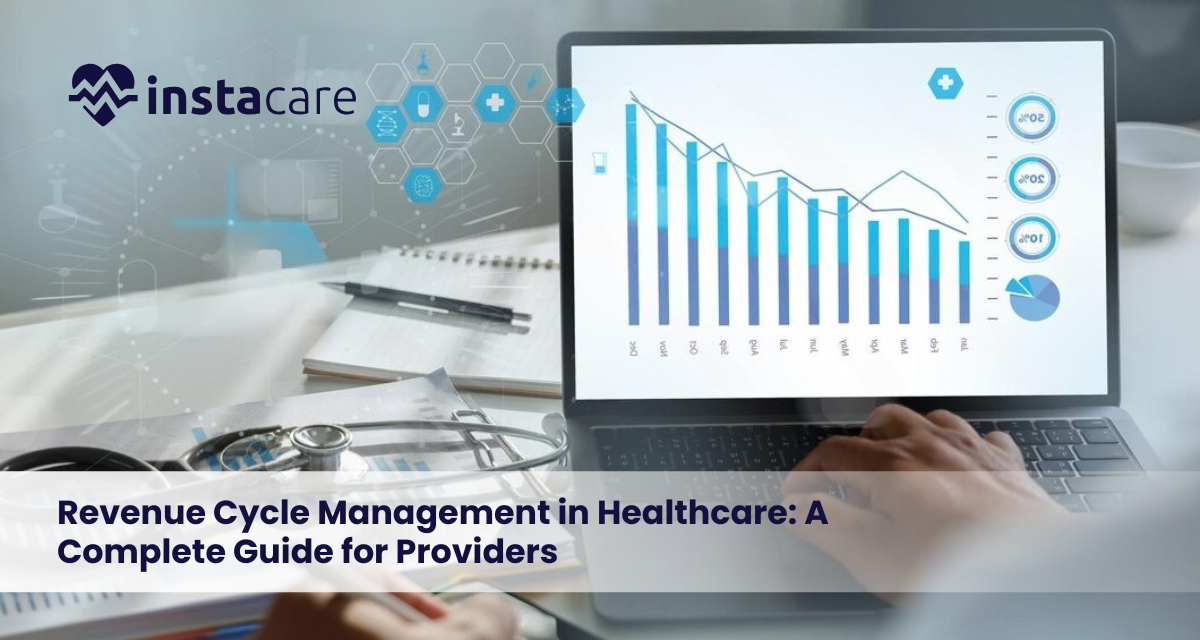
Revenue Cycle Management in Healthcare: A Complete Guide for Providers The financial component of the current healthcare systems is Revenue Cycle Management (RCM). It helps ensure that they make their payments to their providers on time and in the correct amount, without any delays or irregularities in the process. RCM is crucial to the financial survival of healthcare organizations from patient registration through final payment. As operation expenses increase and payers become more complicated to meet, hospitals need to implement effective measures in the revenue cycle to enhance their cash flow and minimize denial of claims. What Is Revenue Cycle Management (RCM)? Healthcare revenue cycle management is the financial process involved in the healthcare organizations tracking patient care episodes in terms of initial appointment booking to the final patient payment. It integrates administrative functions and clinical functions so that there is proper billing and reimbursement. The activities covered by RCM in healthcare encompass insurance verification, medical coding, and claim filing, payment recording, and payment denial resolution. An efficient revenue cycle will guarantee predictable revenue and improve patient satisfaction and efficiency. Key Stages of the Revenue Cycle Registration and Scheduling of patients This starts when a patient makes an appointment. The correct demographic and insurance information is obtained here. Insurance Verification The Insurance verification process are performed to verify patient eligibility, coverage limits and co-pay requirements prior to treatment. Medical Coding Healthcare billing and coding relies on the standardization of codes of clinical services through use of ICD and CPT systems. Charge Capture Every service offered is recorded and translated into billable services. Claims Submission Medical claims processing involves claims being electronically filed to insurance providers in order to have them reimbursed. Payment Posting Insured and patient payments are documents that are documented and matched with the claims presented. Denial Management Denial management in healthcare will refer to recognizing declined claims, rectifying mistakes, and repaying them. Billing and Collections of Patients All the remaining would go on to patients through modern patient billing solutions. Why Revenue Cycle Management Is Important? Guarantees Financial Stability Effective RCM will ensure a consistent flow of revenue and reduce leakage of finances. Reduces Claim Denials A well-established medical revenue cycle procedure reduces mistakes and enhances approval. Enhances Patient Experience. Clear billing and correct estimates result in improved trust and satisfaction. Supports Compliance Good documentation and coding implies compliance with the regulatory requirements. Efficiency in Operations. Automated processes save the administrative load and enhance productivity. Book Your Free Marketing Consultation Common Challenges in Healthcare RCM Frequent Claim Denials Coding errors or failure to document the case completely results in rejection of claims. Complex Insurance Policies The Healthcare reimbursement process has different payer rules making it complicated. Manual Processes Old systems enhance mistakes and reduce work speeds. Poor Data Integration Interoperability between systems is lacked, and hence inefficiency. Patient Payment Delays Collections are more difficult due to high deductibles and co-pays. Role of Technology in Modern RCM Technology has changed the face of RCM; it has helped in removing monotony and enhancing precision. Key Technologies Include: AI-powered coding tools Eligibility checking upon a robot. Billing solutions on the cloud. Live analytics dashboard. Electronic health records (EHR) that are integrated. Digital resources will also improve the Medical revenue cycle process through errors minimization and faster reimbursements. Benefits of Effective RCM Implementation Faster Reimbursements Robotization reduces the time of submitting and approving claims. Minimized Administrative Expenses. Automated processes reduce man-hours and overheads. Improved Cash Flow The collections are efficient, hence they guarantee a steady stream of revenue. Better Denial Management High-technology analytics recognize trends and minimize denials. Enhanced Compliance Automated procedures reduce regulatory risks. Best Practices for Optimizing Revenue Cycle Management Improve Front-End Processes Proper patient data and eligibility checks minimize errors at the downstream level. Invest in Staff Training Common training makes sure that the standards are met with respect to coding. Use Automation Tools Billing and claims tracking software should be adopted. Monitor KPIs Regularly Performance tracking assists in detecting inefficiencies at an early stage. Strengthen Communication It is vital that there should be a clear coordination between clinical and administrative staff. Outsourcing vs In-House RCM In-House RCM Pros: Increased dominion over activities. Immediate issue resolution Cons: High staffing costs Resource-intensive Outsourced RCM Pros: Access to industry experts Reduced operational burden Scalable solutions Cons: Less direct control Potential security issues of data. Decision to have in-house or outsourced RCM is influenced by the size, budget as well as complexity of the organization. Key Performance Indicators (KPIs) in RCM Monitoring of KPIs assists in gauging the healthcare revenue cycle management efficiency. Important Metrics: Days in Accounts Receivable (AR) Clean claim rate Denial rate Net collection rate First-pass resolution rate These ratios give information about financial performance and health of operation. Future Trends in Revenue Cycle Management RCM is fast changing due to changes in technology and a shift in regulations. Emerging Trends: Predictive analytics by AI. Robotic process automation (RPA) Patient-based billing models. Price transparency tools Claim data security via blockchain. Such innovations will transform the RCM in healthcare making processes quicker, smarter, and transparent. Conclusion RCM is critical in ensuring the financial viability of healthcare providers. Optimizing every phase of the revenue cycle, from patient registration to ultimate reimbursement, helps organizations improve cash flow, minimize claim denials, and boost patient satisfaction. Leveraging an advanced Clinic Management System streamlines billing workflows, automates claims processing, enhances documentation accuracy, and improves overall financial transparency. The use of modern technology, adherence to best practices, and continuous monitoring of performance indicators are essential for developing an efficient RCM strategy. In the ever-changing healthcare environment, a robust Clinic Management System integrated with strong RCM processes will remain pivotal as healthcare institutions strive for long-term growth and operational excellence. Frequently Asked Questions What does healthcare revenue cycle management mean? The full financial process encompasses billing, coding, claims submission, and payment collection in healthcare organizations. What is RCM and why is it significant in healthcare? RCM provides prompt reimbursements, minimizes billing claims and enhances the
Hospital Automation: Transforming Healthcare Through Smart Technology The world of healthcare is quickly changing with the implementation of digital technologies, and one of the areas that are being affected the most by the change is hospital automation. The automation of hospitals is making them work more efficiently and accurately, reducing paperwork, enhancing patient care, and streamlining operations. Through the integration of intelligent instruments, data analytics, and interconnected systems, hospitals will be able to improve patient safety, reduce human error, and streamline workflows. This article discusses the role automation is playing in transforming current hospitals and why it will become a necessity in future health care systems. What Is Hospital Automation? Hospital automation is the use of computerized tools, programs, and smart solutions to simplify clinical and management procedures in medical centers. It eliminates the manual processes and it introduces automated processes that enhance efficiency, accuracy, and patient outcomes. It comprises all automated patient records and billing to AI-based diagnostics and robotic surgeries. In essence, automation is expected to produce more efficient, safer, and more patient-centered care. Key Components of Hospital Automation Hospital Information Systems A Hospital information system (HIS) is a digital platform that unites all hospital activities. It integrates patient, billing, scheduling, and diagnostics into a single system, forming the foundation of a comprehensive Hospital Management Software solution. Electronic Medical Records EMR automation enables hospitals to store and handle patient data in digital format. This will enhance accessibility and lessen paperwork. Automated Billing Systems Hospital billing automation will reduce manual errors and increase the rate at which payments are processed. Patient Management Systems Patient management automation helps track appointments, admissions, discharges, and follow-ups. Integration of Laboratories and Diagnostic Laboratory automation in hospitals enables rapid, more precise testing. Types of Hospital Automation Clinical Automation This encompasses diagnostic systems, robotic surgery, and treatment planning systems that help doctors provide accurate care. Administrative Automation Billing, cover, schedule and insurance processing and documentation. Workflow Automation Automated hospital workflows eliminate delays because the communication between departments is simplified. Pharmacy Automation Medication dispensing and tracking of inventory automation improve patient safety. Infrastructure Automation Hospital environments are enhanced with smart lighting, the HVAC control, and energy-efficient systems. Benefits of Hospital Automation Improved Patient Care This minimizes mistakes and improves treatment accuracy, resulting in better outcomes. Increased Efficiency The automation of healthcare can be used to accomplish tasks that previously required hours in minutes. Reduced Operational Costs The automation systems reduce the staffing and administrative expenses. Enhanced Data Accuracy Electronic systems are used to remove duplication and the errors in manual entries. Better Patient Experience Online booking of appointments to automated reminders should make patients happier. Real-Time Data Access Medical records can be accessed immediately by the doctors enhancing diagnosis and treatment decisions. Role of Artificial Intelligence and IoT Artificial Intelligence Vital AI improves the process of clinical decision-making through processing medical data and forecasting the health risk. It supports: Disease detection Individualized care delivery plans. Predictive analytics Internet of Things (IoT) IoT devices can enable real-time patient monitoring through connected sensors and wearables. These systems: Monitor the vital signs. Create remote patient monitoring. Enhance the response times during emergencies. The future of digital hospital management is AI and IoT. Book Your Free Marketing Consultation Challenges in Implementing Hospital Automation High Initial Investment Hospital automation systems are quite expensive to install. Data Security Concerns Cybersecurity is required in manipulating sensitive patient information. Employee Training Needs Healthcare staff should be trained to use automated tools. Integration Issues Existing systems might not lend themselves well to new automation systems. Resistance to Change The implementation of new technologies can be obstructed by employees accustomed to doing things the old way. Future Trends in Hospital Automation Due to constant improvement in technology, automation of hospitals is promising in its future. Emerging Trends: AI-powered diagnostics Voice recognition clinical documentation. Smart robotic surgeries Secure medical records blockchain. Anticipatory patient surveillance. The innovations will also enhance Clinical workflow automation and enhance the provision of health care in the world. Best Practices for Successful Implementation Begin with Scalable Solutions Select systems that are scalable to Healthcare automation solutions’ requirements. Focus on Data Security Put in place effective encryption and compliance measures. Train Healthcare Staff Effective usage and adoption is made easy with proper training. Ensure System Integration They should ensure that all systems work together. Keep an eye on Performance Measures Loyal audits assist in gauging ROI and improvements in operate-ability. Conclusion The revolution in the healthcare sector is hospital automation, which enhances efficiency, accuracy, and patient care. Hospitals can improve operations and patient clinical outcomes by incorporating new technologies, such as AI, IoT, and digital record systems. Although issues like implementation barriers and costs exist, the long-term benefits outweigh the negatives. With the ongoing technological revolution, hospital automation will be significant in creating smarter, safer, and more responsive healthcare systems. FAQs What are the hospital automation systems? Hospital automation systems are digital tools that automate clinical and administrative processes to enhance efficiency and patient care. What is the use of automation in enhancing patient care? Automation minimizes mistakes, speeds diagnosis, and improves coordination between departments, resulting in better treatment outcomes. Is the automation of hospitals costly? Automation may cost a great deal at first, but it decreases long-term operating costs and enhances efficiency.
Automation in Healthcare: Transforming Patient Care and Hospital Operations The healthcare sector is rapidly changing as more digital technologies are applied to improve operations and enhance patient outcomes. Automation in healthcare is one of the most serious innovations. Since the introduction of automated appointment scheduling, robotic-assisted surgeries, and more, healthcare organisations are using technology to increase efficiency, accuracy, and patient care. Software automation in healthcare is not merely a fad; it is changing the way hospitals, clinics, and diagnostic centres are run in the current age. What Is Automation in Healthcare? In healthcare, automation involves applying technology to perform unskilled tasks with minimal human intervention. It entails the use of digital systems, artificial intelligence (AI), robotics and software to address repetitive operations, data management, and clinical processes. Healthcare automation may include: Administrative processes Clinical procedures Billing and claims management. Patient communication Data management These are aimed at decreasing the number of manuals, reducing errors, and improving the overall quality of care. Key Technologies Driving Healthcare Automation Healthcare transformation is being driven by a number of sophisticated technologies. Artificial Intelligence (AI) Predictive diagnostics Medical imaging analysis Individualized prescribing advice. Robot Process Automation (RPA) The systems based on Robotic process automation healthcare repetitive administrative functions including: Claims processing Patient data entry Insurance verification Electronic Health Records (EHR) Integration Centralized patient data Real-time updates Secure information sharing Telemedicine Automation An automation in telemedicine facilitates: Virtual consultations Follow-ups on patients automated. Electronic prescription management. Healthcare Data Automation Automation of healthcare data assists in: Real-time analytics Automated reporting Surveillance of population health. All these technologies improve the work of hospitals and patient experiences. Applications of Automation in Healthcare There is automation of several functions of health care. Computerized Appointment Scheduling Online booking systems SMS/email automated reminders. Reduced no-show rates Automated Clinical Workflow Automated Clinical Workflow Electronic prescriptions Automated exchange of lab results through integrated Lab Management Software, ensuring faster diagnostics and reduced reporting errors. Smart patient triage systems. Billing and Revenue Cycle Automation Automated insurance claims Error detection in billing Faster payment processing Inventory and Supplies Management Automated stock tracking Smart reordering systems Reduced waste Diagnostic Robotics and Surgical Robotics Robotic-assisted surgeries Precision diagnostics Improved surgical outcomes These applications illustrate the administrative and clinical efficiency of automation of software in healthcare. Benefits of Automation in Healthcare The benefits of automation in hospitals provide quantifiable patient outcome and hospital enhancement. Increased Efficiency Reduces paperwork Accelerates the administrative work. Brings optimal resource allocation. Improved Accuracy Minimizes human error Enhances data precision Enhances the diagnostic reliability. Cost Reduction Reduces costs of operation. Reduces staffing burdens Decreases billing errors Improved Patient Experience Faster service delivery Shorter waiting times Better communication Better Decision-Making Real-time analytics Data-driven insights Better treatment planning. The advantages of automation in hospitals are among the reasons why the digital transformation is a strategic decision. Book Your Free Marketing Consultation Challenges and Limitations Healthcare automation is associated with challenges, even though it has its benefits. Common limitations include: High implementation costs Employee opposition towards change. Data security and technology privacy threats. Problems in integrating with old systems. Requirements on regulatory compliance. To be successful in the adoption, these barriers are to be tackled. Impact on Healthcare Professionals There is no substitution of healthcare professionals by automation, but it expands their abilities. Positive impacts include: Less administrative work. Freer time to interact with a patient. Efficiency in the workflow. Increased diagnostic support. Nevertheless, medical professionals will have no choice but to change and acquire digital literacy and accept new technologies. Future Trends in Healthcare Automation Innovation and integration lead to the future of healthcare automation. AI-Powered Predictive Care Early disease detection Individualized care plans. Health prevention. Smart Hospitals IoT-connected devices Measurement of patients automatically. Real-time bed management Advanced Robotic Surgery Increased precision Reduced recovery time Minimally invasive surgeries. Expanded Telemedicine AI-based chatbots Remote diagnostics through automation. Wearable health combinations. The concept of automation will keep on revolutionizing the manner in which care is provided around the world. Best Practices for Implementing Healthcare Automation Effective automation needs a plan of action. Recommended best practices: Perform workflow analysis prior to implementation. Choose scalable solutions Make certain that there is compliance on data security. Train staff effectively Measure performance frequently. Implement systems in stages. Long term success and maximization of ROI are guaranteed by careful in planning. Conclusion Patient care and hospital management are being revolutionized by automation in healthcare. Automated appointment scheduling, high-tech robotic surgeries, and efficient technology are benefiting efficiency, reducing errors, and improving patient satisfaction. Although issues such as expenses and data confidentiality still exist, the benefits of the long term outweigh the constraints. With the ongoing innovation, healthcare software automation, including advanced Hospital Management Software, will be a very important factor in building smarter, more efficient, and patient-centered healthcare systems. Frequently Asked Questions What is the automation of healthcare? Healthcare automation is the employment of computer technology and software to precisely simplify the administrative, clinical, and operational processes in healthcare facilities. Where are the key advantages of automation in hospitals? The advantages of automation in hospitals are enhanced efficiency, minimized errors, saved costs, and enhanced patient experiences. What is the benefit of robotic process automation in health care? Healthcare systems that use robotics to automate repetitive processes such as data entry and claims processing apply pressure on the process and lead to more accuracy.
What is Lab Billing Software? A Complete Guide for Diagnostic Laboratories Billing in diagnostic laboratories may be complicated because of a number of tests, insurance, and coding claims, and payment of patient. The manual billing systems usually introduce mistakes, payment delay and administrative burdens. It is at this stage that a laboratory billing system becomes very crucial. Lab billing software computerizes the process of invoicing, coding and insurance handling, and payment tracking to enable the laboratories enhance efficiency and accuracy in financials. This guide will discuss the functionality of billing software, its purpose, advantages, and reasons it is necessary in the present-day diagnostic labs. What is Lab Billing Software? Lab billing software is a dedicated software that is used to handle billing functions in diagnostic and pathology laboratories. It automates the process of invoice creation, test pricing, insurance claims and financial reporting. Also known as: Diagnostic laboratory billing program. Medical laboratory billing software. Pathology lab billing software The primary aim of these tools is to simplify the work of billing, without violating healthcare regulations and coding standards. How Lab Billing Software Works? Lab billing software is an integration with laboratory management systems, and it automates the billing cycle of the test order to payment collection. Typical workflow: Test data of patients is automatically imported. There is use of test pricing and billing codes. Invoices are created as soon as possible. Claims of insurance are handled. Payments are followed and accounted. The software reduces the manual error by automating lab billing and coding, accelerating the revenue cycle. Key Features of Lab Billing Software The current lab billing software has a diverse scope of capabilities aimed at efficiency and compliance. Automated Invoicing Creates invoices in real time. Accepts various billing types. Handles bulk billing Insurance Claim Management On-line filing of claims. Status updates and tracking claims. Denial management tools Coding Support Inbuilt libraries on medical coding. Healthcare billing standard compliance. Reduces coding errors Payment Tracking Follows up patient and insurance payments. Automated reminders Several support payment gateways. Reporting and Analytics Revenue reports Excellent payment monitoring. Financial dashboards These are the building blocks of Automated lab billing system. Benefits of Lab Billing Software The use of lab billing software has operational and financial benefits. Reduced Billing Errors The automation reduces the number of manual errors that are created when pricing and coding and enhances accuracy and compliance. Faster Payments Automated claim process saves time in payment and enhances cash flow. Improved Efficiency Employees have to spend less time in paperwork and more time in the main laboratory activities. Increased Financial Transparency The sophisticated reporting systems give an overview of revenue, pending payments, and dynamics. Scalability Software can expand with your lab requirements with hundreds of tests per day or thousands per day. The following Lab billing software benefits make it a must-have investment to the expanding labs. Who Can Use Lab Billing Software? Lab billing software belongs to the range of the healthcare providers and diagnostic facilities. Primary users include: Diagnostic laboratories Pathology labs Hospital labs Radiology centers Research laboratories Multi-location lab networks Diagnostic lab billing software can be used in both small clinics and large diagnostic chains based on their complexity in billing. Book Your Free Marketing Consultation Important Factors to Consider Before Choosing Lab Billing Software There is a variety of factors to consider when choosing the appropriate software to bill. Integration Capabilities Ensure compatibility with: Laboratory Information Systems (LIS). EHR/EMR platforms Accounting tools Compliance and Security Search to find software that can support: Medical data security regulations. Secure payment processing Audit trails Ease of Use The interfaces are easy to use and enhance the productivity of the staff. Customization Options Choose software that allows: Custom billing rules Flexible invoicing formats Pricing adjustments Cost and ROI Price lab billing software depending on: The subscription vs single cost. Hidden fees Long-term savings Challenges Solved by Lab Billing Software The paper-based billing systems pose some difficulties that can be overcome with the help of software. Common issues solved: Billing inaccuracies Delayed insurance claims Revenue leakage Manual data entry errors The absence of financial transparency. Complicated laboratory billing and coding. With automated workflow, labs would be able to get rid of administrative bottlenecks and improve financial results. Future Trends in Lab Billing Software Automation, AI, and integration are the trendsetters of the future of lab billing software. AI-Powered Billing Artificial intelligence will: Predict claim approvals Detect billing errors Automate denial management Cloud-Based Platforms Cloud solutions offer: Remote access Lower infrastructure costs Real-time updates Integrated Healthcare Ecosystems The next generation platforms will combine billing with: LIS and LIMS Patient portals Telehealth platforms Smart Analytics Sophisticated analytics will assist labs: Forecast revenue Optimize pricing Improve financial planning These innovations will transform the manner within which medical lab invoicing software works in the contemporary healthcare. Conclusion Lab billing software is an important application that can be used by diagnostic laboratories in order to optimize operations and enhance financial precision. These systems change the way laboratories manage billing and revenue cycles since they help automate invoicing, insurance claim management, and real-time analytics. Acting either as a small pathology laboratory or a network of multiple diagnostic centers, implementing a sound laboratory billing system can save mistakes, speed up the processing, and increase the efficiency of the work. With the development of technology, more intelligent and integrated billing systems will still define the future of health care finance. FAQs What is the primary objective of the lab billing software? The key aim of laboratory billing system is to automatize invoicing, insurance claims and payment follow-up and maintain correct lab billing and coding. Is the small diagnostic lab appropriate to use lab billing software? Yes, diagnostic lab billing software comes in scalable versions which can support small clinics and large laboratory networks. What is the price of lab billing software? Lab billing software pricing is offered in different features, deployment type (including cloud and on-premise), and the size of the lab and is usually priced at affordable monthly subscriptions to

Electronic Lab Notebook (ELN): A Complete Guide for Modern Laboratories Laboratories are quickly moving away with the use of paper-based documentation to electronic systems that enhance efficiency, teamwork, and data security. The Electronic Lab Notebook (ELN) is one of the most disruptive instruments in this development. ELN system for laboratories are becoming a necessity in science and industry because they ease the research documentation process and increase the quality of the data held within them. The guide examines the functionality of ELNs, their characteristics, advantages, and the reasons why ELNs are essential in the contemporary laboratory environments. What is an Electronic Lab Notebook (ELN)? An Electronic Lab Notebook (ELN) is a computer-based system to store, archive, and maintain laboratory information systematically. In contrast to the conventional notebooks, Electronic lab notebook software enables the researcher to archive experimental findings, protocols, photographs and notes in a centralized and searchable location. Digital lab notebook is an electronic laboratory notebook that substitutes ordinary handwritten records with digital records, and thus, it is simpler to trace experiments, work remotely, and maintain data long-term. ELNs have been highly adopted in research institutions, pharmaceutical firms and academic laboratories to facilitate effective Laboratory data management. Why Do Laboratories Need ELN Systems? The contemporary laboratories produce huge volumes of data per day. When this information is done manually, there is a higher probability of making mistakes, loss of data and inefficiencies. A laboratory-specific ELN system solves these problems by providing organized digital processes. Reasons labs adopt ELNs: Lessen the errors in works of paper and manual documents. Enhance coordination of research teams. Facilitate quicker data retrieval and analysis. Make sure that it is regulatory. Remote research support. ELNs are also being used as a foundation of Laboratory workflow automation as laboratories undergo digitization transformation. Key Features of an Electronic Lab Notebook To get acquainted with the ELN features and benefits, it is a good idea to begin with the basics of its functionality. Recording of the Digital Experiment Experiments can be recorded in real time with structured templates and forms that the researcher can customize. Searchable Data Storage The search features are also advanced enabling users to filter down on past experiments and spend less time on manual searches. Collaboration Tools Notebooks may be accessed and shared by multiple users, thereby allowing team work to be done across locations seamlessly. Integration Capabilities Recent ELNs facilitate ELN integration with LIMS, LIMS instruments and data analytics. Version Control All changes are monitored, which makes the changes transparent and traceable. Cloud Accessibility Several sites provide Cloud-based ELN solutions that enable one to access them anywhere without any insecurity. Multimedia Support Users are allowed to add images, graphs, datasets, and videos in entries. Benefits of Using an ELN A digital notebook has a range of benefits in terms of operation and science. Improved Data Accuracy Electronic entries minimize the effect of transcription errors and standardization of documentation. Enhanced Productivity Researchers do not waste a lot of time in paperwork but focus on innovations. Better Collaboration Shared access allows real time interaction between distributed teams. Data Security and Backup The cloud storage is a guarantee of data protection and recovery in case of a disaster. Faster Compliance Audits Regulatory inspections are made easy by structured documentation. In general, ELNs are helping a lot to enhance the Laboratory data management and enhance the efficiency of research. ELN vs Traditional Paper Lab Notebook The discussion between ELN vs paper lab notebook presents the benefits of digital transformation. Paper Lab Notebooks: Prone to damage or loss Hard to search and share Limited collaboration Manual compliance tracking Electronic Lab Notebooks: Digitally stored and backed up. Easy search and retrieval Multi-user collaboration Automated compliance functionality. Although paper notebooks can still be used in the smaller labs, ELNs provide scalability and reliability that are required in the modern research setting. Book Your Free Marketing Consultation Applications of ELN Across Industries ELNs are not restricted to the academic laboratories. Their diversification is in favor of various industries. Pharmaceutical and Biotech Applied to drug discovery, clinical trials and regulatory documentation. Academic Research Assists learners and scientists to conduct experiments and present results. Chemical and Materials Science Protects workflows with lots of data and documentation. Food and Beverage Industry Applied in quality control and testing of product. Environmental Labs Helps in keeping track of data gathering and reporting. These applications explain why ELN for research labs is emerging as a conventional online resource. Compliance and Data Security in ELN One of the main issues in the scientific setting is regulatory compliance. Designing modern ELNs is aimed at satisfying the strict ELN compliance and regulations. Important compliance characteristics are: Trails of all data amendments. Electronic signatures Data encryption Access control and user permissions. Regulatory requirements (FDA, GLP, GMO) Such features will guarantee safe control of the Laboratory data and conserve intellectual property and valuable research information. Challenges in Implementing ELN ELN adoption may pose problems, even though it has the advantages. User Resistance Scholars who are used to using paper notebooks will not be quick to embrace technologies. Initial Setup Costs It might invest upfront to do licensing and implementation. Training Requirements Employees must be well onboarded to utilize the system. Integration Complexity Technical skills may be needed to connect ELNs to the existing systems such as LIMS. Nevertheless, such issues are not long term in comparison to long term productivity benefits. How to Choose the Right ELN Software? It is essential to choose an appropriate platform in order to succeed. Factors to consider: User interface and easiness. Integration capabilities Data security features Cloud versus on-premise deployment Customization options Compliance support Future expansion capability. Vendor support and long-term upgrade potential is also another consideration that organizations should take before deciding on Electronic lab notebook software. Future Trends in Electronic Lab Notebooks ELN is an ever-growing technology in line with the digital innovation. Artificial Intelligence Research Solutions Experimental data will be analyzed through artificial intelligence and proposed with optimizations. Deeper System Integrations Uninterrupted integration
Healthcare Data Sets: Types, Uses, and Importance in Modern Healthcare The modern healthcare is supported by data. Healthcare data sets are essential to enhancing patient outcomes and medical innovation in clinical decision-making to research on the state of health in society. Structured medical data becomes increasingly available and valuable as the healthcare systems are becoming digitalized at a very fast pace. This paper discusses the nature of healthcare data sets, their categories, uses, advantages and future trends that yield data-driven healthcare. What Are Healthcare Data Sets? Healthcare data sets refer to a set of structured or unstructured medical data that can be employed to serve clinical, research and administrative purposes. Such datasets may contain patient-related data, diagnosis outcomes, treatment history, imaging, and population health data. Hospitals, research institutions, pharmaceutical companies, and AI developers are some of its frequent users. The high quality Healthcare datasets for research leads to a high-quality clinical trials, predictive modelling, and evidence-based medicine. Types of Healthcare Data Sets Clinical Data Sets These data sets include patient-specific data that is gathered in the process of patient care provision, such as diagnosis, treatment, laboratory findings, and physician notes. They are commonly called Clinical data sets and they are fundamental to the clinical decision-making and research. Electronic Health Records (EHR) EHR Software datasets contain electronic patient health records including medical history, prescriptions, allergies, and imaging reports. One of the most useful healthcare analytics and interoperability resources is electronic health record data. Medical Imaging Data These data sets contain radiology data such as X-rays, CT scans and MRIs. They are the ones that are generally used to train AI models in diagnostic imaging and computer-aided detection. Genomic and Molecular Data Genomic datasets are genes and molecular biomarkers involved in precision medicine and cancer biology. Public Health Data Public healthcare datasets are a collection of data on disease outbreak, vaccination rates, and health trends of the population gathered by government agencies and international organizations. Claims Data and Administrative Data These data sets cover the billing, insurance claims and hospital utilization data sets. They assist in streamlining operations and planning of policy. Patient-generated and Wearable Data Fit trackers, smart watches and other mobile health applications are a source of real-time health information and constant data tracking. Applications of Healthcare Data Sets Medical Research Data sets in Medical research are utilized to examine disease patterns, treatment results, as well as risk factors on a population basis. Machine Learning and Artificial Intelligence The use of AI models as a source of intraproduct training predictive algorithms, diagnostics, and clinical automation is based on a large dataset, which leads to innovation in Healthcare data analytics. Drug Development Pharmaceutical industries use data to determine possible drug targets and hasten the medical experiment. Public Health Surveillance Big data in healthcare is used to track epidemics and trends of diseases on a large scale, monitored by health agencies. Personalized Medicine Patient-focused clinical insights enable clinicians to provide specific treatments according to specific patient features and genetic data. Hospital Operations The datasets allow healthcare providers to optimize the staffing, resource allocation, and patient flow management. Benefits of Healthcare Data Sets Improved Patient Outcomes Evidence-based conclusions allow identifying diseases in the initial stages and developing an individual plan of treatment. Faster Medical Research Availability of a variety of Medical data sets increases the pace of clinical research and Hack. Greater Healthcare Effectiveness Automation and analytics minimize mistakes and automation. Predictive Healthcare Predictive analytics is used to detect high-risk patients and avoid complications. Greater Population Health Management Big data will assist in health trend analysis and in the development of preventive treatment plans. Digital Health Innovation AI, Telemedicine, Clinic Management Software and digital therapeutics are dependent on good datasets to develop and verify. Challenges in Managing Healthcare Data Data Fragmentation The information about healthcare is usually fragmented in various systems and is tricky to integrate. Poor Data Quality Missing or incomplete information may impact on research accuracy and clinical decisions. Interoperability Issues The various systems can employ different formats that do not facilitate easy sharing of data. High Storage Costs Storage and security the ability to handle big data demands scalable architecture. Ethical Concerns When patient information is used to conduct research, there are ethical issues to be considered regarding consent and disclosure. Data Privacy and Compliance Healthcare information is very confidential and it needs to be handled in a strict adherence to regulations. Legislation that has to be adhered to includes HIPAA, GDPR, and local healthcare data protection systems. The major privacy practices are: Anonymization and data encryption. Authentication and access control. Audit trails and monitoring Protect cloud storage of Open healthcare data programs. Compliance assurance fosters patient trust and helps institutions to avoid legal liabilities. Book Your Free Marketing Consultation Future of Healthcare Data Sets The innovativeness of data is closely related to the future of healthcare. Emerging trends include: AI-Driven Insights Newer machine learning models will be able to dig more insights in the large-scale data. Achieving Interoperable Health Systems Better data standards will allow sharing between providers and platforms without any issues. Real-Time Data Integration The wearables and IoT devices are going to create constant streams of health data. Federated Learning Patient privacy will not be compromised since AI models will be trained on decentralized data. Expansion of Open Data There is increased release of Open healthcare data by more governments and institutions to facilitate international research and innovation. Precision Medicine Growth Genomic data sets will guide extremely individualized therapy and customized cure. Conclusion The nature of healthcare datasets is changing the way medicine is practiced, researched, and delivered. Data is central to the contemporary healthcare ecosystem, from clinical decision-making to AI-based diagnostics. Although there are still issues such as privacy, interoperability, and data quality, ongoing improvements in analytics and governance structures are addressing these problems. In the constantly changing healthcare, the use of high-quality datasets will be critical towards the provision of smarter, more personalized, and efficient patient care. Frequently Asked Questions What is the application
OpenAI for Healthcare: Transforming Patient Care with Artificial Intelligence The future of healthcare is changing rapidly with artificial intelligence, which has allowed making diagnoses much quicker, smarter workflow, and patient-centred care. OpenAI is a leader in the transformation, as its advanced AI models are already being deployed in healthcare systems worldwide. AI tools are also assisting providers in providing more efficient and accurate care through clinical documentation to prediction analytics. This paper will discuss the transformations that OpenAI is bringing to the field of modern medicine and its major uses, advantages, ethical aspects, and the future of AI-driven innovation in healthcare. What Is OpenAI? OpenAI is a research and technology company that creates more sophisticated AI models that could comprehend and produce human-like language, analyse data, and address sophisticated problems. Its tools are very common in all other industries such as education, finance and more so in healthcare. OpenAI-driven models may be used in medical environments to support clinicians, carry out monotonous tasks, and enhance decision-making through profound data analysis. The tools are included in the wider trend of AI in healthcare, where automation and intelligence can be applied to improve care delivery and patient outcomes. Why Healthcare Needs AI Solutions? The healthcare systems are under increasing stress due to the increase in patients, clinician burnout, and the complexity of administration. Techniques of the past are typically unable to cope with data-intensive processes and decision-making that are time-sensitive. The AI solutions can help overcome these issues by: Automating reporting and documentation. Clustering of big data. Improving the accuracy of diagnosis. Fostering distance and online health care. With the expanding nature of medical data, AI-based systems are increasingly becoming imperative to the sustainable provision of healthcare. Key Applications of OpenAI in Healthcare Clinical Documentation and Automation The results of conversations with patients can be structured and formed as a clinical note using AI models, which saves administrative overhead. This will enable physicians to enjoy more time with the patients as opposed to documentation. Virtual Health Assistants AI chatbot offer rudimentary triage, check-in of symptoms, schedule appointments, and drug notifications. It is among the most widespread OpenAI healthcare applications of telehealth technologies. Medical Research and Literature Review AI is able to review large volumes of medical literature, summarize results, and assist the researcher to draw patterns at a rate exceeding what can be achieved by human processing. Patient Education and Engagement Understanding of diagnoses, treatments, and how to take medications using simple language is done by AI-powered tools and enhances health literacy and adherence. Clinical Decision Support AI assists physicians to interpret complicated medical data and recommend evidence-based advice, which enhances Clinical decision support AI systems in hospitals. Benefits of OpenAI in Healthcare Improved Efficiency The repetitive duties such as documentation, billing summaries, and patient intake are automated thus decreasing the usage of administrative resources. Improved Diagnostic Accuracy The AI models, which are trained on large datasets, are able to identify patterns that humans might miss and AI for medical diagnosis can be used, such as radiology and pathology. Better Patient Experience The chat systems powered by AI offer 24/7 service, making them more accessible and quicker to respond to. Cost Reduction Optimized processes and automation contribute to lowering operations and quality care. Personalized Medicine AI examines medical histories and genomes to aid in personalized care, which is becoming a trend in Artificial intelligence in medicine. Real-World Healthcare Use Cases Telemedicine Platforms AI chatbot help with pre-triage and telehealth visits, particularly in underserved areas. Radiology Support Medical imaging AIs are used to identify abnormalities in medical images and allow radiologists to prioritize severe cases. Electronic Health Record (EHR) Optimization AI enhances the precision of documentation and provides pertinent details about patients in real-time. Mental Health Support AI-based conversational systems offer primary care to anxiety, depression and behavioral health, in addition to human care. Hospital Operations AI enables predicting the admission of patients, staffing optimizations, and supply chain management with the help of Clinic Management Software. Challenges and Ethical Considerations Data Privacy Medical information is extremely sensitive and AI instruments have to meet stringent privacy laws. Bias in AI Models The biases of the AI systems that are trained on small data sets can be represented and, therefore, impact the quality of care among some population groups. Transparency It means that AI recommendations should be explained in a way that would allow clinicians to trust and validate the results. Over-Reliance on Automation Human judgment should be aided by AI and not replaced. It is necessary to have a balance between automation and clinical expertise. OpenAI and Healthcare Compliance Healthcare organizations should make sure that the AI tools are in line with the laws of the region including HIPAA (US), GDPR (EU), and additional local health data regulations. Some of the compliance considerations are: Secure data encryption Audit trails and monitoring Patient consent management Model transparency Ethical regulations and technical protection can only prevent irresponsible use of ChatGPT in healthcare. Book Your Free Marketing Consultation Future of OpenAI in Healthcare The future of AI in healthcare is bright and it is unlikely to stagnate in various spheres: AI-powered drug discovery Prognostic disease modelling. Clinical decision tools in real-time. Individual simulation of treatment. Medical interfaces that are voice-activated. With more refining of AI models, they will probably become a common and standard part of medical life and not an option that improves medical performance. Best Practices for Healthcare Organizations Start with Pilot Programs Initial deployments, e.g. AI documentation assistants, can be scaled out. Prioritize Data Security Make sure that there is a strong encryption, anonymization, and access controls. Train Healthcare Staff The understanding of AI capabilities and limitations should be known to clinicians and administrators. Maintain Human Oversight Qualified medical professionals must always review the outputs of AI. Concentrate on Patient Centric Design The AI devices should help improve the quality of care, rather than make the interaction with patients harder. Conclusion OpenAI is leading a central role in changing the current healthcare system
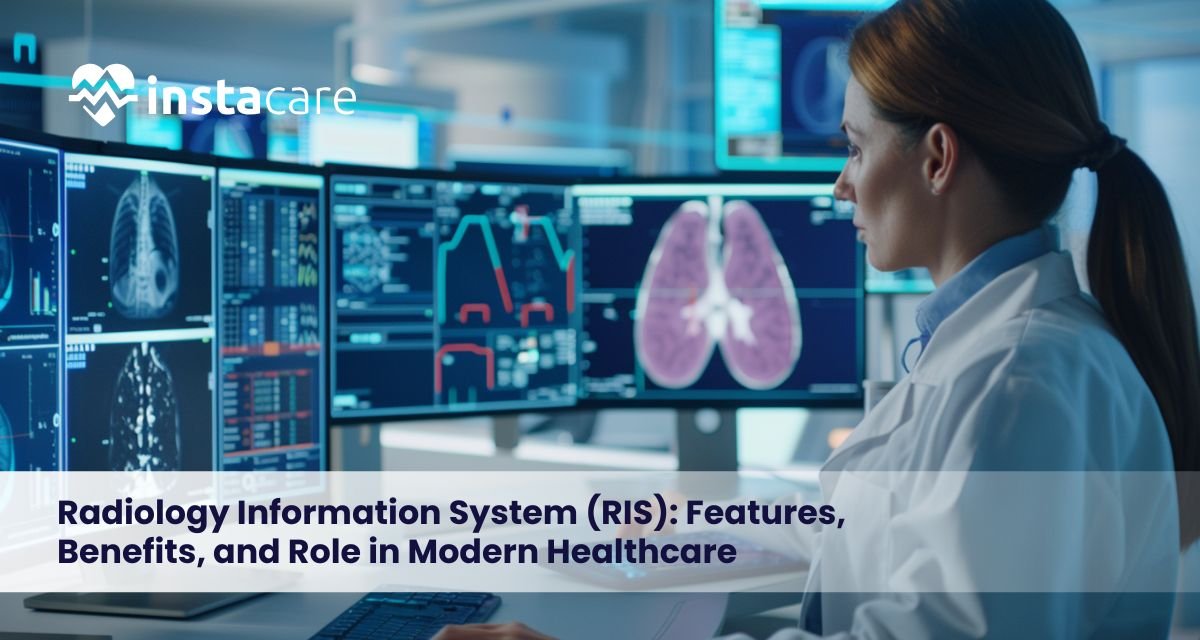
Radiology Information System (RIS): Features, Benefits, and Role in Modern Healthcare The way healthcare is conducted nowadays depends on effective imaging processes. With increased volume of diagnostic imaging, radiology departments require intelligent systems that coordinate, report, and store patient information. The Radiology Information System (RIS) is a key element in enhancing efficiency, precision, and productivity in imaging departments. The paper examines RIS software, its main characteristics, advantages, implementation issues, and its changing role in the healthcare of today. What is a Radiology Information System (RIS)? A Radiology Information System (RIS) refers to a special application that is used to organize and automate the work of radiology. It facilitates administration and clinical processes, such as scheduling, patient tracking, reporting, and billing. RIS in healthcare is the pillar of radiology workflow management since it provides smooth coordination among radiologists, technicians, and other healthcare providers. It combines patient records, imaging orders, and reports into a single system, thus lessening work by hand and enhancing accuracy. Key Functions of a Radiology Information System RIS systems deal with various activities that can improve the efficiency of operations. Key radiology information system features include: Registration and Demographics of patients. Scheduling and resource allocation of appointments. Radiology reporting system management. Status and workflow tracking. Billing and coding support The radiology department software is necessary to manage the large volumes of imaging using these functions. Core Features of RIS The current RIS software has advanced functionalities that aim at enhanced accuracy in the workflow and data. Workflow Automation and Scheduling Radiology scheduling software will make sure that imaging equipment and staff will be used optimally. Robotic scheduling ensures that there are no disputes and the patient wait period is minimized. Patient Data Management RIS modules are where patient history, imaging orders and clinical notes are stored. This centralized method eliminates duplication of data and enhances coordination. Reporting and Documentation Radiology reporting system facilitates a more systematic reporting, voice recognition, and template that can be used to achieve consistent results. Billing and Financial Integration RIS assists in coding, billing, and insurance processing that enhances the management of revenue cycle and hospital financial results. Analytics and Reporting High-tech dashboards assist administrators to research the trends in workflow efficiency and productivity to analyse healthcare investment. Cloud-Based RIS RIS solutions on clouds are scalable, accessible remotely, and less expensive in terms of the IT infrastructure, which is why they are the most suitable ones to display in the context of the modern healthcare organization. RIS vs PACS: Understanding the Difference RIS and PACS are frequently mixed and confused yet have other uses. RIS is concerned with the administrative and workflow. PACS is concerned with storage and retrieval of medical images. RIS and medical imaging information system such as PACS form an entire digital radiology ecosystem. RIS is in charge of data flow and scheduling whereas PACS is in charge of image storage and viewing. Benefits of Implementing RIS Greater Workflow Effectiveness RIS in healthcare automates routine operations and enhances interdepartmental communication to minimize delay and errors. Enhanced Patient Care Rapid scheduling and reporting enhance the diagnosis and treatment results. Better Data Accuracy The patient data is centralized, leading to less duplication and transcription mistakes. Financial Optimization RIS enhances the financial performance and cost-efficient operating of hospitals by simplifying the billing and use of resources. Regulatory Compliance RIS aids in audit trails, data protection and healthcare compliance. Integration with Healthcare Systems The ability to integrate with other healthcare platforms is one of the most important benefits of RIS. Electronic Health Records (EHR). Hospital Information Systems (HIT). Laboratory Information Systems (LIS) Clinic Management Software PACS and imaging tools Such integration establishes one cohesive ecosystem in which information moves through it smoothly enhancing clinical decision making and lessening administrative load. Challenges in RIS Implementation RIS implementation may be challenging despite its advantages. High Initial Costs Implementation of RIS needs to invest in software, training and infrastructure. Integration Complexity RIS requires technical integration with the existing healthcare systems. Staff Training Radiologists and technicians might need some time to adapt to new working procedures. Data Migration Risks When converting old data into a new system, it is necessary to plan on how to avoid the loss of data. Nevertheless, these issues can be addressed with minimal difficulties given correct planning and assistance of the vendor. Book Your Free Marketing Consultation Future Trends in Radiology Information Systems Innovation and digital transformation are the key to the future of RIS. AI-Powered Automation Artificial intelligence will boost the accuracy of reporting and optimization of the workflow. Cloud Adoption Scalability and cost economy will ensure cloud-based RIS keeps on growing. Interoperability Advancements The better integration standards will help exchange the data across the systems more smoothly. Predictive Analytics Supply-side analytics will assist healthcare providers to predict the demand of imaging and enhance resource allocation. Such developments will give RIS modules more strength and re-invent the software capabilities of the radiology department. Conclusion Radiology Information System is a very important part of the modern healthcare infrastructure. RIS software supports the management of radiology workflow and enhances clinical outcomes through the scheduling and reporting as well as billing and analytics. With the current digitization of healthcare, the optimal best radiology information system can be an important factor in improving operational efficiency, patient care, and financial performance. Organizations that invest in advanced RIS solutions will be better positioned to meet increasing imaging needs and evolving healthcare expectations. Frequently Asked Questions What is RIS software used for? Radiology workflow is controlled with the help of RIS software that provides scheduling, patient tracking, reporting, and billing that ensures the efficient operation of an imaging department. How does RIS differ from PACS? RIS it controls administrative and workflow operations whereas PACS has a store of medical images and displays them. The two systems collaborate to produce full imaging control. What does cloud-based RIS have to offer? RIS in the cloud also provides scalability, remote access, reduced cost of infrastructure, and enhanced data security.
ROI in Healthcare: Maximizing Value for Providers and Patients Financial sustainability and quality care should be aligned with the evolving healthcare environment. Hospitals and clinics must operate under constant pressure to minimize costs, improve patient outcomes, and adopt new technologies. This is the place where healthcare return on investment is needed. The concept of ROI in healthcare is not solely about profits but about the value created by investments in technology, infrastructure, personnel, and patient care programs. When computed and optimized correctly, ROI can help providers make more informed decisions that benefit their organizations and patients. What Is ROI in Healthcare? The ROI of healthcare is the ratio of financial and operational gains to expenditure. It helps assess the ability of a project, technology, or initiative to deliver quantifiable value. As an example, when a hospital invests in an electronic health record (EHR) system, the ROI would consider: Savings in cost due to less paper work. Improved efficiency Fewer medical errors Better patient outcomes Higher satisfaction of the patient. Healthcare ROI is not just money, but also clinical outcomes, operational efficiency and patient experience. Why ROI Matters in Healthcare Healthcare organizations exist within an intricate environment, which has limited assets. All investments have to be worth its returns. Key Reasons ROI Is Important: Secures intelligent distribution of funds. Enables the use of data to make decisions. Enhances the hospital financial performance. Promotes the use of innovation. Enhances accountability Good ROI plan will make sure that investments are made according to long-term objectives but without compromising on the quality of care. ROI in Healthcare IT Healthcare is changing with technology. Digital tools have better care and efficiency promises, including telemedicine to AI diagnostics. Introducing new systems is however expensive. This is why ROI in healthcare IT is a major concern for administrators. Examples of IT Investments: Electronic Health Records (EHR). Telehealth platforms Remote patient monitoring AI-powered diagnostics The systems of revenue cycle management. Healthcare Technology ROI has the following advantages: Less administration expenses. Faster patient processing Improved billing accuracy Improved clinical decision-making. Increased patient interaction. The assessment of the ROI of healthcare technology will guarantee that the digital transformation is indeed value-producing, as opposed to be a burden on the budget. Measuring ROI in Healthcare To evaluate accurately, there must be a structured approach and reliable data. Measuring ROI in healthcare involves more than financial metrics. Basic ROI Formula: ROI = (Net Benefit – cost of Investment)/ Cost of Investment x 100. The measurement of healthcare ROI, however, is more complicated in nature since it can include: Less readmission in the hospitals. Shorter patient stays Fewer medical errors Increased productivity of staff. Higher scores of patient satisfaction. Healthcare ROI Metrics Normal healthcare ROI metrics are: Cost per patient Revenue growth rate Operating margin Readmission rates Average length of stay Patient satisfaction rating. These measures are being used to assist organisations in an appropriate analysis of healthcare investment, and performance assessment. Cost-Benefit Analysis in Healthcare Hospitals conduct cost-benefit analyses before implementing new initiatives to compare anticipated outcomes with expected costs. Factors Considered: The cost of initial implementation. Operation costs and maintenance. Training requirements Long-term financial savings Clinical improvements An extensive cost-benefit analysis mitigates the risk and guarantees wiser decisions to be made. Impact of ROI on Hospital Financial Performance Strategies that deliver strong ROI directly impact hospitals’ financial performance. By the time, the investments bring quantifiable returns, hospitals will be able: Expand services Upgrade equipment Hire skilled professionals Enhance patient infrastructure. Hospitals that are financially stable are in a better position to provide high quality patient-centred care. Book Your Free Marketing Consultation Improving ROI in Hospitals To maximize returns, there is the need to plan and review. Techniques of improving ROI in hospitals. Invest in Technology of High Impact Pay attention to cost-reducing and patient outcome-enhancing tools. Manage the Workforce Optimally Staffing will enhance productivity and limit overtime costs. Improve Revenue Cycle Management Proper billing and coding minimize the revenue leakage. Prevent Readmissions Effective discharge planning reduces redundant expenses. Use Data Analytics Evidence-based practices enhance performance and patient results. Prioritize Preventive Care Programs Prophylaxis will reduce treatment costs over the long term. Monitoring should be conducted at all times to ensure that investments are effective in the long run. Challenges in Healthcare ROI Evaluation Although ROI is essential, it may not be easy to calculate it because of: Long term projects with delayed deliverables. Training hard to quantify intangible benefits. Alterations in regulatory conditions. Expensive initial technology expenditures. Healthcare administration must consider both financial indicators and patient outcomes when evaluating ROI. Future of ROI in Healthcare Healthcare ROI will become increasingly data-driven. Current technologies such as AI, predictive analytics and value-based care models will increase the accuracy of ROI measurement. In healthcare organizations, there are efforts to transition from volume-based to value-based care, with an emphasis on outcomes rather than service volume. This model inherently enhances ROI by linking patient health gains to financial rewards. Conclusion The concept of ROI is critical in the healthcare industry to promote sustainable development and provision of quality care to patients. Through proper investment planning, appropriate healthcare ROI metrics, and a comprehensive cost-benefit analysis, organizations can create maximum value for providers and patients. It could involve analyzing technology upgrades, staffing changes, and new treatment programs; in any case, a methodical approach to healthcare investment analysis will make decisions smarter. Finally, enhancing ROI in hospitals means providing better care while remaining economically sustainable. Frequently Asked Questions What is healthcare return on investment? Healthcare return on investment is a measure of the financial and operational value of healthcare achieved relative to healthcare costs. It consists of financial paybacks as well as patient outcomes. Why should ROI in healthcare IT matter? In healthcare IT, ROI will assist in determining the investments in technology will make it more efficient, cost-effective, and care-giving. It is a guarantee that digital tools can deliver value. How do hospitals measure ROI? Financial formula, data on operations, patient outcome, as well as cost-benefit analysis

What Is Patient Safety? Meaning, Importance, and Key Principles Quality healthcare involves patient safety. All communications between a patient and the healthcare system involve some risks, be it during the diagnosis, treatment, administration of medication, or surgery. Safety of patients implies reducing such risks and avoiding unnecessary damage. Patient safety in healthcare has taken a worldwide concern in the modern complicated healthcare setting. At hospitals, clinics, and home care settings, safe practices are beneficial to the patients, enhance the outcomes, and create confidence in healthcare systems. What Is Patient Safety? Patient safety can be described as the avoidance of mistakes, trauma, and suffering to patients in the process of providing healthcare services. It is geared towards developing systems, processes and behaviours that minimize the risks and guarantee safe patient care. Patient safety includes: Preventing medical errors Prevention of healthcare-associated infections. Assuring proper diagnosis and treatment. Safe medication and surgical treatment. Simply, patient safety refers to the provision of the right care, in the right manner, at the right time and without harm. Why Patient Safety Is Important? Patient safety is a valuable aspect that should not be underestimated. The problem of unsafe healthcare practices may cause severe injuries, long hospitalization, high healthcare expenses and even death. The main reasons of Importance of patient safety are: Avoiding avoidable injuries to patients. Increasing treatment results and recovery. Minimizing readmissions and complications in the hospital. Improving patient provider trust. Improving the quality of healthcare in general. Good patient safety behaviors also empower health care specialists to alleviate patient stress, risk of litigation, and professional mistakes. Common Patient Safety Risks Nevertheless, despite best practices, several risks can endanger patient safety in healthcare facilities. The first step is to identify these risks and prevent them. Typical Patient safety examples are: Drugs and medications, for example, incorrect dose or interactions. Poor sterilization or hygiene-associated infections. Diagnostic errors such as delayed and incorrect diagnosis. Medical errors including misplaced surgery. Falls and injuries and most particularly in older patients. Inter-team communication breakdown between healthcare teams. To mitigate these risks, there should be awareness, training and standardized safety measures. Key Principles of Patient Safety Successful patient safety initiatives are grounded in fundamental values that inform health care companies and practitioners. Patient-Cantered Care The care must give attention to patient’s needs, preferences and values. Engaging patients enhances care and satisfaction. Open Communication and Transparency Medical practitioners need to promote open discussion of risks, errors, and issues without fear of recrimination. Standard Operating Procedures Checklists, guidelines, and patient safety standards allow the mitigation of variation and avoid errors. Continuous Learning and Improvement There are lessons that healthcare systems need to be taught to avoid future destructive practices based on mistakes and close calls. Teamwork and Collaboration The safety of care requires the doctors, nurses, pharmacists, and support staff to communicate and collaborate effectively. These are the principles that constitute the Patient safety goals across the whole globe. Book Free Demo Role of Healthcare Providers in Patient Safety Physicians have an important responsibility in ensuring safety of patients throughout care. They are involved in: Adherence to patient safety practice. Correct recording of patient information. Checking patient identity before procedures. Proper medication administration. Keeping hygiene and infection control. Efficient communication with patients and colleagues. Healthcare providers can introduce a culture of safety and trust by remaining vigilant and accountable. How Patients Can Contribute to Their Own Safety? The responsibility of patient safety is collective. Informed and engaged patients can make a substantial difference and decrease risks. To enhance the safety of patients, they can: Inquiring about their diagnosis and treatment. Giving full medical histories and allergies. Adherence to the instructions on medications. Reporting procedures and results of tests. Reporting adverse events of any kind or uncharacteristic symptoms. The involvement of patients enhances safety and health outcome. Patient Safety and Technology Technology is increasingly becoming useful in enhancing patient safety in health care. Electronic devices assist in minimizing errors and enhancing coordination. Examples include: Electronic health records (EHRs) to record correctly. Systems to manage medication oversights to prevent errors in prescription. Assistive clinical decision aid systems. Early complications monitor to be used in patients. Technology helps in delivering healthcare through safer and more efficient means when properly applied. Conclusion High-quality healthcare is based on patient safety. Healthcare systems can go a long way in minimizing harm and enhancing patient outcomes by knowing what patient safety entails, risk identification, and the implementation of major concepts of patient safety. Excellent patient safety, provider responsibility, patient involvement and support, and technology that fosters secure care settings enable patients to be confidently and trustfully attended to. FAQs What does patient safety in healthcare entail? In the medical field, patient safety is the prevention of errors, injuries, and other harm to patients through safe practices and systems. What is the significance of patient safety? Patient safety is significant in the sense that it helps in safeguarding patients against avoidable injuries, improving the outcome, and also, the overall quality of healthcare. What are ubiquitous patient safety practices? Common patient safety practices include effective medication management, infection control, effective communication, proper documentation, and compliance with safety standards.