

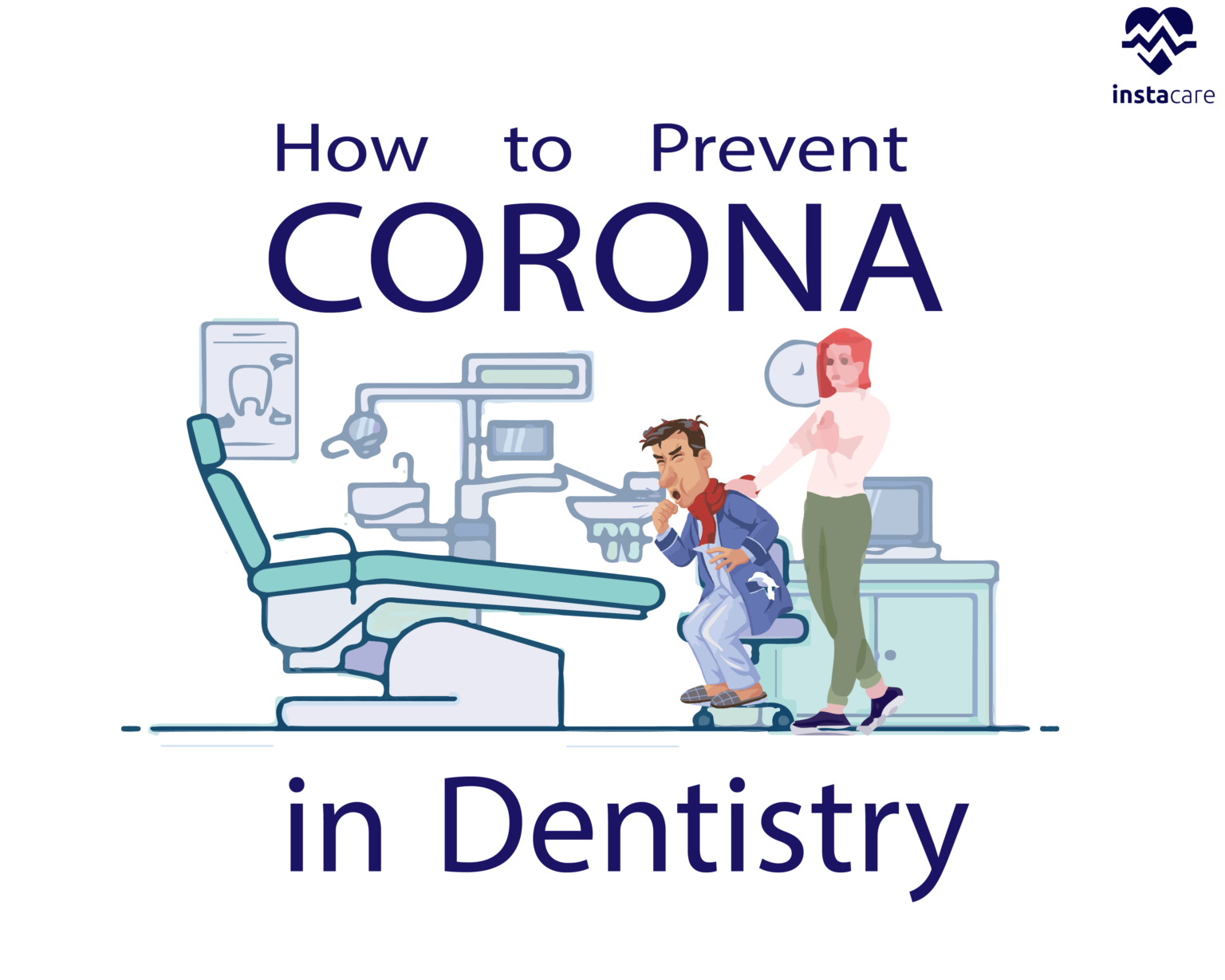
Can There Be Spread Of Corona Through Dentistry? Considering the situation worldwide, there are high possibilities that any kind of interaction between humans, animals or even objects contains a huge risk of the corona. Spread in 110 countries so far, it’s the immediate point of concern. As far as dentistry is concerned, being a profession that deals with the human mouth, it contains relatively more chances of spreading the virus. Corona through dentistry is something that is highly possible. The spread of Corona through dentistry According to research published in the International Journal of Oral Science, there are three major ways through which Corona can spread. These there are as following: Airborne Spread Contact Spread Contaminated Surfaces Spread Airborne Spread The dental papers indicate that numerous dental strategies produce pressurized canned products and beads that are polluted with the virus. Consequently, bead and airborne transmission of 2019-nCoV are the most significant worries in dental facilities and medical clinics, since it is difficult to maintain a strategic distance from the age of a lot of vaporized and bead blended in with patient’s salivation and even blood during dental practice. Notwithstanding the contaminated patient’s hack and breathing, dental gadgets, for example, fast dental handpiece utilizes rapid gas to drive the turbine to turn at high velocity and work with running water. At the point when dental gadgets work in the patient’s oral pit, a lot of vaporized and beads blended in with the patient’s spit or even blood will be produced. Particles of beads and pressurized canned products are sufficiently little to remain airborne for an all-encompassing period before they choose ecological surfaces or enter the respiratory tract. In this way, the 2019-nCoV can possibly spread through beads and pressurized canned products from tainted people in dental centers and emergency clinics. Contact Spread A dental expert’s continuous, immediate or circuitous contact with human liquids, tolerant materials, and defiled dental instruments or natural surfaces makes a potential course to the spread of viruses. Likewise, dental experts and different patients have likely contact of conjunctival, nasal, or oral mucosa with beads and pressurized canned products containing microorganisms created from a tainted individual and pushed a short separation by hacking and talking without a veil. Compelling contamination control methodologies are expected to forestall the spread of 2019-nCoV through these contact schedules. Contaminated Surfaces Spread Human coronaviruses such as SARS-CoV, Middle East Respiratory Syndrome coronavirus (MERS-CoV), or endemic human coronaviruses (HCoV) can persist on surfaces like metal, glass, or plastic for up to a couple of days. Therefore, contaminated surfaces that are frequently contacted in healthcare settings are a potential source of coronavirus transmission. Dental practices derived droplets and aerosols from infected patients, which likely contaminate the whole surface in dental offices. In addition, it was shown at room temperature that HCoV remains infectious from 2 h up to 9 days, and persists better at 50% compared with 30% relative humidity. Thus, keeping a clean and dry environment in the dental office would help decrease the persistence of 2019-nCoV. Preventing the spread of Corona through dentistry There are a few preventive measures that dentists must take to avoid any kind of transmission of Corona. A few of them are given as follows: Patient Evaluation If possible, make sure that you are aware of the patient’s history. With a person with positive Corona, it’s highly advised to be extremely careful. Use Instacare’s Telemedicine to have a complete medical session through a video call. This will reduce the chances of transmission. Hand Hygiene It’s been widely notified that washing hands regularly, significantly reduces the chances of virus transmission. Use a hand sanitizer in case you don’t have access to water. Personal protective measures for dental professionals Airborne droplet transmission of infection is the main route of spread, particularly in dental clinics and hospitals. Barrier-protection equipment is strongly recommended for all healthcare givers in the clinic/hospital settings during the epidemic period of 2019-nCoV. Like including protective eyewear, masks, gloves, caps, face shields, and protective outwear. Rubber dam isolation The use of rubber dams can significantly minimize the production of saliva- and blood-contaminated aerosol or spatter, particularly in cases when high-speed handpieces and dental ultrasonic devices are used. Mouthrinse before dental procedures Since 2019-nCoV is vulnerable to oxidation, preprocedural mouthrinse containing oxidative agents such as 1% hydrogen peroxide or 0.2% povidone is recommended, for the purpose of reducing the salivary load of oral microbes, including potential 2019-nCoV carriage. A regular mouthrinse is also recommended. Even after all these measures, make sure that you don’t interact unnecessarily. Even now, we know very little about it. So, keep your surroundings clean.
The country is in Panic as 19 patients of coronavirus have been confirmed in Pakistan out of which 15 are reportedly in Karachi, 2 in Islamabad, 1 case in Quetta and 1 in Gilgit. Covid-19 aka coronavirus by world health organization has spread in over 100 countries. About 11 patients, suspected of coronavirus in Pakistan are still under observation in hospitals in different cities across the province. The suspected patients have been kept in isolation rooms including three patients in DHQ hospital, Gujranwala, two each in Mayo Hospital and Doctors Hospital in Lahore and one each in DHQ hospital, Hafizabad, DHQ hospital, Sargodha and DHQ hospital, Lodharan. As many as 65 patients have been cleared of suspicion of contracting the virus and discharged from hospitals from across the province. However, sources informed that two patients including a NAB prisoner and a patient from Gujranwala have also been kept in the High Dependency Unit at the Services Hospital, but it could not be confirmed if they were suffering from symptoms similar to coronavirus. “As only those patients, suspected of carrying coronavirus symptoms, are supposed to be kept in HDU isolation, but officials deny that these patients were being kept for suspicion of coronavirus,” a doctor at the Services Hospital told The News Tuesday. PM’s Special Assistant on Health Dr. Zafar Mirza said the cases in Pakistan have more than doubled in the last 24 hours. This is not surprising. The disease has spread in 106 countries. All 19 patients have contracted virus from abroad, and are stable. There is no evidence of local spread as yet. If we act responsibly we can avoid the virus spread. The most important thing is to limit the spread of coronavirus is by ensuring hygiene; washing hands properly, avoid touching our face and keeping a distance from sick people. “The government is working hard to contain the spread, but we all need to play our role in this fight,” he added. Post Credit: The News
- 1
- 2