

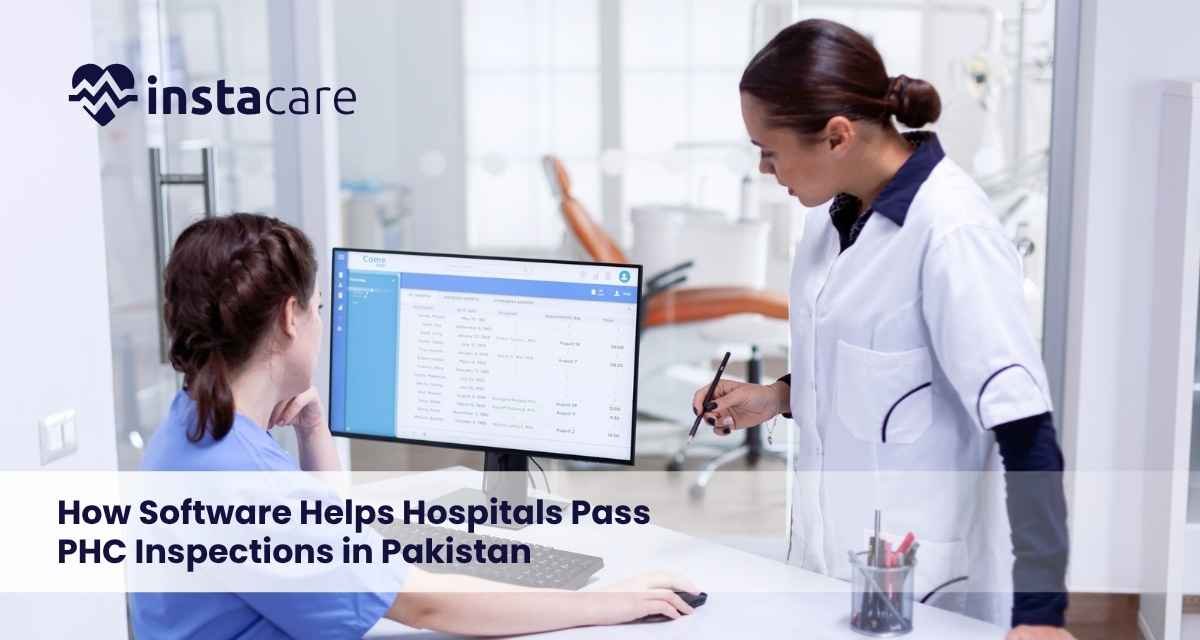
How Software Helps Hospitals Pass PHC Inspections in Pakistan Healthcare facilities in Punjab are required to comply with regulations set by the Punjab Healthcare Commission (PHC). These regulations focus on patient safety, documentation accuracy, and operational transparency. PHC inspections evaluate whether hospitals and clinics meet the required Minimum Service Delivery Standards (MSDS). Facilities that fail to maintain proper documentation, staff credentials, and clinical records often struggle during inspections. To address these challenges, many healthcare providers are adopting PHC compliance software to manage operations, maintain records, and prepare for inspections more efficiently. This guide explains how healthcare software helps hospitals meet PHC requirements and improve inspection readiness. Why Hospitals Struggle with PHC Inspections Many healthcare facilities rely on manual or fragmented systems, which create compliance challenges. Common issues include: Incomplete patient records Missing staff credential documentation Unorganized files during inspections Lack of audit trails Inconsistent operational processes These issues make it difficult for hospitals to demonstrate compliance during PHC inspections. What Is PHC Compliance Software? PHC compliance software is a digital healthcare system that helps hospitals manage clinical, administrative, and regulatory processes in a structured way. These systems integrate multiple hospital functions into a centralized platform, allowing healthcare facilities to maintain accurate records and prepare for inspections. PHC compliance software typically includes: Electronic medical records (EMR) Hospital management systems (HMIS) Laboratory information systems Pharmacy management systems Staff credential management How Software Helps Hospitals Meet PHC Requirements 1. Structured Medical Records Management Healthcare software allows hospitals to maintain complete and accurate patient records. Digital systems help store: Patient history Consultation notes Prescriptions Diagnostic reports This ensures that records are organized and easily accessible during inspections. 2. Staff Credential Management Hospitals must maintain documentation of staff qualifications and licenses. Software systems help: Store staff credentials Track license validity Maintain training records This simplifies verification during PHC inspections. 3. Audit Trails and Documentation PHC inspections require traceable records. Healthcare software provides: Activity logs Record update tracking Access history These audit trails help demonstrate compliance and accountability. 4. Integrated Departmental Systems Modern healthcare software integrates multiple hospital departments, including: Outpatient services Laboratory systems Pharmacy operations Inpatient management This ensures consistent data across the organization. 5. Complaint Management Systems Hospitals are required to manage patient complaints effectively. Software systems allow facilities to: Register complaints Track resolution Maintain documentation This improves service quality and regulatory compliance. 6. Infection Control and Safety Tracking Healthcare software helps hospitals track infection control measures and safety protocols. This supports compliance with PHC safety standards. 7. Equipment and Asset Management Hospitals must maintain records of medical equipment and maintenance schedules. Software systems help: Track equipment usage Maintain maintenance logs Monitor calibration schedules Book Your Free Marketing Consultation Benefits of Using PHC Compliance Software Hospitals that implement healthcare software gain several advantages. Improved Inspection Readiness All required documents are organized and easily accessible. Reduced Administrative Work Automation reduces paperwork and manual processes. Better Operational Efficiency Integrated systems improve workflow and coordination. Enhanced Data Accuracy Digital systems reduce errors and improve record consistency. Stronger Regulatory Compliance Hospitals can maintain documentation required by PHC standards. How to Choose PHC-Compliant Software Healthcare facilities should evaluate software solutions based on key requirements. Important factors include: Support for EMR and HMIS systems Integration across hospital departments Secure data management Audit trail capabilities Scalability for future growth Selecting the right system helps hospitals maintain long-term compliance. Preparing for PHC Inspection Using Software Hospitals can improve inspection readiness by using software effectively. Recommended steps include: Digitize patient records Maintain staff credential databases Organize compliance documentation Track operational processes Conduct internal audits using system reports These steps help healthcare facilities prepare for inspections confidently. Future of PHC Compliance and Digital Healthcare Healthcare regulations in Pakistan are increasingly aligned with digital systems. PHC continues to encourage hospitals to adopt: Electronic medical records Integrated hospital systems Data-driven healthcare management Hospitals that invest in digital solutions will be better prepared for future regulatory requirements. Conclusion PHC inspections require healthcare facilities to maintain accurate documentation, structured processes, and transparent operations. Manual systems often fail to meet these requirements, creating challenges for hospitals during inspections. By adopting PHC compliance HIMS software, healthcare facilities can streamline operations, maintain proper records, and improve inspection readiness. Digital healthcare systems are not just tools for efficiency they are essential for regulatory compliance and the future of healthcare in Pakistan.
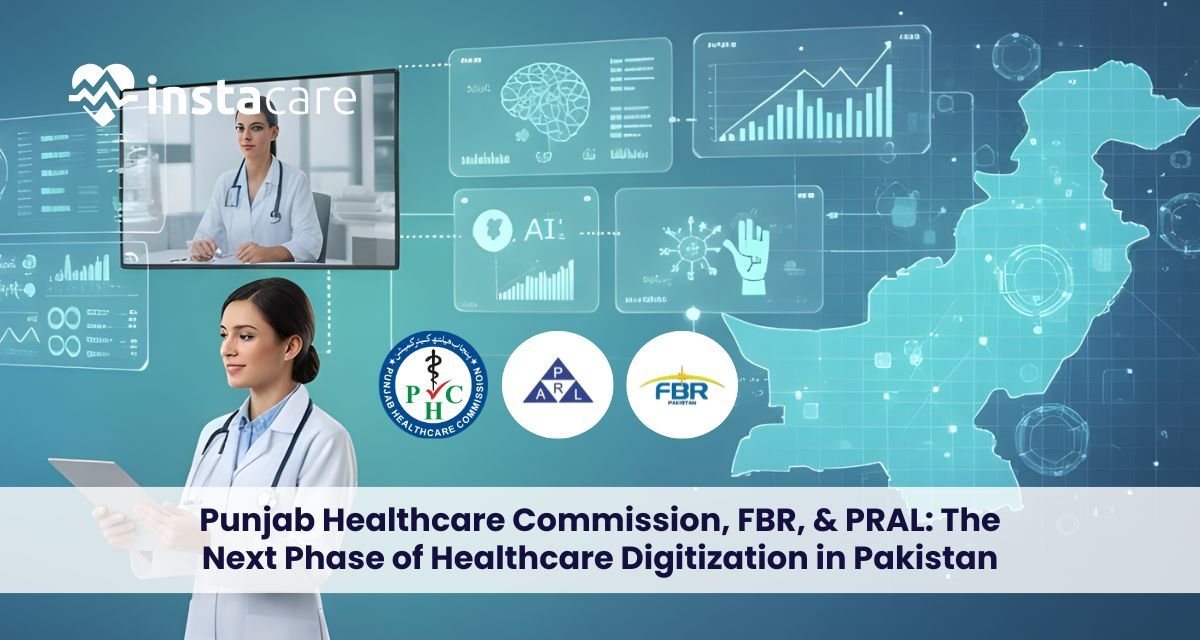
Punjab Healthcare Commission, FBR, & PRAL: The Next Phase of Healthcare Digitization in Pakistan Pakistan’s healthcare industry is undergoing a major digital transformation one that is structured, regulator-driven, and rapidly becoming unavoidable. Recent directives from the Punjab Healthcare Commission (PHC) and the Federal Board of Revenue (FBR) signal a unified national push: healthcare businesses must shift to standardized digital systems to improve transparency, compliance, patient safety, and long-term operational stability. This shift isn’t sudden it is the natural evolution of a modern healthcare ecosystem. Preparing for PHC or FBR Compliance? If your healthcare facility is navigating new regulatory requirements, InstaCare’s healthcare digitization experts can guide you on how HIMS and EMR software streamline operational, clinical, and financial compliance. 👉 Request a compliance readiness consultation PHC and the Mandatory Adoption of HIMS in Punjab The Punjab Healthcare Commission has intensified enforcement of mandatory Hospital Information Management Systems (HIMS) across: Hospitals Clinics & maternity homes Diagnostic laboratories Pharmacies This mandate focuses on strengthening: Standardized clinical documentation Patient safety and traceability Governance and regulatory oversight Data-driven health planning HIMS and EMR software are no longer optional; they are becoming essential infrastructure for delivering regulated, high-quality healthcare in Punjab. FBR, PRAL & the Push for EMR/POS Integration Alongside PHC’s clinical digitization, the FBR has begun formally notifying healthcare businesses about integrating EMR and POS systems with PRAL (Pakistan Revenue Automation Limited). This integration ensures automated, digital invoicing and compliant financial reporting. This aligns with Pakistan’s national goals of: Improved financial transparency Streamlined digital tax compliance Reduced manual reporting errors Better long-term fiscal documentation It’s important to note that platforms like InstaCare function as enablers not taxpayers. Compliance responsibilities lie with healthcare providers, while software platforms provide the secure digital framework. Uniting PHC & FBR Requirements Through Integrated Healthcare Software Healthcare facilities today face two major digitization tracks: Clinical and operational digitization (PHC-led HIMS/EMR compliance) Financial digitization (FBR/PRAL-led digital invoicing and reporting) InstaCare bridges these requirements by supporting: Clinics Hospitals Maternity homes Labs Pharmacies with a fully integrated healthcare software ecosystem designed for regulatory and financial compliance. Regulation Isn’t the Barrier – Fragmented Execution Is Digitization is not the challenge; siloed implementation is. When healthcare regulators, providers, and software partners operate separately, compliance becomes reactive and stressful. But with coordinated integration, digital adoption becomes sustainable and beneficial. When executed correctly, EMR and HIMS systems deliver: Transparent operations Institutional trust Audit-readiness Long-term stability and growth The Road Ahead: Pakistan’s Digital Healthcare Future Healthcare digitization in Pakistan is no longer a matter of “if.” It’s now about how effectively it is implemented. With aligned efforts from PHC, FBR, PRAL, healthcare providers, and technology partners like InstaCare, Pakistan is positioned to build a healthcare system that is: Digitally governed Clinically accountable Financially transparent Future-ready InstaCare remains committed to supporting this national shift by converting policy requirements into real, on-ground digital transformation through reliable and scalable healthcare software. Still Evaluating EMR or HIMS for Your Facility? Explore how InstaCare helps healthcare facilities across Punjab comply with PHC and FBR digitization standards. 👉 Schedule a product walkthrough
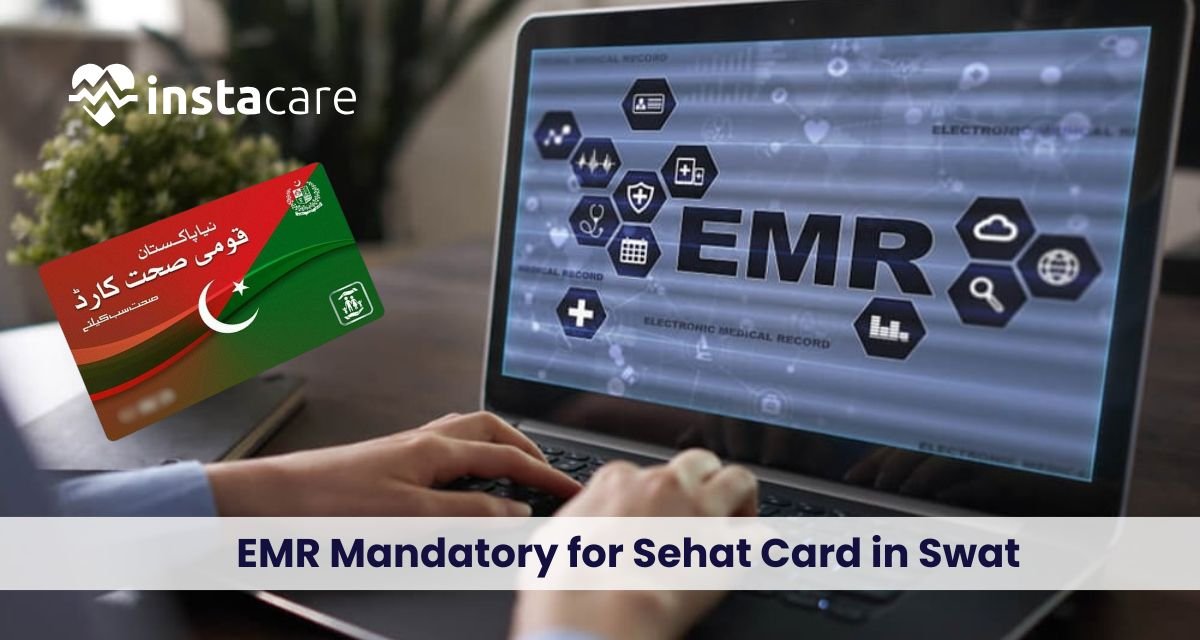
EMR Mandatory for Sehat Card in Swat: KP Government Makes Digital Records Compulsory for All Hospitals Mingora, Swat (July 11, 2025) – In a major healthcare policy shift, the Khyber Pakhtunkhwa (KP) government has declared Electronic Medical Record (EMR) software mandatory for all hospitals in Swat, linking compliance directly to the Sehat Card Plus program. The new directive, effective immediately, sets an October 31, 2025, deadline, after which non-compliant hospitals will be barred from treating Sehat Card patients. Why EMR is Now Mandatory for Sehat Card in Swat The KP Health Department issued an official circular (Ref: KP/H&ME/Tech/EMR-Swat/2025/01) stating that EMR integration is essential for: ✔ Seamless Sehat Card claims processing ✔ Eliminating fraudulent billing ✔ Improving patient care through digital records ✔ Enabling data-driven healthcare policies “Hospitals without EMR cannot generate the digital treatment proofs required for Sehat Card claims. This move ensures transparency and efficiency,” said Dr. Riaz Tanoli, Director of Sehat Sahulat Program KP. Impact on Swat’s Hospitals Public Hospitals Saidu Teaching Hospital and other major facilities must upgrade existing systems. Rural Health Centres (RHCs) face challenges due to limited IT infrastructure. Private Hospitals & Clinics Larger hospitals already use EMRs, but smaller clinics must adopt affordable solutions. The KP government will provide subsidized EMR software and training. Strict Consequences for Non-Compliance Hospitals failing to implement EMR by October 31, 2025, will: ❌ Be removed from the Sehat Card network ❌ Lose Sehat Card patients, affecting revenue ❌ Face potential penalties or audits Public & Professional Reaction Patients: “If this stops fake billing and speeds up treatment, we support it,” said Fazal Rabi, a Mingora resident. Doctors: Worry about extra admin work during transition. Hospital Admins: Seek government support for internet and training in remote areas. What’s Next? The Swat EMR mandate could expand to all KP districts if successful. The government is also working on: 🔹 Better internet connectivity for rural hospitals 🔹 Training programs for medical staff 🔹 Centralized health data analytics Final Verdict The EMR mandatory rule for Sehat Card in Swat marks a digital healthcare revolution—but its success depends on smooth implementation and support for smaller clinics through reliable solutions like EMR Software by Instacare.

Immunization Tracking through EMR Software Made Easier As healthcare increasingly shifts to digital solutions, Immunization Tracking through EMR software is transforming how we manage and monitor vaccinations. What was once a complex, paper-based process is now a streamlined, efficient system powered by advanced software, giving both practitioners and patients complete control. From flu shots and travel vaccinations to routine pediatric immunizations, EMR systems are essential for ensuring timely doses, minimizing errors, and providing healthcare providers with centralized, easy access to patient records. This is especially valuable in today’s interconnected, networked healthcare landscape. Major Features Of EMR Immunization EMR software provides measurable benefits of much greater value than convenience. Here’s the payoff in its entirety: Real-Time Record Keeping: Eliminates delay and errors associated with manual entry. Reminders and Alerts: Provides automated reminders, reducing the likelihood of dose omissions. Improved Data Sharing: Conveniently shares vaccine history with schools, employers, or other healthcare providers. Compliance Support: Helps clinics meet national vaccination standards and reporting mandates. Time Savings: Freeing up valuable administrative time, enabling providers to devote more time to patient care. All these amount to improved practice, improved patient safety, and improved public health. Application & Benefits Of Immunization Tracking by EMR Software The Value of Accurate Immunization Records Vaccines are a foundation of public health. Vaccines prevent infectious disease spread and save a million lives annually. But vaccines are only effective if there is the schedule and dosing adherence. That is where accurate immunization records come into play. Paper or tainted records, however, have the undesirable consequence of causing missed doses, duplicate injections, and even becoming a health risk. They are misplaced or missing in emergency conditions or patient transfer between providers. These problems are addressed by EMR systems. Monitoring computerized allows all doses administered to be accurately documented, creating an entire lifetime history of immunizations available at any authorized location. Successful Vaccine Management through EMR Systems Core EMR software must have the ability to automate sophisticated clinical workflows. Immunization tracking is now baseline functionality for almost all EMR systems, and this is how it works: If a vaccine is given, it’s entered on the patient’s electronic record. The software captures important information like the type of vaccine, the manufacturer, the lot number, the location where given, and the provider. This information is then stored indefinitely and added to the patient’s entire medical record. Much more importantly, the system tracks follow-up doses and reminds providers and patients of due or past-due immunizations. This automation avoids vaccinating on schedule delays without reminders. Automated Alerts: Provider Safety Net The favorite thing about EMR-based monitoring for immunization is the automated alert. The provider does not have to go on a wild search for patient records to discover upcoming vaccinations. The system uses reason-based scheduling to produce reminders for all patients based on age, medical history, and recommended vaccinations. For example, children are tracked against early child vaccine schedules, and adults are reminded of shingles, pneumonias, or flu vaccines. The predictive alerts prevent failure of vaccination, thus making individuals and populations safe otherwise at risk. Patient Empowerment Through Digital Portals Healthcare today is heading towards the patient-focused direction, and EMRs are at the center of it. By integrating patient portals with EMR systems, now patients can conveniently access from home to see their immunizations, appointment reminders, and even place orders for copies of their records online. This puts patients well-informed and activated. Parents can track vaccination history on children, adults can track booster shots and flu shots, and travelers can track being ready to go at the destination. Second, electronic reminders timed, through SMS, email, or push notification, radically increase rates of compliance. Integration with National and Global Registries Most EMR solutions are also designed to integrate easily into government immunization registries and health information exchanges. This allows clinics to Develop reports needed by national or local health authorities. Use state-wide or nationwide immunization statistics as a reference. Improve disease surveillance and response to outbreaks. The unity strengthens public health infrastructure and facilitates quick response during emergencies like pandemics or disease outbreaks. AI and Predictive Vaccine Management As EMR software matures, artificial intelligence and machine learning are being used to enhance the forecasting of vaccines and activation of patients. For instance, EMRs will be in a position to forecast who will be most likely to miss an upcoming vaccination and automatically schedule follow-ups. They can even use population-level information to inform policymakers where they have to prioritize vaccinations during crisis. This idea of leadership reframes immunization tracking from passive to active, proactive, serving the entire healthcare ecosystem. Best Practices for Optimum EMR Immunization Solutions To aim towards maximum benefits of monitoring immunizations using EMR software, doctors and health practitioners must have the following in place: Train Healthcare Personnel Appropriately: Train all health personnel in recording vaccine information and viewing immunization calendars on the software. Standardize Documentation: Document on the same types of documents across the entire network, avoiding error entries and enhancing the quality of information. Make It Cross-Accessible: Allow sharing immunization records in real-time across departments or even offices within the network of health centers. Audit Records Frequently: Regular audits prevent missed doses, repeated doses, or incorrect recording. Budzing these practices into work on a daily basis, health centers are able to provide more uniform and reliable immunization services. Real-World Impact: Community Health at Scale When EMR immunization software is effectively installed in clinics, schools, pharmacies, and hospitals, the effect quickly scales. Where EMR integration is strong, governments have reported: Improved vaccination coverage Improved speed in ending outbreaks Better vaccine
The healthcare industry in Pakistan is evolving rapidly, with increasing emphasis on improving patient care, operational efficiency, and compliance with regulatory standards. One significant step in this direction has been the Punjab Healthcare Commission’s (PHC) Minimum Service Delivery Standards (MSDS), which aim to enhance the quality and accountability of healthcare establishments (HCEs). In light of a recent development in the healthcare sector, it is clear that the adoption of Electronic Medical Records (EMR) and Electronic Health Records (EHR) will soon become mandatory for all healthcare providers in Punjab. This shift marks a pivotal moment for clinics, hospitals, and healthcare practices across Pakistan. As a market leader in health tech innovation, InstaCare offers CoreMedix, a state-of-the-art EMR/EHR solution, perfectly aligned with the Punjab Healthcare Commission’s MSDS. Whether you’re running a single-doctor clinic or a multi-specialty hospital, InstaCare’s software is designed to optimize your practice, ensure compliance, and deliver exceptional patient care. Why Punjab Healthcare Commission Compliance Matters The Punjab Healthcare Commission’s MSDS are the cornerstone of quality assurance for healthcare establishments in Punjab. These standards provide a structured framework for HCEs to ensure patient safety, maintain accurate records, and streamline healthcare delivery. As the PHC moves toward making EMR/EHR adoption mandatory, healthcare providers must embrace solutions that meet these standards. InstaCare’s CoreMedix EMR/EHR software is developed explicitly in alignment with PHC’s MSDS, offering you a seamless way to ensure compliance while elevating the quality of your services. What is CoreMedix? CoreMedix is a comprehensive clinic management software that integrates EMR/EHR functionalities to support healthcare providers in managing their operations efficiently. Designed to meet the unique challenges of the healthcare sector in Pakistan, it streamlines administrative tasks, enhances patient management, and improves the overall workflow of clinics and hospitals. Whether you’re in Lahore, Karachi, Islamabad, or a smaller city in Pakistan, CoreMedix is tailored to meet your needs. Key Features of CoreMedix EMR/EHR Software Patient Management Managing patient records is the backbone of any healthcare practice. CoreMedix enables healthcare providers to maintain detailed digital records, ensuring accuracy and security. The features include: Comprehensive Patient Profiles: Store demographics, medical history, allergies, prescriptions, and lab results in one place. Appointment Scheduling: Simplify booking, rescheduling, and managing patient appointments. Digital Prescriptions: Eliminate manual errors with e-prescriptions that can be shared with patients and pharmacies. Follow-Up Reminders: Automatically notify patients about follow-ups, ensuring continuity of care. Clinic Management CoreMedix offers advanced tools to manage day-to-day clinic operations seamlessly: Billing and Invoicing: Generate accurate bills for consultations, procedures, and services with integrated invoicing. Inventory Management: Keep track of medical supplies and equipment, avoiding stockouts or overstocking. Queue Management: Organize patient flow efficiently to reduce waiting times. Customized Reporting: Generate detailed operational reports to analyze clinic performance and financial health. Practice Management For multi-specialty clinics and hospitals, CoreMedix offers robust practice management features: Multi-User Access: Allow multiple healthcare providers and staff to work on the system simultaneously with secure role-based access. Document Management: Upload, store, and retrieve patient documents and diagnostic reports with ease. Revenue Cycle Management: Track payments, outstanding balances, and revenue performance in real-time. Referral Management: Collaborate with other specialists or facilities by managing patient referrals efficiently. Regulatory Compliance What sets CoreMedix apart is its adherence to Punjab Healthcare Commission (PHC) standards: Standardized Documentation: Ensure compliance with PHC’s MSDS for documentation and record-keeping. Data Security: Safeguard patient information with robust encryption and secure access protocols. Audit Trails: Maintain a complete log of user activities to ensure accountability and transparency. Why Choose InstaCare’s CoreMedix? Developed for Pakistan’s Healthcare Needs CoreMedix is not just another clinic management software; it is a solution developed with deep insights into Pakistan’s healthcare ecosystem. It is designed to overcome common challenges such as fragmented data, inefficient workflows, and regulatory hurdles. Seamless Implementation InstaCare ensures smooth onboarding, training, and technical support for all users, minimizing disruption to your practice during the transition to digital systems. Cost-Effective Solutions Adopting an EMR/EHR system can seem daunting for smaller clinics, but CoreMedix offers scalable pricing models to suit businesses of all sizes, ensuring affordability without compromising on quality. Scalable and Customizable CoreMedix can be tailored to meet the specific needs of your practice, whether you’re a small clinic or a large hospital. Its modular approach ensures that you only pay for the features you use. Future-Proof Your Practice With the PHC’s mandate for EMR/EHR systems on the horizon, adopting CoreMedix now positions your practice ahead of the curve. By ensuring compliance today, you eliminate the risk of penalties or disruptions tomorrow. The Growing Importance of EMR/EHR in Pakistan The global healthcare industry is increasingly shifting towards digital solutions, and Pakistan is no exception. From major cities to rural areas, the demand for EMR/EHR systems is growing as healthcare providers recognize their benefits in enhancing patient care and operational efficiency. CoreMedix not only meets but exceeds the expectations of healthcare professionals by offering a solution that is intuitive, reliable, and compliant with local regulations. How to Get Started with CoreMedix Transitioning to digital healthcare has never been easier. Here’s how you can get started: Schedule a Demo: See CoreMedix in action and explore its features with a guided demonstration. Customize Your Package: Select the features that align with your practice’s needs. Onboarding and Training: InstaCare’s team will ensure your staff is fully trained and confident in using the system. Go Live: Start delivering enhanced patient care while managing your practice with ease. Summary The Punjab Healthcare Commission’s initiative to mandate EMR/EHR systems reflects a critical step forward in modernizing Pakistan’s healthcare landscape. InstaCare’s CoreMedix EMR/EHR software, with its robust clinic and practice management capabilities, stands out as the ultimate solution for healthcare providers looking to comply with these new standards while improving their operational efficiency and patient satisfaction. As the leading clinic management software in Pakistan, CoreMedix is your gateway to a more streamlined, compliant, and patient-centric practice. Don’t wait for the mandate to take effect—act now and transform your healthcare practice with InstaCare.
What You Must Know About Cloud-Based EMR Software? In modern health management, EMRs have become an important tool. However, cloud-based EMR software is a huge leap from its on-premise cousin. Cloud-based EMR systems are revolutionizing the way healthcare professionals handle patient data by promising ease of access, scalability, and affordability. Below is a detailed guide to what you need to know about cloud-based EMR software: benefits, challenges, key features, and considerations in advance. Understanding Cloud-Based EMR Software Cloud-based electronic medical record software means it is an electronic medical record system managed over the internet and not necessarily installed on a local basis by a healthcare professional. It is, in some other words, hosted on third-party, remotely run servers. The most compelling advantage of a cloud-based EMR system is allowing healthcare professionals access to records of all patients and all information related to them from any point where the internet is accessible. Key Features of Cloud-Based EMR Software Accessibility and Mobility This is because the Cloud based EMR systems enable the doctors and all other health professionals to access patient’s information from any area and at any given period of time. This is especially helpful where the providers are practicing at several places or may need to refer to the records from a distant location. Data Security and Compliance Most leading cloud-based EMR vendors implement strong security measures, including encryption of data, secure login, and periodic security audits. Besides this, they also maintain health care regulations, such as the HIPAA act, meant for the maintenance of patient information. Scalability The cloud-based solutions are relatively easy to scale up and down to meet the advanced needs of any healthcare practice that is growing in size and/or adding more features. Whether the practice is growing by size or functionalities, a cloud-based solution will adapt without changing a single infrastructure block. Ease of Integration Most of them will offer ease of integration with other healthcare tools and platforms in existence, such as lab systems, billing software, and patient portals. It aids in fully automating the workflow and enhancing overall productivity. Cloud-Based EMR Software: Advantages Cost Efficiency The most impressive advantage of the cloud-based EMR system is its cost efficiency. Conventional on-premise EMRs demand high upfront investments in both hardware and software, besides an IT staff. On the other hand, usually, subscription-based models are offered for cloud-based services, which mostly come with minimal initial costs. This literally diminishes the cost burden from healthcare practices and allows such advanced technology to be more affordable even for small-scale practices or clinics. Improved Collaboration Cloud-based EMR supports better collaboration among the practitioners. Multiple users can view and update patient records simultaneously, which is highly useful for multidisciplinary teams collaborating on patient care. This collaboration makes all the team members on the same page in real time and avoids miscommunication, hence very crucial in improving patient outcomes. Increased Efficiency and Productivity The cloud-based EMR systems drive increased efficiency for a number of administrative tasks, which include appointment setting, billing, and patient management. Automation in these areas saves time for healthcare professionals that was otherwise wasted in paperwork and general administration. In this way, it leads to an increased amount of patient care due to better service delivery. Book Free Demo Advanced Data Analytics Although most of the cloud-based EMR systems are designed with advanced data analytics capability, healthcare providers can make more informed decisions on patient populations and subsequently track health outcomes and trends. In this way, it can be useful in evidence-based clinical decision-making and can also provide valuable information about overall improvement in healthcare services. Challenges of Cloud-Based EMR Software Data Security and Privacy Concerns Although cloud-based systems are for the most part secure, data security and privacy remain a serious concern. Health-care providers should further ascertain that the vendor they choose has met all the requirements for compliance and security. It is necessary to know the methods of data encryption, access controls, and compliance with HIPAA standards. Reliability of Internet Connectivity Cloud-based EMR systems depend on access via the internet. This is considered a disadvantage for areas that have unreliable or slow internet connections. In this regard, health facilities located in such areas may experience difficulties in accessing patient records or relevant information in the absence of internet access. For such situations, one should definitely have a backup plan. Vendor Lock-In Changing to another EMR system is not an easy task; mostly, a change in the vendor is at stake. Data migration is not easy between different cloud-based EMR systems and can be complicated by possible compatibility issues. The flexibility and options available for data export should be analyzed carefully by the healthcare provider while signing the contract with the vendor in order to avoid vendor lock-in. Initial Learning Curve The adoption of a new cloud-based EMR system may be an opportunity for healthcare professionals to learn. Training and support must be available so that the practitioner can use the new system effectively and optimally. A very pertinent consideration in vendor selection would include proper training resources and support. Key Considerations Before Adopting Cloud-Based EMR Software Assess Your Practice’s Needs It is due to this reason that you must analyze certain needs of your practice before choosing a cloud-based EMR system. Consider the size of your practice, the services delivered, and the number of users accessing it. If your requirements are much clear, then you can easily choose a solution as per your goals and workflows. Review Vendor Reputation and Support Research the reputation of potential cloud-based EMR sellers. Use online feedbacks, recommendations, and other case studies as provided by other health care providers. Determine the quality of the customer service offered to the end user by the seller via training material, support and resolve time. Assess Integration Capabilities What is also crucial is the compatibility of EMR system based in the cloud with other instruments and platforms in your facility. The more the System can interface with other health care technologies inclusive of Billing
Why a Cloud Based EHR Software is Good for Your Patients? A solution that aids practices of all sizes in maintaining patient health files are cloud-based EHR software. Instead of keeping the files on paper or, more likely, on an internal server at a particular hospital or practice, this technology stores them in the cloud. Numerous businesses, including a wide range of software services, are migrating the cloud-based EHR software. Applications for labour management, bookkeeping, data storage, commerce management, and other software services have moved or are transitioning to a cloud delivery method. Below are some reasons why cloud-based EHR software is suitable for patients. You Can Keep Costs Low And Prevent Rate Increases You might anticipate cheaper operational costs after you use cloud-based EHR software. The IT department, for instance, might not be as necessary (or if you already outsource some or all of this task, you can cut down on those third-party services). While some practices operating without a cloud solution could be obliged to raise charges, you might, at the very least, be able to preserve your current pricing schedule. Better Patient Information Access For Doctors When you use cloud-based EHR software, busy doctors and nurses will have easier access to patient records. The cloud-based EHR software enables access via a smartphone, tablet, or laptop, regardless of whether the doctor is on rounds at a hospital or vacation but still wants to view the data. Provides Excellent Access To Essential Information Most EHR systems can be accessed practically anywhere with the correct app or web address, a log-in name and a password because cloud-based EHR systems require logging in to access the system. This implies that your eye care team may easily travel throughout the business and even between offices, accessing patient records while on the road and offering higher-quality patient care. Book Free Demo Make It Simpler For Service Providers To Work Together Quick access and log-on capabilities make it easier for providers to work together to deliver improved patient care. Depending on how your EHR is configured, numerous clinicians may have simultaneous access to records. With a cloud-based EHR, there is no need to wait for records to be uploaded and transmitted—endless possibilities. Universal Access A cloud-based EHR software’s ability to provide your practice access from anywhere is one of the most innovative and sector-changing features. Access to patient health information, real-time charting, creating and modifying current encounters, and even mobile prescribing are all available to authorized users. Anywhere access for your medical personnel is crucial for achieving higher productivity levels, enhancing note-taking accuracy, and providing your doctors with a secure means of communicating with employees and patients. The lack of cloud-based EHR software results in gaps between patient encounters and the time a doctor has to enter their notes, limited access to secure communication, and doctors spending more time at their workstations than with patients. Effective Space Utilization Server-based EHRs need to host substantial equipment, reducing the amount of space available in your clinic, and to restrict your ability to expand. A cloud-based EHR eliminates the risk of a physical server location that is not always secure while allowing providers to make better use of their physical space. An EHR that is hosted in the cloud is entirely maintained online. While some might believe this raises cybersecurity threats, this is certainly untrue. EHRs hosted in the cloud are more secure than those on servers. Cloud-Based EHR Is Confidential Cloud-based electronic health records are confidential despite the ease of access. They are protected from theft and computer disasters by being kept on a secure server located outside your workplace. If you don’t safeguard your patients’ records, sensitive data can fall into the wrong hands. Conclusion You can visit the InstaCare website to learn how easy electronic medical record charting maybe if you’re considering migrating your patient information to the cloud.
The Best Electronic Medical Record Software Having These 10 Features The best EMR software in Pakistan (Electronic Medical Record Software) offers a secure platform to view charts, medications, medical histories, and test results, simplifying and making it easier to manage patient records. Many and more EMR software in Pakistan also offers a direct self-service portal so patients can retrieve crucial data, such as the outcomes of a recent blood test, without calling the clinic. You can send necessary prescriptions directly to a pharmacy via a patient portal. Some will also have a telemedicine software function for long-distance contacts. Any modern medical practice must have electronic medical record software, which are fast becoming needed. The top EMR software in Pakistan integrates with a CRM to offer more advantages. Let’s discuss the principal cutting-edge components that a complete EMR software platform can offer. 1- Patient Records Are Transformed Into Electronic Files Via EMR Software The capability of an electronic medical record software (EMR) solution to preserve electronic patient records is its most fundamental characteristic. These digital records may contain information like: Images Medical background Signed authorization forms Lab findings History of prescriptions Patient interaction Additional health and insurance documents 2- Elimination Of All Paper File Requirements The requirement for paper files is eliminated when the data is accessible through an EMR platform. Your current filing cabinets occupy precious space and make it more difficult for medical professionals to retrieve patient information. 3- More Effective And Expedient Overall Care EMR software enables your personnel to access patient data on any authorized device, improving the quality of patient care they can provide. 4- System EMR Streamline Scheduling And Communication The most effective EMR program available today can arrange patient communications and include them in your CRM. Along with increasing productivity, this also facilitates staff communication with patients, giving them a sense of care and value from everyone at your office. Book Free Demo 5- EMR Can Be Used To Provide Instructions For Aftercare. In some circumstances, you also might even be able to provide your patients with educational materials to prepare them for an impending medical operation better. You can even use the system to give aftercare instructions. 6- Help With Scheduling Additionally, these tools help with scheduling. Automated appointment reminders sent by your EMR software in Pakistan to your patients can lower no-show rates and increase client retention. Additionally, you’ll also be able to send automated emails, which can turn potential patients into actual ones and improve your practice’s revenue. 7- Simple Navigation Simple and user-friendly design must be among Pakistan’s top characteristics of EMR software. Such elements are essential for simple navigation. Increased employee happiness and engagement will help you save time. 8- Tools And Integrations For Marketing You’ve worked very hard to create the best possible medical clinic. With marketing tools that work with your EMR software, help others feel your advantages. View More: What Is Medical Billing Software? You may produce more patient leads and increase online traffic with these tools and solutions. With the appropriate equipment, you may increase your earnings and give the local patients a helpful service. 9- E-Prescribing In EMR Software Applications Electronic prescribing is advantageous for both patients and doctors. Poor handwriting errors are eliminated mainly with digital drug requests, and staff personnel rarely waste time on the phone with pharmacies to clarify dosage or frequency. A best-fit software package’s built-in decision assistance capabilities include notifications for drug contraindications and previously reported adverse events. These characteristics lessen the chance of dispensing drugs that might conflict with ongoing maintenance treatments or trigger an adverse reaction. E-prescriptions are frequently quicker, more precise, and safer for patients. 10- Lowering And Avoiding Medical Mistakes EMR dramatically decreases data entry errors and facilitates the management of the crucial patient and billing information. An electronic medical record software (EMR) solution may do much more than securely storing patient data in a single, centralized software system. Conclusion Software for electronic medical record software can enhance patient satisfaction while also benefiting doctors’ and private practice providers’ cash flow and profit margins. Choosing the right software for your business setup is the secret to getting the best outcomes. Instacare provides the best EMR software in Pakistan. You can visit the website of InstaCare.

The InstaCare product team is excited to announce the latest updates in InstaCare smart clinic software. These updates offer visibility on new features, improvements, bug fixes, and upcoming features of InstaCare Smart Clinic. New & Improved Features of InstaCare Smart Clinic CNIC selection option on all print pages. User could search main menus and sub menus. Bug Fixes In Appointment booking, users can book an appointment even the slot is booked. In appointment booking showing slots in which doctor not available. Not showing data from 2 to 7 September in appointment calendar view. First time doctor of selected location not showing and appointment can be booked with the doctor who is not available in that location. Expected Features & Improvements of InstaCare Smart Clinic in the next update Multiple location option on appointment widget. Option to allow access of location to manager. Option to send prescription instructions through voice note. Only available in mobile app. Option to create prescription from Image. Only available in mobile app. In Allocation Type, select ward and Room Type dropdown is not in working. In appointment calendar, user’s name is not showing. Start and End time of appointment should show in appointment details. Prevent user to book an appointment with another location user. In multiple location if user reschedule appointment than having no dates. Uploaded file is not showing while editing user details. From web patient book an online consultation but in EMR it’s showing regular checkup. By booking service base appointment duration not showing like in manager account showing. In Eyeglass prescription, not allowing to print prescription. In Eyeglass Prescription not edit prescription also not giving option to update. After logout, system showing 500 error. In billing, patient name not showing by clicking make bill in prescription. In Appointment, Firefox browser not able to select year. User not able to save treatment plan. Enable Urdu to book appointment. User account details not getting update if users do change without uploading any file. Suggest a new feature or report a bug If you wish to suggest a new feature, view the upcoming features, or report a bug, or feel free to write us at success@instacare.software. If you want to have a cup of coffee with our team, schedule a visit with us at InstaCare Head Office in Lahore, Pakistan.
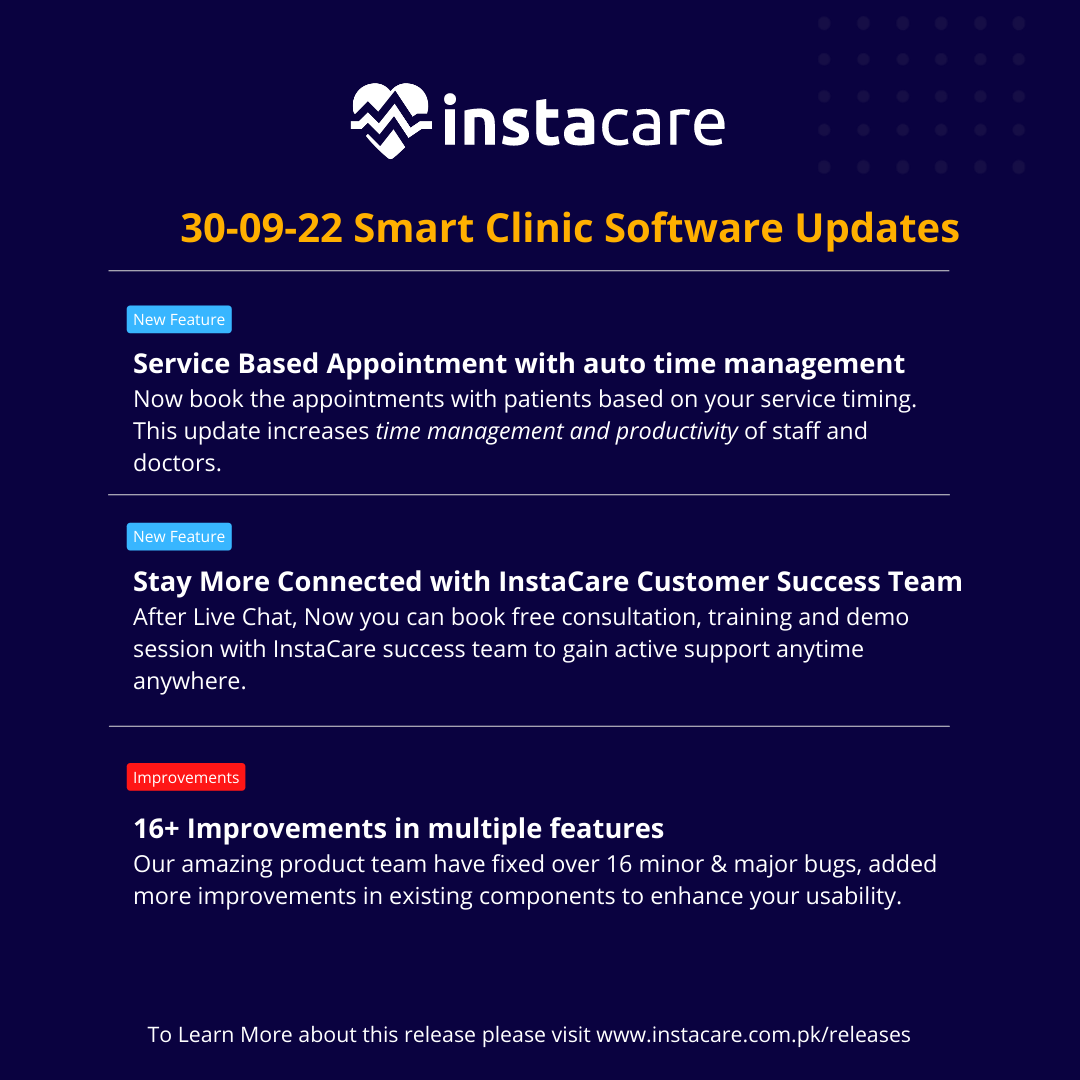
The InstaCare product team is excited to announce the latest updates in InstaCare smart clinic software. These updates offer visibility on new features, improvements, bug fixes, and upcoming features of InstaCare Smart Clinic. New & Improved Features of InstaCare Smart Clinic Option to select appointment time against service. Option to book software demo session. Follow the easy steps and book a free software demo session (Login > Dashboard > Left side menu > Book Demo Session). Bug Fixes Patient Blacklist fixes while creating appointment. In Appointment validation on minimum number length is not applied. Account holder not able to grant access to sub user. Appointment interval mismatching to the given interval in user profile while creating appointment. End time of appointment is not showing in Firefox browser. End time of appointment is not change automatically when we change start time. Deletion of account from a location is removing account from another location. User mismatching according to location. In multiple location, Doctor name do not change according to location. Shortcut key of alt+a for appointment creation, not working. Auto refresh is not working in appointment. User have to refresh it manually. Prescription template mismatching to the selected template when user come from Appointments. By uploading banner from branding and prescription setting, still not showing in prescription printing. User not able to update his qualification from profile. Attached file is not showing while editing expense. Last two slots not showing while creating appointment. Expected Features & Improvements of InstaCare Smart Clinic in the next update In Appointment booking, users can book an appointment even the slot is booked. In appointment booking showing slots in which doctor not available. Not showing data from 2 to 7 September in appointment calendar view. First time doctor of selected location not showing and appointment can be booked with the doctor who is not available in that location. In Allocation Type, select ward and Room Type dropdown is not in working. In appointment calendar, user’s name is not showing. Start and End time of appointment should show in appointment details. Prevent user to book an appointment with another location user. In multiple location if user reschedule appointment than having no dates. Uploaded file is not showing while editing user details. From web patient book an online consultation but in EMR it’s showing regular checkup. By booking service base appointment duration not showing like in manager account showing. In Eyeglass prescription, not allowing to print prescription. In Eyeglass Prescription not edit prescription also not giving option to update. After logout, system showing 500 error. In billing, patient name not showing by clicking make bill in prescription. In Appointment, Firefox browser not able to select year. User not able to save treatment plan. Enable Urdu to book appointment. User account details not getting update if users do change without uploading any file. Suggest a new feature or report a bug If you wish to suggest a new feature, view the upcoming features, or report a bug, or feel free to write us at success@instacare.software. If you want to have a cup of coffee with our team, schedule a visit with us at InstaCare Head Office in Lahore, Pakistan.
- 1
- 2