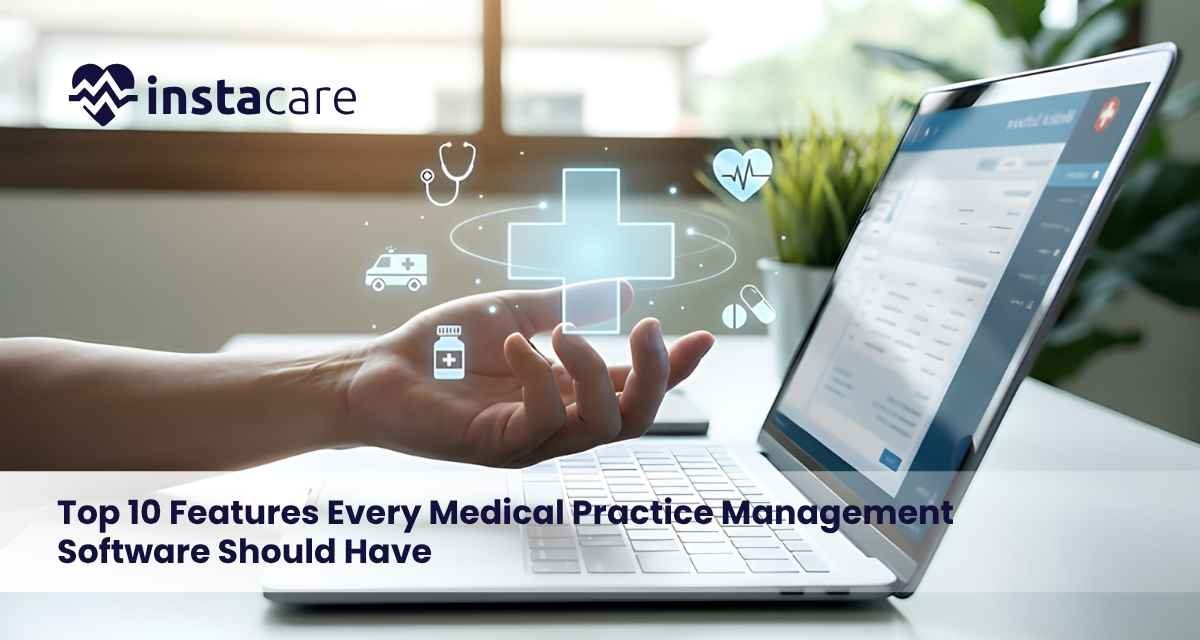
Top 10 Features Every Medical Practice Management Software Should Have Healthcare practice management goes beyond the necessary provision of quality healthcare. Daily management of patient schedules, billing, records, claims, reports, etc. demands efficient management. Completely automating these daily tasks with medical practice management software provides better healthcare workflows as well as a better patient experience. Practice management software varies in offered capabilities. To smooth practice operations, it is essential to have a solid understanding of software features that will support core functionality. Below are the features we consider as the most essential that a medical practice management software solution should have. Scheduling and Calendar Management Practice management software should provide a powerful, efficient employee scheduling system. Staff should be able to reliably schedule, reschedule, and cancel patient appointments with minimal staff and scheduling conflicts. An effective and comprehensive scheduling module is one that supports: Multiple provider calendars Real time appointment availability Automated reminders Waitlist management Recurring appointments Color-coded scheduling views Email and text appointment reminders can also facilitate less missed appointments and improved patient engagement. Patient Registration and Demographics Practice management software should provide the capability to easily and securely collect and organize patient information. Practice management software should provide the capability to maintain patient profiles and provide patient contact, insurance, and emergency contact information, medical history, and consent documentation. An effective patient registration system should eliminate or reduce the paperwork and improve data accuracy as well as administrative staff data accessibility. Electronic Billing and Invoicing Integrated premium medical practice management software should significantly streamline the practice billing and invoicing process. Automated practice management software should be able to create invoices and charge, process payment, and manage collections. Helpful billing features include: Automatic invoicing Flexible payment methods Payment and balance tracking Financial summaries Refunds Billing efficiency strengthens cash flow and lessens the admin burden. Insurance Claims Management Manual insurance claims and poor insurance workflow equal increased claims processing times, as well as a higher probability of claim denials. A good practice management solution facilitates the entire claims process and eases the burden of tracking claims. Key claims management features include: Submitting certified electronic claims Checking eligibility Claims status tracking Detection of claims submission errors Denial management Resubmission of claims Increased claims processing times and decreased claims denials are direct results of these features. Electronic Health Record (EHR) Integration Though practice management software primarily focuses on the practice management aspect of the operations, integration of EHR Software is a great way to increase operational efficiency. Systems integration allows clinicians to access the clinical data they need, billing data, and scheduling data, without having to switch between multiple systems. Advantages include: Less duplication of data entry Enhanced communication Timely patient check-in Accurate documentation Greater coordination of care Patient Portal Today’s patients expect digital offerings when it comes to healthcare. A patient portal streamlines communication and lessens the volume of calls to healthcare staff. A patient portal allows patients to: Schedule appointments View scheduled appointments Access and download their medical notes and billing Request prescription refills Change personal information Send messages The self-service option is the best way to streamline operations and increase patient satisfaction. Reporting and Analytics Built-in reporting tools help managers view and analyze the performance of the business in both the financial and operational segments. Valuable reports might consist of: Revenues Stats on Appointments Productivity of Provider Demographics of Patients Balances Reimbursements from Insurances Rates of Cancellations Performance of Collections Analytics identify patterns. These can focus on better ways of doing things and promote growth that lasts. Managing Inventory and Supplies In many healthcare practices, management of some form of medication, vaccines, medical supplies and equipment takes place. A good inventory management system allows practice managers to keep control of their supplies and avoid wasting stock. Some helpful features of good inventory management systems are: Tracking of Stock Alerts for Low Stock Monitoring of Expiration Dates Management of Purchase Orders Management of Suppliers Reports on Usage Control of inventory means good management of finances, by having in stock what is needed and everything required to practice. Protection of Data and Compliance Healthcare practices are custodians of sensitive data about patients. System security and privacy compliance of data protection have high priority. Some of the security features of importance are: User Verification Access Control Based on Role Security of Data through Encryption Backups of Data to the Secure Cloud Audit Trials Logs Monitored Automatically Protection of Data along with Compliance of Security of Data is highly needed. Accessibility on Mobile Devices and Via the Cloud Practitioners in healthcare are increasingly required to have access to healthcare practice data from many different locations. Software that resides in the cloud allows users authorized access to data via a laptop, tablet, or mobile phone. Some of the advantages of cloud access include: The Ability to Schedule Remotely The Ability to Bill on the Go Access to Data with Instant Updates Automatic Updates of the Software Less Required Hardware Assistance with Recovery From a Disaster Cloud-based Systems are also a great benefit for Practices that have more than one location. Some Additional Features Worth Considering Aside from what is listed above, the modern practice management system can offer features that make things easier. Other functionalities can include: Automated patient notifications Telehealth Digital management of documents Online payments Staff Scheduling Task Management Referrals Lab Integration Prescriptions Managing multiple locations Voice Integration Dashboards Scaling operations, practice management software takes both staff productivity and patient satisfaction to the next level. Book Your Free Marketing Consultation Advantages of Medical Practice Management Software The robust features offered by modern practice management software have brought numerous improvements in the practice of healthcare.Some of these improvements are: Less admin work Easier to manage appointments Streamlined billing and payments Corrected claim submissions Higher patient satisfaction Better staff and patient communication Increased efficiency Improved operations Better finances and financial reporting Increased security of patient data and practice More time to be with patients Greater patient satisfaction The new software does the tedious
Dental practices also require effective management systems in this day of sophisticated healthcare, The secret to improving patient care and streamlining operations is a Dental Patient Management System (DPMS). Let’s examine the factors that make DPMS integration crucial for contemporary dentistry clinics. Improved Health Care Experience The way dental practices communicate with their patients is completely changed by a Dental Patient Management System (DPMS). Dental professionals may now easily access patient records, giving them a complete picture of each patient’s dental history, treatments, and preferences. Because of this accessibility, dentists may provide individualized care by customizing treatments to meet each patient’s needs. Furthermore, it is impossible to overestimate the convenience of online appointment booking and reminders. Patients no longer need to remember to make an appointment or wait on hold. Alternatively, customers can use smartphone apps to manage their appointments, schedule online at their convenience, and get timely reminders. Because they feel appreciated and cared for by the practice, patients who experience this degree of convenience have higher levels of satisfaction. Enhanced Process Thanks to the introduction of a DPMS, the days of being overwhelmed by paperwork and struggling with unorganized schedules are over. Many of the administrative duties that formerly required a large amount of staff time are now automated by this technology. Everything becomes more organized and effective, from making appointments to billing and invoicing. Staff members can now shift their attention from time-consuming administrative duties to delivering high-quality patient care. Dental practices can decrease wait times, guarantee that patients are treated right away, and enhance patient flow through the clinic by implementing a more organized workflow. The personnel gains from this increased efficiency and patients also profit from it. Data Security And Compliance Patient information protection is not just necessary, but vital in the healthcare sector. Strong security safeguards are built into DPMSs to protect private patient information from hacker attacks, illegal access, and breaches. Furthermore, upholding adherence to healthcare laws like HIPAA is essential for preventing legal issues and fostering patient trust. A DPMS assists practices in adhering to these rules by putting in place the required safeguards, carrying out frequent audits, and educating personnel on data privacy and security best practices. The practice’s integrity and reputation are preserved while patient information is safeguarded thanks to this proactive approach to data protection and compliance. Book Free Demo Better Planning For Treatment With thorough patient histories provided by a DPMS, dentists are better equipped to decide on treatment options. In order to create individualized treatment programs that suit each patient’s particular requirements and concerns, dentists can analyze a patient’s dental history, prior treatments, and current state of oral health. Additionally, the system helps monitor the course of treatment over time. Dentists are able to track the effectiveness of their treatments, schedule follow-up sessions, and modify their treatment plans as needed. This degree of supervision helps dentists provide their patients with the best possible care and guarantees continuity of service. Economy Of Cost The long-term advantages of a DPMS far surpass the initial costs, even if it may need an investment. Practices can run more smoothly and save money and time by automating administrative chores and lowering the possibility of errors. Additionally, a more efficient workflow and better patient care may result in higher patient retention and word-of-mouth recommendations, which may boost income. To put it simply, a dental practice’s future profitability and growth are strategically invested in using a DPMS. Smooth Interaction With Different Systems In the linked healthcare environment of today, interoperability is crucial, and a DPMS shines in this area. It is simple to link with various healthcare systems, including diagnostic instruments, billing software, and electronic health records (EHR). Because of this flawless connection, there is no need for manual data entry, which lowers the possibility of errors, and information flows seamlessly between departments. Additionally, it makes it easier for healthcare professionals to collaborate and communicate with one another, which improves patient care and results. Advanced Analytics To Make Well-Informed Decisions Using data analytics to its full potential is one of a Dental Patient Management System’s (DPMS) most notable aspects. Dental practices can gather and examine a plethora of data about patient care, treatment results, and operational effectiveness with this system. Practices can uncover trends, patterns, and insights that may not be immediately apparent by utilizing advanced analytics techniques. Practices can examine, for instance, the most successful treatments, the most popular appointment times, or the most successful marketing initiatives. Practices may make well-informed decisions that improve patient care, maximize resource allocation, and spur business success thanks to this data-driven strategy. Improved Interaction With Patients The foundation of patient loyalty and satisfaction is effective communication. A DPMS improves patient-dentistry communication by offering a range of features that are intended to keep patients informed, involved, and connected. Through online access to their treatment plans, dental records, and appointment scheduling, patient portals enable patients to actively participate in their oral health care. Patients and dental professionals can communicate easily and quickly by using messaging technologies to convey information. healthcare providers plays vital role in giving advance services to the patients and improve healthcare system. Scalability In Expanding Practices Dental practices have growing needs and requirements as they develop and grow. Scalability is a key consideration in the design of a DPMS, enabling practices to develop and change without overwhelming the system. By scaling its performance and capacity to match rising demand, the system can handle more patients. As the practice grows, it is simple to add more modules and features to support new locations, specialties, or services. Furthermore, by offering user-friendly interfaces, role-based access controls, and training materials for new hires, a scalable DPMS can manage an expanding team. This guarantees that all members of the practice, irrespective of their position or degree of experience, can utilize the system efficiently. Adaptable Elements For Personalized Solutions Every dental practice is different, with its own requirements, preferences, and workflows. Recognizing this variation, a DPMS provides modules and capabilities that
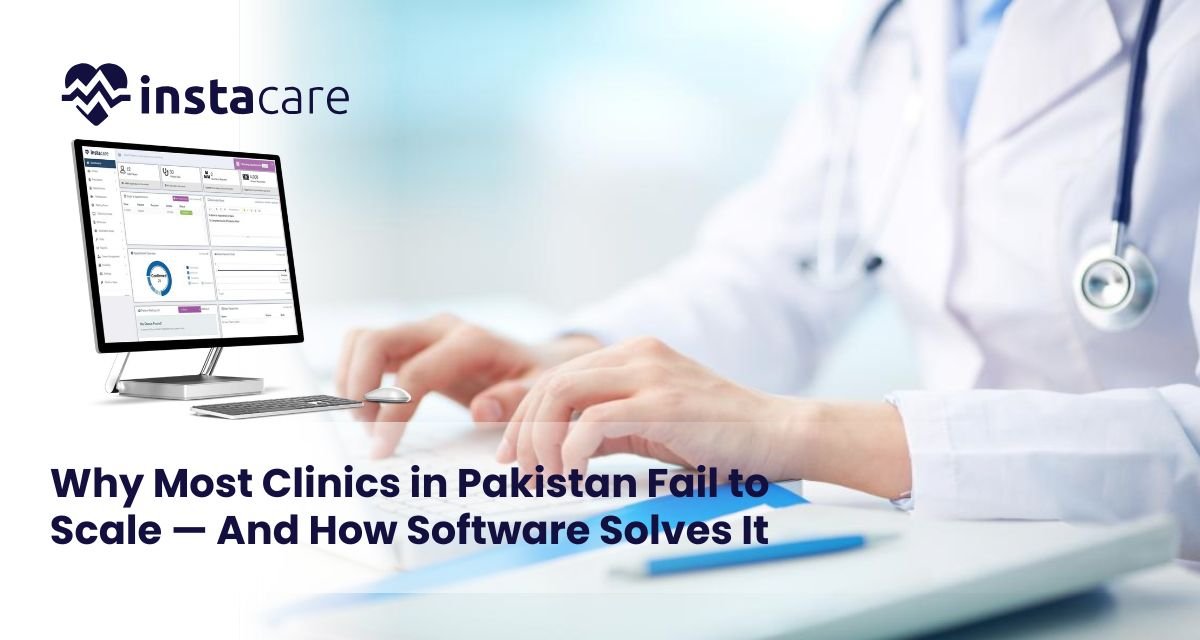
Why Most Clinics in Pakistan Fail to Scale — And How Software Solves It? The rapidly evolving healthcare industry of Pakistan depends heavily on clinics and small medical practices, which provide essential medical care to numerous patients throughout urban and rural areas. These medical facilities treat patients across millions of individuals throughout cities as well as remote areas. Despite performing critical functions, most clinics in Pakistan encounter difficulties expanding their operations past one clinic or doctor location. The expansion of clinics into multi-location healthcare groups remains rare even within densely inhabited areas. Many clinics in Pakistan face growth limitations which leads to a fundamental inquiry about the causes and solutions for this situation. The solution requires an integration of structural problems with business process weaknesses, coupled with weak digital capabilities as the primary reason for growth stagnation. The implementation of digital health record systems and solutions, combined with clinic management software systems, begins to eliminate the barriers that hinder clinic expansion and sustainable scalability. Understanding The Scaling Problem in Pakistani Clinics The objective of scaling a private clinic business exceeds merely extending patient volume across multiple branches. The goal is to develop standardized systems that provide uniform patient care throughout every operational contact point. The majority of clinics in Pakistan battle organizational excellence because of multiple essential factors, and require the best clinic management system in Pakistan 1. Manual Record Keeping and Data Loss Reliable patient documentation records persist on paper at most clinics that operate in the small to mid-sized category. The lack of proper data management produces various problems, which include lost patient history records along with difficult follow-up procedures and increased chances of data loss. Financial expansion through patient data management proves impossible when retrieval capabilities cannot ensure clinical data accessibility. 2. Lack of Operational Visibility The majority of Pakistani clinic owners together with their medical staff operate their clinics without knowing their operational efficiencies. Clinics are effectively making use of the available appointment times. The medical staff manages to follow their scheduled work protocols. What amount of income does the clinic lose through patients who fail to show up and through incorrect inventory management? These important questions remain unanswered because clinics have insufficient monitoring systems. A data-driven strategy is essential for making strategic expansion decisions since the absence of insights will turn important decisions into mere speculation. New clinic branches reflect identical inefficient operational methods from existing facilities, which produce failure instead of growth. 3. Staff Dependency and Lack of Standardization Multiple clinics in Pakistan rely heavily on selected personnel who grasp their operational systems because only these workers enable proper performance. When essential staff members exit, the system fails to function properly. The facilities lack standard operating procedures (SOPs) to train staff and manage flow operations while processing payments. Business expansion depends on standardized operating systems that serve the company beyond individual employees. The absence of automation and enforcement software preserves the fragile and inconsistent operational status of clinics. 4. Financial Leakage and Untracked Expenses Examining monetary movements remains a significant obstacle for businesses trying to expand their medical operations. Several clinics fail to establish proper systems that track both income and expenses, discounts and patient refunds. Petty cash goes unrecorded. Patient payments might be under-reported. The inability to track financial data undermines any possibility of comprehending whether a clinic makes enough profit to grow. The lack of software-backed patient tracking systems results in conflicts about revenue sharing among doctors who share revenue at multi-practitioner clinics. Book Free Demo How Smart Clinic Management Software Solves These Problems? Digital transformation functions across all healthcare institutions, starting from large hospitals to small clinics. A patient management software platform transforms all medical facilities, even in small clinics, through automated operations and improved patient care and data analytics. Here’s how: 1. Automated Appointment Management When patients use clinic software, they can make appointments using a computer or a mobile device options which cuts both telephone congestion and human mistake rates. Software management tools help doctors schedule appointments better so patients obtain their appointments on time, which decreases missed appointments. Real-time updates maintain constant alignment between clinic personnel as well as medical staff. 2. Electronic Medical Records (EMRs) The EMR software for clinics functionality enables clinics to maintain safe storage of patient information including medical records, laboratory reports and clinical prescriptions. The health care quality measures enhance as the system allows patients to keep their medical history accessible across different network doctors or clinics. 3. Centralized Billing and Payments The central billing feature of clinic management software joins all financial operations, including payments and receipt handling together. The software system provides instantaneous transaction recording and report production, and minimises financial loss through cash theft. Seamless payment processing occurs when certain platforms link with POS equipment and digital payment solutions. Benefits of Centralised Billing: Eliminates manual errors Enables transparent revenue-sharing between doctors The software system allows clinic owners to determine their revenue numbers according to service type and department. Patients have better trust in billing processes because items appear separated in statements. 4. Inventory and Pharmacy Management Clinic automation solutions enable clinics with in-house pharmacies to track supply quantities and expiration dates as well as automatically request reorders for consumable materials. The system prevents unnecessary stocking while ensuring essential drugs, together with consumables, remain available during needed. Advantages of inventory automation: Avoids medicine shortages By implementing this measure, expired products cannot reach the market for sale Reduces theft or unaccounted losses The system generates up-to-the-minute evaluations of clinic stock 5. Multi-Branch Management Through software for multi-branch clinics, users can visualise and control various locations through a unified dashboard. Clinic owners gain centralised oversight of all locations’ activities, which include an appointment system along with revenue generation and employee performance tracking, even when they are not physically present. Courting expansion becomes possible for clinics since they gain direct oversight and control across all their new locations. Conclusion Modern medical facilities that will prosper within Pakistan’s changing healthcare environment must begin their
Patient management software is an amazing and great change within the management of patient data in hospitals, clinics, and healthcare provision sites in this modern day of healthcare management. These systems are far more efficient, from electronic records and storing of medical records to scheduling appointments and processing payments. However, threats of data breaches resulting from electronic storage weave out improper security and privacy protection about sensitive medical information. At the moment, growing regulatory demands and with a serious rate of attacking the healthcare system, protection of patient data is a particular concern. Why Data Security and Privacy Are Important in Patient Management Software They store the sensitive information accumulated at a great scale using Patient Management Software (PMS). It contains not only the personal details like name, address, or phone numbers but even Social Security numbers, medical histories, test results, prescriptions, and billing information. If it falls into the wrong hands, you will be able to notice identity thefts, frauds in insurance, and other destructive impacts on the patients and health care organizations. Common Flaws in Patient Management Software Patient management software is also not against all flaws. The patient management software has a long list of advantages, but is said to consist of some flaws that need to be diagnosed to avoid its potential impact on healthcare organizations. 1- Cyber attacks and Data Breaches The health sector is the most targeted sector of cyberthieves because their information is extremely valuable on the black market. Ransomware attacks have, to a great extent, increased. Hacking systems, locking patients out, and giving access to the hacked data for money could make the health organization lose their money through data theft, down times, and financial loss. 2- Internal Threats While the biggest culprits may be such external cyberattacks, threats from within cannot be dismissed. A patient’s most sensitive information may be available to employees or contractors with the right kind of access; such information can then be exploited by them or leaked unconsciously with their own information. The most problematic internal threats can be traced almost impossible, and it becomes all the more important for health care service providers to have an access control system as strict as possible, and monitor employee activity. 3- Unsecured Networks and Devices More often, providers log in to their patient management software from several devices, which may include a computer or laptop and tablets and even cell phones. Such devices and networks also present doors through which hackers could gain unauthorized entry. For example, the patient’s data might be exposed to breaches while making use of un-updated mobile device software or when a medical practice was relying on an unsecured Wi-Fi network. 4- Outdated Software The other weakness is outdated software. Past systems may not have security features that would help combat the new attacks by the cyber attack perpetrators. More to that, providers of software will stop updating on security holes in the old software, thus leaving a system to remain in the dark. Patient management software with outdated version exposes the patient’s data. 5- Inadequate Authentication and Password Policy The poor practices in the handling of passwords, such as its poor quality or even sharing, form areas that hackers can use to exploit the vulnerabilities present therein and provide a serious opening in very vulnerable systems. This makes the strong authentication methods very necessary in securing the data. Book Free Demo Best Data Security and Privacy Practices in Patient Management Software Health care service providers should have comprehensive security measures that limit risks during the handling of information on their patients for its storage and protection. Some of the best practices include the following: 1- Data Encryption Maybe, in the current era, one of the guaranteed ways to safeguard sensitive information is through encryption. Since the encryption is put on the data, when they assume an imperceptible shape, it does not matter if the accessibility of the system is hijacked by a person who should not have had access. Data both in their resting places (data that are stored) and in movement (being transferred) ought to be encrypted with proper and unyielding encryption standards. 2- Software Updates and Patching This will ensure that the patient management software has no vulnerabilities covered using the most recent updates available. Constant updates are bound to close security gaps and hence cybercriminals will be locked out of accessing the old software. There must be an update policy statement clearly stated and collaborated with software vendors for health providers to make sure their systems are always safe. 3- Multi-Factor Authentication (MFA) Healthcare organizations should embrace multi-factor authentication, the process by which users are required to provide multiple forms of identification to authenticate more securely. Examples of MFA in common usage include a password plus fingerprint or a password plus one-time code sent from a mobile device. This will keep patients’ information safe because unauthorized access is hard for patients to gain. 4- Access Control and Role-Based Permissions Not every member of an organization has to be granted full access to all capabilities of patient management software. Role-based access controls refer to the availability of only selective amounts of sensitive information to the employee based on the role of the employee within the organization. 5- Backup and Recovery of Data Even if an organization has the best security mechanism in place, it is never ready for the worst. Data backup caters to the policy that patient information will be restored quickly than when the cyberattack or system failure occurs. In addition, there should be a disaster recovery plan to minimize down time or the period when data integrity is lost. 6- Training and Awareness among Employees Most breaches occur because of human error. People fall victims to phishing, mishandle sensitive information, and so on. Employees have to be taken through proper cybersecurity training so that the environment remains safe. Health care employees must be taken through training in regard to the importance of security of information data, on how

How Patient Management Systems are Transforming Healthcare in Pakistan? Healthcare in Pakistan is facing a major transformation due to the introduction of patient management systems. With an increasing number of people having access to healthcare resources, there has been significant progress made in ensuring that those with medical needs are able to take advantage of these resources. Patient management systems can provide immense benefits for both patients and providers, streamlining operations and making life easier for everyone involved by providing faster response times and better support when it matters. This post will explore how these innovative technology solutions are revolutionizing healthcare across Pakistan while also highlighting some areas where more work still needs to be done. What is Patient Management Systems? Patient Management System is software tool designed to help healthcare providers maintain accurate and up-to-date information about their patients. These systems can range from simple appointment scheduling tools to comprehensive electronic health record (EHR) systems that keep track of a patient’s medical history, current medications, allergies, lab results, and more. In today’s fast-paced and digital world, Patient Management Systems are becoming increasingly important as healthcare providers strive to deliver high-quality care while managing large volumes of patient data. With these systems in place, doctors and nurses can quickly access patient information, track treatment plans, and communicate with other members of the care team to ensure that each patient receives the best possible care. Benefits of Patient Management Systems As healthcare continues to evolve and become more complex, Patient Management Systems (PMS) have become increasingly important for hospitals and medical providers. One of the primary benefits of a PMS is improved efficiency in patient care. With a centralized system, doctors and nurses can quickly access patient records, medications, and test results, allowing for faster diagnoses and treatment. PMS also help to reduce errors and improve communication between healthcare professionals, resulting in better patient outcomes. Additionally, PMS can improve access to patient data, which can be used for medical research and population health management. With all of these benefits, it’s no surprise that more and more healthcare providers are implementing PMS into their practices. Book Free Demo Impact of Patient Management Systems in Pakistan Pakistan has seen a significant improvement in healthcare with the introduction of Patient Management Systems (PMS) in hospitals and clinics. These systems allow for seamless patient care by providing physicians with real-time access to patient data, reducing the risk of errors and delays. Patients can now easily book appointments, check-in, and receive reminders about upcoming visits through a mobile app or website. Furthermore, the PMS leads to improved communication between doctors and patients, as physicians are able to share test results, medication instructions, and other important information directly with patients through the platform. The impact of PMS is undeniable, and with continued investment in this technology, healthcare in Pakistan can become more efficient and effective. How Technology is Transforming Healthcare in Pakistan? Pakistan’s healthcare system has undergone a remarkable shift with the advent of technology. Technology is changing the way healthcare providers function and deliver care to patients. It has enabled doctors to make more precise diagnoses and has allowed for more effective treatment plans. Telemedicine and remote patient monitoring have made healthcare accessible to more people in remote areas. Patients now have access to their medical records, test results, and can even schedule appointments online, making their healthcare experience more seamless. Furthermore, technology has contributed towards research and development in the pharmaceutical industry, leading to the discovery of new treatments and drugs. The transformation that technology has brought to the healthcare industry in Pakistan is nothing short of revolutionary, improving patient outcomes and raising the standard of care. View More: 5 Benefits of Using Video Consultation Software Cost Savings for Patients and Caretakers Navigating the healthcare system can be challenging, especially when it comes to expenses. However, with the availability of cost savings options for patients and caretakers, seeking medical attention doesn’t have to create a financial burden. From insurance plans to government programs, there are various avenues for individuals to save on healthcare costs. By taking advantage of these options, patients can focus on their health, rather than worrying about the cost of treatment. For caretakers, cost savings can also alleviate some of the financial stress that comes with providing care for a loved one. With the right resources and information, cost savings for healthcare can make a significant difference in the lives of patients and their caretakers. Strategies for Adopting and Implementing Patient Management Systems Adopting and implementing patient management systems is a crucial aspect of any healthcare organization’s success in the modern era. However, with so many different strategies and options available, it can be difficult to know where to begin. One effective approach is to start by selecting a system that aligns with your organization’s values and goals, whether that be increased efficiency, improved patient outcomes, or greater financial stability. Once you’ve determined the best fit, focus on fostering a culture of collaboration and communication among staff to ensure a smooth transition and ongoing use of the system. Additionally, consider investing in training and ongoing support to keep staff up-to-date on the latest functionalities and capabilities of the system. By following these steps, your organization can successfully adopt and implement a patient management system that will improve the overall quality of care for your patients. Conclusion In conclusion, the utilization of patient management systems (PMS) is proving to be incredibly beneficial for healthcare organizations in Pakistan by reducing patient wait times and improving overall efficiency. With continued adoption of PMS technologies and techniques, there’s no doubt that Pakistan’s health sector will continue to strive to improve its standards across its various healthcare establishments, ensuring newly implemented processes are adopted effectively. Moreover, it is crucial that patients have an understanding of the systems so they can access the necessary treatments in a timely manner, leading to a higher quality of care- something that more and more healthcare organizations are working towards despite
Features And Benefits Of Patient Management Software In the Healthcare Industry The care of patients should always come first for healthcare professionals, and the accumulation of routine tasks like scheduling, billing, and paperwork can sometimes get in the way. A medical practice management (MPM) system or patient management software can free up time so that you and your staff can concentrate on providing care rather than on these time-consuming tasks. Other names include medical patient software, patient management software, and clinic management software. It describes several effective automated systems that track patient data, diagnoses, prescriptions, interactions, and encounters in healthcare settings like hospitals or clinics. Features Of Patient Management Software Here are some features of patient management software: Patient Intake Forms Patients can fill out appointment forms created by patient management software either online or offline. Additionally, it gathers insurance qualification data and incorporates responses into encounter notes. Before their visit, it generates an electronic intake of appointments. The patient can check in electronically after arriving. The system can monitor wait times as part of performance analysis. The software automates the checkout procedure after the appointment, including the appointment scheduling for the patient’s follow-up visit. Medical Billing Payment information is tracked by patient management software. Medical billing automates the billing process and payment collection when a patient checks in, verifies insurance and ensures that everyone receives an equal payment. Patients can pay online through the software if a payment is missed, and it also notifies payment reminders. Scheduling Scheduling is a critical component of PMS. Through a patient portal, patients can make appointments using scheduling. They can also use the system to change and cancel their appointment times. The software then calls, texts, or sends messages as reminders after the appointment is scheduled. Additional Benefits Of Patient Management Software (PMS) Here are some additional benefits of patient management software: Offers Timely Care To Patients One of the benefits of patient management software is that it offers timely care to patients. When a patient sees a doctor, they anticipate getting treatment quickly. They are unconcerned with administrative duties and search for the simplest way to check in and out. Patients are made to feel secure by the Patient Management System by giving them control over the information they provide. Day-to-Day Operations The software streamlines multiple tasks. The members notice improvements as a result, which leads to better outcomes. Patients who receive treatment from medical professionals tell their friends about it and provide feedback. Healthcare professionals can treat more patients with PMS and still deliver high-quality care. Therefore, more patients equal more revenue. Overburdened Ease Admin staffing is one of the leading causes of high healthcare costs. Medical facilities like hospitals can cut administrative costs by automating routine tasks like patient flow management. This is achieved by reducing the amount of data entry work required of your front-desk staff, allowing them to maximize their available time. Additionally, it increases efficiency by enabling the same number of workers to complete better, more fulfilling work by reducing burdens. Practice Management Also, one of the benefits of patient management software is practice management. Due to their constrained resources, solo practices benefit significantly from patient/practice management systems. A patient management system can improve the efficiency of a medical practice’s charting, billing, scheduling, and claim-processing procedures. Small businesses might be able to get everything they need in a single straightforward bundle, whereas larger businesses might need to purchase separate software solutions for each of these needs. Conclusion Healthcare organizations can use facilities provided by patient management software. It raises the level of service, gives patients prompt attention, and makes daily operations easier. Are you interested in creating a hospital management system? InstaCare is on hand to assist. We are a committed group of perfectionists who consistently exceed clients’ expectations. We have extensive experience with health tech solutions over many years. For the best patient management software, visits our website.

5 Amazing Benefits Of Clinic Management Software In Pakistan Doctors are often confused about choosing the best clinic management software in Pakistan. This is because of the wide variety of unreliable and less featured products available in the market. Today, in this article we will explain to you the benefits of using software for clinics along with sharing some Top EMR companies in Pakistan. What Is A Clinic Management Software Before we dig into other details, it is important to learn why top doctors use software for clinics. A Clinic management system is a set of software components that helps medical professionals with digital prescriptions, patient management, maintaining electronic health records, appointment scheduling, medical billing, and inventory management. It also helps doctors to completely automate the workflows in order to increase their efficiency and productivity. How Many Doctors Use Clinic Management Software According to research, less than 10,000 doctors use the software in Pakistan. These professionals use this software majorly for digital prescriptions, EMR/EHR management, billing, and, telemedicine appointment management. It is important to understand that digital health in Pakistan is a comparatively new market than any other. Till Year 2015, the adoption of medical software was very less due to the lack of trust in the technology. After 2016, Pakistan worked really hard to improve the access to the internet and mobile applications that helped in promoting the digital transformation in the healthcare industry as well. As of 2022, over 17% population use the internet in Pakistan. The growth of internet users has also helped in enabling digital health and we have seen a significant increase in the use of clinic and patient management software. What Are The Benefits Of Using Clinic Management System Paperless Information Management Best clinic management software will fulfill all the basic needs of your medical office. Good software comes with all the necessary options to help you get rid of papers. Such options may include digital patient record keeping, automatic appointment management, electronic digital prescriptions, digital billing for clinics, treatment planning, inventory management, and now with telehealth and video consultation features as well. Fast Access to Patient Medical Records There is no doubt that patient management software is much faster, accurate, and reliable than human beings. Within just a few seconds you can fetch the information of a patient out of thousands of records. Moreover, good software will provide you the facility of maintaining unlimited records. You can take backups of your information anytime and it is much more secure than papers in your clinics. Automatic Appointment Scheduling The biggest advantage of using clinic management software is its comprehensive appointment scheduling. With a proper alert system, appointment management software will increase the number of show-ups and patient inflow inside your clinic. Appointment Management Software also allows you to manage your daily, weekly, and monthly agendas in a much convenient way. While you can schedule an unlimited number of appointments with just a single clinic, you can also get some advanced features like SMS and email alerts to notify about their appointments and change in any appointment schedule. Electronic Prescriptions Creating, modifying, and finding an electronic digital prescription is much faster and easier than a handwritten prescription. one of the key benefits of electronic prescription is an increase in accuracy and fewer chances of medication errors. Some other benefits include immediate notification of allergies, drug interactions, and duplications. It also helps in reconciling of medical history quickly while prescribing medicines. It also reduces the chances of prescription loss. It also increases patient safety by a reduction in medical errors. Patient Satisfaction Do you know that patients are more satisfied and happy from the doctors and clinics who are enabled with digital health? It is because of the great patient satisfaction that clinics that are using patient management software are getting more patients. A good clinic management software will not only helps doctors to make their practices efficient and more productive but also makes patients more satisfied as they will be able to provide digital feedbacks, digital medical history, appointment notifications, and online appointment booking. The list of advantages and reasons why clinic management software should be used is countless and we will write more articles covering the benefits and advantages of implementing software for medical offices. In Pakistan, we see dental clinic management systems are most widely used because it helps dentists with digital treatment planning and appointment scheduling. However, now we have seen a significant increase in the number of specialists who are using specialty-based EMR systems for Clinics. Now let us help you identify the best software for clinics. What are the Best Clinic Management Softwares in Pakistan? There are not many specialized companies that are providing EMR/EHR Patient and Clinic management systems in Pakistan but there are some who are really doing very well in the industry. Currently, the following companies are providing software for doctors: InstaCare – Award Winning Clinic Management System InstaCare is the best-known digital health company in Pakistan that has already transformed over 3,000 clinics in Pakistan. The key features of InstaCare Clinic Automation Software include patient management, electronic prescription, medical billing, appointment scheduling, queue and token management system for clinics, inventory management system for clinics, accounts software for clinics, and telemedicine for doctors, clinics, and hospitals. The company is lead by Commonwealth Award Holder, Mr. Bilal Amjad under whose leadership, InstaCare has won tremendous awards including the International TakeOff Istanbul Top Foreign companies in digital health and the national P@SHA ICT Award in the health and well-being category. Other awards also include the APAC Insider award for best digital health startup in Pakistan. BOOK FREE DEMO OF INSTACARE CLINIC MANAGEMENT SOFTWARE CureMD CureMD is also a popular EMR Company in Pakistan with a wide variety of EMR Softwares.CureMD is a leading provider of innovative health information systems and services that transform the administrative and clinical operations of healthcare organizations of all sizes. Majorly CureMD operates in the American market however it has its offices established in

How To Enable Eclinic In Pakistan Eclinic management system enables you to conduct and monitor day to day activities of your hospital or clinic. It integrates the information and manages all the financial, administrative, and legal operations. Through it, you can keep an eye on all the ongoing activities of your organization, even remotely. In Pakistan, we need to enable it so that we can serve more productively. Nowadays, a few people have their complete electronic health records with themselves, which makes it difficult to gather information about them. The e-clinic system in Pakistan will help in keeping all the information about the patient in one place. It contains all the records about them, like their name, age, diagnosis, medication history, disease history, allergy history, and immunization record of the patient. Moreover, it also contains the notes and advice of the doctor. Therefore, serving as a complete directory of patient information. Through its use, you can keep data safe and secure. It is a means to digitize your clinic or hospital. Benefits of using the e-clinic system in Pakistan Using an e clinic system has many benefits. It integrates the information and ongoing activities of your organization. E clinic system has many benefits. Some of them are as follows. The e-clinic software gives a complete picture of business-related activities like inventory management, sending and receiving payment, tax payment, inventory management, sales, purchase, and expense. You can access the records through it from anywhere, at any time. To reach the records of the patient, you will only need their medical record number. It keeps the information safe and secure. Due to this, the patient also does not need to worry if they lose the prescription. They can get it back through the feature of electronic prescription. Through it, you can get an insight into points you need to focus on and that need improvement. The e-clinic software saves a lot of your time and effort. If someone visits your clinic after a long time, you can easily access their record in a single click, without the need to search for a hard copy. All you would need a medical record number to access it. In this way, you would not need to make history again and again. It makes it much easier to analyze the data, making it easier to work on weak points and get an insight into the progress of your business. E clinic software reduces the chances of medication errors. It keeps a complete record of all the medicines that a person is taking, therefore, any drug duplication or dose duplication does not occur. Also, the software would check that the dose is right or not according to weight and age of the person. Moreover, the prescription is legible because it is computerized. Through this software, you can save the overall expense of your business because it serves as a complete manager of your clinic or hospital. By using it, you can cut down on your staff. You would not need a person to find previous files and records, or to book appointments, generate bills, generate tokens, manage queues, etc. Also, it would manage your inventory efficiently, which is crucial for a business. Moreover, you will require many people to prepare accurate bills. But with this software, you can get them instantly with a single click. It saves a lot of your overall cost investment, time, and effort. It helps interconnect healthcare providers with each other. Through which, they can discuss the case of the patient with each other without the need for an in-person visit. Conclusion E clinic management system is a must need for the healthcare industry of Pakistan. It not only helps increase productivity but also lowers your burden and eases the management of day to day activities. InstaCare the best emr ehr software company in pakistan provides the top e clinic software that can help you in serving better.

10 Benefits Of Patient Management Software For Clinics Working in clinics is a tough and hectic job for all staff members. You have to care for your patients as well as their data. The patient’s data is one of the most important things in clinical practice. Writing and maintaining all the records adds a lot of stress to the lives of health care providers. A tool that can make their life easy by using a patient management system. In it, you can store all the information about your patients and the clinic. It can work as your clinic administrator. The patient management system generally contains the following information Patients’ name Patient’s age Gender Medication history Disease history Co-morbidities Allergy history Diagnosis Previous visit Future appointments Lab evaluation readings Doctor’s notes Appointment schedule Number of attended and unattended appointments Total sales and purchase of the clinic Billing details of the patient, etc The patient management system would help you in billing, inventory management, appointment scheduling, and much more. In this article, we are going to discuss why is the patient management system necessary for your clinic. How it increases overall clinical productivity? Relieves stress This software helps in relieving stress from the heads of health care providers and other staff members. By using it, your clinic’s staff can work without tons of burden and with ease. Since they need not write and store the same information again and again. The staff members can spend their time on any other and more important activity. Or You can also save the salary amount you are giving to your staff by reducing the number of people you have hired. Suggestions When a doctor is entering all the history of the patient, this software gives suggestions to rule out the differential diagnosis. This feature helps the doctors in finalizing and making a diagnosis. Also, when the doctor is prescribing the medications, the patient information management software gives suggestions about medications. Whenever the doctor prescribes some medicine that is not related to the condition, it will alarm you. This feature helps a lot in preventing medication errors and life-threatening blunders. Safe and secure data The patient’s data remains safe and secure when stored in a patient management system. Since it is hard to keep tons of paper safely, and it is easy to lose them. So, when you will keep the information in software, it will remain safe and secure. In this way, only reliable people can access the records, not everyone can open the patient’s file and your clinic’s record. Easy billing The patient management system also helps in the financial activity of the clinic. It helps in creating bills in a short time, without any hassle. Since it contains the whole data about the patient, bills generation by using the software is so easy. People also need not wait for long hours to check out from the clinic. You can also review all the charges due to the patient in one click. This software makes it easier for those who have to claim the insurances or whom their companies pay for the bills. It is easy to keep the check and balance of billing by using the patient management system. A complete review You can get a complete insight into how many beds are available and how many beds are busy at the moment by using this software. It will give you a complete insight into what is going on in the laboratory or the pharmacy or the gym. By using this software, you can easily manage the inventory of your clinic, especially the pharmacy. Managing inventory is a critical part of running the pharmacy business. This is because it can cause you a great loss if the medications get expired or overstocked. The patient management system would protect you from all overstocking, understocking, expired medications, etc. Scheduling the appointments The patient management system contains a feature of an appointment management system. By using this feature, the client can book their appointments on their own, online. This feature helps in saving the staff member’s time as well as the patients’ time. It also helps in reducing no show visits from the patient’s side. The client can book their appointment anytime, anywhere they want. This software would give automated reminders to the clients via emails, text messages, and other platforms so that they do not miss their appointment. You can also reduce the number of staff since you would not be needing staff members to book the appointments if you are using the patient management system. Increases the clinical productivity Healthcare providers when they have to perform all the tasks by themselves, feel so stressed all the time. They have to write complete lengthy notes and orders daily. Also, they have to make sure that they keep the patient’s data safe and secure. When you would use the patient management system, it would reduce a lot of stress from the heads of the healthcare providers. The notes and details can be entered digitally, and the time and date are automatically updated. They do not need to worry about keeping it secure as everyone cannot access it. This software helps the staff in their day to day operations, so that they can focus on the clinical side which is more important. Better workflow Since all the information about the patient is already updated on the software, all the healthcare providers can easily access it at the same time. This feature helps in moving things smoothly and in a better workflow. When the data is kept in files, it is moved one by one from one place to another. All the healthcare providers like doctors, pharmacists, physiotherapists, etc have to review the patient’s record from time to time. This process takes a lot of time and causes a hassle. By using the patient management system, the patient can get timely care from the doctors. Time-saving Healthcare providers can save a lot of time by using a
Our research found that EMR and Clinic Management software helps doctor and dentist in boosting their productivity levels and better practice management.
- 1
- 2