

Mental Conditions That Can Develop In Quarantine Everyone has a different way to react to a situation. In this coronavirus pandemic, people have to strictly follow the quarantine. This could be a source of relaxation and spending time with your family members, or a source of stress for many. An abrupt change in one’s social rhythm can cause mental conditions. In this article, we will discuss the mental conditions that can develop in quarantine. What is quarantine? Firstly, we need to know what is quarantine. According to the NPR, the definition of quarantine is; “Quarantine separates and restricts the movement of people who were exposed to a contagious disease to see if they become sick.” The word quarantine was first used by the people of Venice, Italy in 1127 due to a leprosy outbreak. Then after 300 years later, the people of the United Kingdom imposed its use due to the plague outbreak. In Canada in 2003, people also went into quarantine due to the outbreak of severe acute respiratory syndrome. West African villages also practiced quarantine in 2014 due to the ebola virus outbreak. Now almost the whole world is in quarantine due to coronavirus outbreak. Mental Conditions in quarantine Following are the conditions that have high chances to get developed in a quarantine. Feeling of helplessness The effects of quarantine on mental health include a feeling of helplessness. People feel that they have no control over the situation, which haunts them. They think that they cannot go out by their will. This creates panic and negativity around people. No social activity People have to stay at home for long periods without any social gathering. This is so stressful for people especially those who are extrovert, who like to meet other people. They cannot go to a restaurant, host a party at home or sit together and play cards. There is no source of relaxation with family and friends. Since spending time with your loved ones make you a happy and healthy person. You feel refreshed while going out on a weekend for dinner or any other activity. One of the negative effects of quarantine on mental health is that people have to socially disconnect from each other, hence getting a feeling of depression. Health risks Depression and anger are the major side effects of quarantine on mental health. People start feeling anxious about what the future holds for them. They continuously think about how will they get over the situation, how are they going to do their groceries and other stuff, how will they cope with the financial strain. These things constantly keep them worried and anxious leading to depression and anger. The feeling of loneliness, sadness, fear, anxiety, and continuous stress makes them suffer from severe mental health issues. Post-traumatic stress symptoms Post-traumatic stress disease occurs when a person goes through a severe shocking, strange event. They face symptoms like panic attacks, nightmares, and anxiousness. This can also happen when people have to go through quarantine for a long period. The adverse effects of quarantine on mental health are so severe that they need time to completely wipe out. Some people can even start drugs and alcohol abuse. These habits are usually carried till three years after the end of quarantine. Claustrophobic people Quarantine is like hell for people who suffer from claustrophobia. Locking them up in a small tight place makes them suffer from panic attacks and anxiety. They continuously have to tell themselves that this will be over. Since these people feel suffocated in small places, they have to spend day and night at a single place in quarantine. This could deteriorate their mental health a lot. Stress for elderly The elderly people are already at risk of catching the coronavirus. They strictly have to stay at home for long periods. Since many elderly people are already dependent on people, quarantine adds more to their stress. They feel so low and depressed by lying on the bed the whole day and night. A little outing can refresh them, which is impossible in quarantine. What to do? Since the whole country is under lockdown currently, and social distancing is must, the best solution is to consult a doctor remotely. Instacare is providing free corona consultations to diagnose if you have corona or not. Also, the following video might help you. We can just hope to get out of the quarantine soon. This phase of quarantine is so stressful for all the people. But, at the same time, we should try to be more constructive at home. We can do many things to keep us entertained. Doing activities related to art and craft, painting, reading, gardening, decorating home can help us to get rid of stress and boredom. Do little new activities daily to keep yourself protected from mental illness. Try not to worry about little things that affect mental health.
How Can Doctors Keep Going During Corona Outbreak Through Telemedicine In today’s time of coronavirus outbreak, which has now become a pandemic, there is a heavy workload on healthcare professionals. They are at great risk of catching the infection. In Italy, out of 67,814 reported cases of coronavirus, 6205 cases are of health care workers according to the 25th march report. These statistics show that even after the lock-down of the whole country, our health care professionals are at a huge risk of getting the coronavirus infection. This risk can be minimized if the patients consult the doctors via telemedicine. This would save them from getting the infection. In this article, we will talk about how the telemedicine applications are helping the doctors in this coronavirus outbreak and how can they cope with it? What Is Telemedicine? Telemedicine is becoming the first line of defense and the most useful tool for doctors nowadays. This helps them to consult with the patient over the phone or computer and let them prescribe the medicines as well. It is the platform where doctors can interact with their patients through a video-conference. Telemedicine helps the doctors to prescribe, diagnose, educate and monitor the patient remotely, with no physical interaction. Telemedicine lets the doctor ask relevant questions to the patient about the disease, they can discuss the signs, symptoms, and history through a virtual visit. If the patient’s health concerns the doctor, they first send them to get their chest x-ray and blood tests done. After that, they can rule out the final diagnosis. They can then make a further decision of either letting them stay at home or to get them admitted to the hospital. How Is Telemedicine Beneficial? If health care workers like the doctors and the nurses would get sick, there would be a rapid, unbearable impact that will affect everybody. Health care workers who keep working at hospitals while infected from coronavirus can transmit it to more people. If these workers go home to recover, they would eventually infect their family members. This would also put an immense load on their coworkers. If they are critically ill and need to get hospitalized, then there will be fewer resources available to treat the public. Eventually, if this keeps going on, we will have to face a shortage of doctors after this coronavirus pandemic. So to save the doctors it is necessary to shift on telemedicine. The hospitals can not manage the heavy volume of patients in this state of panic. They can manage it with the help of telemedicine applications. The telemedicine can protect the doctors because it will reduce their exposure to the patients. No physical contact would be there, by which there would be no chance of catching the infection. Hospitals’ waiting areas are already busy and so overloaded with people that anyone can catch an infection. The doctors are also at high risk when examining the patient suffering from COVID-19. Remote consultation by the doctor, therefore, reduces the risk of getting exposure and infection. Telemedicine applications like InstaCare help in keeping the patient and the doctor isolated. How Does Telemedicine Works? The telemedicine works by assessing the person remotely who is facing the symptoms of coronavirus and monitoring their progress. If deteriorated, the doctors advise them to shift to the hospitals. This technique helps in only shifting the patients who are having any complications. This also decreases the high volume of patients coming to the hospital’s emergency. The doctors and nurses also feel less stressed and can cope easily with the situation. Drawbacks It can be a solution for many, specially coronavirus, a highly contagious disease. But doctors need to examine the patient properly. Telemedicine can only help when the patient can tell the symptoms bothering them. They can discuss those symptoms with the doctors to have an expert opinion. The doctors can then make a further decision about what to do next. The doctors can replace some of their patients to telemedicine who are not critically ill. Still, they have to work day in and day out at the intensive care units and emergencies of the hospital where they can oversee the critically ill patients.
How To Prevent Coronavirus COVID-19 is a highly contagious disease caused by a coronavirus that spreads from person to person via their respiratory droplets. The spread of coronavirus can be prevented by exercising some tips. In this article, we will discuss safety measures to prevent coronavirus and why are they necessary. It is important that along with the safety measures, we understand why are these measures necessary and what’s the logic behind these. For any further questions, leave a comment below. Washing Hands Frequently Wash your hands frequently, especially before eating, after blowing your nose, coughing, sneezing and when you come back home from outside. Wash your hands properly for at least 20 seconds because the soap requires at least 20 seconds to kill the virus and bacteria. Wet your hands with running water, then apply soap, scrub all the parts of your hands, rinse them with running water and then dry them with tissue paper or a clean towel. Use can also use an alcohol-based hand sanitizer on the go. Make sure it has at least 60% alcohol because high alcohol content helps in killing bacteria and viruses. Always wash your hands with soap and water, if they are visibly dirty. Washing your hands frequently is necessary because the coronavirus can stay on surfaces for a long time. If an infected person coughs or sneezes on that surface, and you touch that surface, you can easily catch coronavirus. Avoid Touching Your Face It is a part of human nature to touch the face, eyes, nose, and chin unconsciously. You should avoid touching them because hands touch many surfaces and can carry viruses and bacteria. This habit makes you prone to coronavirus infections, you can transmit the viruses and bacteria to your face that you have caught from surrounding or by touching other people. If you need to touch your face, make sure to wash your hands properly and then touch it. Stay At Home It is so important to stay at home, especially if you are having any flu-like symptoms or if you have a travel history of the past 14 days. It is beneficial for you and others as well. If you have traveled internationally, there is a chance that you are infected and your body is not showing any symptoms. You can infect others in this period, so it is necessary to quarantine yourself for at least 14 days to protect others from getting infected. Apart from any symptoms and travel history, it is good to stay at home as much as you can. Avoid exposure to crowded and closed places. The more you stay at home, the more protected you will be against coronavirus. Maintain A Social Distance Maintaining social distance is one of the most significant measures to prevent Coronavirus. You should maintain a distance of 3 feet (1 meter) from people who are having flu-like symptoms. Coronavirus is highly contagious, there is a high chance of getting infected if you are in close contact with someone who is suffering from it. A graphical illustration of social distancing is given below: Disinfect Surfaces Coronavirus can reside on surfaces. It is recommended to clean and disinfect high touch surfaces like doorknobs, switchboards, keys and cell phones, etc. There is a fair chance of transmission of coronavirus through these surfaces. If anyone touches them with contaminated hands, your hands can get contaminated too. You should also try to disinfect the products you are bringing home from the outside. You never know who has coughed, sneezed or touched them with contaminated hands. Cough And Sneezing You should cover your mouth with tissue paper while coughing and sneezing or cover it by an elbow. Throw that tissue paper in the dustbin and wash your hands with soap and water for at least 20 seconds. Wear A Face Mask It is necessary to wear a face mask if you are having an interaction with an infected person, or suffering from flu-like symptoms. It will protect others from getting infected. By wearing a face mask you would not transmit your infected respiratory droplets that would protect against coronavirus spread. Avoid Shaking Hands Stop shaking hands to greet people, instead, you can nod, bow or wave a hand to greet them. It is a tip to keep yourself and other people protected. Shaking hands can cause transmission of coronavirus from one’s hands to another. Conclusion Prevention is better than cure. You should exercise all the above-mentioned tips to protect yourself from catching a coronavirus infection. Everyone has to play their role to stop the dissemination of this coronavirus outbreak. You should take precautionary measures even if you are healthy because you can transmit it to someone with a weak immune system, an elderly or someone asthmatic. To them, it would be lethal, so everyone needs to take these safety measures to protect other people. If you need more information regarding coronavirus, you can visit InstaCare health articles for it.
How much progress has been done on Coronavirus vaccine? Coronavirus vaccine is an arduous, million-dollar task nowadays when the coronavirus has become a global health crisis, killed thousands of people, and spreading throughout the world at an alarming rate, Considering the whole situation of pandemic created by the coronavirus, it puts huge pressure on scholars, researchers, and scientists, to create an effective vaccine for this disease. In the rest of the article, we’ll explore the top four pharmaceutical research going on in the world. These are: Novavax Corona Vaccine Experiment Moderna’s mRNA-1273 Regeneron’s REGN 3048-3051 INOVIO’s INO-4800 NOVAVAX CORONAVIRUS VACCINE EXPERIMENT Novavax is trying a new technique to create the coronavirus vaccine as a recombinant vaccine. In this, the genetic code for the protein spike on the surface of SARS-COV-2 is extracted, which is responsible to cause an immune reaction in humans. Then they pass over this genetic coding to bacterium or yeast that produces a large quantity of protein. Along with it, Boston company, CureVac, and Moderna are also trying to produce coronavirus vaccines out of messenger RNA. Up to date, there is no approved vaccine that is produced by the genetic material of RNA or DNA. MODERNA’S mRNA-1273 CORONAVIRUS VACCINE EXPERIMENT Moderna Inc. Of Cambridge, has started the phase I human clinical trial testing mRNA -1273 to produce the vaccine. The researchers are conducting this research to invent the vaccine in Washington, currently going through the first phase of the trial. In phase I trial, the researchers have tested 45 healthy human beings, adults aged between 18-55 for over 6 weeks. The subjects received the injection on day 1 and day 29 and will be monitored for 12 months after the second shot. Phase I focuses on the safety of the vaccine and to know if it is producing the immune response in humans. Later phases will focus more on its effectiveness against preventing the infection. This coronavirus vaccine differs from the traditional vaccines because they use the virus itself, while this vaccine uses the genetic sequence from messenger RNA of COVID-19. REGENERON’S REGN 3048-3051 VACCINE EXPERIMENT Regeneron’s pharmaceutical of Tarrytown, New York, is trying to produce a vaccine that will provide passive immunity to the people. It will work on the principle of directly injecting the preformed antibodies. The scientists of this pharmaceutical are working by modifying the immune system of mice to produce the vaccine. They have altered the mice’s immune system to that of humans, exposed them to the coronavirus and infected them. Then they have separated and isolated these antibodies. They have also isolated the antibodies produced by the people who have recovered from coronavirus. They will combine both antibodies and will formulate it as a vaccine. The advantage of combining both the antibodies to produce the vaccine is, that it will remain effective even if the virus mutates. This vaccine targets the spike protein present on the surface of the virus. This spike protein binds the virus to the host cell and causes an immune reaction. The Regeneron’s vaccine will target to block the spike protein interaction with the host cell, eventually neutralizing the virus. The doctors can also use this vaccine also as a drug for treating coronavirus, but according to the company, they will use it as a preventive measure for healthy people. INOVIO’S INO-4800 VACCINE EXPERIMENT Inovio’s pharmaceutical of Plymouth Meeting, Pennsylvania, is also approaching to produce the vaccine with the same technique of Moderna’s. Their approach is to insert DNA plasmids directly into the cells. They have optimized the plasmids and reorganized them by computer sequencing technique. The plasmids will replicate inside the human body and strengthen the natural human immune response. The company has already conducted its research on animals for the vaccine. They are hoping to start the trials on humans by April 2020, which will involve 30 healthy people. CONCLUSION The health care professionals are working day and night to design a vaccine. Experts say it will still take a year or more to create it. We have to be patient about the vaccine because scientists can not design these overnight. To market the coronavirus vaccine, scientists have to make sure it is safe and effective. The pharmaceutical companies are trying their best to invent a potent vaccine. We will soon get the way out for fighting against this contagious virus. Stay positive and protected! In case you feel any signs of coronavirus in you, get a certified doctor’s opinion through InstaCare Telemedicine; remotely, safely, and instantly.
Everything I need to know about Coronavirus COVID-19 before it gets me It’s March 2020, and within a few months, Coronavirus has made the lockdown of the whole country inevitable. Furthermore, the panic created among the masses is on top of that. But as they say, knowledge is power, you can better prevent yourself from the virus by learning more about it. So here is each and everything you need to know about novel Coronavirus aka COVID-19. WHAT IS COVID-19? The coronavirus belongs to the family of viruses that infects human beings and animals. The specific type of Coronavirus that the world is facing right now is SARS-Cov-2. The disease it causes is known as COVID-19. Since it’s a newly found virus, there has been very fewer studies on it. Hence we don’t know what actually happens when it enters the human body. But apart from that, we are aware of symptoms of COVID-19. One more thing we know about the virus is its highly contagious nature. The virus can cause mild to severe illness; which in worst cases, can turn into death. IS CORONAVIRUS A PANDEMIC? Globally 2,46,295 confirmed cases have been reported of coronavirus. Out of which 81,139 are from China, 35,713 from Italy, 17,361 from Iran, 14,769 from Spain and rest of them are from other countries like the United States, France, United Kingdom and many others. Total reported deaths from coronavirus until today are 1,018. Considering that situation, WHO (World Health Organization) has announced Coronavirus to be a pandemic. WHEN AND WHERE DID THE CORONAVIRUS EMERGE? COVID-19 is a new strain that has emerged from Wuhan, the city of China, in December 2019. It has now spread to different countries like the United States, United Kingdom, Italy, Spain, Iran, Pakistan and many others. There is no cure discovered for this disease yet. The patients are treated symptomatically. The Chinese centre for disease control has revealed that 80% of the suffering people faced mild symptoms, 15% of them faced severe symptoms, while 5% of the patients were critically ill due to the coronavirus. WHAT ARE THE SIGNS AND SYMPTOMS OF CORONAVIRUS? The signs and symptoms of novel coronavirus resemble the symptoms of common cold, flu and pneumonia. It causes fever, cough, sore throat, fatigue and shortness of breath. People with weak immunity may also suffer from nausea and diarrhoea. The emergency symptoms of coronavirus are; severe difficulty in breathing, confusion, bluish lips or face and persistent pain in the chest. At this stage, you should rush to the hospital emergency. HOW DOES CORONAVIRUS SPREADS? The coronavirus spreads from person to person through airborne droplets. If an infected person, coughs and sneezes in a close environment in front of others, the other people will eventually catch the infection. The virus can also transmit through high touch surfaces. If an infected person is carrying viruses on his hand and touches the surface, he will transmit the virus on the surface. If a healthy person touches that surface again, he can catch the virus easily. HOW CAN I PROTECT MYSELF FROM CORONA VIRUS? You can protect yourself from coronavirus by wearing a mask if you are coughing or sneezing. Wash your hands frequently and sanitize them with an alcohol-based sanitizer. Do not touch your face, nose and eyes with unwashed hands. Keep disinfecting the high touch surfaces like switchboards, doorknobs, fridge doors and keys etc. Avoid going to overcrowd places and maintain a distance of 1 foot from the one who is coughing or sneezing. Cook the meat and eggs at high temperature. Wash the fruits and vegetable properly before use. Try to isolate yourself at home as much as you can. Avoid going out for unnecessary tasks and also avoid international travelling.. WHY IS WASHING HANDS NECESSARY? Washing hands frequently is necessary because there is a fair chance of carrying the virus in your hand which you have caught by touching any surface. The coronavirus resides on the surfaces for a long duration, if you will touch the surface where viruses are present you can easily get infected. WHEN WILL I HAVE THE SYMPTOMS AFTER EXPOSURE? The incubation period for coronavirus may vary between 2 to 14 days. Within this period, the person will not show any symptoms. You will have the symptoms after 14 days of exposure. There is a chance of transmitting the virus to others in this phase as well. WHO IS AT RISK? The older adults, immunocompromised people and the ones with comorbidities like heart diseases, kidney diseases, diabetes and lung diseases are at higher risk of getting worse symptoms of coronavirus. DOES EVERYONE WITH SYMPTOMS NEEDS TO GET TESTED? No! Not everyone having flu symptoms needs to get tested for COVID-19. If you are suffering from cough, fever and sore throat, try to isolate yourself at home. Avoid exposure to other people, so that you do not transmit your infection to others. You should only go for a test if you are having severe symptoms like shortness of breath, high-grade fever, and severe fatigue. Not everyone with flu-like symptoms can be tested for coronavirus because it is not possible to test such a large number of people. WHAT SHOULD I TAKE AS TREATMENT? You should only take paracetamol if you are facing any of the coronavirus symptoms. Do not take anti-inflammatory medicines like ibuprofen, naproxen, and cortisone. They have shown adverse effects on the people suffering from coronavirus. Further, if you are uncertain about your health, connect with a professional doctor through Instacare Corona Response Unit for Corona consultation. Through this service, you’ll be able to get an expert opinion, remotely, safely, instantly. WHAT IF I HAVE A TRAVEL HISTORY? If you have a travel history in the past 14 days, you should self isolate yourself. You can transmit the virus to others, even if you have no symptoms. After 14 days it can be confirmed either you are infected or not. HOW IS TEST DONE FOR CORONAVIRUS CONFIRMATION? The confirmation test for coronavirus
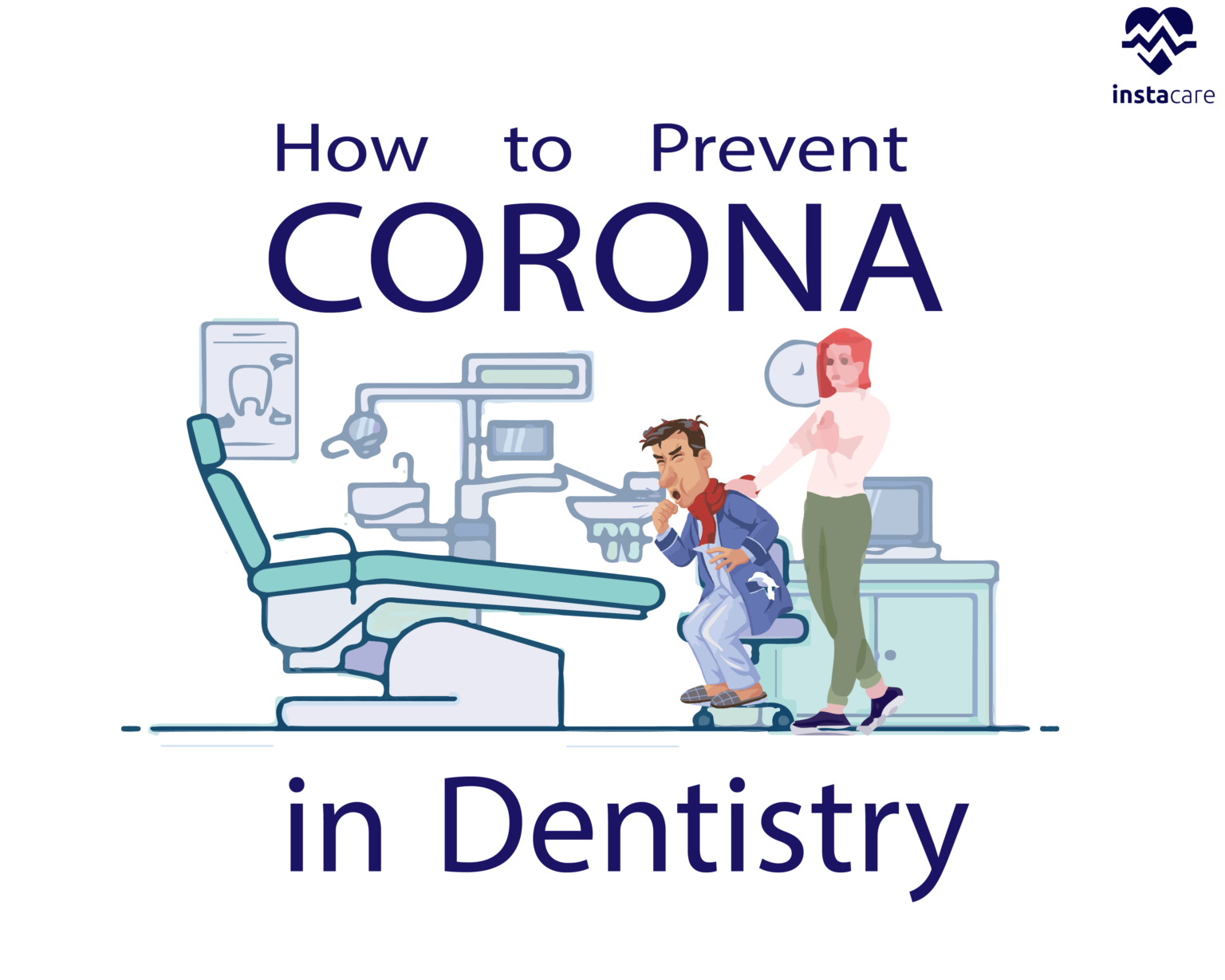
Can There Be Spread Of Corona Through Dentistry? Considering the situation worldwide, there are high possibilities that any kind of interaction between humans, animals or even objects contains a huge risk of the corona. Spread in 110 countries so far, it’s the immediate point of concern. As far as dentistry is concerned, being a profession that deals with the human mouth, it contains relatively more chances of spreading the virus. Corona through dentistry is something that is highly possible. The spread of Corona through dentistry According to research published in the International Journal of Oral Science, there are three major ways through which Corona can spread. These there are as following: Airborne Spread Contact Spread Contaminated Surfaces Spread Airborne Spread The dental papers indicate that numerous dental strategies produce pressurized canned products and beads that are polluted with the virus. Consequently, bead and airborne transmission of 2019-nCoV are the most significant worries in dental facilities and medical clinics, since it is difficult to maintain a strategic distance from the age of a lot of vaporized and bead blended in with patient’s salivation and even blood during dental practice. Notwithstanding the contaminated patient’s hack and breathing, dental gadgets, for example, fast dental handpiece utilizes rapid gas to drive the turbine to turn at high velocity and work with running water. At the point when dental gadgets work in the patient’s oral pit, a lot of vaporized and beads blended in with the patient’s spit or even blood will be produced. Particles of beads and pressurized canned products are sufficiently little to remain airborne for an all-encompassing period before they choose ecological surfaces or enter the respiratory tract. In this way, the 2019-nCoV can possibly spread through beads and pressurized canned products from tainted people in dental centers and emergency clinics. Contact Spread A dental expert’s continuous, immediate or circuitous contact with human liquids, tolerant materials, and defiled dental instruments or natural surfaces makes a potential course to the spread of viruses. Likewise, dental experts and different patients have likely contact of conjunctival, nasal, or oral mucosa with beads and pressurized canned products containing microorganisms created from a tainted individual and pushed a short separation by hacking and talking without a veil. Compelling contamination control methodologies are expected to forestall the spread of 2019-nCoV through these contact schedules. Contaminated Surfaces Spread Human coronaviruses such as SARS-CoV, Middle East Respiratory Syndrome coronavirus (MERS-CoV), or endemic human coronaviruses (HCoV) can persist on surfaces like metal, glass, or plastic for up to a couple of days. Therefore, contaminated surfaces that are frequently contacted in healthcare settings are a potential source of coronavirus transmission. Dental practices derived droplets and aerosols from infected patients, which likely contaminate the whole surface in dental offices. In addition, it was shown at room temperature that HCoV remains infectious from 2 h up to 9 days, and persists better at 50% compared with 30% relative humidity. Thus, keeping a clean and dry environment in the dental office would help decrease the persistence of 2019-nCoV. Preventing the spread of Corona through dentistry There are a few preventive measures that dentists must take to avoid any kind of transmission of Corona. A few of them are given as follows: Patient Evaluation If possible, make sure that you are aware of the patient’s history. With a person with positive Corona, it’s highly advised to be extremely careful. Use Instacare’s Telemedicine to have a complete medical session through a video call. This will reduce the chances of transmission. Hand Hygiene It’s been widely notified that washing hands regularly, significantly reduces the chances of virus transmission. Use a hand sanitizer in case you don’t have access to water. Personal protective measures for dental professionals Airborne droplet transmission of infection is the main route of spread, particularly in dental clinics and hospitals. Barrier-protection equipment is strongly recommended for all healthcare givers in the clinic/hospital settings during the epidemic period of 2019-nCoV. Like including protective eyewear, masks, gloves, caps, face shields, and protective outwear. Rubber dam isolation The use of rubber dams can significantly minimize the production of saliva- and blood-contaminated aerosol or spatter, particularly in cases when high-speed handpieces and dental ultrasonic devices are used. Mouthrinse before dental procedures Since 2019-nCoV is vulnerable to oxidation, preprocedural mouthrinse containing oxidative agents such as 1% hydrogen peroxide or 0.2% povidone is recommended, for the purpose of reducing the salivary load of oral microbes, including potential 2019-nCoV carriage. A regular mouthrinse is also recommended. Even after all these measures, make sure that you don’t interact unnecessarily. Even now, we know very little about it. So, keep your surroundings clean.
What is the 2019 Novel Coronavirus? 2019-n Coronavirus is a family of a large number of viruses that belong to the bigger family of Corona RNA. Among these, other similar viruses are MERS-CoV, HKU-1, and SARS-CoV. 2019-nCoV is considered to be the deadliest but if proper measures are taken, it’s relatively easier to prevent it. History In December 2019, a cluster of people was identified with pneumonia in Wuhan, China. Inspection of these people revealed that it was caused due to a previously unknown virus then, named 2019 Novel CoronaVirus. Similar viruses were found earlier like in 2012, MERS-CoV, in Arabia and SARS-CoV were discovered in 2002, again in China. The initial study on coronaviruses was done in the 1960s and cases has been appeared since then. But mostly, the virus was of a different type hence a proper scholarly resource is not available. World Health Organization (WHO) has designed a help-page for the 2019 Novel Coronavirus for more history. Causes The researchers have proposed the hypothesis that maybe because of the open animal market in Wuhan, the virus has somehow transferred from animals to humans and got mutated. A detailed analysis of earlier viruses has also stated similar facts. SARS-CoV was spread through cats earlier in China and MERS-CoV was spread though camels in Saudi Arabia. Though the source of 2019-nCov has not been verified yet, the presence of the market indicates its possibility to be true. Symptoms Since it’s a newly discovered virus, all the symptoms cannot be stated with complete verification but considering the recent cases, symptoms of this special Coronavirus include fever, cough, runny nose, and breathing difficulties. In severe cases, it can cause pneumonia and severe respiratory issues. Children, seniors, and people with some severe medical history are more vulnerable to becoming ill with this virus. Coronavirus in China and Pakistan 425 people have died due to Coronavirus and around 2700 are affected by it. 80 has died within Wuhan. Older people and children are more likely to get attacked. The main source of expansion in Wuhan, China was the animal market. But now the primary way is through the air and respiratory systems among the citizens. Since its emergence, the WHO has announced an emergency and the Chinese government is also taking action to stop its expansion. Basic guidelines include wearing masks and keeping one’s body warm. In Pakistan, on the contrary, the struggle is to figure out if the virus exists or not. Till now, the tests and reports show that there is no Corona in Pakistan. 5 potential cases were treated which included 3 Pakistani and 2 Chinese individuals in Pakistan. Fortunately, all of them are found negative. What measures the Pakistan Government has taken? The government has set up corona info booths in various hospitals around the country that give emergency services and any related information. Dr. Zafar Mirza, State Minister of Health of Pakistan tweeted yesterday that they are thoroughly checking passengers that are traveling from abroad to Pakistan to make sure that corona doesn’t enter the country. 201/ At Islamabad airport this morning – received passengers from China along with HE Chinese Ambassador in ?? CZ6007 brought 69 passengers including 57 Pakistanis and 12 Chinese. We supervised implementation of “Airport SOPs” & I interviewed passengers. pic.twitter.com/22GleZfmUa — Zafar Mirza (@zfrmrza) February 3, 2020 Pakistani students who are stuck in the city of Wuhan are something that everyone is concerned about. They have pleaded the government to evacuate them, but Prime Minister Imran Khan has refused partly to show Pakistan’s solidarity with China and partly because of the risk that this way it might enter Pakistan. My elder Brother & other Pakistani students requesting to government of Pakistan to help them out from China due to coronavirus. There are other several Pakistani Students who are in Stuck In China. Kindly Do Something for our Pakistani Students. :”(#coronarovirus @ImranKhanPTI pic.twitter.com/FfBI1K47BG — Umar Bhutto ?? (@umarbhutto50) January 30, 2020 Safety Tips WHO has issues. safety tips to prevent Coronaviruses. These include Wash hand frequently using an alcohol-based rub or soap or water. Cover mouth when coughing and sneezing. Avoid close contact with others. Avoid excessive consumption of meat The virus hasn’t been found at an alarming amount outside China. But if you are traveling to or from China, make sure that you follow prescribed practices to save yourself and near ones. For expert advice regarding the diagnosis, prevention or treatment of Corona, just leave a message. Visit instacare for more information.