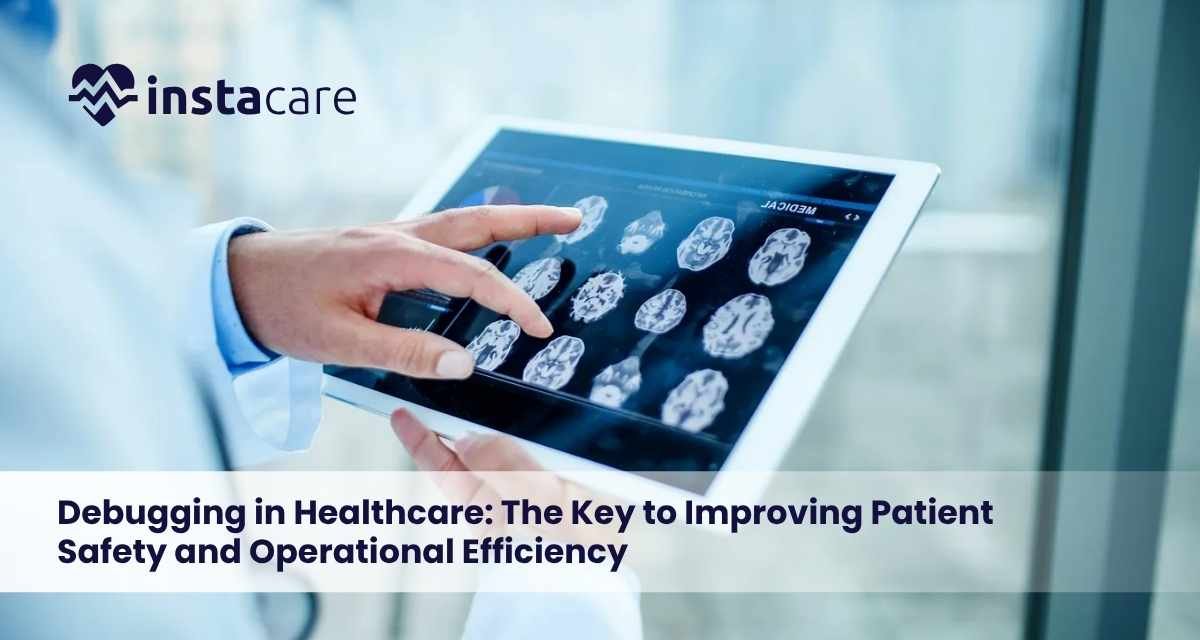
Debugging in Healthcare: The Key to Improving Patient Safety and Operational Efficiency In today’s fast-paced healthcare environment, ensuring patient safety and delivering high-quality care are top priorities. The use of technology in the modern day healthcare system has become something that cannot be done without, both in terms of electronic health records (EHR), modern medical devices, and diagnostic software. Nevertheless, no technology is without problems or glitches, and systems may face bugs or errors to disrupt any operations and even give patients negative results. In healthcare, debugging is a process of identifying, diagnosing, and fixing a malfunction of a healthcare technology system. It plays a very critical role in upholding high quality of care and ensuring smooth running of medical systems. This blog will dwell into the concept of debugging in healthcare, its significance and its role in influencing both patient outcomes as well as the healthcare operations. We will also consider the nature of errors prevalent in the healthcare systems, debugging and typical issues encountered by health care practitioners when trapping. What is Debugging in Healthcare? Healthcare debugging is the act of diagnosing, analyzing, and correcting healthcare technology-related bugs, such as software systems, medical equipment, and electronic health records (EHRs). These are technologies aimed at enhancing efficiency in healthcare, better patient care and decreasing human error. Nevertheless, being a complex system, they may have technical problems that should be addressed as soon as possible to maintain patient safety. In healthcare, healthcare professionals aim to find solutions to problems that may affect patient care, e.g., system crashes, faulty data entry, broken medical equipment, or lack of integration between various health information systems. Effectual debugging, in turn, guarantees that medical professionals will have access to reliable information, medical alerts, and the ability to communicate seamlessly across the platforms. Why is Debugging Important in Healthcare? The importance of debugging in healthcare cannot be overstated. Positional failures of healthcare technology can result in wrong diagnosis, postponing medical interventions, prescription mistakes, or interpersonal misunderstandings between medical practitioners. These are some of the most important reasons why debugging is very important in the healthcare sector: Patient Safety: The most important thing is patient safety in healthcare. Errors in medical software or malfunctions of medical machinery can result in inaccurate diagnostics, treatment delays, or even later adverse patient results. When healthcare technology is being developed, debugging guarantees its functionality as expected and reduces the likelihood of errors and risks posing harm to patients. Medical Records Accuracy: Electronic health records (EHR) are the tools used in recording patient health data consisting of medical histories, medications, and test results. Any defect in the EHR system may cause patients to lose or save data incorrectly, which subsequently may be used in making an error in treatment. Debugging helps to confirm the accuracy and up-to-date nature of medical records, which follows in making informed healthcare decisions. Operational Efficiency: A number of technologies can be used by healthcare systems to optimize different processes including scheduling appointments, patient tracking, and coordinating care, among several providers. Bugs in the system may result in inefficiencies, which translate to delays and mount up workload on the healthcare professionals. Debugging is used to facilitate smooth running of the health care systems to achieve improved care delivery and low operational cost. Regulatory Conformity: Healthcare organizations are bound by stringent regulations in terms of data security, privacy and medical accuracy. Healthcare technology bugs that threaten these regulations may cause both legal and financial implications. To comply with healthcare laws like HIPAA (Health Insurance Portability and Accountability Act) in the United States that regulates the privacy and security of patient data, it is necessary to debug. Common Types of Errors in Healthcare Systems Healthcare is a field where mistakes may be made in many forms and the debugging processes should be able to accommodate a range of problems. Some of the most common errors found in healthcare systems include: EHR Systems Software Bugs Electronic Health Records (EHR) constitute systems necessary in tracking patient information and forwarding the same to other health care providers. A bug in an EHR system may lead to falsified recorded information including the wrong patient names and dosages and even missing medical history. These mistakes may cause misdiagnoses or inappropriate treatment plan. Malfunctioning of Medical Devices Medical equipment like the infusion pumps, ventilators and heart rate recording machines are a part of patient care. In the event of hardware failure or software errors in a device, then the failure may result in faulty data measurements or incorrect administration of medication and endanger the lives of patients. Communication Failures Healthcare providers are dependent on communication systems such as hospital management software and communication platforms with patients to coordinate care. Cod in these systems may result in the loss of messages and alerts, communication breakdowns among the staff members, causing delays in treatment and care prescription errors. Data Security Issues Healthcare data is highly sensitive and needs to be protected from unauthorized access. Security bugs may result in gaps in data protection, which may reveal sensitive patient data to attacks or theft by hackers or other malicious individuals. Integration Problems Healthcare systems frequently have to use several applications and devices, which cooperate with each other. A failure in a single component of the system may result in integration challenges, thus data conflicts, synchronization, and inefficiencies that reduce overall execution of the healthcare ecosystem. Book Your Free Marketing Consultation Strategies to Debug in Healthcare Healthcare organizations should apply a systematic approach to debugging to solve problems. The following are some of the generic ways of troubleshooting healthcare technology systems: Manual Debugging: It entails inspecting the code, logs, system settings manually by healthcare IT professionals in an effort to detect errors. Sometimes manual debugging can be time-consuming yet it is required in detecting the complex problems which cannot be solved by automated tools. Automated Testing and Monitoring: Automated debugging tools may monitor healthcare systems 24/7 to detect possible problems. They can observe errors, crashes, or abnormal behavior
- 1
- 2