

AI Lifecycle in Healthcare: From Planning to Continuous Monitoring AI application spans many areas including medical imaging, patient monitoring, clinical documentation, risk assessment, treatment, and administrative tasks. Developing an AI application for healthcare goes beyond training an algorithm and deploying it in the hospitals. Healthcare decisions have implications on patient safety, privacy, and accessibility, as well as care-related outcomes. Thus, every AI application must be governed from conception to its decommissioning. The AI lifecycle in healthcare outlines the governance process for the responsible design, development, validation, deployment, oversight, maintenance, and discontinuation of AI systems in healthcare. What Is the AI Lifecycle in Healthcare? The AI lifecycle refers to the entire governance process of the design, development, and deployment of AI systems, as well as their ongoing maintenance and eventual discontinuation. The AI systems lifecycle differs from conventional software systems because AI systems learn from data. Therefore, the systems will function in unpredictable ways as the population of the patients served, the data, the medical practice, or the equipment used in the hospital changes. A system that frequently delivers optimal results during its development phase may, in the course of time, perform sub-optimally in another hospital. Lifecycle management makes it possible for an organization to identify risks early, evaluate the system’s performance prior to deployment, and monitor the system in practice to assess and manage any changes. Identifying the Healthcare Problem The governance lifecycle commences with the precise identification of the clinical or operational problem to be solved. The development teams should answer the following questions: what healthcare problem are they intending to solve; what will the AI system users’ roles be; which patients stand to be impacted by the system; and what are the key performance indicators that will define the success of the system. Use cases may be leveling the risk of health deterioration amongst patients, decreasing the prevalence of missed patient appointments, prioritization of time-sensitive x-ray scans, or making clinical documentation less tedious. Health-related problems should be clear, focused, and meaningful in the clinical setting. As a rule, AI should be considered only if there are no other simpler, more efficient, and effective clinical solutions. Establishing Governance Governance involves assigning responsibilities and making decisions regarding control mechanisms for safety throughout the lifecycle. The organization must include the system’s purpose and acceptable use, the role of human oversight, privacy, and performance and reporting requirements, along with the procedures for reporting and approving updates. Good governance removes ambiguity regarding responsibility and aligns the development of AI with clinical safety and quality, along with cybersecurity and data protection. Collecting and Preparing Data AI in healthcare relies on managed data that is relevant and accurate. When data is to be used, the team must consider consent, confidentiality, and ownership, as well as access control and data protection retention and transfer. Preparation may include duplication removal, format and information centrality correction, standardization of terminology and unnecessary identifiers, and labeling of clinical events. Data of poor quality produces poor results. In addition, the team must confirm that the data sets represent the intended population with regard to age, gender, ethnicity, condition, where data was collected, and the equipment and the care environment. Developing the AI Model The AI Model is developed by a specialized team. Suggested algorithms and methods are used to train the model to recognize patterns and predictions. Data is taught to the model through training. Validation and test data evaluate adjustments and the final performance, respectively. Leakage of data must be avoided. The model is a programmed construct of elements, such as data sources and descriptions of the criteria for inclusion, as well as the design and type of the model, along with the assumptions, limitations, and potential for failure. Trade-offs between reliability and safety, speed, cost, and compatibility with legacy systems must also be made. Book Your Free Marketing Consultation Validating Performance The model must be able to generalize beyond the training data. Technical validation of a model may assess, among other things, the time taken to process a request, along with accuracy, sensitivity, specificity, precision, and the rates for false positives and false negatives. Clinical validation determines if a system has realistic value. Testing must consider various patient demographics, the impact of the system on the clinical workflows, comprehension of the system among clinical staff, system reliability, and the potential harm caused by erroneous results. External validation is important because it tests the model on data from a different hospital, population, location, or device. Ethics and Regulation AI in healthcare may fall under medical devices, privacy, cybersecurity, data protection, and healthcare regulations. Appointment scheduling software typically falls under fewer regulations than AI that prescribes treatments or identifies severe medical conditions. From an ethical viewpoint, the most relevant would be the assessment of autonomy, justice, beneficence, and non-maleficience. Patients and care providers should know what the system does, how its outputs are to be interpreted, and the circumstances where human judgement will override the system. Workflow Integration of AI A precise AI system can still fail if it is not usable within a clinical workflow. Controlled pilots should be used to reveal issues within workflows and the system, along with new and unanticipated risks. AI systems should be used within clearly defined boundaries. There should be unambiguous human responsibility for the implications of AI on clinical decisions and patient care. Real-World Performance Evaluation Evaluation of AI in healthcare should look at accuracy, missed cases, false alarms, response times, failures, overrides, user feedback and complaints, and impact on patients differentiated by groups. AI performance should be continually monitored because of the impact of new data, changed clinical practices, new or updated equipment, altered patient populations, and changed data-entry methods on original performance. System Updates AI systems might need updates if the system is found to work incorrectly, if the system needs to become more accurate, to reduce security threats, or to support additional patient types. If changes are made to the data, code, thresholds, interfaces, or model behavior, those

Cloud-Based Healthcare: Benefits, Applications, Challenges, and Future Trends Cloud-based healthcare helps medical organizations simplify how they store, organize, and share patient information. Using cloud technology, a collection of hospitals, clinics, labs, and healthcare providers can access medical records safely, work collaboratively, and provide patient care more efficiently. The digital transformation of healthcare means the industry needs solutions that most cloud providers offer, like operational and cost efficiencies as well as increased telemedicine and improved patient care. This guide provides information on cloud-based healthcare, its advantages, uses, drawbacks, and anticipated developments. What Is Cloud-Based Healthcare? Cloud-based healthcare is the application of cloud computing to use the internet for the storage, processing, and management of healthcare data, whereas, previously, there was an overreliance on both local and physical data storage. Using a cloud system, healthcare organizations have the ability to view and manage EHRs, medical images, lab reports, clinical notes and schedules, and billing and other healthcare-related information virtually, safely, and system collaboratively. Cloud systems, however, provide the means to mobilize healthcare data and keep healthcare data systems secure. How Cloud-Based Healthcare Works? In a cloud healthcare system, medical data and information are stored in the healthcare system and secure on the data storage servers of the cloud providers. Healthcare system that have been authorized to view the data and information have the ability to do so via a secure Internet connection from a desktop computer, tablet, or mobile device. In addition to being able to protect and keep sensitive healthcare data secured, modern cloud systems allow healthcare teams to record and synchronize data across multiple locations and departments. Benefits of Cloud-Based Healthcare Health care made available via the cloud means better accessibility. Staff at every level can access the patient record system securely and at any point in time. This drastically cuts the time needed for staff to formulate the next steps and further improves the overall patient care system. Because of a cloud system, the need for time-consuming and costly in-house IT systems and services is eliminated. This makes the system financially accessible by even small town clinics. The major points are: Patient records systems have better security. The different health care staff levels work seamlessly. The costs for IT systems and services drastically drop. Data management systems have built-in recovery. Health data systems communicate rapidly. Data systems can be expanded rapidly and economically. Common Uses of Cloud-Based Healthcare Cloud-based systems can be utilized in virtually every health care service and even some of the administrative services required. Health care systems that have electronic health records are more cloud-based. This lessens redundant tests and improves the quality and flow of health care. The cloud provides the basis for video-based health care, remote health care, and even follow up health care. Cloud networks aid health care imaging, lab and pharmacy systems, scheduling and billing systems, and inter-health care data systems. Cloud-Based Health Care Improves Patient Care Because the cloud makes patient data and health care services available in real time, health care staff are empowered to improve the timeliness, efficiency, and quality of health care. Patient engagement is enhanced by the secure patient portals that support viewing of medical records, scheduling of appointments, access to test results, prescription refill requests, and the ability to message providers. Remote patient monitoring with cloud-embedded care devices also allows providers to assess and manage chronic conditions, including diabetes, hypertension, and heart disease, without requiring as many office visits. Book Your Free Marketing Consultation Security and Data Protection Protecting patient information is one of the highest priorities of cloud-based healthcare. The most advanced cloud systems provide multiple layers of protection for sensitive medical data. Some of the standard protective measures are as follows: Data encryption Multi-factor authentication Role-based access controls Security monitoring Data back up Auditing access to data Healthcare organizations must also comply with the privacy regulations that are applicable to them, and have their own policies of limiting access to, the storage and sharing of, data. Challenges of Cloud-based Healthcare Even though there are so many advantages of cloud technology, healthcare organizations may face numerous challenges when implementing cloud technology. Cybersecurity challenges will always be a concern since valuable data are of higher risk in the healthcare cloud. Failure to secure systems and educate staff of the possible threats will be the responsibility of the organization. Also, reliable internet access is essential for utilizing cloud services. Uninterrupted access to medical records may be impossible if there are no adequate backup systems. Additional challenges include integrating older healthcare systems with cloud systems, staff training, data migration and upholding healthcare regulations. The Role of Cloud Computing in the Future of Healthcare Alongside healthcare, cloud computing will develop with the rest of technology. AI, machine learning, the analytics of large data sets, and Internet-of-Medical-Things devices are all going to use cloud computing in the delivery of healthcare. Cloud computing will also facilitate the development and deployment of predictive analytics, personalized medicine, and precision healthcare. Furthermore, robotic surgery and advanced clinical decision support systems will likely be enhanced through cloud computing. With the continued development of cloud computing, the healthcare systems of the world will appreciate benefits in efficacy, reach, and patient experience. Cloud Strategies for Healthcare Organizations Before the implementation of cloud computing, healthcare systems should have a thorough plan. The selection of an appropriate cloud computing vendor, an ongoing evaluation of the security posture, employee training, and a strong data governance framework are a few of the key areas for adoption. Healthcare operations should also rely on the establishment of disaster recovery plans, the ongoing assessment of the safety of systems, and the assurance of optimal functioning of systems. Conclusion Cloud computing in healthcare offers a world of possibilities. The traditional approaches to the delivery of healthcare services are being made more efficient from the digitization of patient records and the use of cloud computing in telehealth, online patient monitoring, and advanced analytics. With the necessary precautions in place for safety and compliance, the
Low-Code and No-Code for Healthcare: Benefits, Applications, and Future Trends Currently, the global push for the digitization of healthcare has made improving patient access, optimizing administrative management processes, and increasing the productivity of healthcare staff and practitioners a primary focus. Traditionally developing healthcare software requires a significant level of investment. Low-code and no-code are making a big difference in these situations. Building applications on low-code and no-code development platforms can be achieved using little or no coding at all. Development can be carried out using a graphical interface and drag-and-drop, pre-assembled building blocks. All of this can be done without much of the time and effort usually required by healthcare software developers. Low-code and no-code platforms enable the development of systems to automate patient appointments, streamline and automate workflows, and even automate the creation and delivery of electronic healthcare forms. These platforms are enabling the development of more cost-effective solutions to more pressing and changing demands in the delivery of healthcare systems. What Are Low-Code and No-Code Platforms? Low-code and no-code platforms are software development systems that simplify the creation of applications. Low-code platforms are development systems that integrate a visual approach to the majority of the development system, and therefore, require a bit of programming knowledge. They can be used for all the healthcare applications that are complex and demand a higher degree of customization and need to be integrated with other applications. No-code platforms are development systems that have a drag-and-drop interface, templates, and configurable workflows. These systems are much more suited to healthcare staff and practitioners who do not have a technical background, as they require no programming at all. In comparison to coding in the traditional way, both systems offer a much more rapid way to develop applications. Why Healthcare Is Adopting Low-Code and No-Code Solutions? The delivery of healthcare systems is under increasing pressure to do more with less and provide a much better patient experience. All the while, systems and applications that help to deliver this have to be designed, developed, and deployed in a regulatory compliant fashion. Using traditional software development systems, the delivery of these systems can take months or years. Benefits to Using Low-Code/No-Code Tools in Healthcare Low-code and no-code tools enable healthcare organizations to: Rapidly build new healthcare applications Lower the total cost of building healthcare applications Build more efficient healthcare applications Build applications that address healthcare needs more rapidly Automate various healthcare tasks Improve integration and teamwork between healthcare administration and healthcare delivery These advantages give healthcare organizations more time to focus on the improvement and delivery of patient care. Common Applications in Healthcare The only limit to the applications of low-code and no-code tools in healthcare is your imagination. Client Booking Healthcare organizations are able to build online appointment systems that help patients book, change, or cancel appointment times, while also decreasing the burden of appointment management on office staff. Client Registration Forms and systems can now be built to help clients register and complete online/on-site intake in a time efficient and systematic manner. Workflow Automation Many administrative tasks can now be automated using low-code and no-code tools. These tasks include but are not limited to: Appointment messaging Referrals Prescription renewals Staff/Client Notifications Approvals Follow-up Task Automation Patient Portals Staff portals can be built to help staff view, edit, and manage: Schedules Shift Requests Staff Performance Staff Training Staff Onboarding Staff Portals can help improve management. Inventory Management Clinics and hospitals now have the ability to be notified when supplies or equipment stock is low. Incident Reporting Safety incidents and equipment failures can now be reported quickly to the necessary department using automated digital forms. Internal Dashboards Healthcare administrators can design dashboards to track: Patient numbers Appointment data Staff usage Resource use Operational data Service data Advantages of Low-Code and No-Code in Healthcare Speed With low-code systems, apps that would typically take months to develop can sometimes be built in a matter of weeks and in some cases, days. Cost With less coding and more clicks, costs associated with developing the app decrease while the organization uses more of its internal resources. Productivity Healthcare staff have more time to focus on patient care instead of being bogged down by tedious paperwork and administrative tasks. Flexibility Because the coding is so easily adjustable, the app can be updated to fit the regulations and workflow of the healthcare office. Collaboration Because clinical staff, administrative staff, and IT staff work together to design the app, the app works for the staff and fits the workflow. Process Automation Repetitive tasks are automated and integrated into the app, causing less delay, more consistent inter-office workflow, and less human error. Accessibility Most low-code and no-code systems are responsive and easily adaptable to work on desktops, laptops, and phones. Book Your Free Marketing Consultation Disadvantages of Low-Code and No-Code in Healthcare These systems are not without their faults so organizations must be aware of issues these systems might cause. Data Protection Most healthcare apps are handling sensitive patient data and as such, strong protection of this data with secure systems, user protection, and management of data access is critical. Compliance Most of the healthcare low-code and no-code systems are not compliant with the required protections and healthcare data regulations. Designing compliant systems is possible, but will require some level of coding. Customization Most no-code systems require the app to be designed with a workflow in mind, and therefore, can’t support complex healthcare workflows. Integration Complexity Healthcare systems usually combine many digital solutions. Integrating new tools with current electronic health records systems, billing, laboratory, or imaging software may need specialized skills. Scalability Applications need to be able to handle larger amounts of data and larger numbers of concurrent users as healthcare organizations expand. Best Practices for Successful Implementation Maximizing the advantages of low-code and no-code platforms for healthcare organizations can be realized by following best practices. Understanding the workflow issues will help to ensure the solution developed to address the problem will meet the
AI in Surgical Centers: How Artificial Intelligence Is Transforming Modern Surgery Artificial intelligence (AI) is transforming almost every vertical, healthcare included, and surgical centers are among the most advanced adopters of new technologies. Surgical procedures have the potential to be faster, safer, and more efficient due to advances in AI from the enhancement of preoperative surgical planning, assistance to surgeons during the procedure, and improvement/assessment of postoperative recovery. AI will not replace health care practitioners. Instead, it will function as a sophisticated assistant to health care professionals enabling them to make better clinical decisions by providing data and pattern recognition. Within the environment of a surgical center, AI will become even more important as digital technologies become more pervasive. What Is AI in Surgical Centers? AI in surgical centers encompasses highly developed computer systems and machine learning technologies that assist with various components of surgical care. These systems have the ability to analyze medical images, survey patient data, identify potential threats, refine the efficiency of procedural scheduling, and even offer real-time assistance during a surgical procedure. The aim of AI technologies used in surgical centers is to enhance the accuracy of surgical techniques, decrease the likelihood of unintentional surgical complications, and improve patient care. How AI Supports the Surgical Process? AI systems help with almost every phase of the surgical process. This begins with the preoperative surgical assessment. Surgical Systems Design Successful surgeries rely on methodical design. Software with AI is capable of delivering 3D models of anatomy by way of CT or MRI scans. This gives surgeons a means of visualizing anatomy before stepping into the OR. Such precision is especially useful in surgeries with high complexity and high risk because of hazardous anatomy. Intraoperative Systems Design AI is capable of monitoring instruments and analyzing intraoperative imaging and alerts in the event of significant deviation or likely errors. More advanced systems use image overlays and tracking to maintain precision and guide the surgeon throughout the operation. While design is in the hands of the surgeon, systems provide a higher level of support. Postoperative Systems Design AI monitoring does not stop at the close of the incision. Systems are capable of monitoring vitals and are designed with algorithms to detect out of norm trends as well as signaling which patients require focused resources. This allows healthcare teams to reallocate resources and focus on patients with the greatest need in order to improve the overall outcome. Benefits of AI in Surgical Centers AI Enhancement of Surgical Systems Surgical systems benefit from the implementation of AI by increasing the precision of a surgery and decreasing tissue damage by providing an in depth analysis of the anatomy throughout the procedure as well as supporting real time data. Because of AI’s evolving nature, systems designed with advanced algorithms are capable of producing greater operational safety as potential hazards are detected before becoming formalized. Surgical systems designed with AI have the benefit of processing even the most complex of cases in a matter of moments allowing safe and accurate decisions to be made. Less Chance for Human Error The experienced surgeon will always be in charge of their own team. AI serves as a second opinion, making it more likely that details will not be overlooked while providing support for routine clinical evaluation. Caring for the Patient AI offers the ability to formulate a more precise and tailored treatment plan by evaluating more than just the medical history and current health status of each patient. AI also takes into consideration the age, lifestyle, and imaging of the patient. A more individualized treatment plan is likely to improve patient satisfaction. Greater Optimization of the Operating Room AI offers the ability to optimize the operating room by analyzing a multitude of staff and patient requirements and needs. Speeding up the process and greater optimization of the operating room reinforces the surgical center’s ability to sustain an increased patient population. AI Technologies Used in Surgical Centers There are numerous surgical systems with AI in their toolbox. Analyzing Medical Images AI offers the capability to analyze imaging and other forms of medical diagnostic imaging with speed and precision. Predictive Models AI offers the ability to assess a greater volume of patient data and predict complications and the post-operative course and disposition. Vision Systems AI offers the ability to assist with navigation and movement during a surgical procedure. Speech-to-Text Units AI offers the ability to turn unstructured spoken documentation into a structured, less time-consuming form of documentation. Robotic Systems AI offers the ability to enhance the precision of movement during a surgical procedure with a greater level of assistance of a robotic surgical system however, the surgeon is always in control of the system and the procedure. Book Your Free Marketing Consultation AI and Minimally Invasive Surgery AI offers the ability to enhance the precision of instrument movement and the assistance of navigation especially with a very small and confined surgical space. These changes can lead to: Incisions that are smaller Less blood loss Reduced time in the hospital Less pain after surgery Quicker recovery Fewer complications AI’s Challenges in Surgical Centers Challenges of AI in Surgical Centers There are obstacles that need to be tackled despite all the benefits AI brings. Data Protection In order for AI programs to be effective, a lot of patient data needs to be logged into the system. This makes the need for more advanced Data Security and protection of patient data even greater. Existing System Compatibility To make AI programs effective, all current medical systems will need to have compatible software, new medical devices, and staff will need training on how to use them. High Initial Investment There is a very large cost barrier because of all the new hardware, medical devices, AI software, and training that is brought in. Most surgical centers consider this a long-term expenditure that will benefit patients and improve workflows. Need for Human Control AI programs are meant to assist medical staff, not make this staff
AI Virtual Assistants in Healthcare: Benefits, Uses, Challenges, and Future The introduction of artificial intelligence (AI) into the healthcare sector is rapidly transforming the way healthcare services are delivered, managed, and experienced. One of the most promising and exciting manifestations of this technology is the emergence of AI virtual healthcare assistants. These digital assistants, powered by AI, natural language processing, automation, and data analytics, have the potential to alleviate some of the most significant challenges and serve diverse stakeholders, including patients, providers, nurses, hospitals, and healthcare enterprises. AI virtual assistants are not intended to supplant physicians. Their purpose is to improve the ease of access to healthcare services, facilitate better communication, and maximize patient engagement. AI assistants now play a vital role in contemporary healthcare by performing numerous functions, including responding to healthcare inquiries and scheduling and supporting the completion of clinical documentation. What are AI Virtual Healthcare Assistants? AI virtual healthcare assistants are computing tools that can interact with a user, comprehend health-related inquiries, perform virtual healthcare tasks, and offer supplemental virtual healthcare assistance through websites, mobile applications, patient portals, voice systems, and hospital computing infrastructures. These tools can take the form of chatbots, voice assistants, automated scheduling tools, virtual symptom checkers, and clinical virtual support systems. Some of the tasks that these virtual assistants can perform include: Booking a healthcare appointment Sending reminders to patients about their medication Answering health-related questions Pre- and post-treatment patient guidance Collecting virtual patient data Supporting Virtual Healthcare Assisting physicians with clinical notes and documentation Providing directions for follow-up care The World Health Organization (WHO) has indicated that while large AI models may be deployed in healthcare and other related fields, they would also require the establishment of rigorous safeguard standards. The Role of AI Virtual Assistants in Healthcare Healthcare systems are inundated with challenges like heavy patient demand and staff shortages. There’s also the challenge of growing administration pressure. The burden of managing patient outreach, handling repetitive patient inquiry, managing, and documenting patient appointments; all enact a heavy burden on healthcare staff, especially doctors and nurses; impacting their overall productivity. The adoption of AI virtual assistants in healthcare can ease these challenges by handling the burden of tedious and repetitive tasks with high efficiency. AI virtual assistants also provide direct access for patients to healthcare information and, in some cases, real time support. Patients no longer have to wait in physically or virtually ineffectively long queues to get basic information. Some healthcare virtual assistants are even capable of giving patients reminders as well as instructions on next steps. The American Medical Association describes healthcare AI as “augmented intelligence,” meaning these tools a re designed to assist physicians and not replace their judgment. The organization also notes the increasing use of AI tools in the medical field, especially those designed to help with documentation and patient navigation. Common Uses of AI Virtual Assistants in Healthcare Patient Assistance and Health Queries AI supports a variety of patient inquiries. Examples include common questions about symptoms and treatment, as well as questions about the schedules for clinic visits, tests, medication, and post-care treatment. AI assists patients in determining the most appropriate pathway for care. Examples include deciding whether to use urgent care, a teleconsult, or a routine care request. AI is not a replacement for health care professionals, especially for serious symptoms such as chest pain, or difficulty breathing, as well as headache and fever. Also, sudden weakness should not be a serious healthcare concern. Appointment Management AI virtual assistants are particularly useful for managing appointments. They can help patients find available doctors, book and cancel visits, and even send reminders to patients. This results in fewer no-shows. Reducing no-shows helps front-desk staff and improves workflow throughout the hospital. Reminders for Taking Medication AI virtual assistants can also send reminders to patients to take or refill medication and to follow through with and adhere to other instructions. This feature is particularly useful for patients who struggle to manage their maintenance medications for chronic conditions like diabetes and hypertension. Monitoring Patients Remotely AI virtual assistants also help monitor patients remotely by collecting self-reported symptoms and recording basic health information. They can notify the appropriate healthcare team if an issue is identified. This allows patients to receive healthcare support while avoiding frequent visits to the hospital. Assisting with Clinical Documentation AI virtual assistants can help draft clinical notes, document patient information, and even help summarize a patient’s visit. This helps reduce the burden of clinical documentation and helps provide physicians with more time to spend on caring for patients. Support for Mental Health AI virtual assistants can support mental health by offering basic emotional support, mood tracking, a breathing exercise, and reminders for therapy sessions. They can also help a user find a mental health professional, but they should not substitute mental health professionals for more serious cases. Book Your Free Marketing Consultation Benefits of AI Virtual Assistants in Healthcare AI Virtual Assistants improve patients’ and healthcare providers’ experiences. Key benefits include Faster response time to frequent patient inquiries Less administrative burden Better appointment management Improved patient engagement Basic support around the clock Less no-show rate Better medication compliance Telehealth support Improved workflow Better patient communication These assistants will make clinics and hospitals more productive due to the ability to take care of tedious tasks. For the patient, it will make healthcare more accessible and convenient. Challenges and Risks Despite the benefits, important challenges come with the use of AI virtual assistants. Healthcare information is sensitive, and providing information that is even a little bit off can have serious repercussions. For this reason, the designing, implementing, and using of AI tools must be done with a lot of careful consideration, and most importantly, human supervision. Some of the most common challenges virtual assistants face are the risk of providing incorrect and/or incomplete information, privacy data security challenges, and providing biased information. In addition, there is a lack of understanding in the emotional sense, overreliance on these
Patient Empowerment Software: Transforming Healthcare Healthcare is changing fast. The most notable aspect of this is the shift toward patient-centered care, in which patients are seen as partners in the care process rather than passive recipients. Bringing about this change is patient empowerment software, which includes digital tools to aid patients in taking control of their healthcare process. This software can help patients partake in their care process in many ways by allowing them to access their medical records, track and manage their symptoms and medications, and communicate and interact with their care providers. Patients want care to be as user-friendly and clear as the digital applications they use in their daily lives. The digital tools that empower patients help to close the gap between patients’ digital care expectations and the traditional medical systems. What Is Patient Empowerment Software? Patient empowerment software are the digital systems that aid patients in the management and decision-making processes regarding their own health. These systems can be digital applications in their own right or components of other systems, such as electronic health record (EHR) systems. These systems seek to turn the healthcare model that is predominantly controlled by providers into one that is predominantly patient-centered. This software gives patients the ability to improve their health outcomes by informing them and enabling them to take various healthcare actions. Patient empowerment software can include any or all of the following: Scheduling and reminder systems Messaging systems to care teams Self-assessment and symptom-tracking tools Condition specific educational content Medication management and telehealth systems Integrating all of these systems provides patients the ability to manage their health with clarity and confidence. Why is Patient Empowering Important? Patient empowerment is vital in contemporary care. Its advocates show increased: Compliance with treatment Understanding of their condition Involvement in the care process Managing chronic conditions Satisfaction with care Greater control of their lives to the extent that empowered patients make more rational decisions concerning their medication and lifestyle The active involvement of patients transforms the care process from a top-down approach to a relatively equal partnership. As a result, focus is shifted from the process to the outcomes, which include improved adherence to the care process and fewer complications. Characteristics of Empowering Patients Application Some of the patient empowerment tools found in most contemporary application software include: Personal Health Records Patients no longer have to rely on their health care providers to inform them of their diagnoses, lab tests, images, vaccinations, and summaries of their visits as they can now access them in one place. Patients can track their health and encourage them to engage in health-related discussions with their providers. Care Events Patients can now schedule, reschedule, and cancel their care events without having to make a phone call. Many patient empowerment applications have features that remind patients of their scheduled visits. Empowered Patients Patients can easily contact their care teams, receive answers to their queries, and get involved in the care process without visiting the health care facility in person. Many modern patient empowerment applications especially allow patients to engage in care virtually by tracking their symptoms and vital signs like blood pressure and blood glucose. Medications Automated alerts for scheduled medication times Requests to refill sent to the pharmacy/clinic Notifications for potential interactions or when a dose is missed Learning Materials Patients are able to access articles with supporting research, as well as videos and tutorials, to help them understand their illnesses, available treatments, and how to engage in preventive care. Integration of Telehealth To help those patients who live in rural areas, and to help the barriers of time and lack of transportation, an option for virtual appointments is available. Book Your Free Marketing Consultation How Patient Empowering Software Serves Users? Patients With patient empowerment software, an individual is able to: Understand their illnesses better Track their own health Decide on their own treatment and/or lifestyle Access help and answers to their questions in a direct manner. This helps to lessen anxiety Continue to stay involved in the management of their chronic illness (asthma, hypertension, diabetes, etc.) Healthcare Providers For clinicians, this software provides: Current patient information when it is time for an appointment Less time is spent on the phone doing follow up calls Better patient communication Greater compliance to care More time to dedicate to each patient for consultation Healthcare Systems For healthcare organizations, this software provides: Better patient compliance and satisfaction Better care coordination and operational care Better management of the health of the community and a decrease in readmissions An overall better quality of care with a positive impact on the cost of care This software engages patient care in a manner that is empowering for patients and helps provider care for patients. Real-World Applications Patient empowerment software is being used in many areas of healthcare to include the management of chronic illness and mental illness. For chronic illness management, patients can log and track their own vital signs and share with their provider. This allows for better and more timely interventions. In mental illness management, mood tracking and therapy reminders are helpful. Medication Adherence: Automated alerts reduce medication non-adherence and improve health outcomes. Post-Surgical Recovery: Daily check-ins catch complications earlier and reduce the risk for hospital readmissions. Preventive Care: Automated care alerts improve adherence to vaccinations, screening tests, and routine health visits. With actionable insights and proactive care management, patient empowerment software improves the quality of care. Challenges and Considerations A few challenges arise when introducing patient empowerment software: Digital Literacy Many patients lack comfort and/or experience using certain types of technology. Platforms must be simple and usable by patients regardless of comfort level with technology. Privacy and Security Health data are the most sensitive of all data. Platforms must use strong security protections, ensure only the most needed data are accessible, and comply with all data protection standards. Integration with Clinical Systems All patient empowerment software must integrate with existing EHRs to avoid data silos, duplicate data entry, gaping
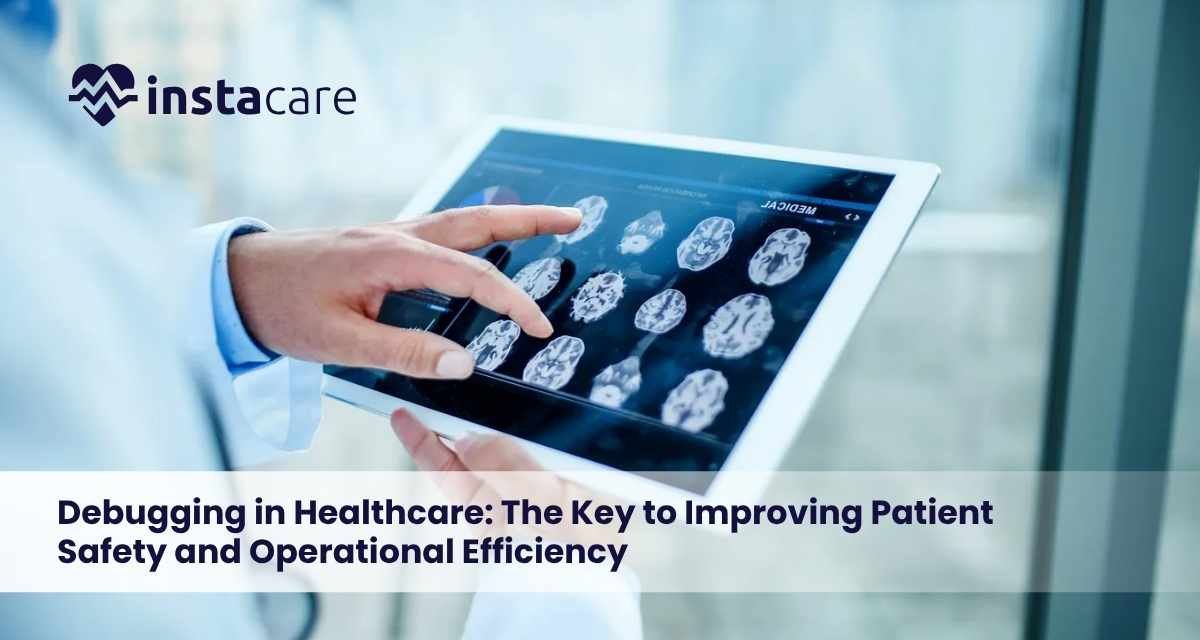
Debugging in Healthcare: The Key to Improving Patient Safety and Operational Efficiency In today’s fast-paced healthcare environment, ensuring patient safety and delivering high-quality care are top priorities. The use of technology in the modern day healthcare system has become something that cannot be done without, both in terms of electronic health records (EHR), modern medical devices, and diagnostic software. Nevertheless, no technology is without problems or glitches, and systems may face bugs or errors to disrupt any operations and even give patients negative results. In healthcare, debugging is a process of identifying, diagnosing, and fixing a malfunction of a healthcare technology system. It plays a very critical role in upholding high quality of care and ensuring smooth running of medical systems. This blog will dwell into the concept of debugging in healthcare, its significance and its role in influencing both patient outcomes as well as the healthcare operations. We will also consider the nature of errors prevalent in the healthcare systems, debugging and typical issues encountered by health care practitioners when trapping. What is Debugging in Healthcare? Healthcare debugging is the act of diagnosing, analyzing, and correcting healthcare technology-related bugs, such as software systems, medical equipment, and electronic health records (EHRs). These are technologies aimed at enhancing efficiency in healthcare, better patient care and decreasing human error. Nevertheless, being a complex system, they may have technical problems that should be addressed as soon as possible to maintain patient safety. In healthcare, healthcare professionals aim to find solutions to problems that may affect patient care, e.g., system crashes, faulty data entry, broken medical equipment, or lack of integration between various health information systems. Effectual debugging, in turn, guarantees that medical professionals will have access to reliable information, medical alerts, and the ability to communicate seamlessly across the platforms. Why is Debugging Important in Healthcare? The importance of debugging in healthcare cannot be overstated. Positional failures of healthcare technology can result in wrong diagnosis, postponing medical interventions, prescription mistakes, or interpersonal misunderstandings between medical practitioners. These are some of the most important reasons why debugging is very important in the healthcare sector: Patient Safety: The most important thing is patient safety in healthcare. Errors in medical software or malfunctions of medical machinery can result in inaccurate diagnostics, treatment delays, or even later adverse patient results. When healthcare technology is being developed, debugging guarantees its functionality as expected and reduces the likelihood of errors and risks posing harm to patients. Medical Records Accuracy: Electronic health records (EHR) are the tools used in recording patient health data consisting of medical histories, medications, and test results. Any defect in the EHR system may cause patients to lose or save data incorrectly, which subsequently may be used in making an error in treatment. Debugging helps to confirm the accuracy and up-to-date nature of medical records, which follows in making informed healthcare decisions. Operational Efficiency: A number of technologies can be used by healthcare systems to optimize different processes including scheduling appointments, patient tracking, and coordinating care, among several providers. Bugs in the system may result in inefficiencies, which translate to delays and mount up workload on the healthcare professionals. Debugging is used to facilitate smooth running of the health care systems to achieve improved care delivery and low operational cost. Regulatory Conformity: Healthcare organizations are bound by stringent regulations in terms of data security, privacy and medical accuracy. Healthcare technology bugs that threaten these regulations may cause both legal and financial implications. To comply with healthcare laws like HIPAA (Health Insurance Portability and Accountability Act) in the United States that regulates the privacy and security of patient data, it is necessary to debug. Common Types of Errors in Healthcare Systems Healthcare is a field where mistakes may be made in many forms and the debugging processes should be able to accommodate a range of problems. Some of the most common errors found in healthcare systems include: EHR Systems Software Bugs Electronic Health Records (EHR) constitute systems necessary in tracking patient information and forwarding the same to other health care providers. A bug in an EHR system may lead to falsified recorded information including the wrong patient names and dosages and even missing medical history. These mistakes may cause misdiagnoses or inappropriate treatment plan. Malfunctioning of Medical Devices Medical equipment like the infusion pumps, ventilators and heart rate recording machines are a part of patient care. In the event of hardware failure or software errors in a device, then the failure may result in faulty data measurements or incorrect administration of medication and endanger the lives of patients. Communication Failures Healthcare providers are dependent on communication systems such as hospital management software and communication platforms with patients to coordinate care. Cod in these systems may result in the loss of messages and alerts, communication breakdowns among the staff members, causing delays in treatment and care prescription errors. Data Security Issues Healthcare data is highly sensitive and needs to be protected from unauthorized access. Security bugs may result in gaps in data protection, which may reveal sensitive patient data to attacks or theft by hackers or other malicious individuals. Integration Problems Healthcare systems frequently have to use several applications and devices, which cooperate with each other. A failure in a single component of the system may result in integration challenges, thus data conflicts, synchronization, and inefficiencies that reduce overall execution of the healthcare ecosystem. Book Your Free Marketing Consultation Strategies to Debug in Healthcare Healthcare organizations should apply a systematic approach to debugging to solve problems. The following are some of the generic ways of troubleshooting healthcare technology systems: Manual Debugging: It entails inspecting the code, logs, system settings manually by healthcare IT professionals in an effort to detect errors. Sometimes manual debugging can be time-consuming yet it is required in detecting the complex problems which cannot be solved by automated tools. Automated Testing and Monitoring: Automated debugging tools may monitor healthcare systems 24/7 to detect possible problems. They can observe errors, crashes, or abnormal behavior

10 Healthcare Business Ideas For Startups Healthcare sector is among the rapidly developing industries in the world and presents inexhaustible chances of innovations and development of business. About the growing need to have convenient, affordable, and technology-oriented care, entrepreneurs are considering new methods of venturing in this arena. Starting with health tech startup ideas and ending with online healthcare business ideas, there are numerous possibilities on the way to the successful venture. Knowing the future healthcare business trends now and strong new medical business opportunities can make you build a sustainable and effective business. Why Invest in Healthcare Startups? The healthcare sector is a stable and necessary industry, and hence it is a good location to venture in by an entrepreneur. There is an ever-increasing demand of better services, digital solutions, and patient-centered care. Investment in the healthcare provides: Long-term growth potential A high demand for innovative solutions. Physical and digital services opportunities. Room to make meaningful contributions to society. All these reasons allow concluding that healthcare is a good option when one wants to venture into Healthcare entrepreneurship ideas and consider entering a developing market. 10 Healthcare Business Ideas for Startups Below are ten new Healthcare startup opportunities in medical business that can work out: 1. Telehealth Services Platform Design an online doctors consulting platform, which links patients and healthcare professionals together at a distance. It is one of the most trendy business concepts of online healthcare today. 2. Health & Wellness Coaching Provide individual training on fitness, nutrition, and mind. It is one of the best businesses when it comes to low investment healthcare business ideas. 3. Home Healthcare Services Deliver home-based services to elderly or chronically ill patients such as nursing and physiotherapy services. It is an expanding sector of healthcare start-up opportunity. 4. Medical Delivery Services Begin a company with the delivery of medicines, laboratory samples, or medical equipment to the homes of patients. This is in line with the present trends in future healthcare business. 5. Health Tech App Development Create fitness trackers, mental health, or appointment booking mobile apps. They are disruptive health technology start-ups that are highly scalable. 6. Diagnostic and Lab Services Establish a mini diagnostic centre or mobile laboratory testing service. It is among the strongest prospects of new medicine business. 7. Medical Equipment Rental Rent equipment such as wheelchairs, oxygen cylinders or hospital beds. It is a low investment viable healthcare business concept. 8. Drugstore or Online Pharmaceutical Establish a drugstore or develop an e-commerce library to sell and distribute medicine, which would add to the online healthcare concept. 9. Mental Health Support Services Provide counseling, therapy, or digital mental health. This is a booming field in the healthcare entrepreneurship concepts. 10. Nurse Training and Education Initiate an educational institution or an online center to educate healthcare practitioners or caregivers. This aids in the growth of workforce and is in line with strategies of healthcare industry start up guides. Book Your Free Marketing Consultation Key Factors to Consider Before Starting Healthcare startup requires proper planning before its undertaking. Policies legal and regulatory. Determine your target market and audience. Develop your budget and sources of funds. Make quality and patient safety a priority. Make investments in trusted technology. A startup guide in the healthcare industry would save risks, and would run smoothly. Challenges in Healthcare Startups There are special issues to healthcare businesses that should be ready to face by the entrepreneurs. Rigorous rules and codes of conduct. Zealous start-up costs in certain sectors. Personal information security and privacy issues. Requirement of qualified personnel. Establishing trust with patients. These obstacles are imperative determinants in the successful venture of healthcare startups. Tips for Success in Healthcare Business The innovation, quality, and customer satisfaction are the key factors to success in the healthcare industry. Finger on the pulse with new business trends in healthcare. Focus on serving patients and experience. Efficiency can be enhanced through technology. Establish effective ties with medical practitioners. Provide continuously better services. The strategies are useful in transforming ideas of health tech startups into successful companies. Conclusion The healthcare sector has enormous scope to an entrepreneur who is prepared to be innovative and find solutions to real life challenges. With the idea of an online healthcare business to the concept of advanced health technology start ups, there are a lot of ways to succeed. Locating startups in the healthcare industry can succeed by identifying market demands, adhering to an excellent healthcare industry startup guide, and concentrating on quality health care. The healthcare businesses can be profitable and effective with the correct strategy. FAQs What are the most appropriate healthcare business ideas as a beginner? Health coaching, medical delivery services, and online consulting platforms are some of the most advantageous healthcare entrepreneurship concepts to beginners since they are comparatively cheap to operate and they are simple to establish. Is online healthcare a profitable business? Indeed, telehealth services and health apps are lucrative business concepts in healthcare online because of the growing need to access and seek convenient and affordable online healthcare. What are the things that I should take into account when starting a healthcare startup? A good healthcare industry startup guide should be in place before beginning, which involves learning about the regulations, demand in the market, budgeting, and concentrating on the quality of patient care.

Top Digital Health Company in Asia by CXO Global Forum InstaCare is proud to announce that the CXO Global Forum has honored it with the prestigious ‘Top Entrepreneur Award’. This recognition reinforces InstaCare’s position as the Top Digital Health Company in Asia and a pioneer in revolutionizing the healthcare landscape. Our innovative solutions and unwavering commitment to healthcare excellence have also earned it multiple accolades, including: Top Digital Health Company in Pakistan Best Healthtech Startup in Pakistan Best EMR and Practice Management Company in Asia These achievements reflect InstaCare’s dedication to leveraging technology to enhance healthcare accessibility, efficiency, and outcomes across the region. Bilal Amjad Reflects on InstaCare’s Commitment “This award is a testament to our mission of transforming healthcare through advanced digital solutions,” said Bilal Amjad, CEO of InstaCare. “We are committed to empowering healthcare providers and patients with tools that elevate care delivery and contribute to a healthier future for everyone.” As a leading digital health platform, we continue to innovate and deliver impactful solutions, including: Electronic Medical Records (EMR) Practice Management Systems Telemedicine Patient Engagement Tools Our efforts are bridging the gap between patients and healthcare providers, ensuring that healthcare is more accessible, efficient, and affordable across Pakistan and beyond. The recognition by CXO Global Forum underscores InstaCare’s vision of setting new benchmarks for healthcare technology, bringing innovation, and making a lasting impact on the healthcare industry.
- 1
- 2