
How to Get More Repeat Bookings with Clinic Management Software? In today’s competitive healthcare environment, private clinics and practices have to not only gain new clients but also retain established ones. Boosting the patient return rate through repeat bookings is one of the core elements of maintaining patients and running a sustainable, long-term business. The modern clinic software can be one of the most potent ways to provoke this. With integrated functionalities like auto-reminders, communication management, and follow-up scheduling, it ensures ease-to-access communication for healthcare professionals while keeping their operations lean. Understanding Repeat Bookings Repeat bookings mean the patients visiting a clinic for a Follow-up appointment system, continued treatment, or prevention. It is a sign of trust, satisfaction on the part of the patient, and an eventual continuation of the patient-clinician relationship. It ensures consistent revenue for the practice and aids in enhancing the health outcome of the patient due to continuity of care. Why Repeat Booking Matters? Follow-up patients are easier to get through the treatment protocol, are good referral sources, and spread the word about your practice. They are also cheaper to keep than to acquire, hence they are vital organs for the success and well-being of any medical cash flow. Therefore, clinics must maintain a balance between maintaining existing patients and attracting new ones. Moreover, frequent patient visits allow healthcare providers to deliver better personalized care and track progress effectively. In the long run, this increases trust and contributes to better community health outcomes. Common Barriers to Repeat Bookings Before diving into how to enhance repeat bookings, it’s important to identify what might prevent them: Long waiting times Poor follow-up communication Forgetting appointments Inconvenient scheduling process Lack of engagement or motivation These are challenges that have a negative impact on patient experience in clinics and result in lost opportunities for follow-up treatment. Book Free Demo Key Features in Clinic Management Software That Drive Repeat Bookings Current clinic management software advantages go well beyond the convenience of administrative tasks. They encompass dedicated tools that directly affect repeat bookings: Online Appointment Scheduling: Patients appreciate Online appointment scheduling for clinics. A system that provides online appointment booking for clinics enables patients to schedule follow-ups at any time, from anywhere. This self-service option is particularly appealing to younger, technology-savvy patients. Automated Reminders: No-shows are frequent, but usually accidental. With appointment reminder software for physicians, repeat bookings through automated SMS, email, or app reminders can minimize no-shows and prompt early bookings. Built-in Communication Tools: Successful follow-up will frequently rest upon continuous communication. EMR with built-in communication tools allow clinicians to deliver updates, lab results, and reminders—all patient-keeping opportunities. Scheduling for Follow-up and Recall: Staff can be reminded by clinic software or even auto-schedule the next appointment using diagnosis or treatment plans to keep a solid follow-up appointment process in place. Patient History and Integration of Data: Integrated records facilitate individualized care, which informs patients that the clinician remembers and cares about their health history. It can prove to be an immense driver for repeat bookings. How does Clinic Management Software help Increase Repeat Bookings? Let’s see in depth how this software can improve patient return directly. Automates Follow-Up and Recall One of the biggest strengths of automated patient recall systems is that they eliminate human error and provide timely contact. Whether chronic illness reviews, vaccinations, or follow-up post-treatment, automating the process means no one falls through the cracks. For instance, dental offices frequently employ this to remind patients of cleanings every six months. Automating the recall process means clinics don’t have to manually track patients to bring them back regularly. Enhances Loyalty and Experience To increase patient loyalty in private practice, personalization is key. Health education content, frequent updates, and chat features help build confidence and bonds. They are part of a wider Patient engagement solutions strategy that enhances communication, stimulates feedback, and establishes long-term relationships. An active patient is more likely to feel looked after and thus more likely to book their next appointment. Reduces No-Shows No-shows interrupt timetables and waste time. Clinic management software dramatically minimizes this problem by using intelligent reminders. One study demonstrated that reminders by SMS cut no-shows by more than 25%. With repeated bookings via automated SMS, practices can remind, reschedule, and follow up—all without staff interaction. This dependability improves working efficiency and patient satisfaction, both of which lead to repeat visits. Increases Loyalty and Experience To build patient loyalty in private practice, customization is the key. With full access to patient histories, communication logs, and preferences, practitioners can provide personalized care. This makes patients satisfied and more likely to book an appointment in the future. Moreover, software solutions make it easy to conduct post-visit surveys. These assist in finding areas for improvement and make patients feel that their voices are heard, enhancing loyalty. Enables Strategic Marketing Effective digital marketing for private clinics can be integrated with the software, using email campaigns or SMS to notify patients about health tips, new services, or appointment openings. When patients regularly hear from their clinic in useful and non-intrusive ways, they stay connected and are more likely to return. Supports Growth Strategies A strong booking and follow-up system facilitates medical practice growth strategies through retaining existing patients, while also allowing for the ability to service new ones efficiently. Clinic software can provide reporting on booking patterns, patient testimonials, and campaign performance, allowing clinics to make informed decisions to grow and expand. How Clinic Management Software Facilitates? The following is a combined list of how Clinic management software benefits repeat bookings: Streamlines scheduling and rebooking Reduces no-shows with automated reminders Increases engagement with personalized communication Automates follow-up recalls Facilitates feedback gathering and service enhancements Increasing patient return rate with clear and consistent communication Syncs with AI healthcare innovations for predictive scheduling Facilitates real-time drug safety monitoring for patients on complicated medications Streamlines healthcare data integration with AI for enhanced patient tracking Supports telemedicine and
AI-Driven Pharmacovigilance: Revolutionizing Drug Safety Monitoring Pharmacovigilance is the study of the monitoring and evaluation of all adverse effects related to pharmaceutical products, and all of this has undergone a drastic transformation owing to the impact of Artificial Intelligence (AI) on this field. Traditional systems are important, but rather reactive and limited in scope. The rise of AI innovations in healthcare is changing the way the world manages drug safety with real-time, data-driven insights. Even countries like Pakistan tend to see Pharmacovigilance System Implementation that need to be implemented for a stronger AI in the Public Health infrastructure and improved patient safety. Understanding Pharmacovigilance By identifying, monitoring, and preventing ADRs, pharmacovigilance can maintain safety to the patient and public trust in medicines, especially upon the introduction of new drugs. A process through which adverse drug reaction notification can greatly increase public safety and trust in medicines. Pharmacovigilance in Pakistan is still developing in countries like Pakistan. It is evident in the growing interest by many health institutions in building better drug safety systems that conform to international standards. Traditional methods, however, seem to fall short on several challenges relating to speed, accuracy, and scope. Limitations of Traditional Pharmacovigilance Methods Conventional pharmacovigilance primarily relies on manual reporting, case analysis, and passive databases for recording adverse reactions to drugs. These enable underreporting, delays, and inconsistencies in the detection of adverse reactions to drugs. Certain incidents may not be reported by healthcare providers, whether owing to time constraints or due to sheer lack of awareness, thereby compromising the efficacy of the entire monitoring system. To add to that, these systems cannot withstand any further scaling with the current volume of healthcare data that continue to be generated from hospitals, pharmacies, and digital health platforms such as telemedicine and drug safety consultations. This becomes a bottleneck for real-time detection of emerging safety signals or effortless management of complex datasets. How AI is Transforming Pharmacovigilance? Artificial intelligence is throwing its weight on drug safety to mitigate various limitations in the above situations by automating the data collection, processing, and analysis processes. Machine learning in pharmacovigilance enables the identification of patterns from large datasets that facilitate the early detection of ADRs that may evade traditional reviews. Natural language processing (NLP) extracts relevant safety information from unstructured data sources, such as clinical notes, social media posts, and electronic health records. AI can merge different information sources to enhance real-time drug safety monitoring and predictive model building. Such AI systems in healthcare are capable of analyzing the patient’s genetic profile, lifestyle, and medical history for predicting Drug Reactions that would otherwise occur. This approach shifts pharmacovigilance from a reactive system to a proactive one regarding its intervention for improving patient outcomes. Book Free Demo Benefits of AI-Driven Pharmacovigilance ● Detection of ADRs at an Early Stage Millions of health records and reports on incidents may be rapidly analyzed by AI for untoward drug reactions. This will enable safety regulators or pharmaceutical companies to react promptly by sending safety announcements or amending drug dosage, etc. ● Enhanced Scalability and Efficiency Automation shortens the time we need to analyze extensive sets of data on pharmacovigilance, thus alleviating the pressure on human resources. This is particularly a huge blessing in nations like Pakistan, where there is hardly any resource for carrying out manual assessment. ● Enhanced Decision-Making With a modular form of AI, decision-making is aided by real-time dashboards and actionable insights to healthcare professionals and regulators. This enhances decision-making to combat safety threats at an early stage of their development. ● Increased Patient Safety By using artificial intelligence, hospitals can enhance Patient Safety through AI with pharmacy data and telemedicine platforms. Artificial intelligence highlights high-risk drugs or interactions, thereby decreasing patient harm. ● Support for Health Initiatives Public AI plays an important role in identifying trends in the public health sector, whether drug misuse or areas of regional side effects, which, when monitored and predicted better, can be useful in designing more effective health policy interventions. ● Convergence with Wearable and Mobile Health Data AI systems typically aggregate and analyze data received from wearable devices and integrated health applications for tracking Adverse Drug Reaction Detection incidents outside clinical settings. Thus, the entire health picture becomes better visible for a patient. It allows real-time, continuous monitoring of drug safety. ● Predictive Assessment of Patients on an Individual Level By better individualizing risk profiles, including genetic evaluation, age, gender, comorbidities, and drug history, artificial intelligence through machine learning in the field of pharmacovigilance can provide risk assessments at the individual level. Hence, personal drug safety improvements in intervention, along with better treatment efficacy and reduced side effects. ● Compliance Support from Regulatory Agencies AI technologies make the financial house easier to recognize to fulfill local and international regulatory requirements through a much more reliable reporting and documentation system created for the pharmaceutical industry and healthcare providers. Automation reduces human error and provides reliability, making pharmacovigilance reporting consistent. ● Strong Clinical Trial Monitoring Automatic processing of participant data leads to a quicker detection of ADRs using AI in the course of clinical trials. This advances safety when conducting trials and facilitates quicker approvals of promising treatments. ● Improve Communication Healthcare Provider AIs can provide notifications and alerts for doctors and pharmacists at the time real-time events when there is an incident likely to warrant a follow-up. Thereby improving communication, the readiness for quick clinical decisions will significantly minimize the possibility of complications. Challenges and Ethical Considerations These AI healthcare innovations are promising in nature, but they have their challenges and some points of ethical concern. ● Data Privacy and Security About the need for AI to enhance pharmacovigilance, a huge volume of sensitive health data is paramount. Privacy and security become a major issue in bringing Healthcare Data Integration with AI under the wings of AI because mishandling of the data can dent public trust. ● Bias in Algorithms “The

How Healthcare Software Bridges the Gap Between Patients and Providers? Healthcare software has emerged as an essential solution which tackles existing challenges concerning communication and care coordination, as well as care continuity problems in the healthcare field. The rapidly evolving healthcare sector has narrowed the physical gap between patients and healthcare professionals through digital methods. The medical industry adopted modern connectivity and access alongside enhanced efficiency after healthcare software became available. The digital transformation is impacting healthcare delivery by creating patient-focused care approaches that utilise data to improve treatment. This blog examines the patient-provider connection facilitated by healthcare software and its positive impact on healthcare services and key performance indicators for patients and providers. Understanding the Communication Gap in Healthcare The digital revolution introduced significant changes to patient-provider interactions, as they previously relied on personal encounters and phone chats, supplemented by written medical documents. Under the previous healthcare system, patients faced problems due to delayed care, disrupted communication, and diminished transparency. Patients felt uninformed and disengaged regarding their health, while providers faced administrative burdens, including manual record maintenance and limited access to external clinic health information. The approach to healthcare shifted from proactive to reactive due to these measures. Healthcare software systems emerged to address the continuous care needs of providers, who sought enhanced communication and more effective coordination between offices through computerised medical applications. What is Healthcare Software? Healthcare software features various digital tools and platforms that help support medical service delivery while ensuring service management. Computer applications in healthcare span simple appointment management systems to advanced AI-driven systems. These tools work together to strengthen communication, enhance accessibility, and enable providers and patients to access instant data for more informed and empowered care. Most Commonly Used Healthcare Software Electronic Health Records (EHR) Electronic Health Record (EHR) represents the most influential healthcare software system currently available. An Electronic Health Record system unifies all patient clinical records into a single digital system, including medical data such as history, test outcomes, images, and therapeutic plans. EHR systems enable provider staff to access key medical information in a streamlined process, which simultaneously decreases documentation work and minimises medical mistakes. Through EHRs patients avoid relaying their medical history at each visit they make and receive care that is both timely and individualised. The standardised structure of electronic health records allows healthcare workers to team up for patient care, which enhances continuity while decreasing possibilities for misunderstandings between providers. Telemedicine Healthcare delivery experienced revolutionary changes through telemedicine solutions and software, which provide virtual care solutions and consulting opportunities between healthcare providers and patients. Patients access medical consultations through protected video sessions from their residences. The technology enables better healthcare accessibility to patients while decreasing their travel expenses and diminishing their journey durations. Healthcare providers achieve better flexibility, and their system allows remote patient monitoring while managing patient queues in an optimised way. Telemedicine platforms link with EHRS and appointment systems, which deliver a unified service experience to health providers and patients. Patient Portals The healthcare connection relies heavily on patient portals as essential elements for communication excellence. Patients can access their health information through secure, structured web-based portals that operate 24 hours a day. Patients can: Healthcare technology users access medical documentation along with their laboratory test results through the portal system. Schedule or cancel appointments Request prescription refills Communicate directly with providers Telehealth platforms and solutions allow patients to pay medical expenses and maintain coverage records. The system delivers higher levels of transparency that increase both patient-provider communication and provider accountability. Patients who enjoy open access to their records and health providers demonstrate increased health journey participation, which results in better treatment results. Mobile Health Apps The mobile health apps transform how individuals handle their daily medical routines. Mobile applications provide users with customised functions that assist in improving patient outcomes and routine medical care practices. Most applications enable wearable devices to track multiple metrics simultaneously. Heart rate Blood sugar levels Blood pressure Sleep patterns Physical activity Healthcare providers gain access to real-time data, which enables them to make better decisions and find medical issues in an early stage. Remote Patient Monitoring RPM systems use technological devices to monitor patients at home outside regular hospital settings. Digital thermometers and blood pressure monitors along with glucose meters, gather patient vital signs which healthcare providers receive during real-time transmissions. Developing the remote patient monitoring system works best in managing chronic diseases because it enables these three key benefits: Early detection of complications Reduced hospital readmissions Personalised treatment adjustments RPM promotes better patient compliance with their prescribed healthcare plan. For patients, RPM offers peace of mind. Through RPM, providers implement preventive measures rather than responding to situations. Practice Management and Billing Software Healthcare facilities need operational efficiency as a priority to run efficiently, but they must focus mainly on delivering clinical care. Practices that implement management tools automate their daily operations, which include: Appointment scheduling Patient registration Insurance verification Billing and claims management The systems cut down paper-based work, resulting in more time available for healthcare personnel to tend to their patients directly. These healthcare systems reduce billing mistakes while expediting reimbursements, and they strengthen operational longevity for medical practices. Challenges in Adopting Healthcare Software Organizations face different obstacles when deploying healthcare software, although they yield positive results. The sensitive health data management must meet all requirements set by HIPAA and GDPR, alongside privacy and security needs. Numerous systems maintain limited connectivity because they fail to operate and exchange data properly. Small practices encounter obstacles to funding and operating sophisticated software systems that handle implementation costs. Healthcare providers, along with their patient engagement experience varying degrees of comfort using digital technology. To succeed with these barriers, one needs to invest in infrastructure development alongside training programs and user-friendly interface development. Conclusion Clinic Management Software is reaching its modern-day importance as an essential healthcare technology. From enabling telemedicine to facilitating real-time health tracking and simplifying administrative processes, it has significantly transformed patient-provider relationships and improved access to

InstaCare and LCCI Partner to Boost Digital Health Innovation in Pakistan In a landmark step toward strengthening Pakistan’s digital health ecosystem, InstaCare Pvt. Ltd. has announced a strategic collaboration with the Lahore Chamber of Commerce & Industry (LCCI) to drive healthcare innovation, affordability, and accessibility for the business community across the country. This forward-looking partnership was officially unveiled at the ICTN Expo, one of Pakistan’s leading technology exhibitions, where both organizations shared a joint vision of transforming healthcare access through digital solutions. Key Highlights of the Partnership Strategic Collaboration for Accessible Healthcare Through this collaboration, InstaCare and LCCI will work together to enhance digital healthcare access and affordability for companies operating under the chamber’s umbrella. This initiative aligns with both organizations’ commitment to empowering the private sector with better health resources for their teams and communities. Launch of the Digital Health Committee InstaCare and LCCI are also launching the first-ever Digital Health Committee within LCCI — a dedicated body that will champion entrepreneurship, policy advocacy, and ecosystem development for the healthtech sector. The committee will serve as a platform to connect startups, healthcare providers, and regulators to foster sustainable innovation. Exclusive Discount for LCCI Members As part of this collaboration, InstaCare will offer an exclusive discount of up to 30% on its digital health solutions to all registered LCCI member companies. This initiative aims to help organizations adopt reliable clinic management systems, telemedicine platforms, lab integrations, and more — at accessible pricing. A Shared Vision for Digital Health Empowerment Speaking about the partnership, Bilal Amjad, CEO of InstaCare, stated: “Pakistan’s healthcare transformation will only be possible when the private sector leads with innovation and accessibility. Our partnership with LCCI is not just a business collaboration — it’s a joint commitment to make healthcare smarter, fairer, and more future-ready.” A representative from LCCI added: “We are proud to partner with InstaCare to launch this important initiative. Digital health is the future, and this committee will play a vital role in promoting innovation and improving access for our members and beyond.”
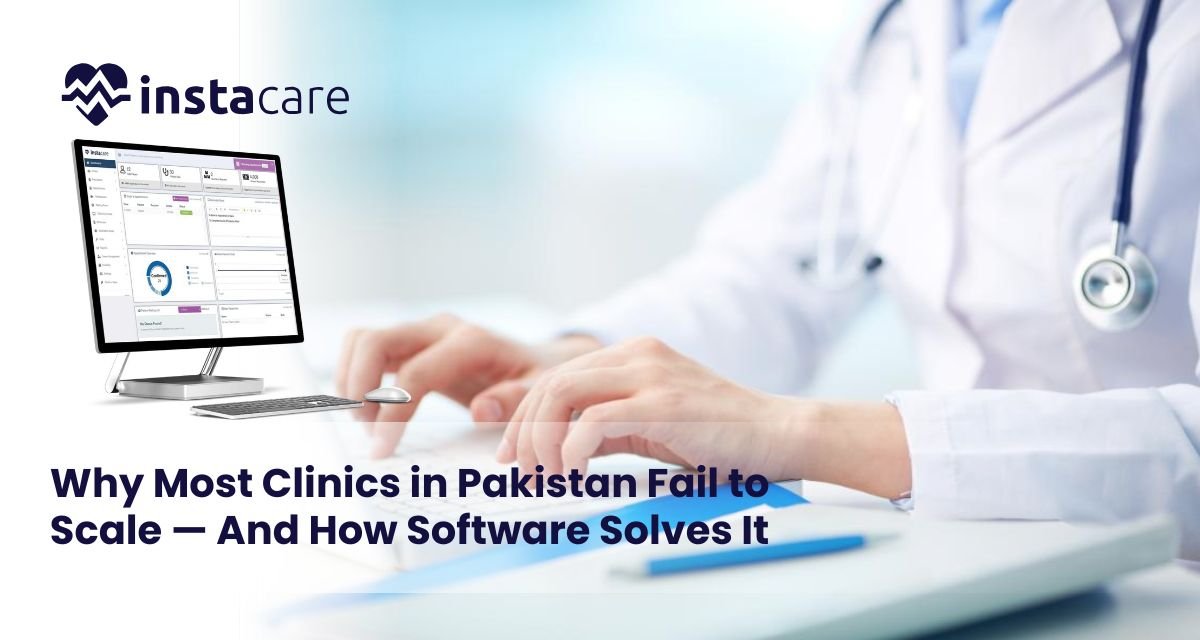
Why Most Clinics in Pakistan Fail to Scale — And How Software Solves It? The rapidly evolving healthcare industry of Pakistan depends heavily on clinics and small medical practices, which provide essential medical care to numerous patients throughout urban and rural areas. These medical facilities treat patients across millions of individuals throughout cities as well as remote areas. Despite performing critical functions, most clinics in Pakistan encounter difficulties expanding their operations past one clinic or doctor location. The expansion of clinics into multi-location healthcare groups remains rare even within densely inhabited areas. Many clinics in Pakistan face growth limitations which leads to a fundamental inquiry about the causes and solutions for this situation. The solution requires an integration of structural problems with business process weaknesses, coupled with weak digital capabilities as the primary reason for growth stagnation. The implementation of digital health record systems and solutions, combined with clinic management software systems, begins to eliminate the barriers that hinder clinic expansion and sustainable scalability. Understanding The Scaling Problem in Pakistani Clinics The objective of scaling a private clinic business exceeds merely extending patient volume across multiple branches. The goal is to develop standardized systems that provide uniform patient care throughout every operational contact point. The majority of clinics in Pakistan battle organizational excellence because of multiple essential factors, and require the best clinic management system in Pakistan 1. Manual Record Keeping and Data Loss Reliable patient documentation records persist on paper at most clinics that operate in the small to mid-sized category. The lack of proper data management produces various problems, which include lost patient history records along with difficult follow-up procedures and increased chances of data loss. Financial expansion through patient data management proves impossible when retrieval capabilities cannot ensure clinical data accessibility. 2. Lack of Operational Visibility The majority of Pakistani clinic owners together with their medical staff operate their clinics without knowing their operational efficiencies. Clinics are effectively making use of the available appointment times. The medical staff manages to follow their scheduled work protocols. What amount of income does the clinic lose through patients who fail to show up and through incorrect inventory management? These important questions remain unanswered because clinics have insufficient monitoring systems. A data-driven strategy is essential for making strategic expansion decisions since the absence of insights will turn important decisions into mere speculation. New clinic branches reflect identical inefficient operational methods from existing facilities, which produce failure instead of growth. 3. Staff Dependency and Lack of Standardization Multiple clinics in Pakistan rely heavily on selected personnel who grasp their operational systems because only these workers enable proper performance. When essential staff members exit, the system fails to function properly. The facilities lack standard operating procedures (SOPs) to train staff and manage flow operations while processing payments. Business expansion depends on standardized operating systems that serve the company beyond individual employees. The absence of automation and enforcement software preserves the fragile and inconsistent operational status of clinics. 4. Financial Leakage and Untracked Expenses Examining monetary movements remains a significant obstacle for businesses trying to expand their medical operations. Several clinics fail to establish proper systems that track both income and expenses, discounts and patient refunds. Petty cash goes unrecorded. Patient payments might be under-reported. The inability to track financial data undermines any possibility of comprehending whether a clinic makes enough profit to grow. The lack of software-backed patient tracking systems results in conflicts about revenue sharing among doctors who share revenue at multi-practitioner clinics. Book Free Demo How Smart Clinic Management Software Solves These Problems? Digital transformation functions across all healthcare institutions, starting from large hospitals to small clinics. A patient management software platform transforms all medical facilities, even in small clinics, through automated operations and improved patient care and data analytics. Here’s how: 1. Automated Appointment Management When patients use clinic software, they can make appointments using a computer or a mobile device options which cuts both telephone congestion and human mistake rates. Software management tools help doctors schedule appointments better so patients obtain their appointments on time, which decreases missed appointments. Real-time updates maintain constant alignment between clinic personnel as well as medical staff. 2. Electronic Medical Records (EMRs) The EMR software for clinics functionality enables clinics to maintain safe storage of patient information including medical records, laboratory reports and clinical prescriptions. The health care quality measures enhance as the system allows patients to keep their medical history accessible across different network doctors or clinics. 3. Centralized Billing and Payments The central billing feature of clinic management software joins all financial operations, including payments and receipt handling together. The software system provides instantaneous transaction recording and report production, and minimises financial loss through cash theft. Seamless payment processing occurs when certain platforms link with POS equipment and digital payment solutions. Benefits of Centralised Billing: Eliminates manual errors Enables transparent revenue-sharing between doctors The software system allows clinic owners to determine their revenue numbers according to service type and department. Patients have better trust in billing processes because items appear separated in statements. 4. Inventory and Pharmacy Management Clinic automation solutions enable clinics with in-house pharmacies to track supply quantities and expiration dates as well as automatically request reorders for consumable materials. The system prevents unnecessary stocking while ensuring essential drugs, together with consumables, remain available during needed. Advantages of inventory automation: Avoids medicine shortages By implementing this measure, expired products cannot reach the market for sale Reduces theft or unaccounted losses The system generates up-to-the-minute evaluations of clinic stock 5. Multi-Branch Management Through software for multi-branch clinics, users can visualise and control various locations through a unified dashboard. Clinic owners gain centralised oversight of all locations’ activities, which include an appointment system along with revenue generation and employee performance tracking, even when they are not physically present. Courting expansion becomes possible for clinics since they gain direct oversight and control across all their new locations. Conclusion Modern medical facilities that will prosper within Pakistan’s changing healthcare environment must begin their

InstaCare at DFDI Forum 2025: Shaping Pakistan’s Digital Health Future InstaCare is proud to have participated in the DFDI Forum 2025, a groundbreaking event organized by the Ministry of IT and Telecom Pakistan, where global investors, tech leaders, and policymakers gathered to discuss the future of digital health in Pakistan. This forum marked a historic step in shaping Pakistan’s digital transformation, securing an impressive $700 million in investment commitments on Day 1 alone. Pakistan’s Rising Digital Health Hub The event showcased how Pakistan is positioning itself as a regional hub for digital innovation, fostering foreign investments and nurturing technological advancements that will drive the future of digital health in Pakistan. It was a unique opportunity for us to engage in meaningful discussions, exchange ideas, and gain insights into how Pakistan is becoming an emerging leader in the digital health ecosystem. Digital FDI: A Catalyst for Growth in Pakistan The momentum at the forum was truly inspiring. With the Ministry of IT and Telecom Pakistan leading the charge, Pakistan is set to become a focal point for global digital partnerships and investment in tech innovations. InstaCare, as part of the digital health sector in Pakistan, is excited to contribute to this evolution by offering cutting-edge healthcare technology solutions, digital health platforms, and telemedicine services to millions of Pakistanis. Opportunities for Growth in Digital Health and Tech Investments The event highlighted the growing interest and commitment from global investors to contribute to Pakistan’s digital growth. With significant investments in telemedicine, healthcare IT solutions, and digital health infrastructure, InstaCare is poised to capitalize on these opportunities to expand its services and contribute to Pakistan’s digital healthcare landscape. By fostering tech investment and collaborating with global partners, we can drive innovation, enhance healthcare delivery, and create sustainable solutions for a digitally empowered future. Key Highlights of DFDI Forum 2025 $700 million investment secured on Day 1 Global discussions on the future of digital health in Pakistan and tech investments Strong emphasis on Pakistan’s role as a regional hub for digital innovation Collaborative opportunities for digital health solutions and telemedicine advancements Looking Ahead: Pakistan’s Digital Health Revolution The DFDI Forum 2025 has set the stage for a new era of tech-driven growth in Pakistan, and we are excited to be part of this journey. With investments flowing into digital health technologies and e-health solutions, Pakistan is on the brink of a digital health revolution, where healthcare services will be more accessible, efficient, and innovative. We look forward to continuing our efforts to enhance digital healthcare solutions, making a real difference in the lives of millions across Pakistan. Join InstaCare in Transforming Pakistan’s Digital Future At InstaCare, we believe that the future of healthcare lies in digital transformation. As part of the Ministry of IT and Telecom Pakistan’s initiative, we are committed to shaping the future of digital health in Pakistan. Stay connected with us and be part of the digital health revolution in Pakistan!

Large Language Models in Healthcare: Revolutionizing Medical Intelligence Artificial Intelligence (AI) has steadily been transforming industries across the board, and healthcare is no exception. Among AI’s most groundbreaking innovations are Large Language Models (LLMs), like OpenAI’s GPT series, that can analyze, generate, and understand human language with exceptional accuracy. These models are reshaping how medical professionals access, process, and utilize information. What is a Large Language Model in Healthcare? Healthcare applications with Large Language Models utilize AI systems that receive extensive medical data training to create texts resembling human-written content. Large Language Models help healthcare professionals through document creation while also offering clinical decision assistance and patient solutions, and performing medical research. The implementation of these systems improves operational efficiency as well as accuracy and accessibility, yet introduces risks related to data security and data truthfulness. Impact of Large Language Models in Healthcare Enhancing Clinical Decision-Making One of the most thrilling uses of LLMs in medicine is helping with clinical decision-making. They can scan through extensive medical literature, patient histories, and diagnostic data to give precise diagnoses and treatment recommendations. Physicians can utilize LLMs to double-check patient histories, medication interactions, and symptoms and save precious minutes in emergency and regular care. These technologies do not supplant human judgment but are sound decision-support systems and decrease the likelihood of oversight or mistake. Additionally, LLMs have the ability to provide case-specific evidence-based guidance, useful in unusual or unprecedented cases. Having AI added into Electronic Health Records (EHRs) also enhances their usefulness by streamlining processes and lowering administrative burdens. Medical Research and Literature Analysis In medicine, one has to keep up with new evidence but more and more challenging. LLMs are able to scan thousands of scientific articles in a matter of seconds and extract findings as well as identify important points of data for researchers. With multidisciplinary data set pattern discovery, LLMs assist scientists in finding areas of missing knowledge and suggesting novel hypotheses. It speeds up the research cycle and enables innovation in pharmaceuticals, disease modeling, and public health policy. In addition, LLMs can generate literature reviews, summarize clinical trial results, and aid regulatory documents, all in a time and cost-effective manner for medical researchers. Patient Engagement and Health Education Good-quality healthcare is the bedrock of doctor-patient interaction. Medical terminology, though, introduces misunderstandings, particularly by non-medical people. LLMs are doing commendable work in ensuring health literacy. By application of chatbots and virtual assistants via AI and LLMs, the following is possible: Translating medical jargon into plain language. Offering answers to straightforward health queries. Publishing post-treatment guidance and reminders. This real-time assistance empowers and engages patients, potentially enhancing compliance and outcomes. Multilingual capability also enables communication with more individuals, bridging the language gap in more diverse healthcare systems. Book Free Demo Various Hospital and Clinic Use Cases for LLMs LLMs are already proving useful in many hospital and clinic environments. Some of the most promising uses are: Clinical Documentation: Automatically generating SOAP notes from physician-patient conversation. Medical Transcription: Transcribing dictations into medical text with formatting. Triage Support: Computerized aides direct patients to the right levels of care. Pre-visit Planning: Patient history summaries for doctors before visits. Coding and Billing: Software automatically determines billing codes and diagnosis codes in insurance claims processing. Such services offer clinicians time-saving benefits and allow increased efficiencies in service delivery. LLMs in Mental Health Treatment The mental health industry is also being enriched by LLM utilization: Virtual Therapy Support: AI buddies providing cognitive behavior therapy (CBT) methods. 24/7 Emotional Support: Chatbot provides immediate responses during a crisis. Anonymized Feedback Tools: Collecting patient feedback without stigma or bias. Mood and Language Analysis: Monitoring language patterns for early depression or anxiety detection. These tools supplement professional mental health treatment but introduce layers of care, particularly where access is limited. Read More about Mental Health Ethical Concerns and Data Privacy via LLMs With the fast speed of LLMs in healthcare, there also arise numerous severe ethical issues. Patient information is highly sensitive, and the use of AI tools is an issue of privacy, consent, and data security. Use of LLMs will be on the understanding that they are used as per the law as embodied in the regulations like HIPAA (US) or GDPR (EU). Any model used must maintain the anonymity of the patient and must remain unbiased while making decisions. Bias is the largest hurdle. If LLMs are not trained on representative data, they will generate biased output, which impacts patient care quality. The systems need to be audited and refreshed from time to time by the developers to ensure safety and fairness. Transparency is also needed. Physicians and patients need to be informed as to how these systems work and the limitations thereof so that they can make intelligent decisions about their use. LLMs and Training and Implementation Issues While LLMs are enormous in potential, implementation in actual healthcare environments presents technical and logistical issues. Hospitals need to invest in infrastructure and training to allow staff to use AI tools to the fullest. Apart from that, compatibility with current healthcare systems like EHRs would also involve vendor and inter-departmental cooperation. The clinicians would also fight against the systems in case they perceive them as invasive or unreliable. The cost is also an issue. LLMs are computationally intensive, and healthcare organizations will have to account for thinking about long-term return on investment. LLMs – The Future of Personalized Medicine LLMs will be at the forefront of the precision medicine revolution, with treatment plans customized according to an individual’s genetic profile, lifestyle, and surroundings. LLMs, using genomic information, medical history, and live health inputs, can assist in creating extremely customized care plans. They can be applied for predictive diagnosis, recognizing potentially high-risk patients even before symptoms manifest, and chronic disease management

What is LIMS Systems? Overview, Benefits, Features, and Importance In the last few years, as data-based industries have become a standard rather than an alternative, labs have felt mounting pressure to deliver rapid, accurate results together with conformance to regulations and guidelines. Thus, Laboratory Information Management Systems (LIMS) are emerging as an essential software package for labs nowadays. A LIMS enables labs to handle samples in a timely, efficient manner, automates trivial tasks, and ensures extremely high levels of data integrity. Understanding the true scope of LIMS can help laboratories streamline their workflow, report more effectively, and make their entire data handling process more efficient. Let’s define what LIMS systems are, what they can provide, what they can accomplish, and why they are such an excellent resource for laboratories today. Understanding LIMS Systems A LIMS leverages computerization and automation in a laboratory environment. It controls sample movement, laboratory operations, and related data, and offers a formal environment to ensure maximum efficiency, accuracy, and regulatory compliance. LIMS is able to be far more than basic sample tracking systems because they have become complete systems that can carry out inventory control, instrument calibration schedules, billing, customer relationship management, and advanced reporting capabilities. Current LIMS packages are capable of interacting with most of the instruments of a laboratory and enterprise systems such that laboratory data are collected in a single place within a facility and departmental communications are enabled. LIMS software is a very convenient tool to interact with diverse industrial applications like pharmaceutical, environmental science, clinical R&D, testing food and beverages, chemical lab, biotechnology, and forensic science. By employing LIMS packages, laboratory environments can eliminate manual reporting, reduce the degree of human error, and achieve an end-to-end audited trail for all laboratory procedures or tests being performed. Key Advantages of LIMS Systems LIMS systems have numerous advantages that increase operational efficiency, data integrity, and business development. Some key advantages are discussed in detail below: Automation of Manual Process: Does away with manual repetitive tasks such as sample tracking, reporting, and logging. Better Handling of Samples: Trace samples in real-time from collection to final disposal, traceable to the last level. Regulation Compliance: Brought labs into conformity with international standards such as ISO 17025, GLP, GCP, and FDA 21 CFR Part 11. Enhanced Entry: Does away with entry mistakes and lab activity consistency. Ease of Time and Space: Provides trained personnel access to laboratory data anywhere across the globe, so remote work is not a concern. Saving Costs: Reduces the operating expense by rationalizing the procedures, preventing wastage, and maximizing the utilization of resources. Real-time Business Decision Making: Provides instant access to sound data and analysis reports for informed business decisions. Enhanced Client Satisfaction: Effective and timely reporting allows laboratories to deliver enhanced services to clients and enhance client relations. Integrity and Security of Data: Sensitive laboratory information is safeguarded from unauthorized access through user authentication, encryption, and audit trails. Implementation of a LIMS system enhances productivity within as well as service quality and reputation without. Book Free Demo Principal Features of a LIMS System A well-designed LIMS system is replete with features that can be customized to meet the advanced needs of today’s laboratories. Some of the most valuable features are: Sample Tracking and Management: Sample location, status, and custody tracking throughout the workflow. Workflow Automation: Streamline workflow to automatically assign work, set due dates, and locate overdue items. Inventory and Supplies Management: Monitors laboratory reagents, consumables, and equipment to avoid stockouts. Laboratory Instrument Integration: Easily integrates with laboratory instruments to import and automatically analyze test results. User Role Management: Offers varying levels of access based on user roles to ensure data privacy. Document Management: Store and archive crucial documents such as SOPs, certificates, and audit reports in a common repository. Audit Trails: Trace all the activity in the system to support traceability and accountability in internal and external audits. Reporting and Analytics: Provides configurable reports and dashboards to return data on laboratory operation and performance. Regulatory Compliance Support: Comprises capabilities to enable support of data integrity, electronic signatures, and validation procedures needed to facilitate approval following regulatory directives. Upon the selection of a LIMS, the lab has to verify that the system complies with their requirement for workflow, goals in scalability, and regulation. Importance of LIMS in Modern Laboratories The laboratory setup has completely changed over the past ten years. The data volumes have increased exponentially, regulatory requirements have increased, and customers desire faster turnaround times. In this kind of dynamic setup, the function of LIMS cannot be exaggerated. A well-planned LIMS allows for better development to accommodate higher numbers of samples with precision. A LIMS allows laboratories to sustain operational levels whether they grow big operations or not. Highly regulated entities use LIMS as the solution for having records available in an audit-ready form and complying with nation-wide and world-wide quality standards. Besides, recent research studies have also been carried out at numerous places that are collaborative in nature. A web-based LIMS system allows for information sharing between individuals who are geographically distant from one another. The second key planning aspect is future-proofing laboratory operations. While digitalization can no longer be optional today, those labs with LIMS capabilities are in a position to choose newer technologies such as AI, machine learning, and IoT for

AI for Medical Diagnosis: How Artificial Intelligence Is Transforming Disease Detection and Treatment Artificial Intelligence (AI) is transforming medicine in ways people’s imaginations a decade ago could not possibly conceive. No longer science fiction, AI is indeed transforming detection, diagnosis, and disease treatment by physicians. Medical AI diagnosis is the most thrilling development in medicine today, and real-world applications are already transforming lives globally. Let us discuss how artificial intelligence is revolutionising medical diagnosis and the future of medicine. Early Detection Saves Lives One of the best reasons why AI has been applied so extensively to the medical diagnostic process is that it identifies disease early. Early identification is a big determining factor in treatment success. The sooner a condition is identified, the more treatments are available to doctors to treat it, and the better the patient will heal. AI can analyse vast quantities of patient data, lab tests, imaging studies, and genetic markers, faster and more accurately than doctors. To give an example, AI computer algorithms trained on thousands of mammograms can identify fine textures in breast tissue that a radiologist cannot see, such as cancers when they are in stage one. Such precision can enable potentially life-threatening illnesses to be detected before the point at which it is too late to treat. Outside of cancer, AI also diagnoses diabetic retinopathy, heart disease, pneumonia, and even mental illness by interpreting patterns of scans or patient behaviour. Its true value lies in its learning and adapting over time and improving with each iteration. AI in Diagnostic Imaging One of the fields where AI has left an enormous mark is medical imaging. X-rays, MRI, and CT scans are expensive diagnostic machines, but they take time, expertise, and frequency to read. Step into AI. Now, medical computers can also read medical scans with incredible precision. The computers were trained on hundreds of thousands of radiology exams and can identify diseases such as tumors, bone fractures, and internal bleeding in organs. AI in Medical Diagnostics is also utilized occasionally, identifying areas of interest even before a radiologist lays eyes on them. It does this with a reduced turnaround time, allowing doctors to treat critical cases more quickly and efficiently. In neuroimaging, AI has been detecting neurological diseases like Alzheimer’s and Parkinson’s years before conventional means. Algorithms detect subtle differences in brain anatomy or perfusion that the human brain might not be able to detect. In cardiology, AI helps diagnose blocked arteries and arrhythmias, leading to heart attack or stroke. Through Image review faster and with reduced diagnostic errors, Image enhancement is improving outcomes and patient safety. Decision Support for Doctors Doctors today are more inundated than ever. But information will not be enough—information must be properly interpreted and in timely relevant. Clinical Decision Support Systems (CDSS) based on AI help doctors make improved decisions by taking into account medical history, signs and symptoms, test results, and treatment in real-time at the same time. These systems are a second brain, reading vast medical databases and studies in real time to give likely diagnoses. This isn’t replacing physicians, it’s providing them with a tool they can use to double-check, confirm suspicions, or even diagnose obscure diseases they may not have otherwise thought of. By taking the chance of human error out of the equation and removing diagnostic delay, AI is becoming an indispensable business partner for today’s clinics. Book Free Demo Real-World Application in Hospitals Hospitals and clinics across the globe are already reaping the benefits of AI-powered diagnostic technology. Leading institutions like the Mayo Clinic, Mount Sinai, and Stanford Medicine have integrated AI into business-as-usual operations. For example, Mount Sinai uses an AI system to anticipate which ICU patients will get sepsis—a potentially fatal disease, before they ever present themselves with symptoms, hours in advance. It lets doctors act and save lives. In cancer clinics as well, AI is being used to help decide the best treatment for a tumor based on its genes so that patients are treated as unique individuals. Hospitals are utilizing AI to provide automated administrative diagnoses, i.e., quick abnormal laboratory test results for timely examination. Such applications, besides improving care, also eliminate the physicians’ workload, bringing it down to burnout. Challenges and Concerns Healthcare AI does have some serious concerns to tackle, however. Privacy is one of them. AI systems handle a lot of patient data, and it must be secure, anonymized, and responsibly used. Bias in machine learning algorithms is a problem as well. Training data to which an algorithm is being trained, unless representative, will not allow the algorithm to generalize over populations. Such a system for diagnosing skin cancer trained on mostly light-skinned patients, for instance, will perform poorly with dark skin. Developers need to make training data representative across all segments. Doctors and patients are rebelling as well. AI technology becomes more reliable, but for others, concerns that too much reliance on computers will mean errors in diagnosis persist. Human management and control must be established in place to place trust. Where AI Excels? Although AI is useful in all fields, there are some diagnostic specialties in which AI is far better than the conventional way. Let us find out where AI works best: Radiology: Identification of lung nodules, fractures, or intra-abdominal hemorrhage. Dermatology: Identification of skin cancer from photographs. Ophthalmology: Identification of diabetic eye disease and glaucoma. Pathology: Identification of abnormally growing cells in biopsy tissue. In each of these fields, AI pattern recognition technology is boosting speed and diagnostic confidence. Rather than substituting for doctors, it allows them to focus on patient care and complex decision-making. How AI Empowers Patients and Providers? AI places very high importance in the providers’ and patients’ hands if used ethically: Faster Turnaround Time: AI allows quicker turnaround time. More Accuracy: Less misdiagnosis equals improved outcomes. Cost-Effectiveness: Prevention through early detection saves expensive end-stage treatment. Fair Care: Where there is a deficiency in poorer societies, AI fills the gap

Immunization Tracking through EMR Software Made Easier As healthcare increasingly shifts to digital solutions, Immunization Tracking through EMR software is transforming how we manage and monitor vaccinations. What was once a complex, paper-based process is now a streamlined, efficient system powered by advanced software, giving both practitioners and patients complete control. From flu shots and travel vaccinations to routine pediatric immunizations, EMR systems are essential for ensuring timely doses, minimizing errors, and providing healthcare providers with centralized, easy access to patient records. This is especially valuable in today’s interconnected, networked healthcare landscape. Major Features Of EMR Immunization EMR software provides measurable benefits of much greater value than convenience. Here’s the payoff in its entirety: Real-Time Record Keeping: Eliminates delay and errors associated with manual entry. Reminders and Alerts: Provides automated reminders, reducing the likelihood of dose omissions. Improved Data Sharing: Conveniently shares vaccine history with schools, employers, or other healthcare providers. Compliance Support: Helps clinics meet national vaccination standards and reporting mandates. Time Savings: Freeing up valuable administrative time, enabling providers to devote more time to patient care. All these amount to improved practice, improved patient safety, and improved public health. Application & Benefits Of Immunization Tracking by EMR Software The Value of Accurate Immunization Records Vaccines are a foundation of public health. Vaccines prevent infectious disease spread and save a million lives annually. But vaccines are only effective if there is the schedule and dosing adherence. That is where accurate immunization records come into play. Paper or tainted records, however, have the undesirable consequence of causing missed doses, duplicate injections, and even becoming a health risk. They are misplaced or missing in emergency conditions or patient transfer between providers. These problems are addressed by EMR systems. Monitoring computerized allows all doses administered to be accurately documented, creating an entire lifetime history of immunizations available at any authorized location. Successful Vaccine Management through EMR Systems Core EMR software must have the ability to automate sophisticated clinical workflows. Immunization tracking is now baseline functionality for almost all EMR systems, and this is how it works: If a vaccine is given, it’s entered on the patient’s electronic record. The software captures important information like the type of vaccine, the manufacturer, the lot number, the location where given, and the provider. This information is then stored indefinitely and added to the patient’s entire medical record. Much more importantly, the system tracks follow-up doses and reminds providers and patients of due or past-due immunizations. This automation avoids vaccinating on schedule delays without reminders. Automated Alerts: Provider Safety Net The favorite thing about EMR-based monitoring for immunization is the automated alert. The provider does not have to go on a wild search for patient records to discover upcoming vaccinations. The system uses reason-based scheduling to produce reminders for all patients based on age, medical history, and recommended vaccinations. For example, children are tracked against early child vaccine schedules, and adults are reminded of shingles, pneumonias, or flu vaccines. The predictive alerts prevent failure of vaccination, thus making individuals and populations safe otherwise at risk. Patient Empowerment Through Digital Portals Healthcare today is heading towards the patient-focused direction, and EMRs are at the center of it. By integrating patient portals with EMR systems, now patients can conveniently access from home to see their immunizations, appointment reminders, and even place orders for copies of their records online. This puts patients well-informed and activated. Parents can track vaccination history on children, adults can track booster shots and flu shots, and travelers can track being ready to go at the destination. Second, electronic reminders timed, through SMS, email, or push notification, radically increase rates of compliance. Integration with National and Global Registries Most EMR solutions are also designed to integrate easily into government immunization registries and health information exchanges. This allows clinics to Develop reports needed by national or local health authorities. Use state-wide or nationwide immunization statistics as a reference. Improve disease surveillance and response to outbreaks. The unity strengthens public health infrastructure and facilitates quick response during emergencies like pandemics or disease outbreaks. AI and Predictive Vaccine Management As EMR software matures, artificial intelligence and machine learning are being used to enhance the forecasting of vaccines and activation of patients. For instance, EMRs will be in a position to forecast who will be most likely to miss an upcoming vaccination and automatically schedule follow-ups. They can even use population-level information to inform policymakers where they have to prioritize vaccinations during crisis. This idea of leadership reframes immunization tracking from passive to active, proactive, serving the entire healthcare ecosystem. Best Practices for Optimum EMR Immunization Solutions To aim towards maximum benefits of monitoring immunizations using EMR software, doctors and health practitioners must have the following in place: Train Healthcare Personnel Appropriately: Train all health personnel in recording vaccine information and viewing immunization calendars on the software. Standardize Documentation: Document on the same types of documents across the entire network, avoiding error entries and enhancing the quality of information. Make It Cross-Accessible: Allow sharing immunization records in real-time across departments or even offices within the network of health centers. Audit Records Frequently: Regular audits prevent missed doses, repeated doses, or incorrect recording. Budzing these practices into work on a daily basis, health centers are able to provide more uniform and reliable immunization services. Real-World Impact: Community Health at Scale When EMR immunization software is effectively installed in clinics, schools, pharmacies, and hospitals, the effect quickly scales. Where EMR integration is strong, governments have reported: Improved vaccination coverage Improved speed in ending outbreaks Better vaccine