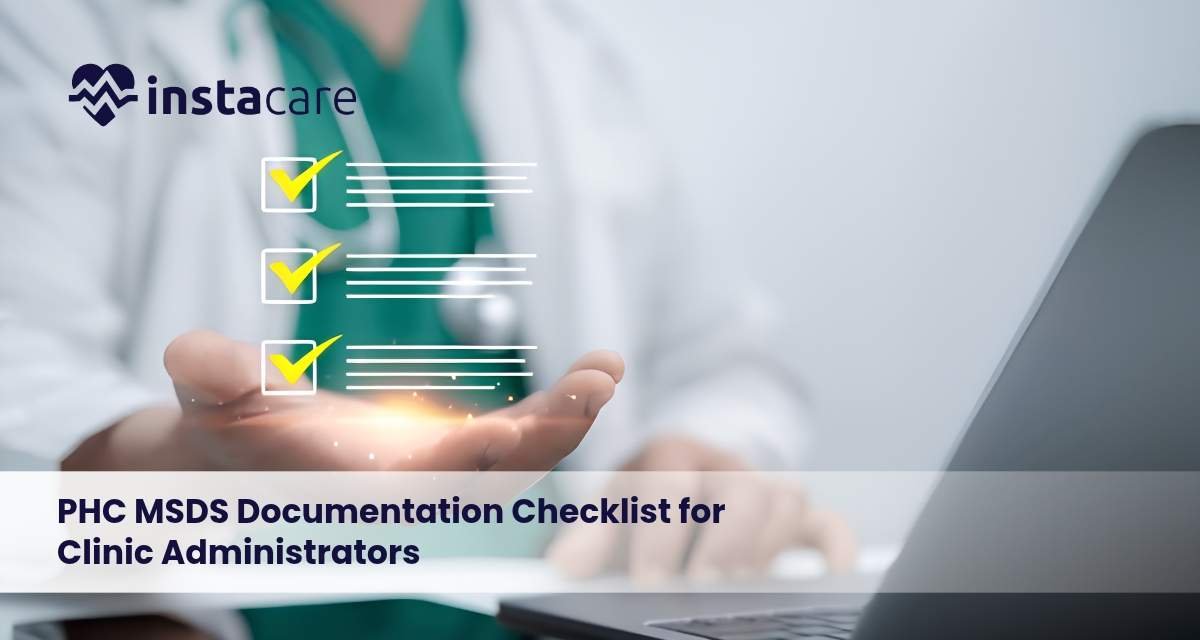
A clinic’s paperwork has to show three things to the Punjab Healthcare Commission (PHC): that it is registered and licensed, that qualified, registered staff provide only the services it is registered for, and that it follows the Minimum Service Delivery Standards (MSDS) for its category. This checklist sorts the documents you keep by their legal status, so you know what the law requires, what the standards expect, and what is simply good practice. Every item below carries one of three labels: Label Meaning Law Comes from the Punjab Healthcare Commission Act 2010 and is binding Standard Comes from the PHC MSDS, which the PHC applies through licensing Good practice Our suggestion. Useful, but not a PHC requirement The PHC issues the MSDS and a Reference Manual for each category of healthcare establishment, so check the version for yours before you rely on any list, ours included. For the medical record rules in detail, see our guide to PHC MSDS medical record requirements. What is Binding and What is Guidance? Not every document the PHC asks about has the same force. The table shows where each rule comes from. Source What it is Status Why it matters to your paperwork Punjab Healthcare Commission Act 2010 The law (Act XVI of 2010) Law A provider may not offer healthcare services without registration (section 13) and may use an establishment only under a PHC licence (section 14). A licence is valid for five years (section 16) Same Act, section 22 Inspections Law Inspection teams can visit when a licence is issued or renewed, or after a complaint. Refusing or failing, without reasonable cause, to give them information can bring a fine of up to Rs 50,000 Licensing Regulations 2020 Detailed registration and licensing rules under the Act Law Check the current text on the PHC website for forms, fees and conditions MSDS for your category Minimum standards notified by the Government (section 2) and implemented by the PHC (section 20) Standard According to the PHC, a regular licence requires total compliance with the MSDS. Partial compliance can lead to a conditional licence MSDS Reference Manual Explanatory guide issued with the MSDS Standard (guide) Read it together with the MSDS for your category This checklist’s workflows and templates Our suggestions Good practice Not binding. Adapt them to your clinic The penalties are real. The PHC’s licensing FAQ says a provider that does not implement the MSDS on time may be fined up to Rs 500,000 or ordered closed until it meets them. Licences can also be suspended, revoked or refused renewal for failing the standards or refusing inspection. In September 2026 the PHC carried out 1,856 regulatory inspections and sealed four centres (Pakistan Observer). Checklist 1: Your registration and licence file Keep one file, on paper and as scans, that shows your clinic is legally entitled to operate. The PHC’s licensing process runs from registration to a provisional licence, MSDS training, a pre-assessment and a formal inspection before the regular licence. Document Label What to keep Registration application on the PHC prescribed form, and the PHC’s acknowledgement Law (section 13) The submitted form and proof of submission. The PHC says registration carries no fee Licence application with the prescribed documents and fee Law (section 15) The application, the documents attached to it and the fee receipt. The application is due within 30 days of registration unless the Government sets another period Affidavit on stamp paper Law (prescribed form) The PHC’s registration form for clinics without indoor facilities lists it as an attachment. Download the current form from the PHC site to see the full list Provisional licence and the MSDS and Reference Manual for your category Standard The PHC issues these when it receives your application, with a deadline to implement the standards Regular licence Law (section 16) The original, valid five years. Note the expiry date in a diary or reminder system Renewal application and fee receipt Law Renewal needs an inspection survey, and the PHC will not issue the renewed licence until it receives the fee MSDS training attendance records Good practice The PHC invites staff to MSDS training. Keep proof of who attended and when Pre-assessment or inspection report and your reply Good practice Keep each report and the actions you took on it Checklist 2: Staff and scope of practice Two of the problems the PHC reported from its September 2026 inspections were clinics operating beyond the scope of their registration and clinics without qualified, registered doctors (Pakistan Observer). Your staff and scope documents answer both. Document Label What to keep Licence stating the kind and purpose of the establishment Law (sections 14 and 17) A clinic may be used only as its licence allows. List the services you offer next to the licence and check that each one is covered Licences from other regulators where they apply Law (other regulator) The PHC’s inspectors also flagged missing approvals from the Pakistan Nuclear Regulatory Authority and the Punjab Blood Transfusion Authority. Keep these if you offer imaging or blood services Qualification certificates and council registrations for every doctor and clinical staff member Good practice A copy for each person, with the registration number and expiry date Staff list with role, joining date and scope of duties Good practice One current list, updated when anyone joins or leaves Signed and dated duty roster Good practice Keep past rosters too, so you can show who was on duty on a given day Supervision records for junior staff Good practice Who supervised whom, and for which tasks The exact staffing documents your clinic needs depend on its category, so confirm them against your MSDS. Checklist 3: Patient records The PHC listed poor maintenance of patient records among the problems it found in its September 2026 inspections. The detailed record rules in the PHC’s published hospital standards cover unique patient identifiers, who may make entries, dated and timed entries, confidentiality, correction of errors and regular review. We explain them in our guide to PHC
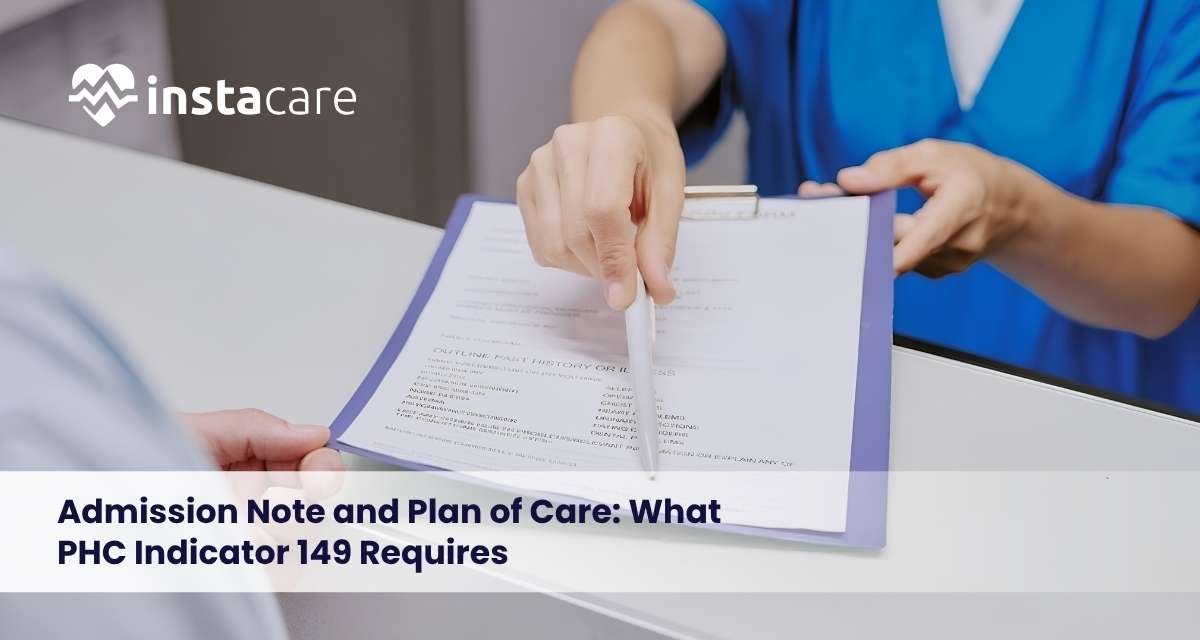
Admission Note and Plan of Care: What PHC Indicator 149 Requires A hospital admission record meets PHC Indicator 149 when every patient’s medical record is complete and legible and contains three things: the reason for admission, the presumptive diagnosis, and a documented plan and progress of care. This guide explains what to write for each, shows where hospitals usually slip, and gives you a template your wards can start using this week. Regulator Punjab Healthcare Commission (PHC) Standard 29 (IMS-2): the medical record reflects continuity of care Indicator 149 Priority Critical Applies to Hospitals admitting patients Indicator 149 is part of the PHC Information Management Systems standards. For all 19 indicators, see our guide to PHC Information Management Standards (IMS 28-30). What PHC Indicator 149 Requires The indicator says the medical record contains information about the reasons for admission, the diagnosis and the plan of care. A reviewer checking a patient’s file looks for four things: The reason for admission is written down. A presumptive diagnosis is recorded. This is the working diagnosis the team holds while tests and treatment continue. The plan of care is documented, and so is its progress as the stay goes on. The whole record is complete and legible. A note nobody can read does not count. Why It Is a Critical Indicator Indicator 149 is one of six critical indicators in Standard 29, alongside operative procedures (150), transfers (151), discharge (152), death (153) and autopsy (154). The admission note is where the patient’s story begins. Every later entry, from the progress notes to the discharge summary, builds on it, so a gap here carries through the whole file. What the Record Must Contain The PHC lists three contents and asks that the record be complete and legible. The “what to write” column is practical guidance for ward teams; the headings are the PHC’s. # PHC requirement What to write Example entry 1 Reason for admission The presenting problem in plain words, with when it started and why the patient needs to be in hospital Fever for 3 days with breathlessness; unable to manage at home 2 Presumptive diagnosis The working diagnosis at admission. It may change, and the change should be written down Presumptive diagnosis: community-acquired pneumonia 3 Plan of care Planned investigations, treatment, monitoring and who is responsible Chest X-ray and blood tests today; IV antibiotics; review by consultant in the morning 4 Progress of care Dated and timed progress notes showing how the patient is responding and any change to the plan Day 2: fever settling, oxygen reduced; continue antibiotics, repeat bloods tomorrow The examples are illustrative only. Use your own clinical content. Keep the plan alive. A plan written on admission and never updated is a common problem. When the diagnosis or treatment changes, record the change and the reason in a new, dated entry. Make it legible. The PHC asks for complete and legible records, so handwriting that nobody else can read is a finding in itself. Legibility is also checked in the record review under Indicator 159. Many hospitals add more. Medical history, examination findings, allergies, current medicines and consent are common additions to an admission note. They are good practice but not among the three the PHC lists, so add them on top, never instead. Where Hospitals Usually Fail on Admission Records These are the gaps to look for in your own files. Each maps to the indicator’s wording. Reason for admission missing or vague, for example “for evaluation” with no problem described. No presumptive diagnosis on the admission note, so it only appears later in the file, if at all. No documented plan of care, only a list of orders. No progress notes for days at a time, so the file does not show how care progressed. A plan that never changes, even though the treatment did. Entries with no name, title, date or time. Every entry should show who wrote it and when (Indicators 146 and 147). Illegible handwriting, which fails the “complete and legible” requirement and a legibility review (Indicator 159). Admission note and discharge summary that do not match, for example a different diagnosis with no explanation. See our guide to the discharge summary (Indicator 152). If your wards show more than a few of these, a monthly sample audit will show how widespread the problem is. Book Your Free Marketing Consultation How to Comply with Indicator 149 in Six Steps Use one standard admission form built around reason for admission, presumptive diagnosis and plan of care, so no ward invents its own format. Set a time limit in your policy for completing the admission note after the patient arrives, and make it known to every admitting doctor. Set a rule for progress notes. Your policy should say how often a patient’s progress is documented, and by whom. Update the plan when anything changes. Record the new diagnosis or treatment and the reason, in a new dated entry. Sign every entry properly with name, title, date and time, and add the signers to your written list of authorized individuals (Indicator 145). Audit a sample every month. Check current and discharged records for the three contents and for legibility, and document what you find and fix (Indicators 156 to 162). Admission Note Template Use this as a starting point and adapt the wording to your wards. Section Entry Patient (name, age, sex, MRN, ward, consultant) Date and time of admission 1. Reason for admission 2. Presumptive diagnosis 3. Plan of care (investigations, treatment, monitoring, responsible doctor) Written by (name and title) Signature, date and time Progress Note (Repeat as Needed) Section Entry Date and time Progress since last note Change to diagnosis or plan, and why Written by (name and title), signature How Hospital Software Helps with Admission and Progress Records Paper admission notes are easy to leave thin, hard to read and hard to find. Progress notes scatter across loose sheets. An electronic medical record fixes both. With CoreMedix hospital management software and
A Master Patient Index (MPI) is an important element of a healthcare information management system. It helps health organizations to reliably identify patients, classify and consolidate patient information, and integrate patient records across various departments and systems. The increasing adoption of electronic records in healthcare has amplified the need to accurately manage patient identities to facilitate timely, safe, and quality care. An effectively managed Master Patient Index helps reduce redundant patient records and eliminates or minimizes patient identification errors. Additionally, it enables authorized users to access valuable and reliable patient information. Understanding the operations, features, benefits, and associated challenges of an MPI gives healthcare workers insight into its importance in healthcare data management. What Is a Master Patient Index (MPI)? A Master Patient Index (MPI) is a database or indexing system that captures patient identifiers and provides connectivity to a patient’s health information across a range of healthcare services provided by an organization. There are many identifiers assigned to a patient. Some of these identifiers connect the patient’s demographic and clinical information and records across a variety of healthcare systems. An MPI typically consists of: Patient’s name Date of birth Gender or sex Address Contact information Medical record number Patient identification number Insurance information An MPI enables access to the right patient information by helping to resolve patient identifier conflicts. It acts as a patient identity management system and connects patients to their health information. An Electronic Health Record (EHR) captures health information in greater depth and breadth than an MPI. EHRs are typically clinical systems. How Does a Master Patient Index Work? A Master Patient Index consolidates a patient’s identification information across various healthcare systems and organizes it in a way that allows the information to be matched. Every time a patient enrolls for a healthcare service, a healthcare worker enters the patient’s demographic information into the system. The MPI checks whether an existing patient record matches the information entered. If a match is found, the new registration is linked to the existing patient record. If there is no match, a new patient record is created. More complex MPI systems deploy matching algorithms to help reduce duplicate patient records. If a patient visits different departments within the same healthcare organization, the MPI helps associate the patient’s records with the correct identity. Potential matches that cannot be automatically confirmed require review by authorized staff. A Master Patient Index works more effectively when integrated with a reliable patient system that organizes patient registration, maintains accurate patient records, and supports efficient information retrieval. Healthcare facilities can use a best patient management software solution to streamline administrative workflows, reduce data entry errors, and improve the management of patient information across departments. Key Features of a Master Patient Index A comprehensive MPI should contain certain features to accurately identify patients and manage healthcare information. Unique Patient Identification In an MPI, patients are assigned a unique identifier that differentiates their records from other records. Using a unique identifier helps avoid confusion between patients with the same or similar names. Duplicate Record Detection MPI systems help identify duplicate records generated when patients provide incomplete or inconsistent information. Duplicates may also occur when patients register more than once. Detecting duplicates helps healthcare facilities improve data quality and maintain accurate patient records. Patient Record Matching Record matching involves comparing records containing the same or similar information to determine whether they belong to the same person. Various techniques include exact matching and probabilistic matching. Data Integration An MPI may facilitate the integration of various data systems, such as registration systems, electronic health records, pathology systems, and laboratory systems. Data Updates and Maintenance An MPI may facilitate the maintenance of patient records by allowing changes to be made when patient information changes. Security and Access Controls MPI systems may incorporate role-based access controls, data encryption, and audit trails to enable controlled access to patient records. Why Is a Master Patient Index Important in Healthcare? Correct patient identification is critical to delivering competent, high-quality healthcare services. An MPI is an important resource that links a patient’s unique identifier to the appropriate information. An MPI reduces the possibility of incomplete and fragmented patient data. This facilitates information sharing between various departments within an organization. Without an MPI, healthcare staff may be unable to find a patient’s previous laboratory results if those results are stored in a duplicate file. An MPI effectively links patient records to a unified patient identity. This strengthens healthcare organizations’ registration, billing, and collection processes while improving interdepartmental communication. Benefits of a Master Patient Index Improved Patient Safety An MPI decreases the risk of medical information being connected to the wrong patient by supporting accurate identification. It allows clinicians to make more informed decisions by retrieving the correct patient information. Fewer Duplicate Patient Records Multiple patient records can lead to confusion and increase staff workloads. An MPI can help identify and resolve duplicate patient identities, improving the overall quality of healthcare information. More Effective Care Coordination Healthcare workers often need to review various patient records to gain a complete understanding of a patient’s medical history. An MPI helps connect these records so healthcare workers can access more complete information. Enhanced Operational Efficiency An MPI decreases the time spent locating patient records and editing or removing duplicates. This allows administrative staff to work more productively. Improved Billing Accuracy Consistent patient identification helps consolidate billing information under the correct patient account, improving the overall accuracy of claims. Better Healthcare Quality and Data Management A reliable patient identity system supports the creation of quality reports, operational reports, and other reports that can help improve the overall healthcare system. Book Your Free Marketing Consultation Master Patient Index vs. Enterprise Master Patient Index A Master Patient Index (MPI) and an Enterprise Master Patient Index (EMPI) both help unify patient identities. However, an EMPI generally covers a broader area. An MPI is typically confined to a single healthcare organization or system. For example, it can unify patient records across different services within a single
Healthcare Data Lifecycle: Understanding the Journey of Healthcare Information Healthcare data is the foundation of stakeholder collaboration to optimize patient care. For healthcare systems to evolve and benefit the patient, there is a need to strategically manage the volumes of data created in the process. Effective data management encompasses the healthcare data lifecycle. The healthcare data lifecycle demonstrates the various steps taken from the creation of data to its retention or destruction. The focus of each step is to guarantee data is secure, accessible, and usable in the form of quality information. Healthcare personnel should be able to access the information needed to deliver care. The benefits of transitioning to digital systems in healthcare have encouraged further growth in the industry. Simultaneously, there is an increased risk of breaching the trust of patients by exposing their health and personal information. For healthcare systems to evolve and have the digital backbone, reliability of information systems is a must. Understanding the data lifecycle assists in information management. What Is the Healthcare Data Lifecycle? The healthcare data lifecycle captures the various stages of the healthcare data journey. These stages include creating, collecting, storing, processing, analyzing, communicating, keeping, and eliminating data. Examples of healthcare data include patient data, medical histories, diagnostic data, laboratory data, imaging data, service data, billing data, and health data. Healthcare organizations must manage this data to keep it accurate and accessible while protecting it from unauthorized access. Healthcare organizations benefit from efficient data lifecycle management through improved business decision-making. Additional benefits include reduced operation errors and improved services. As a result, organizations are able to improve the overall patient experience. Stages of the Healthcare Data Lifecycle 1. Data Creation and Generation The creation of healthcare data is the starting point of a healthcare data lifecycle. Healthcare data is created during the course of providing or receiving healthcare services. This includes consultations, tests, procedures, observations, and the use of healthcare equipment and facilities. When creating new data, it is important to ensure that accuracy is maintained. This is especially important because, at some point in time, this data may be used to make healthcare decisions. Healthcare data may be created in various formats and in several ways, including through forms, electronic documentation, and electronic data capture. Examples of Healthcare Data Names Dates of birth Races Ethnicities Genders Sexual orientations Addresses Marital statuses Family and social histories Symptoms Findings Diagnoses Tests and procedures Treatments Medications Services Healthcare data created correctly and completely forms the base for other activities in the lifecycle of the data. 2. Data Collection and Integration After data is created, it must be retrieved and structured. Data in healthcare is often scattered across different systems, and therefore, integration becomes essential in this process. Different departments and facilities within the healthcare system generate and maintain different information. Combining these information sources helps healthcare personnel have a more comprehensive understanding of an individual’s health status and condition. Essential Elements of Data Collection Standardization of data Identification of information sources Elimination of redundant information Verification of information Protection of information during transfer Integration of healthcare data helps work groups work together and aids healthcare professionals in making informed decisions and fulfilling their obligations based on complete and sufficient information. 3. Data Storage and Maintenance Once healthcare data is collected, it needs to be securely stored, organized, and managed through systems such as Hospital Management Software. As with other data, storage also has the concern of security. This ensures that the data is neither accessed nor processed illegally and remains complete and available to the entity that owns it. Storage has the primary concern of ensuring the data is available in an accessible format. This requires a balance between factors that impact the security and accessibility of the data. Security of the data is impacted by the confidence and integrity levels and the access controls that are implemented on the data. Storage also needs to ensure that the data is processed reliably and is available in a defined format. Healthcare data is subject to both retention and retention laws. Therefore, data may be stored for an extended period. It is important that, during the extended period of storage, data is updated and checked for accuracy to ensure it is relevant and useful to the organization. 4. Data Processing and Management Data in the healthcare sector is typically raw and unstructured and therefore not immediately actionable. Before it can be utilized, it must undergo numerous processing activities. Examples of Data Processing Activities Data cleansing Data reduction Data integration Data standardization Data quality improvement Managing data helps the healthcare workforce work effectively and efficiently and improves the quality and safety of services offered to patients. Poor management of data leads to negative consequences, including loss of time, increased stress, frustration, and an increased likelihood of erroneous conclusions. Hence, data processing activities should be performed while maintaining the integrity of the data. 5. Data Analysis and Utilization The analysis of healthcare data helps uncover relevant information. Recognizing relevant information in healthcare data allows for detection of trends, measurement of performance, and revision of protocols in order to promote quality in healthcare services. What Can Healthcare Data Analysis Achieve? Better comprehension of public health More effective health planning Maximization of available resources Definition of performance standards Fostering of prevention in health Protection of confidentiality while performing analyses on healthcare data Healthcare data should be systematically collected to assess its value and appropriately analyzed and utilized to promote its worth. 6. Data Sharing and Exchange Health information is frequently transferred between various staff members, departments, and facilities. Secure data exchange helps improve communication and collaboration. The implementation of practices that ensure the security and confidentiality of health information is of great importance during data transmission. Security Measures for Data Sharing Limit access to the minimum required Use protected and secure ways of communication Guarantee the integrity and authenticity of transmitted data Trace the use of the data The ability to implement these practices empowers healthcare professionals to

Predictive vs. Prescriptive Analytics: Understanding the Difference and Business Impact Companies collect reams of data. But only by identifying patterns and nuances can companies extract real value from that data. There are numerous opportunities for businesses to use analytics and improve their products and services. One such opportunity is the use of advanced analytics, such as predictive and prescriptive analytics. Predictive analytics allows businesses to look into the future and consider possible and probable outcomes. Prescriptive analytics, however, points to paths businesses should consider. When a business understands the subtleties and distinctions between predictive and prescriptive analytics, it can maximize its resources and minimize its risks and liabilities. These distinctions also help craft and implement policies and procedures that improve and optimize business operations and profitability. What Is Predictive Analytics? Predictive analytics is the use of data and analysis to predict future events. This technique focuses on answering the question, “What will happen in the future?” This differs from historical or traditional analysis, which focuses on answering questions such as: What happened in the past? What is happening now? Predictive analytics focuses on determining what the future may hold based on historical patterns. When performing predictive analysis, there is always the possibility of unexpected outcomes. The goal is to equip organizations with the tools they need to prepare for potential situations. How Predictive Analytics Helps Businesses Predictive analytics helps organizations: Anticipate likely demand for their products and services. Predict customer interests and purchasing behavior. Identify and resolve potential high-impact operational problems. Determine where the organization’s money is likely to go. Recognize abnormalities in structures or patterns that could lead to negative consequences. The objective is to develop and strengthen an organization’s ability to proactively address probable situations. What Is Prescriptive Analytics? Prescriptive analytics tells an organization what actions should be taken based on insights from data. In short, this form of analytics answers the question, “What should be done?” To thrive in today’s business environment, organizations need to be proactive. Predicting what will happen is not enough. The focus should also be on determining what steps should be taken to improve a situation. Prescriptive analytics helps organize and simplify complex situations for management by providing actionable recommendations. How Prescriptive Analytics Helps Businesses Prescriptive analytics helps organizations: Make the best use of company resources. Minimize company expenses. Incorporate strategies for achieving business goals. Address challenges in decision-making. This type of analysis takes into account an organization’s core knowledge and sophisticated computational analysis. Key Differences Between Predictive and Prescriptive Analytics Although both methods rely on data, their objectives and outcomes are different. 1. Purpose Predictive Analytics Predictive analytics draws from historical data and identifies patterns to estimate what may happen in the future. This analysis typically takes the form of probability distributions and assists in planning for various possible future scenarios. Prescriptive Analytics Prescriptive analytics builds upon predictive analytics to recommend potential actions that can help achieve a desired outcome. While recommendations do not guarantee that the desired outcome will be achieved, prescriptive analytics provides a more action-oriented level of analysis. 2. Main Question Answered Predictive Analytics Predictive analytics provides insights into the future by identifying likely scenarios. Answers to questions about the future are often estimates based on available historical data and trends. Prescriptive Analytics Prescriptive analytics focuses on determining how to achieve or resolve something. It provides recommendations to stakeholders to help achieve a desired outcome. 3. Level of Decision Support Predictive Analytics Predictive analytics helps organizations project possible future events. This supports planning by providing different scenarios and helping explain the potential reasons behind those events. Prescriptive Analytics Prescriptive analytics focuses on providing recommendations for potential actions. It helps organizations identify possible solutions to different business scenarios. 4. Complexity Predictive Analytics Predictive analytics focuses on projecting possible events and trends based on available information. Prescriptive Analytics Prescriptive analytics focuses on identifying potential solutions to business problems and challenges. It considers more complex decision-making frameworks than predictive analytics. 5. Business Value Predictive Analytics Predictive analytics adds value to an organization by extending its ability to anticipate future events. It helps businesses prepare for various possible outcomes. Prescriptive Analytics Prescriptive analytics adds value by extending an organization’s foresight and enabling it to proactively consider and select potential options for different future scenarios. Book Your Free Marketing Consultation How Do Predictive and Prescriptive Analytics Work Together? Predictive and prescriptive analytics do not conflict. In fact, integrating both approaches can help organizations make more informed decisions. Generally, predictive analytics comes first. Through analysis, patterns and trends can reveal possible outcomes. Prescriptive analytics then uses these insights to identify potential solutions and recommendations. Example of Predictive and Prescriptive Analytics Consider the following scenario: Predictive Analytics: Predictive analysis may show that customer demand is likely to increase. Prescriptive Analytics: Prescriptive analysis may recommend adjusting inventory or production levels. It may also suggest changes to marketing or sales activities. The overall process of integrating both types of analytics can be represented as: Data → Predict → Identify Possible Solutions → Recommend Actions Organizations can no longer be satisfied with simply understanding and interpreting data. Instead, they must strategically act upon data to improve business processes and outcomes. Benefits of Predictive Analytics Predictive analytics can help organizations improve their operations and planning in several ways. 1. Improve Business Planning Anticipating future changes allows businesses to create plans that address upcoming issues rather than responding to problems after they occur. 2. Better Identify Risks When focused on a particular issue, predictive models can help identify potential risks and support proactive risk management. 3. Enhance Customer Relationships Recognizing and understanding customer behavior can help businesses modify their offerings and create a better customer experience. 4. Better Manage Business Activities Predictive analytics can help businesses plan and optimize resource utilization based on expected demand. Benefits of Prescriptive Analytics Prescriptive analytics focuses not only on what may happen next but also on what actions should be taken in response. 1. Smarter Decisions Instead of simply projecting different scenarios, prescriptive

Medication Therapy Management: Improving Medication Safety and Patient Health Medication Therapy Management (MTM) offers a service-based solution to patients who struggle with the safe, proper, and effective use of their medications. With many patients taking multiple medications for different health conditions, managing them correctly can be confusing and distressing and may lead to negative health implications. MTM helps patients and healthcare providers determine how medications should be dosed and timed to improve patients’ health and safety. It also reduces the potential for medication-related issues to become serious problems. MTM is particularly beneficial for patients who take multiple medications, have multiple chronic health conditions, experience medication-related problems, or have difficulty managing their treatment. What Is Medication Therapy Management? Medication Therapy Management (MTM) involves analyzing all the medications a patient uses. These may include prescription drugs, non-prescription drugs, dietary supplements, and vitamins. MTM evaluates whether each medication is appropriate based on its indication, effectiveness, safety, and usefulness. The process aims to answer several important questions: Is the patient prescribed the appropriate medication for their medical condition? Is the dosage correct? Do the prescribed medications interact and cause adverse effects? Is the medication being taken at the correct time? Are there unnecessary or redundant medications that could be discontinued under medical advice? Identifying and addressing medication-related problems through MTM enables healthcare professionals to provide safer and more personalized care. Why Is Medication Therapy Management Important? Health concerns often involve multiple conditions and require complicated treatment strategies. Individuals with conditions such as diabetes, high blood pressure, heart disease, asthma, and similar illnesses may take several medications every day. Managing multiple medications can be particularly challenging for older adults. Medication Therapy Management helps address several common problems associated with medication use. Drug Administration Errors Some patients may take extra doses, skip doses, or take medications at the wrong time because they misunderstand the instructions. These mistakes can prevent patients from achieving the desired therapeutic effects. MTM provides patients with clear guidance and instructions to support proper medication use and adherence. Drug Interactions Certain medications can interact with one another and potentially alter their effects or cause adverse reactions. A comprehensive medication review can help identify possible interactions and allow healthcare professionals to recommend safer alternatives when appropriate. Avoidance of Unnecessary Medications Because healthcare can be complex, some patients may continue taking medications that are no longer necessary. MTM reviews the purpose and indication of each medication to help ensure that the treatment plan remains appropriate. Side Effect Management Some medications can cause unwanted or adverse effects. MTM helps healthcare professionals identify and manage medication-related side effects. Patients can also be advised about which adverse effects should be reported to their healthcare provider. Key Components of Medication Therapy Management Medication Therapy Management includes several important components that help patients use their medications safely and effectively. Comprehensive Medication Review MTM begins with a thorough review of the patient’s prescription medications, over-the-counter medicines, dietary supplements, and vitamins. During this review, a healthcare professional assesses the effectiveness, safety, appropriateness, and potential interactions of each medication. Medication Action Plan After reviewing a patient’s medications, a personalized, patient-centered action plan can be developed. This plan may include recommendations regarding the patient’s medication schedule, lifestyle modifications, health monitoring, and questions they should discuss with their healthcare provider. Medication Education Many medication-related problems occur because patients do not fully understand how their medications should be used. Therefore, medication education is an important part of MTM. Education may cover: The purpose of each medication Potential treatment side effects Proper medication storage Medication adherence What to do when a dose is missed When to contact a healthcare professional Follow-Up Monitoring Medication management is an ongoing process. Patients may need to be monitored at appropriate intervals to determine whether their medications remain effective and whether their treatment regimen requires modification. Regular follow-up can also help identify new medication-related problems as a patient’s health condition changes. Book Your Free Marketing Consultation Who Can Benefit From Medication Therapy Management? Medication Therapy Management can be useful for different groups of patients, particularly those who face challenges managing complex medication regimens. Elderly Patients Older adults may be more vulnerable to medication-related problems, particularly when they take several medications at the same time. MTM can help identify potential problems and support safer and more organized medication management. Patients With Chronic Conditions Patients with chronic conditions may follow medication regimens for many years. Regular medication reviews can help determine whether treatments remain effective and appropriate as their health status changes. Patients Taking Multiple Medications Patients who take multiple medications may have a higher risk of medication errors, missed doses, or drug interactions. MTM can help organize their medication schedules and identify potential problems with their treatment regimen. Patients With Medication-Related Problems Patients who experience unexpected side effects, difficulty following their medication schedules, or concerns about their treatment may benefit from a professional medication review. The Role of Healthcare Professionals in MTM Medication Therapy Management is a collaborative process involving patients and healthcare professionals. Healthcare providers review and discuss medications, identify potential problems, and provide recommendations based on the patient’s individual needs. Pharmacy Management Software can further support this process by helping healthcare professionals organize medication records, monitor prescriptions, and improve the accuracy and efficiency of medication management. Healthcare professionals may: Determine whether a medication is effective Identify medication-related safety concerns Explain how medications should be used Communicate recommendations to other healthcare providers Help patients work toward their health goals Effective communication allows patients and healthcare professionals to work together to manage medications safely and effectively. Benefits of Medication Therapy Management A well-developed medication management plan can provide several potential benefits, including: Better adherence to medication instructions More organized and understandable treatment plans Reduced risk of medication errors Improved adherence to therapy Earlier identification of medication-related problems Better management of chronic health conditions Greater confidence among patients and caregivers MTM can also empower patients by encouraging them to take an active role in healthcare decision-making. Challenges in Medication Therapy Management Although MTM
What Is Medication Reconciliation: Process, Steps, Examples & Importance For patients that interact with multiple healthcare systems and need to take many different medications, mistimed doses and unintended medication gaps can be deadly. The determination and correction of a patient’s medication status are known as medication reconciliation. This process provides clarification of the medication order and prevents adverse medication consequences. The objective of medication reconciliation is to list a patient’s current and new orders and to reconcile any discrepancies that may exist as a result of the care that was provided. Medication reconciliation is essential to the elimination of unwanted and unintended effects. Healthcare systems must ensure that patients receive the correct medications. What Is Medication Reconciliation? Medication reconciliation involves making sure the current medications a patient is taking line up with the medications a patient is being prescribed. It only includes medications and does not include procedures or other treatments. Reconciliation also does not include previous prescriptions or medications that are no longer needed. Listed below are some of the components that may be included in medication reconciliation: Prescription medications Over the counter medications Vitamins or supplements Herbal products Dosing information Frequency Method/route of administration By identifying the current and new medications, it may be possible to resolve any discrepancy. Reconciliation of medication is necessary for the following circumstances: Patient admission to hospital Patient discharge from hospital First time or established patient visit to a different healthcare provider Movement from one department, division, or branch of a healthcare system to another Changes in the patient’s health or medical conditions Why Is Medication Reconciliation Important? Medication reconciliation is critical to avoid problems caused by issues in medication administration. Errors in medication records lead to incorrect medication, incorrect dosage, and even medication duplication. Some primary benefits include: Decrease medication errors Medication reconciliation was designed to manage situations caused by gaps in medication records. The absence of or gaps in records leads to errors that ultimately harm the patient. Increase patient safety Aligned, complete records help health care professionals avoid adverse drug interactions and orders that may cause serious harm to the patient. Avoid duplication of medication Health care professionals, as a part of health care delivery, may order similar medications and duplicate what is in the health record. Improved communication The reconciliation process of medication helps the various participants in health care delivery communicate and share the most recent information. Educates patients to self-manage It improves patient self-manageability by answering their questions about their medications. When Is Medication Reconciliation Performed? Reconciliation of Medications typically occurs when patients are in transition from one level of care to another: Hospital Admissions Healthcare staff revise the current medications when patients enter the hospital to develop an admission medication list. Transfers between Care Settings Review of medications is critical to avoid errors when patients are transferred between different healthcare facilities. Hospital Discharges Reconciliation of medications for patients prior to discharge helps to ensure they know which medications they need to continue or stop, or if dosages need to be modified. Routine Clinic Visits Review of medications lists often happens when patients attend routing clinic examinations to ensure the accuracy of the medication lists. Book Your Free Marketing Consultation The Medication Reconciliation Process The process of medication reconciliation has several steps. Each step adds to the completeness and accuracy of the individual’s medication record. Step 1: Collect a Complete Medication History Healthcare professionals collect complete data about all medications a patient takes. This includes: the name of the medication, the dose, how often it is taken, the reason for taking it, recent changes, and any allergies. This information can be collected from the patient, their caregivers, or their medical records. Step 2: Create an Accurate Medication List A complete list of medications is made which includes all prescription and over the counter medications and supplements. Step 3: Compare Medications with New Orders The new orders are compared to the current list of medications to determine if any important medications are missing, if there are any duplicates, if any medications are excessive or unnecessary, if there are any gaps in therapy, and if there are any concerning interactions. Step 4: Resolve Medication Differences Any concerning issues are resolved by ensuring appropriate dosing of each medication, discontinuing unnecessary medications, restarting important medications, and/or changing the time of administration. Step 5: Communicate the Updated Medication List Final medication lists are reviewed and explained to the patient and the healthcare team. They are also informed of any changes, the dosing instructions, and the potential side effects. Step 6: Follow Up and Review Regularly Medication reconciliation is an ongoing process. Frequent reviews help ensure accurate records of medication and improve patient safety. Examples of Medication Reconciliation Example 1: Hospital Admission An old patient comes to the hospital where he mentions that he takes many medications at home. The healthcare workers perform reconciliation and find out two medications with similar effects are taken together. While reviewing the medication list, we eliminate the unnecessary duplication. Example 2: Discharge From Hospital After surgery, a patient is given new medications. Before the patient is discharged, the list of medications was reviewed to state which of the old medications should be continued and which of the old medications should be stopped. This prevents confusion when the old medications are stopped. Example 3: New Healthcare Provider Visit A patient goes to a new doctor’s appointment where the doctor reviews the patient’s complete medication history. The provider sees two medications that have the potential for an interaction and adjustments are made to that patient’s treatment plan. Common Challenges in Medication Reconciliation While there are notable advantages to medication reconciliation, a number of issues can make its implementation arduous. Imperfect Medication Data Patients struggle to provide a complete list of medications due to a failure to remember the names or doses of medications and of any supplements. Several Medical Practitioners When patients see many different medical practitioners, their medication information is often disbursed in many different records.

Telenursing: What It Is, How It Works, Benefits, and Examples Healthcare has transformed traditional methods of delivering care. Technology creates new opportunities for patients to receive support outside of healthcare facilities. One of the most significant changes to modern healthcare is the development of telenursing. Telenursing is the ability for nurses to provide care and support via communication technology. Telenursing uses phone, video, messaging, and other digital communication tools to provide remote health services and support patients that are unable to travel to a healthcare facility or require ongoing health support. This approach of healthcare delivery has proven to be useful for patients who have chronic health conditions, require health education, and need routine check-ups and support. What is Telenursing? Telenursing is the delivery of nursing services via telecommunication. Nurses use telecommunication in other ways than in-person visits to deliver healthcare services to patients which includes evaluating, giving advice to patients, monitoring patients, and offering extended services. Telenursing is not a substitute for face to face healthcare. Telenursing is an added healthcare support service that improves care, convenience, and connectivity. Telenursing allows patients to connect with nurses and receive much needed healthcare via telecommunication rather than requiring the patient to travel unnecessarily. How Does Telenursing Function? Telenursing allows patients to receive ongoing health support and connects patients to a nurse via any communication tool. The service is activated when a patient requires healthcare support or a follow up appointment. Prior to interacting with a patient via a secure communication tool, the nurse has been previously briefed to support the patient. A Typical Telenursing Process Includes Initial Assessment A Talennurse collects the patient’s health concerns, symptoms, medical history, medications, and current needs over a phone call or video, or using a communication tool of their preference. The telenurse may ask about pain levels, habits, and recovery progress. They may also ask about newly developed symptoms. Health Monitoring There are several health conditions that, once diagnosed, can be managed by a telenurse. Patients can send telenurses updates on their progress, relief, symptoms, or even changes in medications and recovery status. This provides a nurse with key information that allows them to make an early assessment and encourage development of healthy routines. Education and Guidance One of the main roles of telenursing is to educate the patient about their condition. This can include education for the safe and effective use of medication and management of symptoms. In some cases this will also involve patient education for the management of wounds, prevention of lifestyle disease, and detection of emergency changes. Information will empower patients to make informed decisions regarding their health. Follow-Up Support Of the main aspects of telenursing, follow-up support is the longest of these. Most healthcare scenarios involve a prolonged period of time before the desired goal is reached. Telenursing is ideal support for this period as it enables the telenurse to progress assessments, provide support, and ensure constant adherence to the recovery goal. Common Examples of Telenursing Telenursing has uses across the entire spectrum of health care. Some of the more common examples of this are: Chronic Disease Management Healthcare conditions that have ‘high-risk’ patient groups, like diabetes, high blood pressure and cardiovascular cases, require chronic disease management. Telenursing is invaluable for the management of these patients, allowing the nurse to assist with the routine of symptoms, the routine of medications and the self-management of a healthier choice. Post-Surgery Follow-Up Care Patients typically have lots of questions about surgery recovery, wound care, how and when to take prescribed medication, the types of activities they can engage in, and how to differentiate between normal vs. abnormal symptoms. Through the process of telenursing, recovery progress can be assessed to offer guidance and/or determine if there are concerns that warrant medical attention. Medication Management Adults and seniors, in particular, can have difficulty with the management of multiple medications. Nurses can give medication reminders, as well as simple instructions and explain any medication concerns. Elder Care Support Older adults’ health status can be monitored and daily health needs managed. Telenursing can offer more support to older adults who wish to have care delivered at home and who are unable to leave their homes. Mental Health Support and Health Education Nurses can offer health education, emotional support and guidance to those with stress and lifestyle changes and those with health-related concerns. Telenursing is unable to provide substitute therapy and counseling. It can offer employees emotional support and a temporary sense of peace. Book Your Free Marketing Consultation Advantages of Telenursing Increased Accessibility to Care Telenursing enables nurses to reach clients who would otherwise be inaccessible due to distance, physical limitations, or lack of mobility. This helps remove some of the barriers that prevent some individuals from seeking health care services. Added Convenience Telenursing minimizes the trips that patients might have to take to health facilities for routine and needed care. Patients can communicate with the nurse and receive care from the convenience of their homes. Enhanced Continuity Telenursing, through routine contact with the nurse, creates a connection that helps patients feel supported and helps the nurses to understand the needs of the patient at that moment. Prevention and Assessment of Health Concerns Telenursing can help actually identify an issue as it is developing by helping patients to recognize symptoms. Improved Health Literacy Patients must understand their conditions and the role they must play in order to attain their goals for health. Family Caregiver Support Family members of patients who are not healthcare providers must also be supported and educated about basic healthcare, especially for the elderly and those who need additional time to recover. Challenges Associated with Telenursing While the advantages of telenursing are numerous, there are areas of concern that need to be taken into account. Technology Access Use of some of the telenursing services requires the patient to have an internet connection, a device, and be able to make a call. Some individuals may lack one or all of these. Communication There
Teleaudiology: Benefits, Services, How It Works, and What You Should Know Before telemedicine, hearing healthcare services involved travel to the clinic for evaluations, tests, and follow-up visits. However, patients now have more options for medical support thanks to advances in digital healthcare. One of these is teleaudiology – a means of providing hearing services via digital communication. Teleaudiology allows hearing healthcare to be provided without the necessity of face-to-face meetings for every appointment. Teleaudiology can enable remote hearing assessments, hearing aid services, counseling, and follow-up support for individuals who are far from facilities or have accessibility issues. With the growth of remote healthcare, teleaudiology is a critical part of hearing care for the convenience and flexibility it offers. What is Teleaudiology? Teleaudiology is the branch of telemedicine that involves hearing care professionals offering distant services via telecommunication. Teleaudiology includes the following: Initial assessments Hearing aid management Follow-up visits Rehabilitation Counseling How is Teleaudiology delivered? In teleaudiology, patients and hearing care professionals are connected via tools such as video calls, secured online platforms, and mobile applications. The process may contain the following steps: Scheduling and attending a hearing assessment virtually Discussing you hearing issues and your medical history Assessments appropriate to your hearing issues Receiving recommendations and/or treatment Continuing your care digitally Most hearing aids can now be adjusted virtually by an audiologist or hearing aid specialist without a clinic visit. Services Offered via Teleaudiology Teleaudiology can provide many diverse hearing health services. Teleaudiology Remote Consultations During an online appointment patients consult with a hearing health specialist to review hearing related symptoms, discuss hearing concerns, share lifestyle concerns, and review hearing treatment options. Teleaudiology Remote Hearing Tests Assessments and hearing tests can be performed via HIPAA compliant audiology software and can help identify patients in need of treatment. Teleaudiology Remote Hearing Aid Services Teleaudiology can be used to manage hearing aids by making adjustments, troubleshooting hearing aids, and providing care and guidance for hearing aid users. Teleaudiology for Hearing Rehabilitation and Counseling Teleaudiology can assist those having difficulty adapting to hearing loss by offering rehabilitation and hearing related counseling. Guidance can include hearing loss education and improved communication during day to day interactions. Book Your Free Marketing Consultation Benefits of Teleaudiology Having teleaudiology services available has many benefits to patients as well as hearing health related services. Improved Access to Care Those who previously had limited access, including those living in rural areas or with limited transportation, are able to complete hearing health appointments. Teleaudiology significantly improves access to hearing care. Greater Convenience With remote appointments, patients are no longer required to travel, helping to save time for both the patient and the clinician. This would encourage patients to be more regularly engaged in their preventive hearing care routines. Faster Support Through various modes of digital communication, patients receive quicker support, especially for hearing device support and queries regarding hearing issues and concerns. Increased Continuity of Care Through the use of teleaudiology, professionals can document ongoing progress on a case and provide ongoing support. Support for Older Adults Hearing difficulties affect a large population of the older age group, and they may struggle with leaving the house for in-person appointments. Teleaudiology bridge this gap in accessibility. Limitations of Teleaudiology While teleaudiology creates many opportunities, it cannot fully replace in-person hearing services. In-person visits or clinic visits may be needed. Occasional in-person exams may be needed. Teleaudiology may not fully meet the needs of some patients. Who Can Benefit From Teleaudiology? Teleaudiology can be easily accessible to many groups, including: Persons who live far from hearing clinics Persons with low mobility Hearing aid users who require frequent adjustments Those needing routine check-ups First-time hearing support users It is best suited to persons who need consistent support with occasional in-person visits. Technology Used in Teleaudiology Improved teleaudiology focuses on using different digital technologies and modes of communication to improve service delivery. Common tools: Video conferencing software Smartphone applications Remote hearing aid management systems Online hearing evaluation tools Patient data monitoring systems Tools that help hearing care professionals keep in contact with their patients and provide individualized support. The Future of Teleaudiology The digitization of healthcare brings with it great potential for growth of teleaudiology. The future may bring improvements to the accuracy of remote hearing care as a result of the growth in AI, remote monitoring, and connected hearing devices. The future of teleaudiology may include: Improved remote hearing assessments More personalized hearing technology Better hearing support integration within health tech More accessible hearing support around the globe The objective of teleaudiology is not to overhaul traditional hearing care, but to provide additional means and be more accessible to the users of the service. Conclusion Teleaudiology allows hearing healthcare to involve both professional support and modern technology to provide flexibility and convenient scheduling options for consultations and follow-up care. This option is ideal for individuals that have limited access to traditional hearing healthcare because of physical, financial, or circumstantial challenges. In some cases, hearing healthcare may still require face-to-face contact. FAQs Is teleaudiology a substitute for in-person hearing care? Many consultations, follow-ups, and hearing device adjustments can be effectively done with teleaudiology. In some cases and with more complex situations, in-person appointments may still be necessary. Can hearing aids be modified by teleaudiology? It is possible to modify hearing aids with teleaudiology as long as the hearing aids are the latest devices. Hearing aids that can be controlled digitally mean fewer in-person visits are needed. Do I need special equipment for teleaudiology? Equipment necessary for appointments varies for the services offered. Most appointments just require a working internet connection, quiet area, and phone or computer. Additional hearing technology may be needed for some assessments.
Telemental Health: Making Mental Health Support More Accessible Thanks to advancements in technology, mental healthcare has changed and adapted in many ways, including how patients can connect with mental health professionals. Digital mental healthcare, also known as telehealth, allows patients to connect with providers via video communication to receive counseling, therapy, conduct mental health evaluations, and other supportive mental health services. To those in rural areas without mental health services, or for those that have an inadequate schedule, or even those that struggle to attend mental health appointments, telemental healthcare may be a great way to receive professional support. While it also has its limitations for support (in-person care won’t be replaced), it has greatly expanded the mental healthcare services available. What Is Telemental Health? Telemental health describes mental healthcare that crosses geographic boundaries and uses secured video communications, phone calls, or other approved electronic communications to provide mental healthcare services. Depending on one’s needs, remote mental healthcare can include: Individual Counseling Psychotherapy Mental Health Assessment Psychiatric Evaluation Medication Management Follow-Up Care Group or Family Therapy Behavioral Health Education Symptom or Treatment Progress Monitoring For some situations, video and audio-only appointments may be an option, however, availability and appropriateness may depend on individual conditions and healthcare requirements. How Does Telemental Health Work? Telemental health appointments generally resemble standard mental healthcare appointments, except the patient is not physically present in the same location as the therapist. The patient uses a smartphone, tablet, or computer to connect for the appointment. The mental health professional will ask about emotions, behaviors, symptoms, relationships, sleep, stress, and other issues that may be concerning. Based on the issues presented, the session may involve guiding participation, teaching coping skills, behavioral interventions and exercises, designing a treatment plan, and/or offering progress updates. For video therapy sessions, you should choose a private, quiet location. Having a working camera, microphone, and internet as well as a working device would be very helpful. Telemental health has many advantages and the most notable is convenience. Those people that reside in rural underserved areas have limited access to mental health care. Remote therapy sessions can lessen the travel to you getting necessary therapy. Another advantage is convenience. Fitting your therapy sessions into your already busy schedule becomes much easier and less time is wasted on travel. Many people also feel more comfortable in their own space as they discuss things that may make them anxious. Telemental health also helps people continue care. Despite barriers like distance, mobility, and scheduling, people may continue to meet their Mental Health Care goals. Conditions That Can Be Addressed With Telemental Health Telemental health supports people with a variety of emotional and behavioral concerns. Depending on the assessment of the person, emotional and behavioral concerns may include (but are not limited to: Anxiety Depression Stress Relationship issues Grief Sleep issues Distress Workplace issues Behavioral issues Major changes in life Not all virtual treatment is the same. Some people may be able to fully participate in remote treatment while others may need a mix of virtual and in-person treatment. Telemental Health and Privacy Privacy is very important when providing treatment for emotional and behavioral concerns because of the nature of the issues involved. A focus for people providing telemental health is to ensure that the technology they use is designed to protect personal health information. People seeking treatment also have a responsibility to ensure their side of the conversation is private by, for example, going into a private space to participate in the telemental health session. Prior to engaging in remote treatment, individuals should be informed of how the treatment will be provided, the expected limitations of the service, privacy concerns, the methods of communication that will be used, and what will happen if there are technical problems. Book Your Free Marketing Consultation Limitations of Telemental Health While there are many benefits to telemental health, it is not the best option for every concern. With telemental health, some people may not have access to good internet or even good devices. Additionally, some people do not have a private place they can use to talk comfortably. Distractions and unreliable internet can also be an issue. It might be more difficult to notice things like body language and other forms of communication in a remote setting, making in-person meetings preferable in some cases. There are also some emergencies or situations in which one might need immediate intervention, for which virtual care also might not be appropriate. In that case, mental health professionals offering remote services should describe the next steps in an emergency, as part of their emergency care planning, and verify the patient’s location and available local resources. How to Prepare for a Telemental Health Appointment? Some preparations can help ease the concerns about virtual mental health sessions. Decide on a room where distractions and interruptions will be minimal before the session. Also, test your internet connection, camera, microphone and speakers (if you will be using video). Consider jotting down some reminders for yourself about the symptoms you are experiencing, the questions you want to ask, concerns you want to bring up, the medications you are taking, recent emotional changes, and important events you want to bring up with the mental health practitioner. During your first appointments, you can ask about the focus of the treatment, the schedule of the sessions, the practitioner’s information privacy policy, how to contact the practitioner between sessions to request support, and the treatments provided to address your concerns if they arise. Is Telemental Health as Useful as In-Person Care? The utility of mental health treatment also can depend on the situation, such as the person’s preferences and engagement, the quality of communication, the practitioner’s methods and experience, the nature of the condition being addressed, and the approaches to the treatment. For many kinds of counseling and behavioral health support, virtual appointments can work well for the ongoing portion of care. In contrast, remote care should not be seen as a replacement for